Experiential · Systems Design · Communications
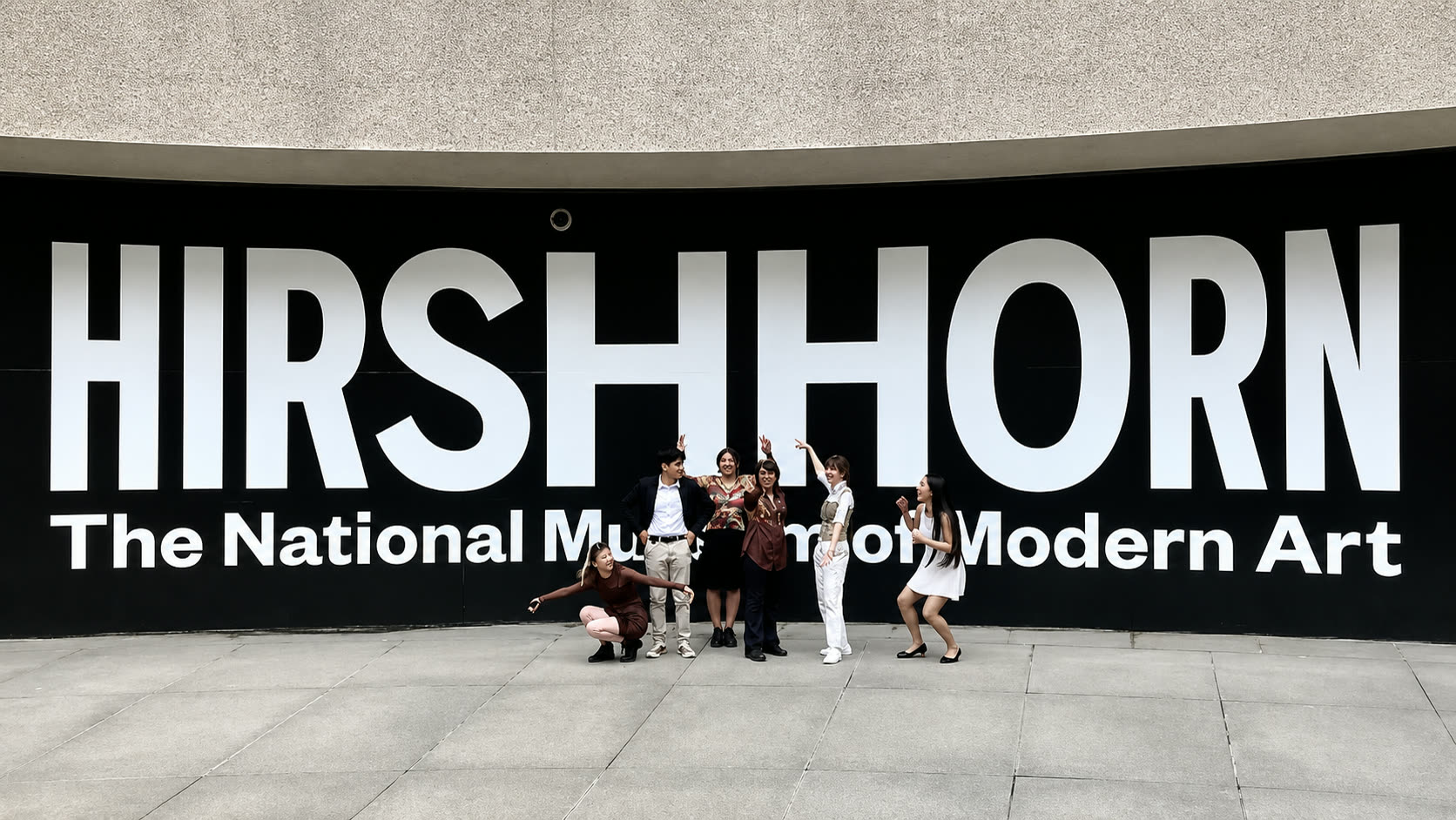
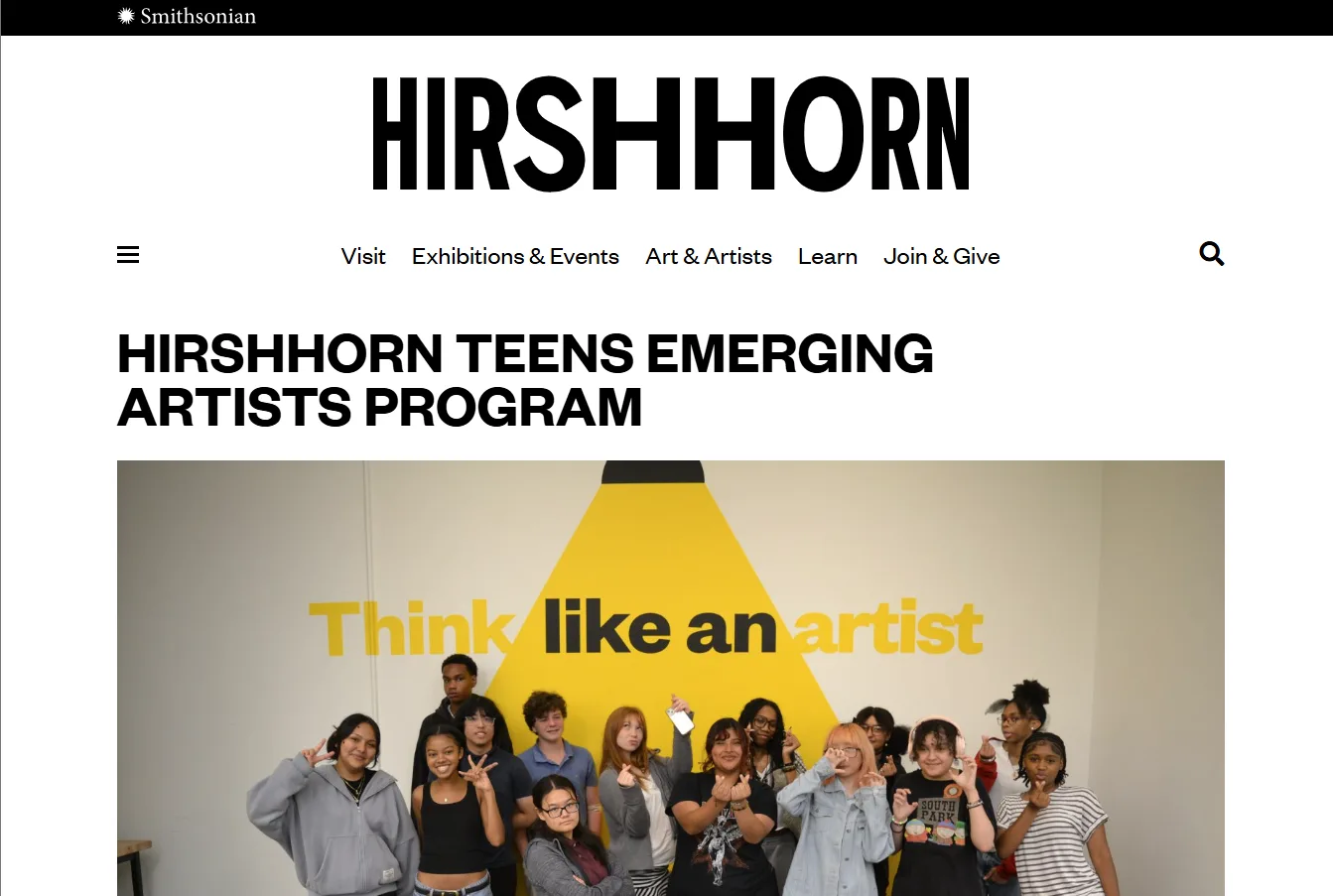
I joined the Smithsonian Hirshhorn Museum as a student intern through their Teen ArtLab Collective (TAC). Over three months, we built a strategy including programming, digital presence, and community infrastructure. It ended in a multi-part proposal presented directly to Hirshhorn museum leadership.
For teens, there's awareness of events, but one-off programming doesn't build anything lasting.
The question we kept circling back to was: what would it take for a teen to feel like they had a stake in what happens inside the Hirshhorn?
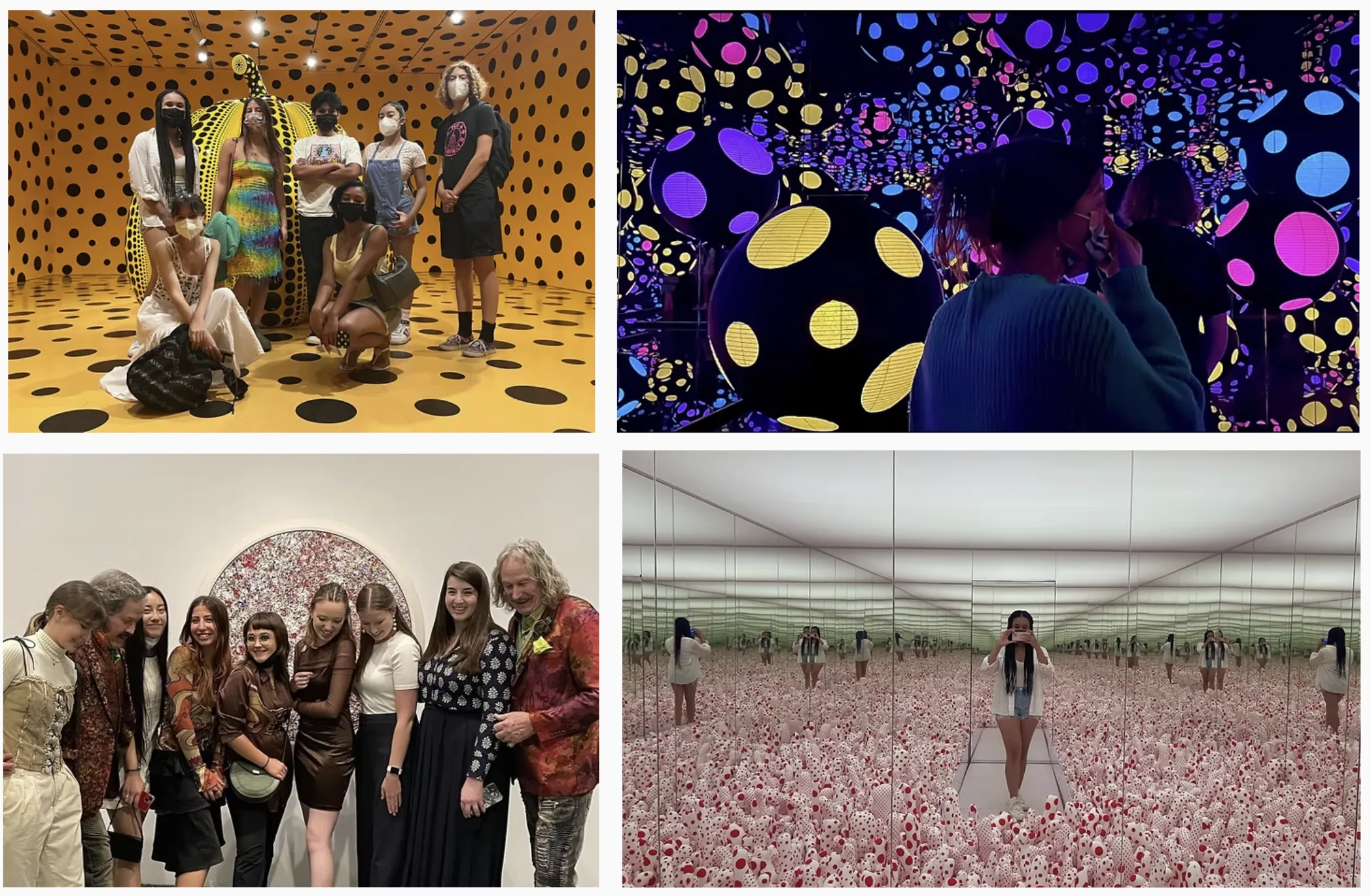
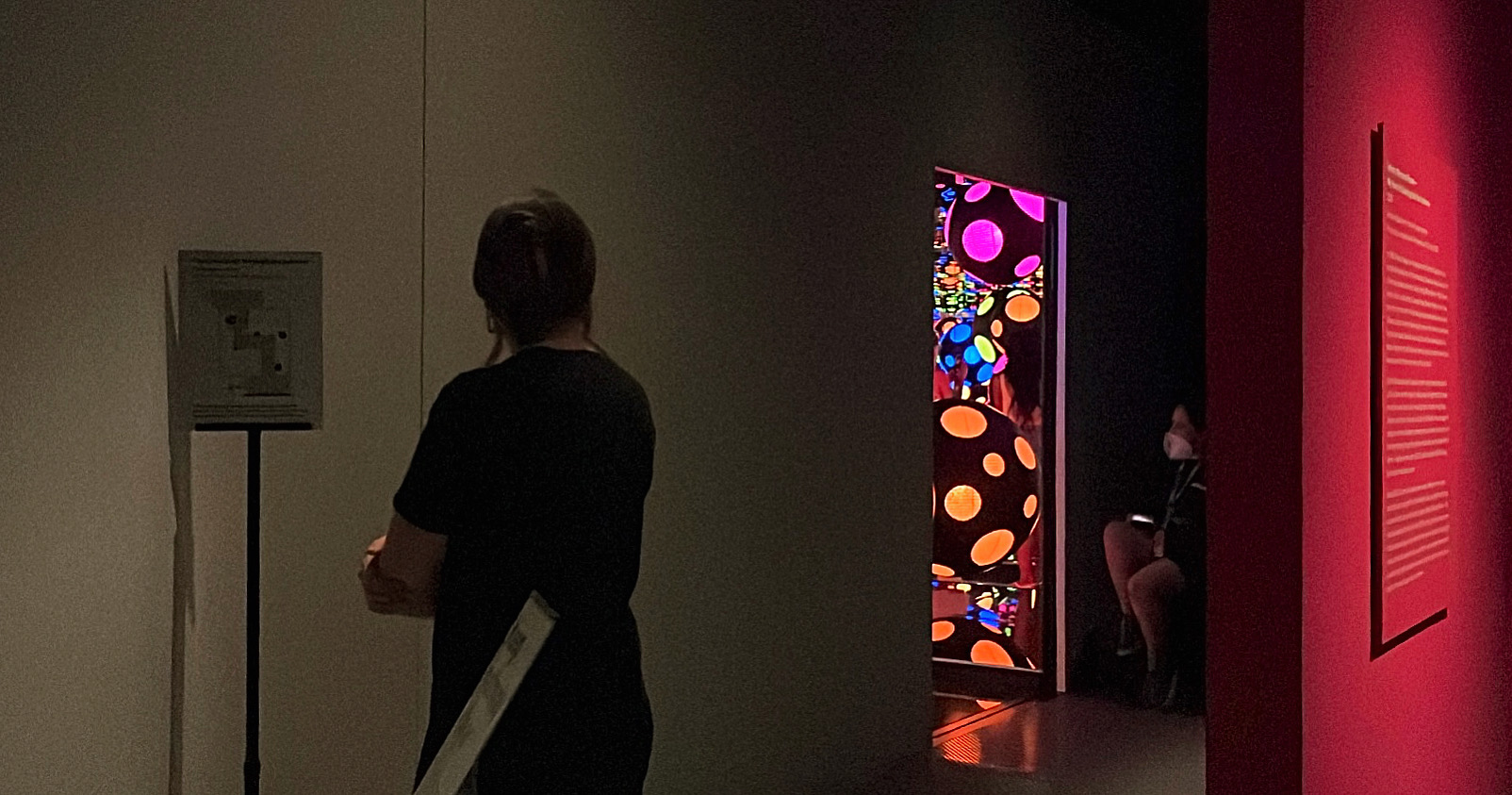
As a student intern, I was able to enter the same rooms the Hirshhorn's own staff worked in: exhibition openings, museum ideation sessions, strategy discussions, and planning conversations. Being in those rooms meant I could hear how staff actually made decisions and catch constraints and largely influenced how we approached planning our proposal.
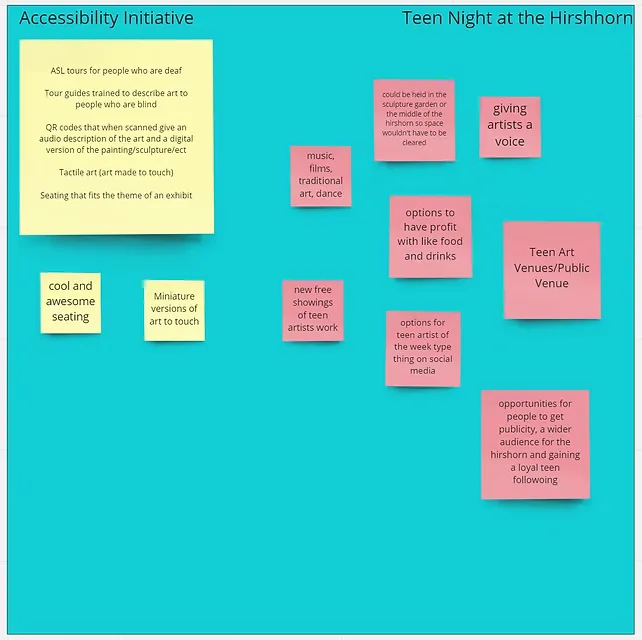
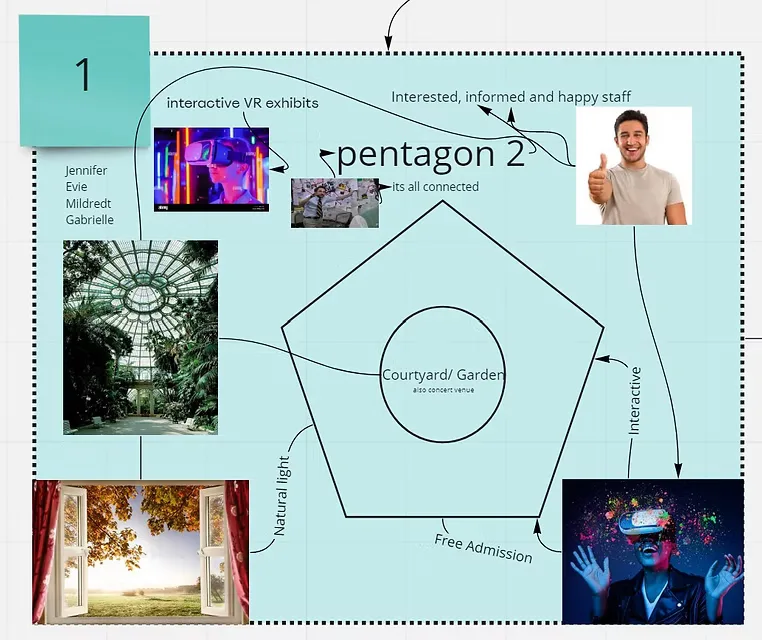
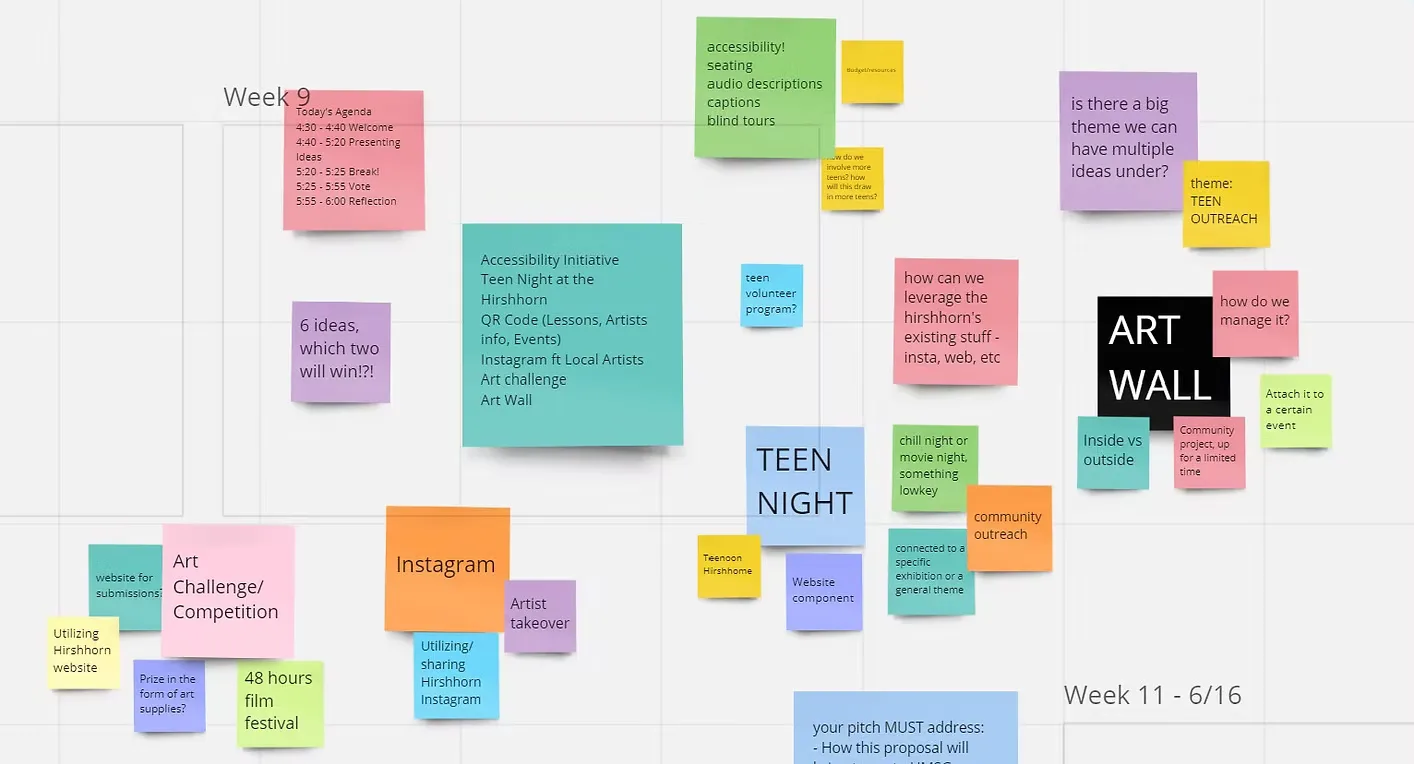
We started with open brainstorming about what the ideal museum experience would look like for a teenager. From there, collaborative workshops grouped those ideas by the actual need they were solving; we kept merging overlapping ones until they consolidated into four clear areas: accessibility, programming, digital engagement, and community ownership.
We designed for the museum as a community space, not a viewing space; interactivity over observation, socialbility over solitary viewing experiences, and accessibility as a starting point. Once we agreed on that frame, it got easier to evaluate whether an idea was actually serving the goal or not.
What made the proposal cohesive was that we resisted designing isolated events.
A Teen Night by itself is just a Teen Night, but connected to workshops, a competition, a digital presence, and an accessibility layer, it becomes something teens actually return to.
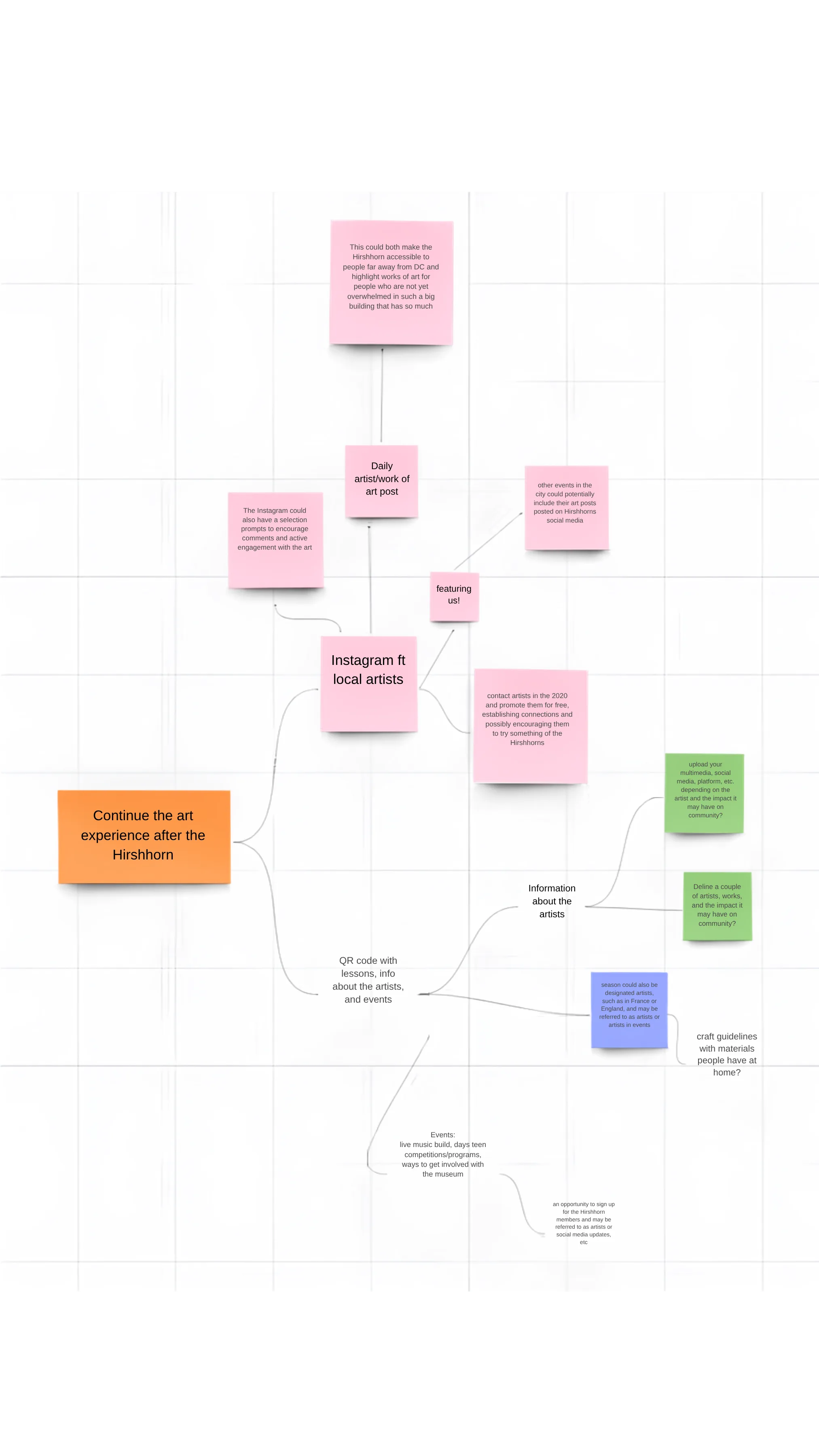
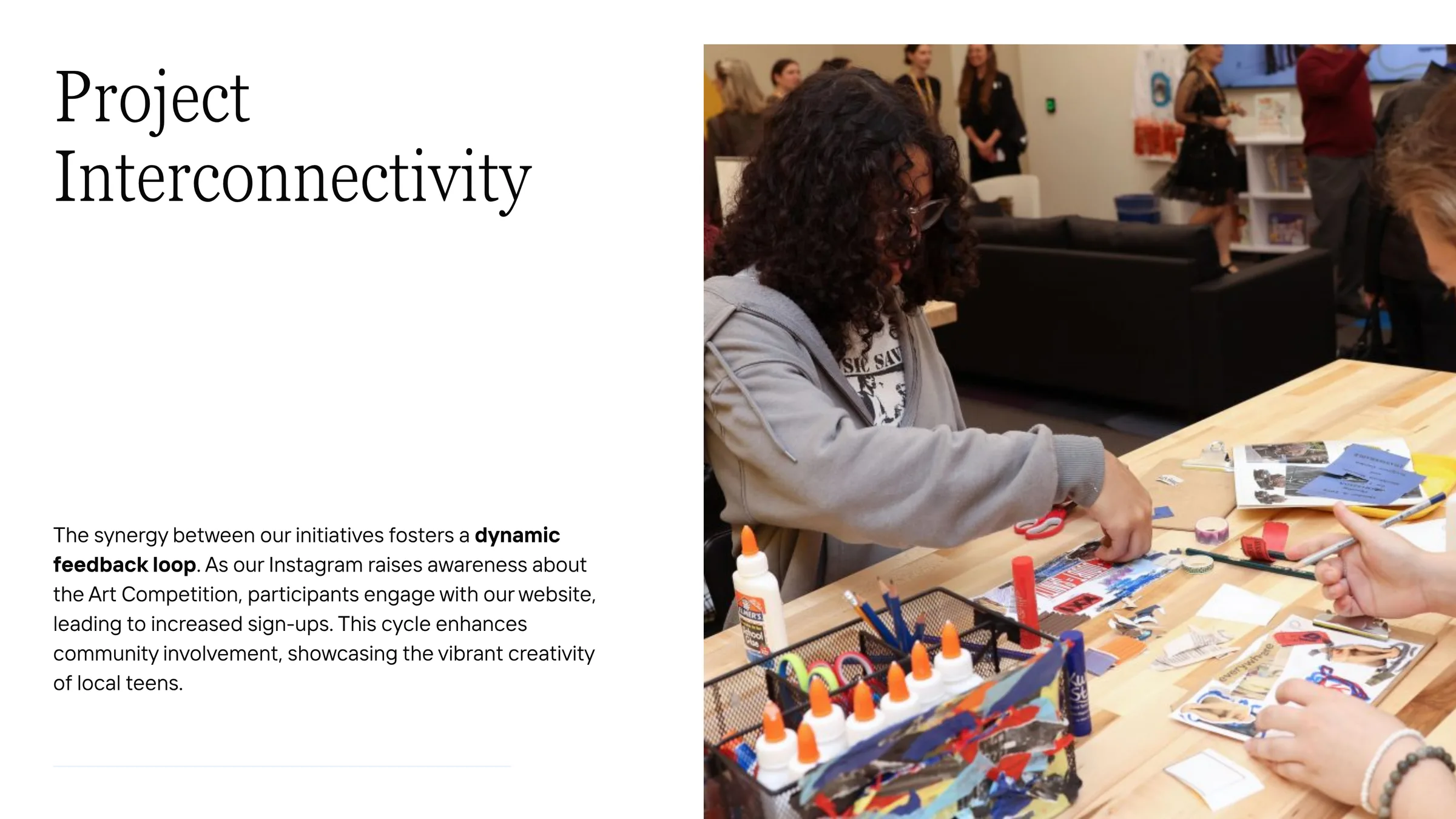
Mapping the interconnected ecosystem, where each initiative reinforces the others rather than standing alone.
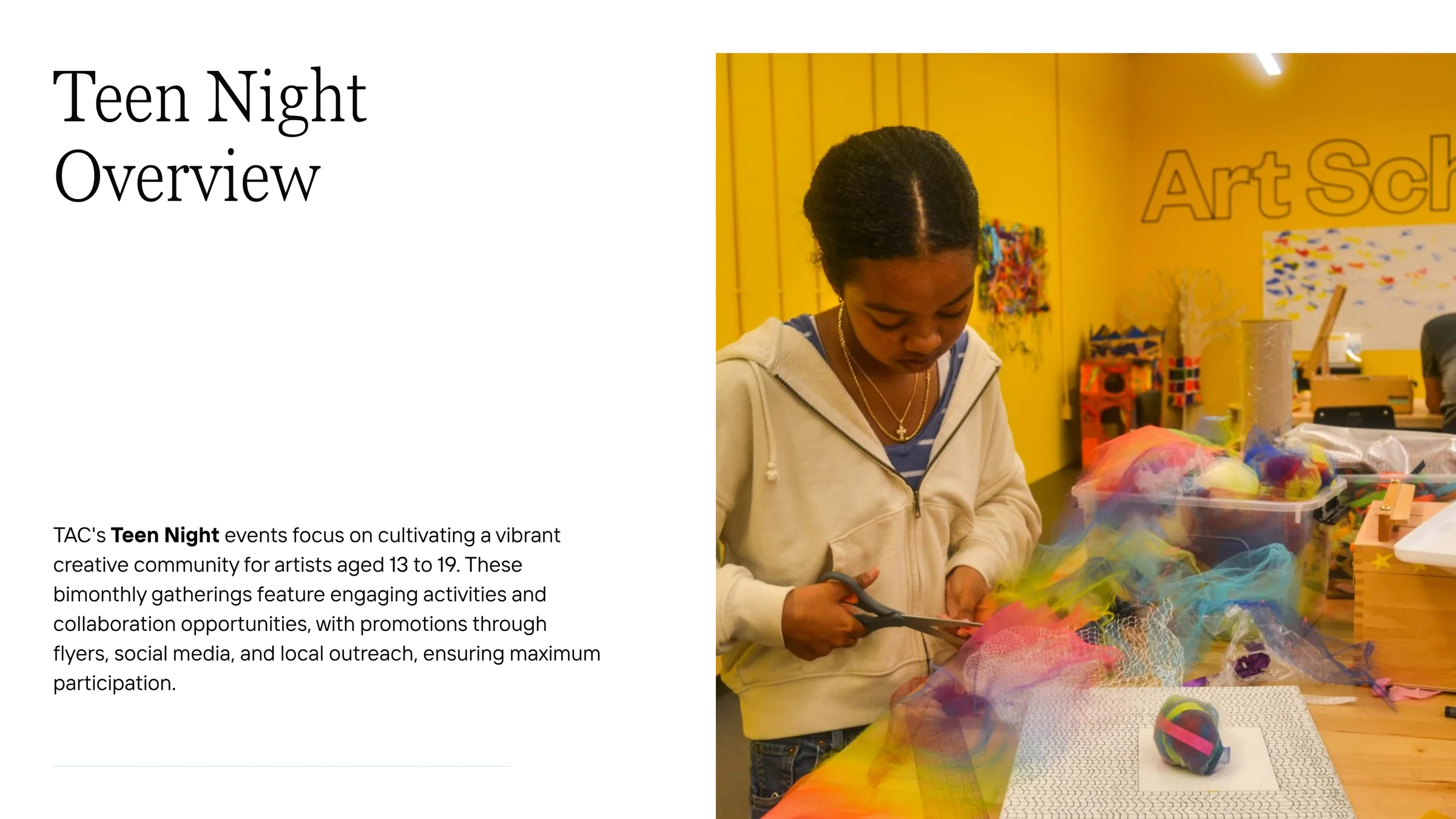
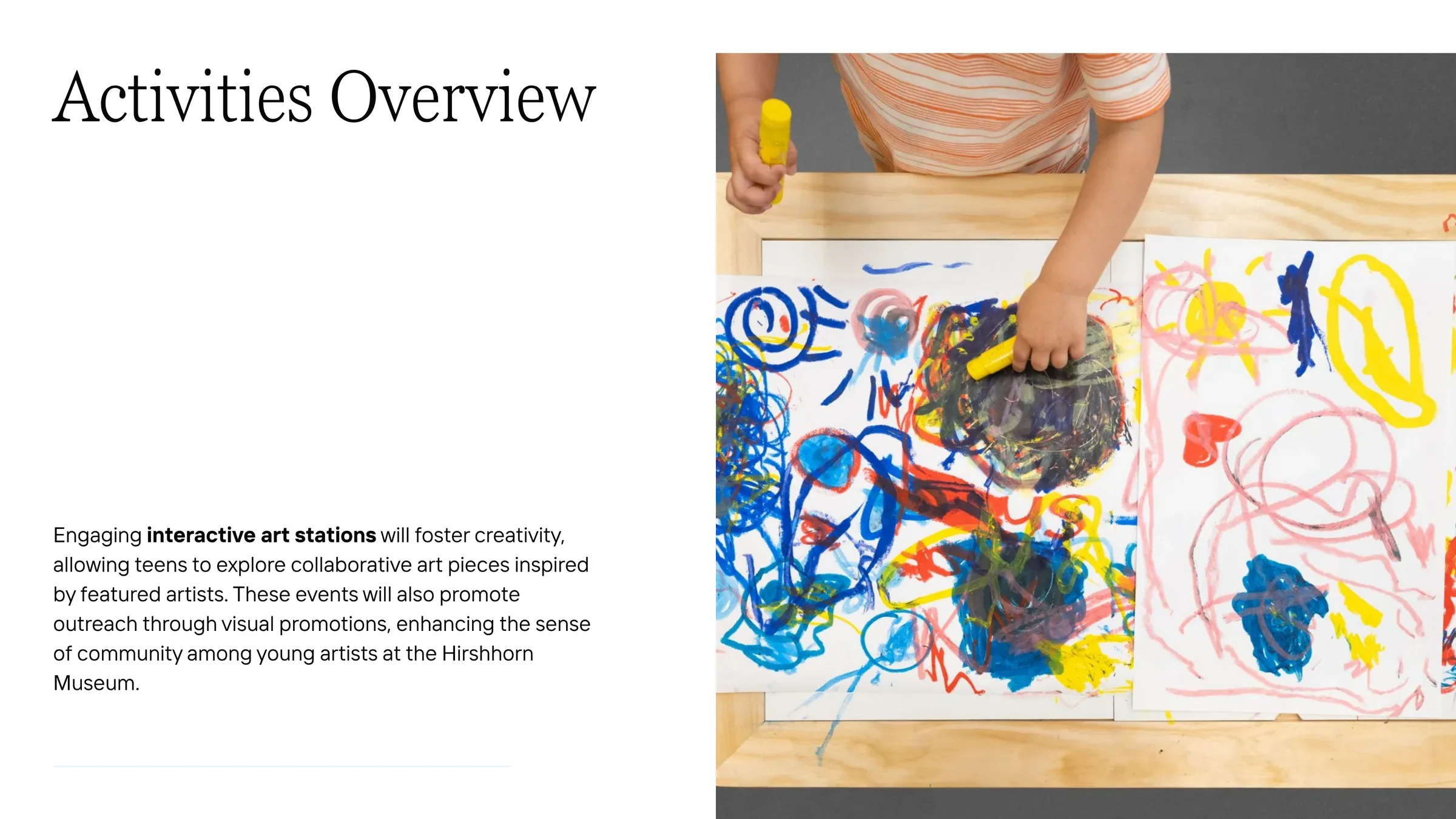
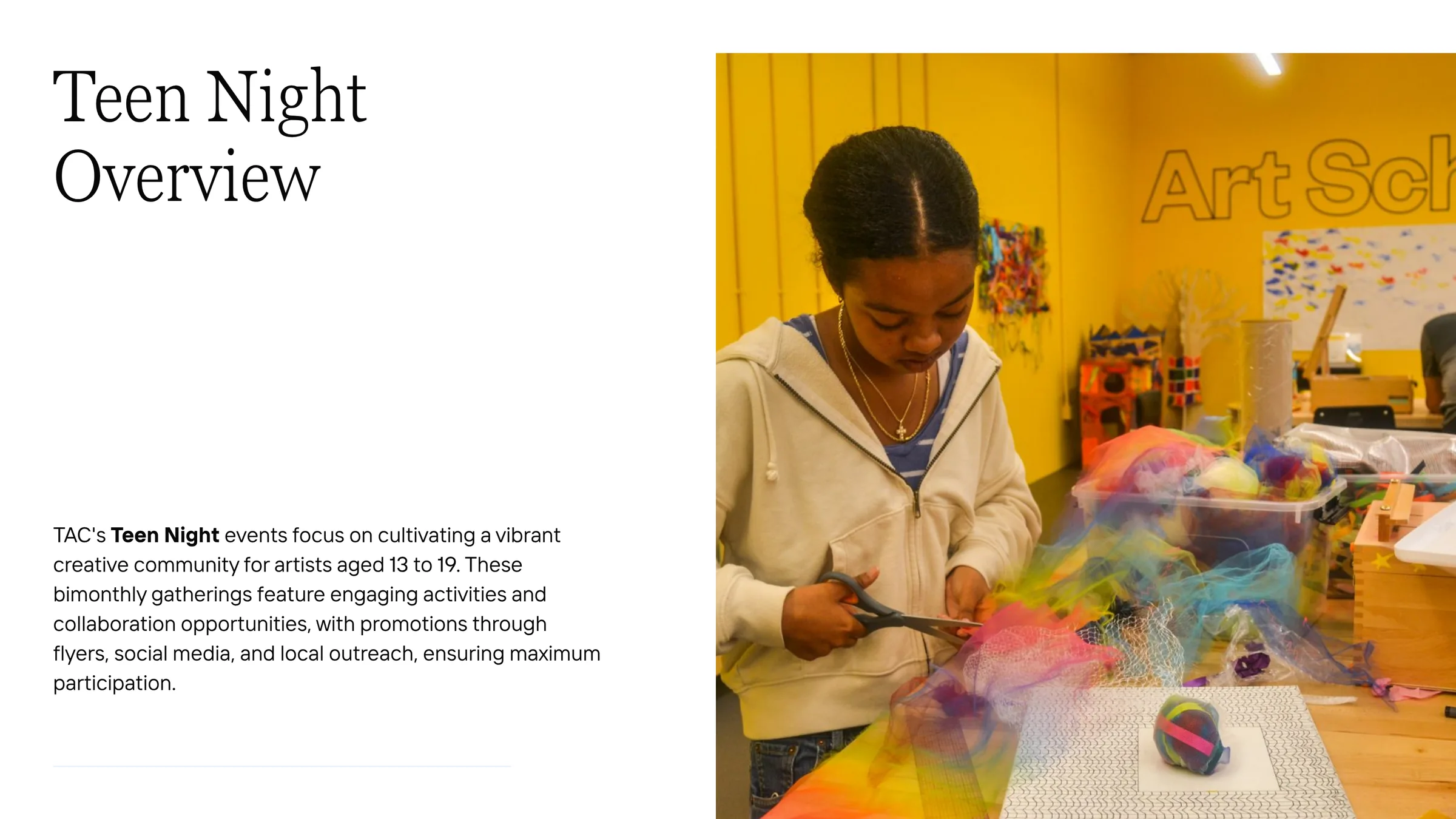
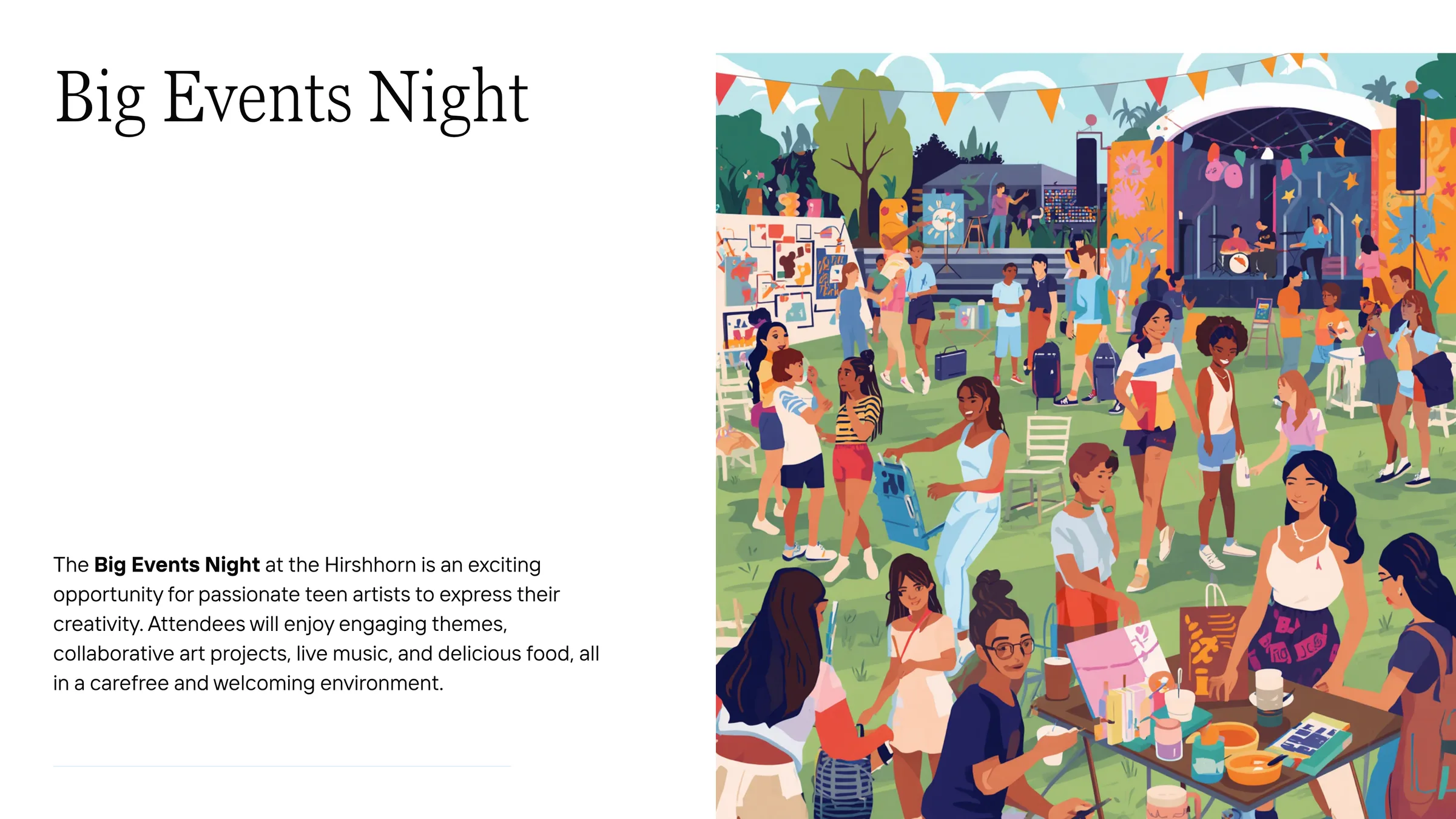
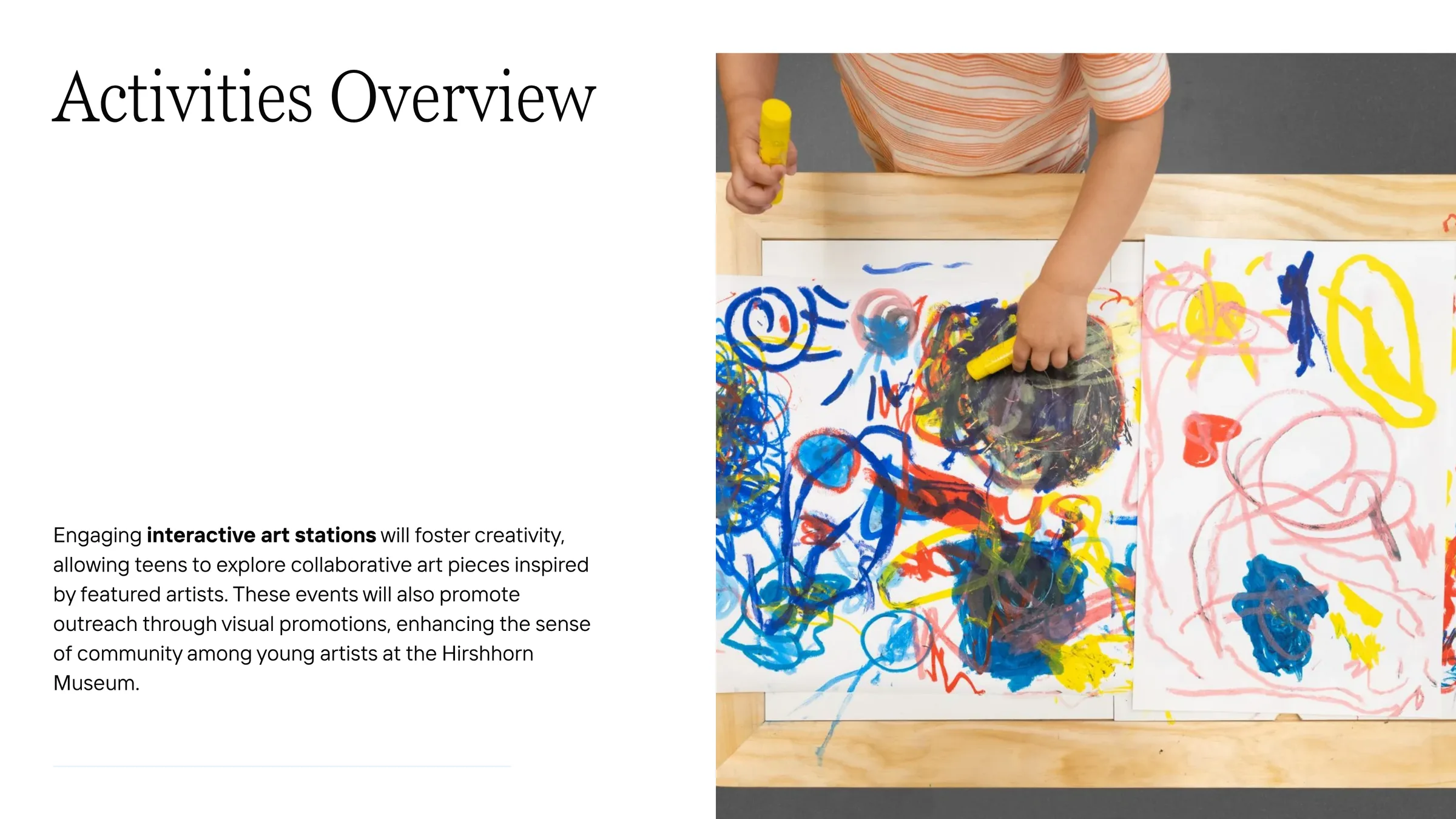
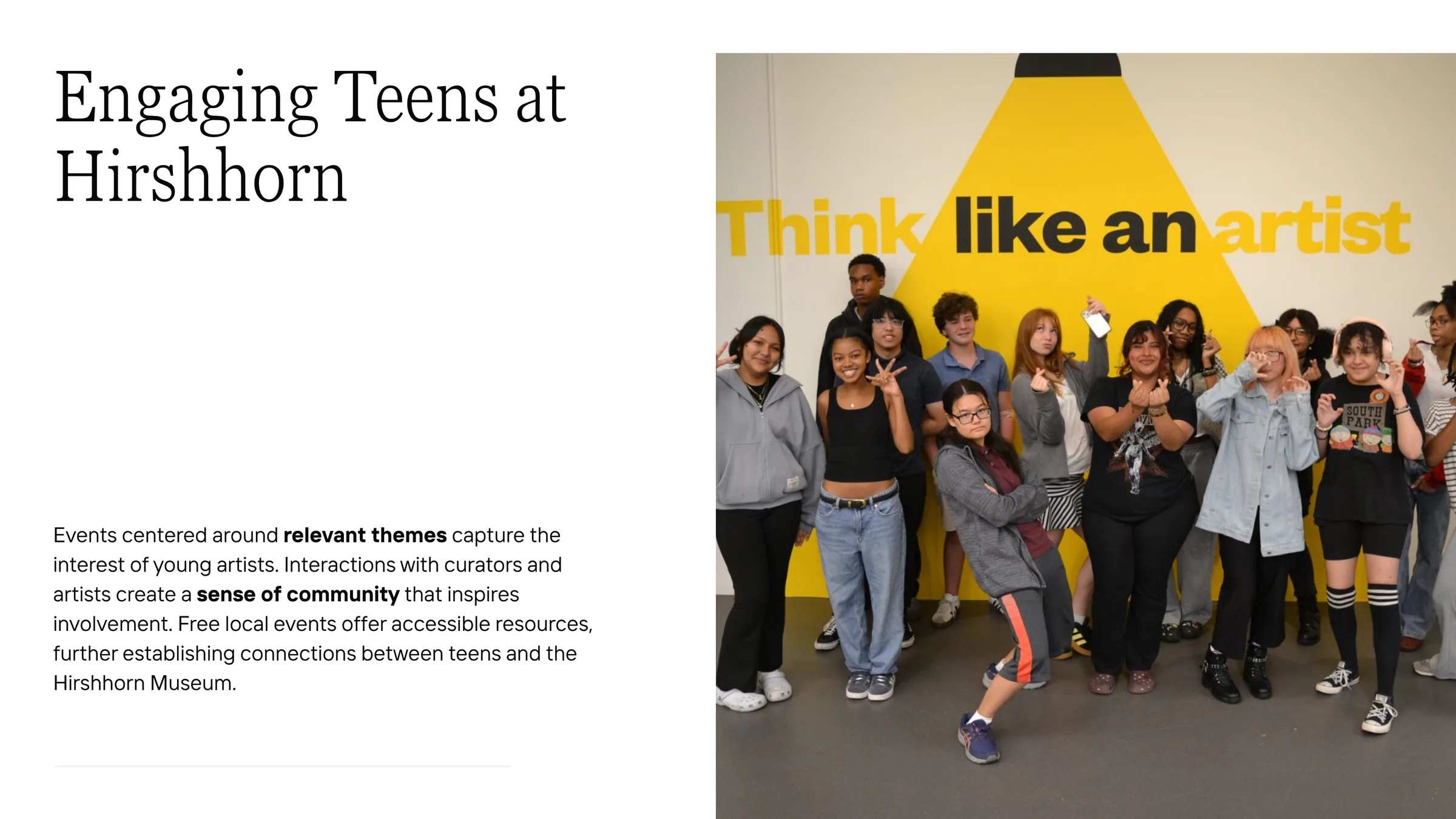
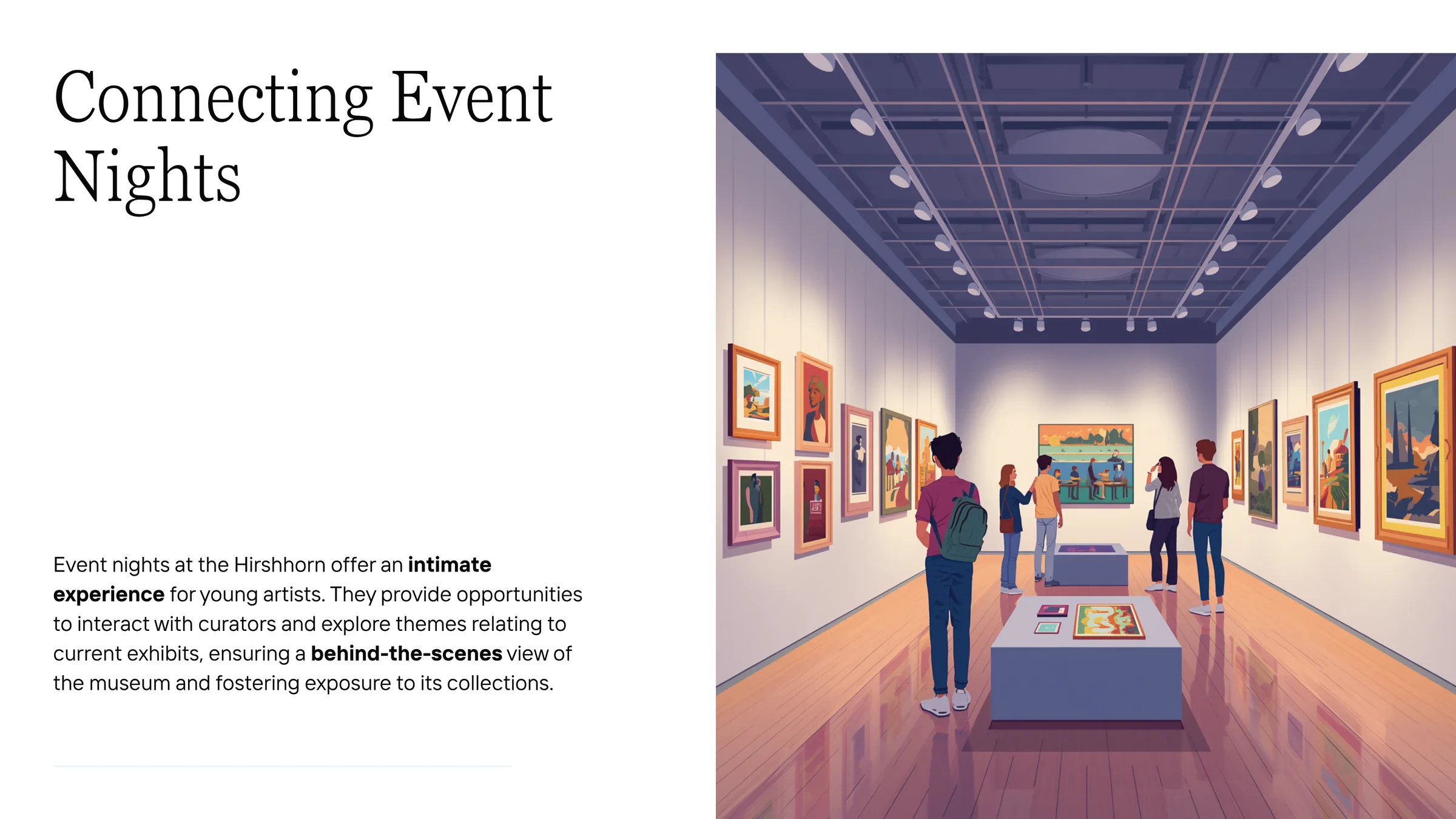
The anchor of the programming was Teen Nights: recurring themed events built around collaborative art stations, live music, food, and the chance to meet curators and other artists. The social layer matters as much as the art layer; if you give teenagers a real reason to be in the building together, the engagement follows from that.
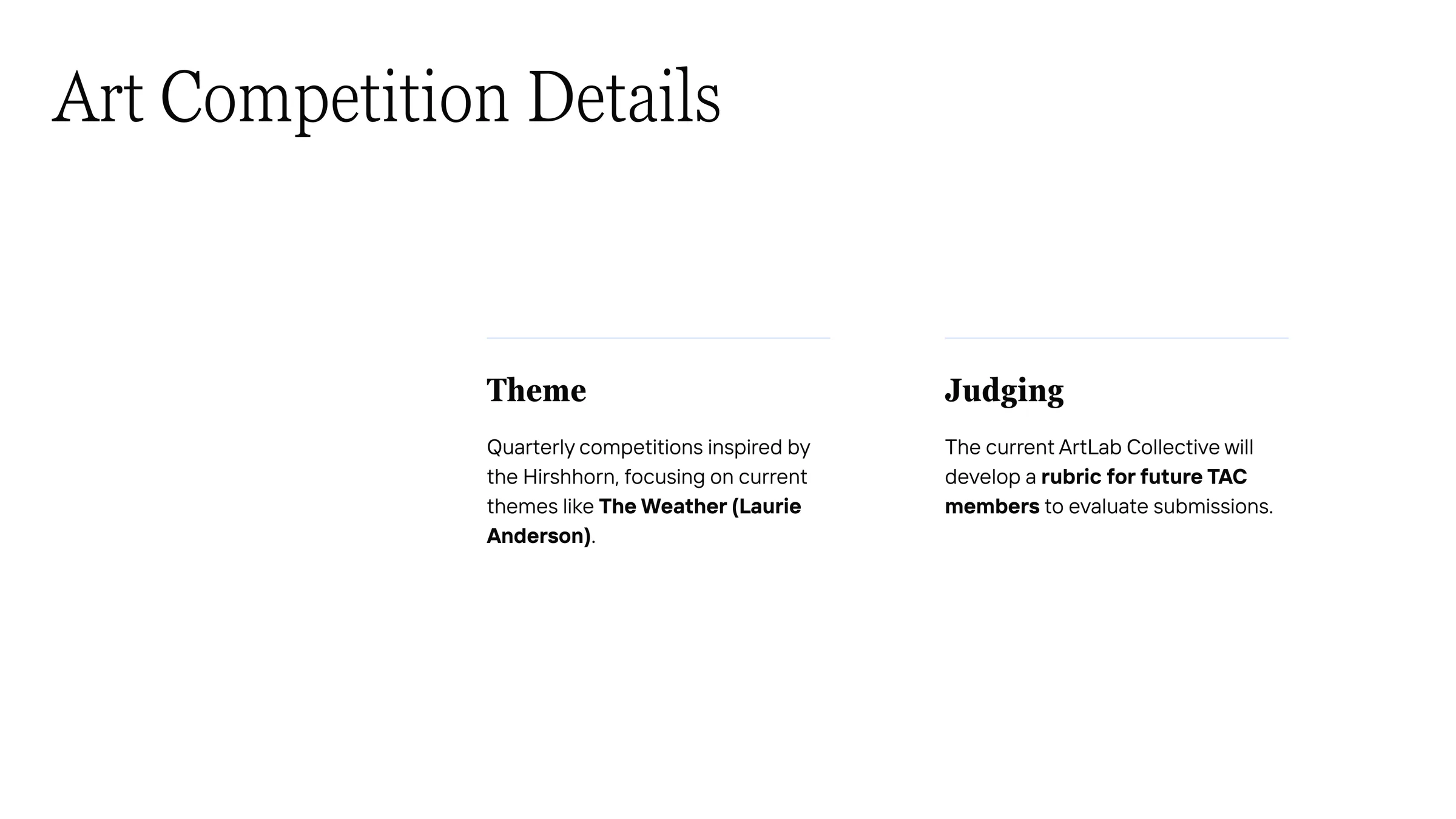
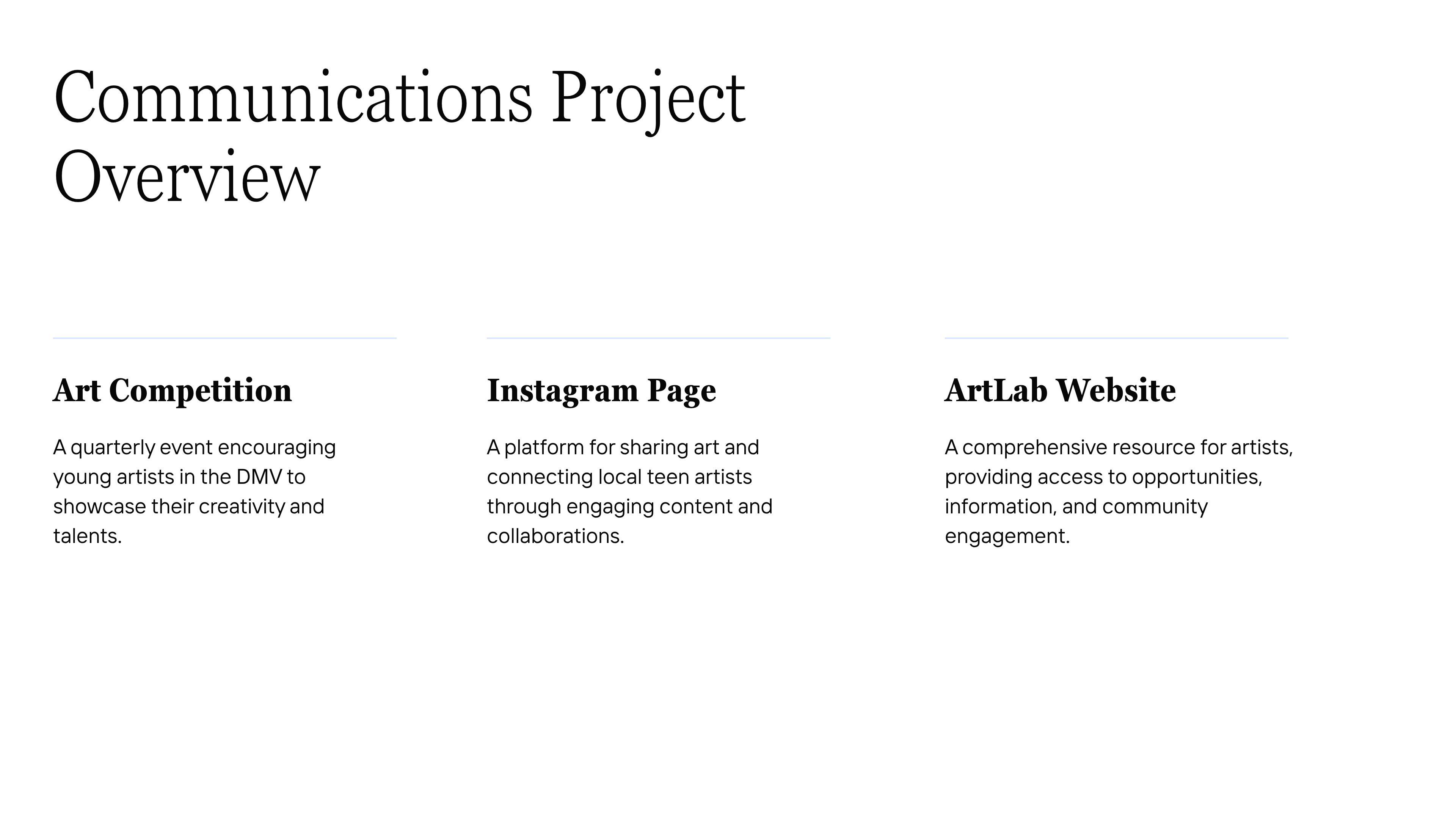
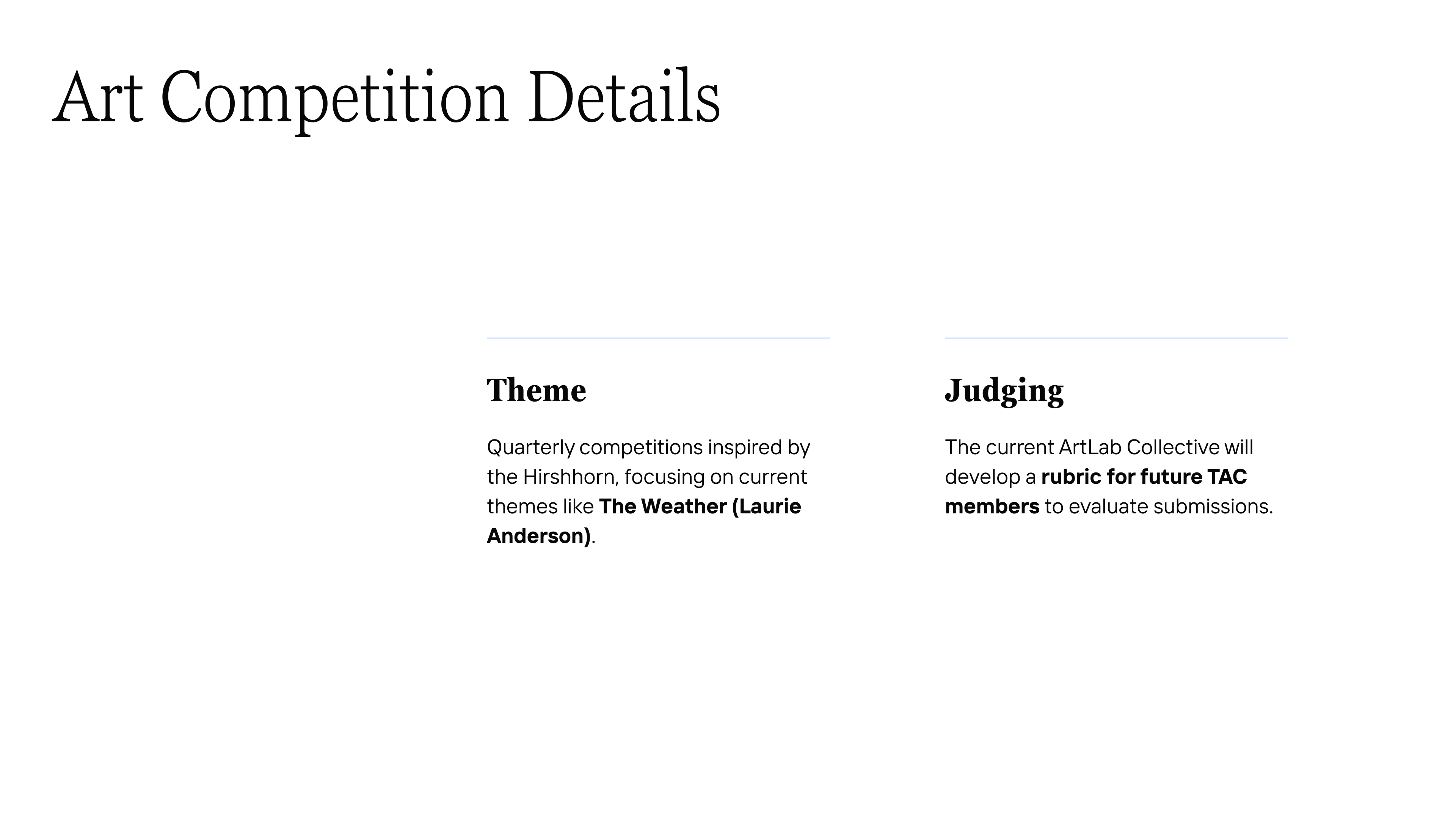
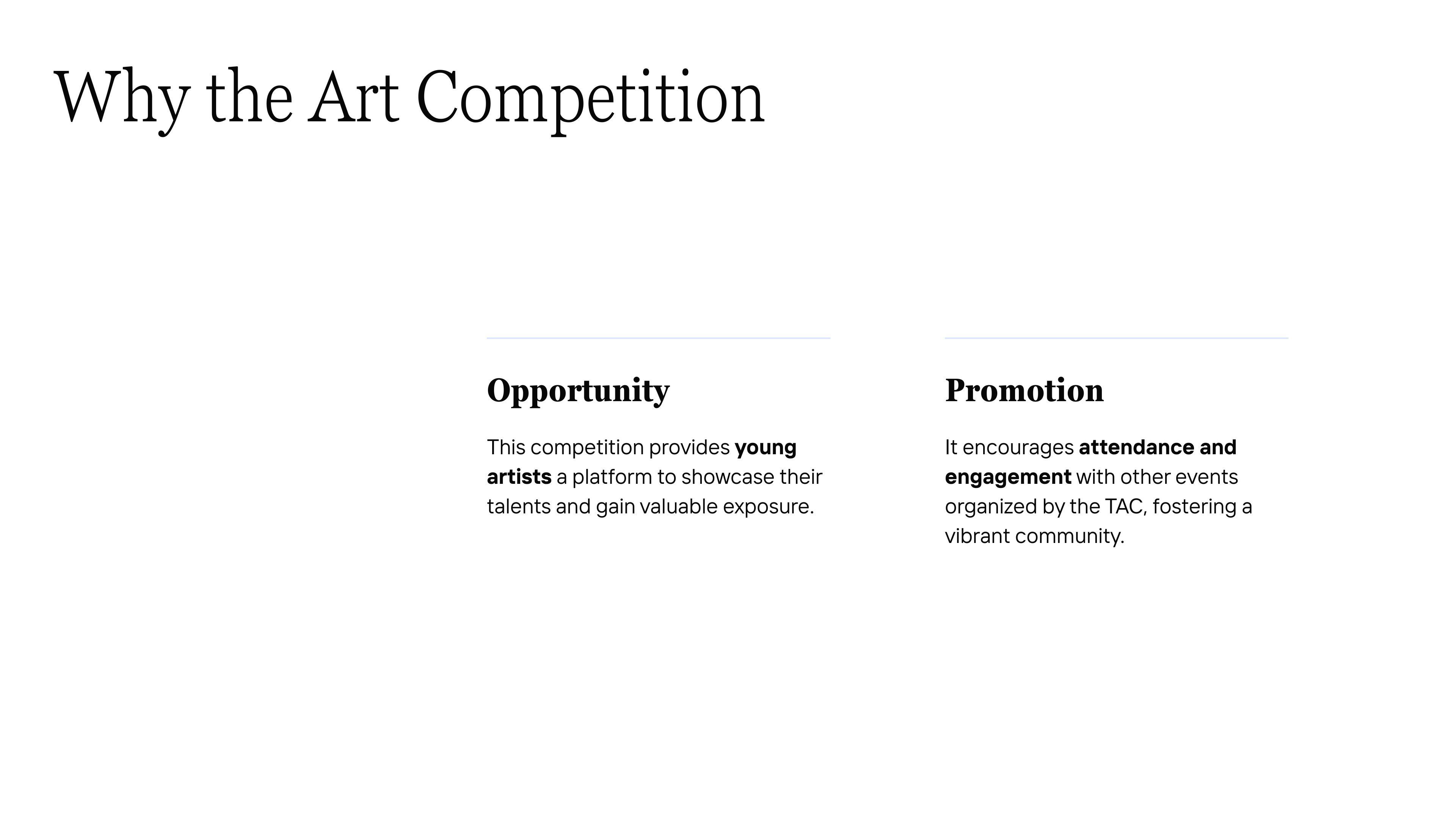
Alongside Teen Nights, we proposed drop-in workshops focused on making and career exploration. The barrier stayed low on purpose, so more teens could find their way into the programming without committing to anything upfront. We paired that with a quarterly art competition tied to current Hirshhorn exhibitions, giving teens a reason to engage with the collection itself, not just the social programming around it.
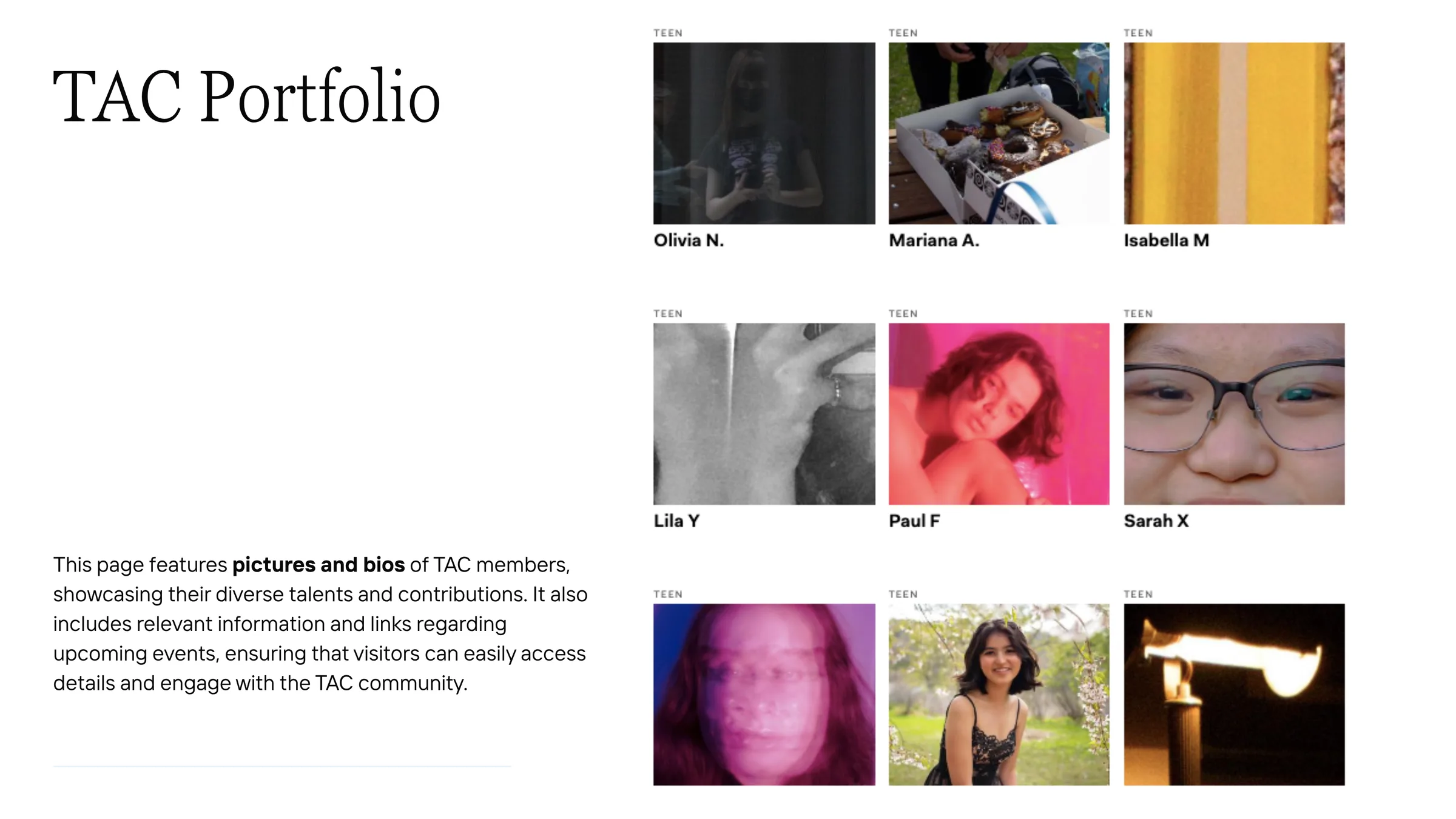
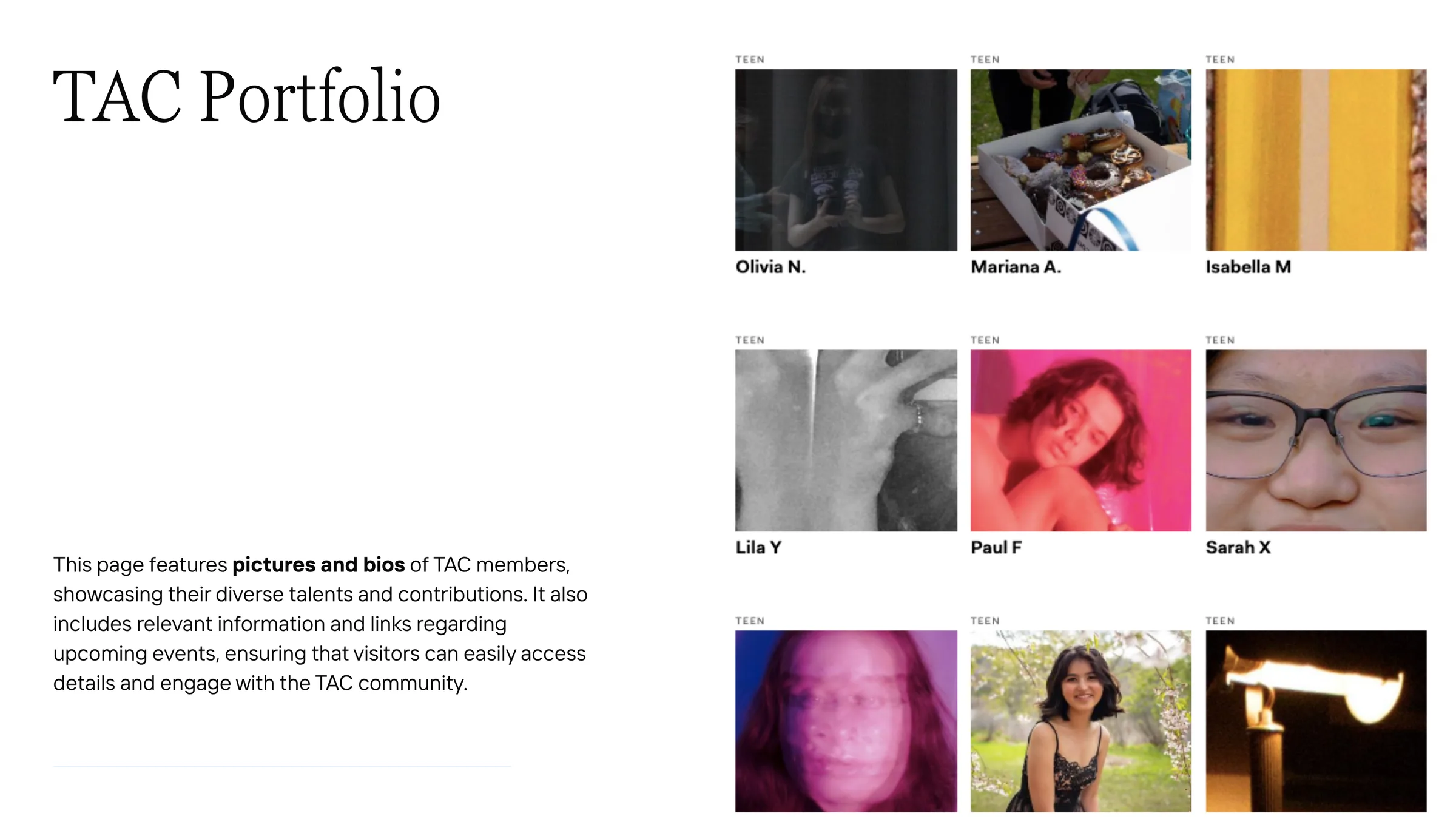
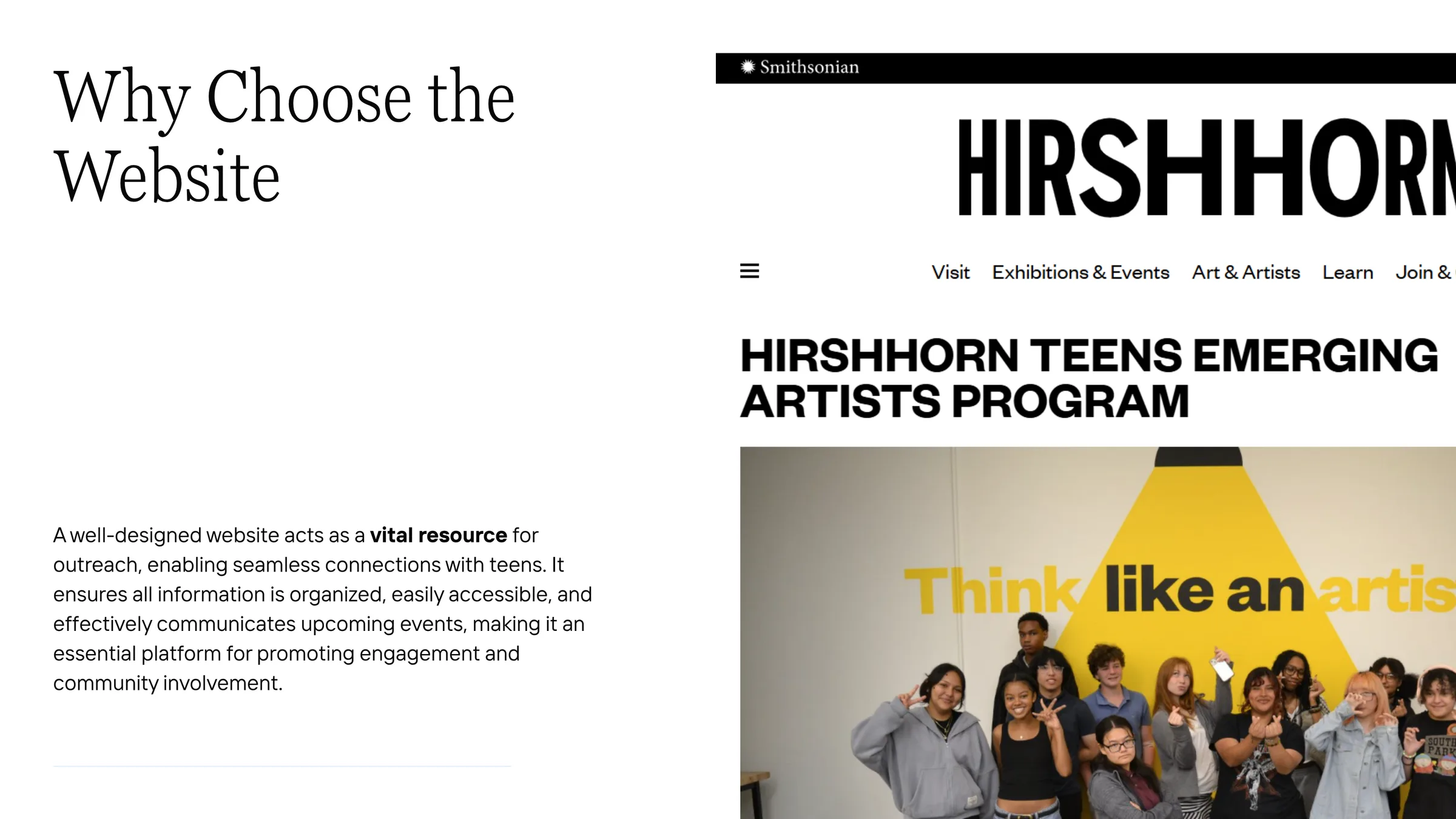
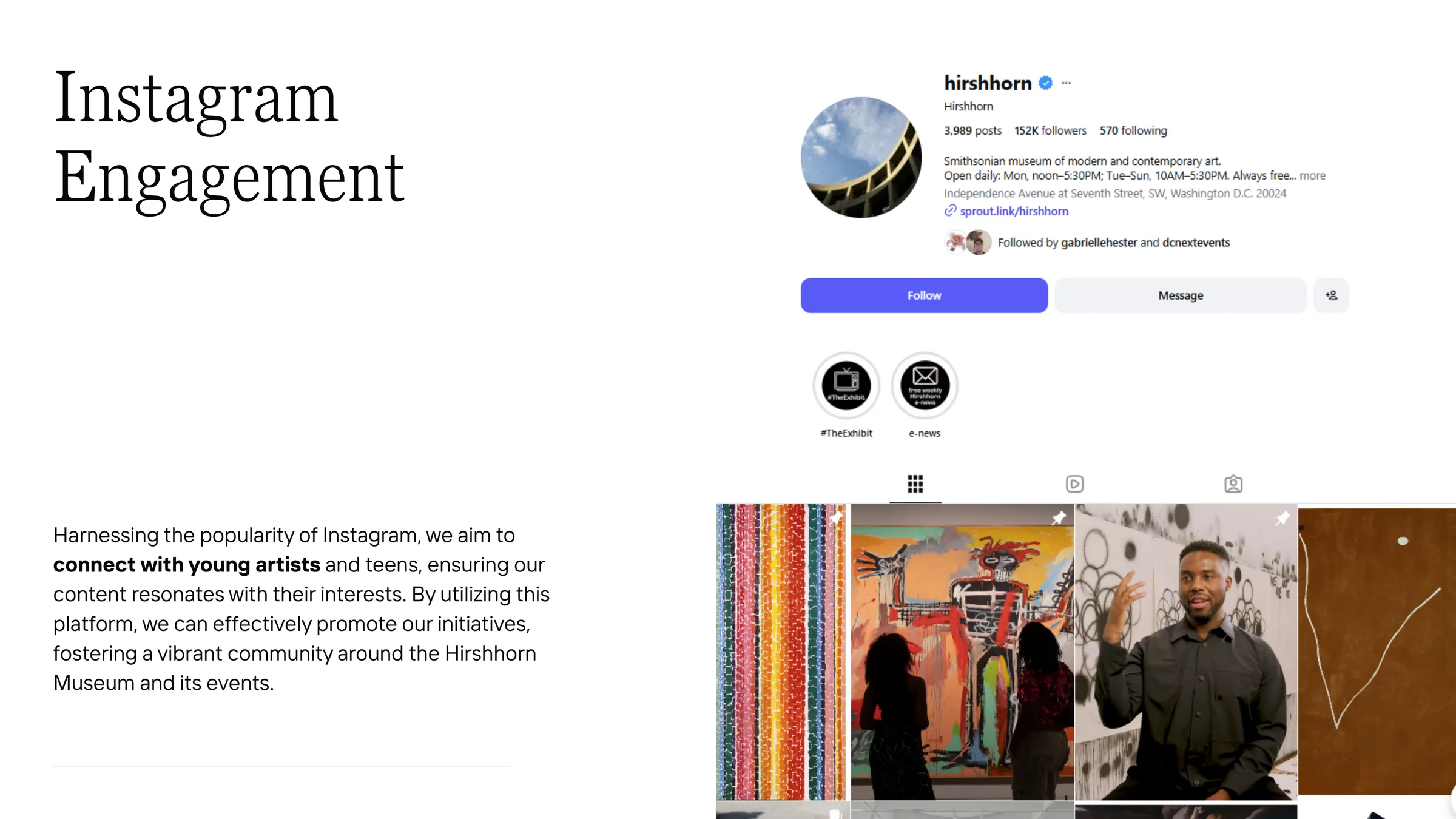
The digital layer created a loop back into the online space: Instagram carried weekly posts, teen takeovers, DMV artist highlights, event promotion, and discussion prompts, while a website held TAC member portfolios, event info, competition submissions, and resources. The museum's online presence needed to feel like it was made for and by teens, not just promoted at them.
We ideated on ASL tours, audio descriptions via QR codes, tactile experiences, and seating designed around exhibit themes (a nod to my time at the National Building Museum), plus teen-led content explaining artworks in non-institutional language.
Leadership was in the room specifically to pull from what we presented, and the Teen Studio ↗ that followed integrated ideas directly from that proposal.
The final proposal deck.