How do you fix an environment where disconnected branding and disorganized room layouts are hurting sales?
Overview
Challenge
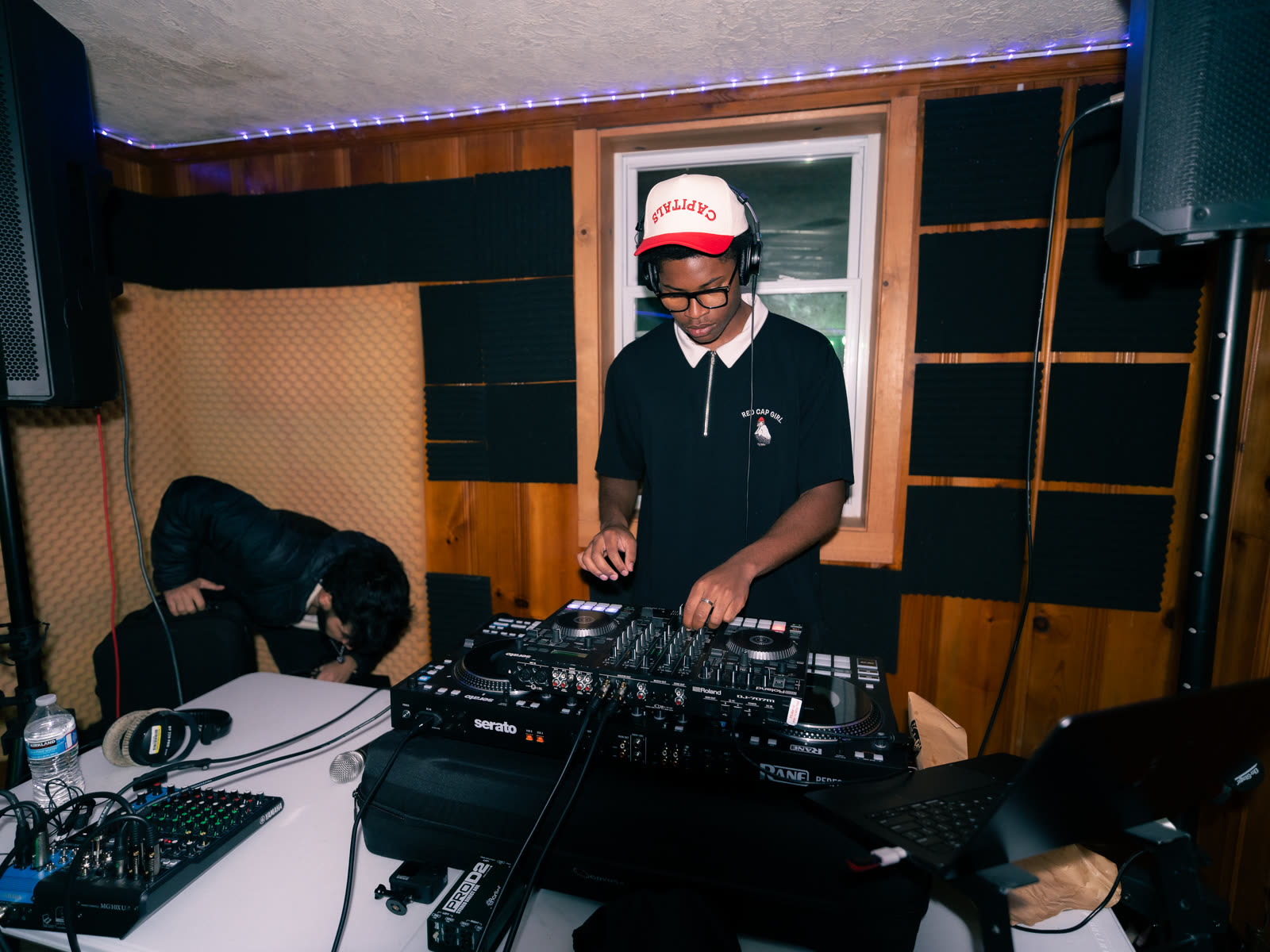
Serotone threw great parties, but the overall brand story and the actual venue layout were fighting the music. Online, the marketing felt disconnected; inside, the room was full of physical friction points that lessened the event.
Strategy
I joined as the team's art and experience designer, treating the room, the graphics, and the online presence as one continuous experience instead of three separate jobs.
Result
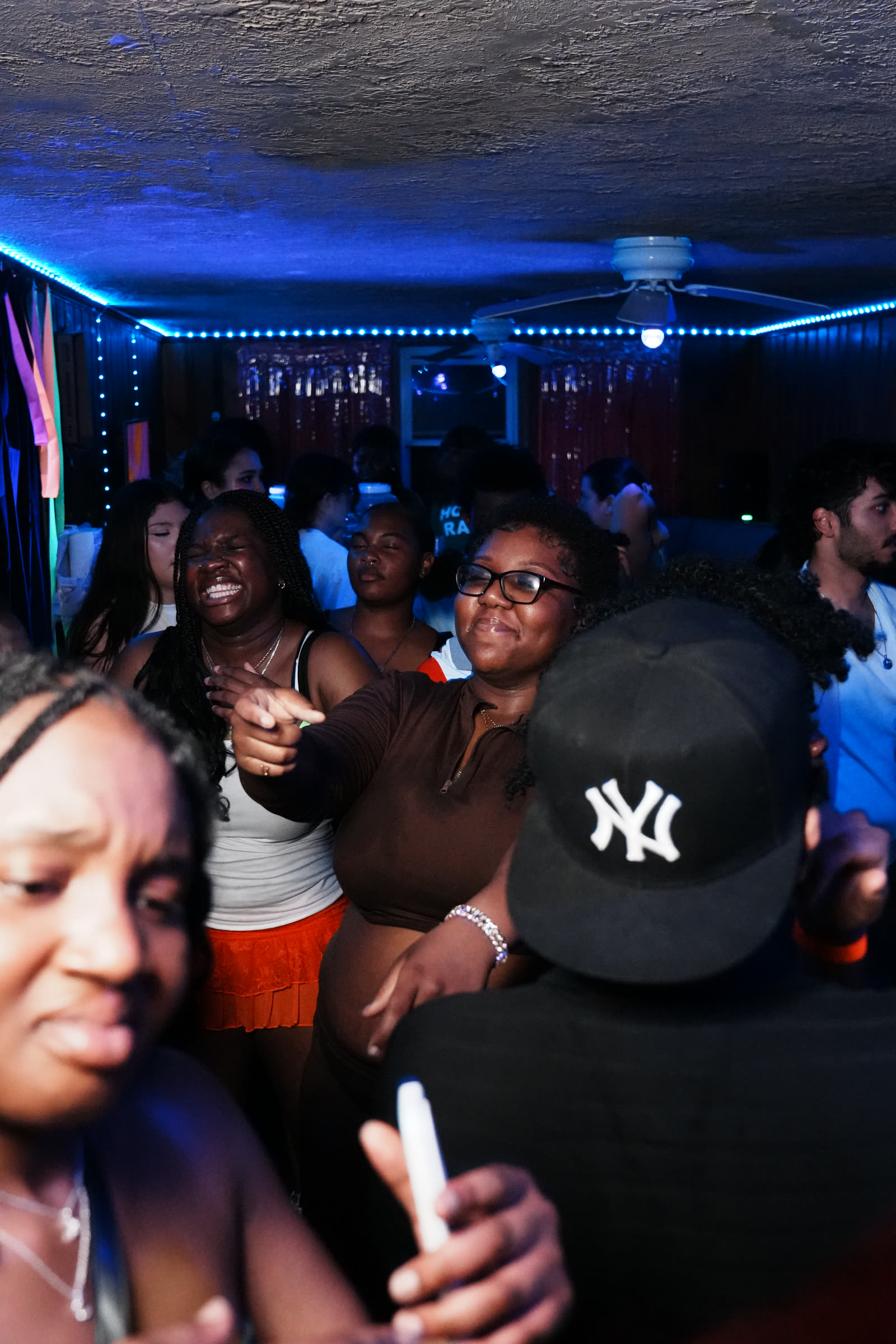
Unifying the online graphics with the venue cleared the visual confusion before people even arrived; fixing the spatial flow meant guests could easily navigate the room, find water, and make purchases without getting stuck in lines, while our sidewalk activations turned nearby nightlife spots into future brand partners.
+33%
In-venue purchase
growth per attendee
33.3K
Campaign views,
across 2 featured events
11.8K
Accounts reached,
plus 1 press feature
Figures tracked via Instagram Business Analytics and in-venue sales records.
Designing for a continuous loop meant every choice had to serve DJs-in-training, DJs, and party-goers at once.
The Ecosystem
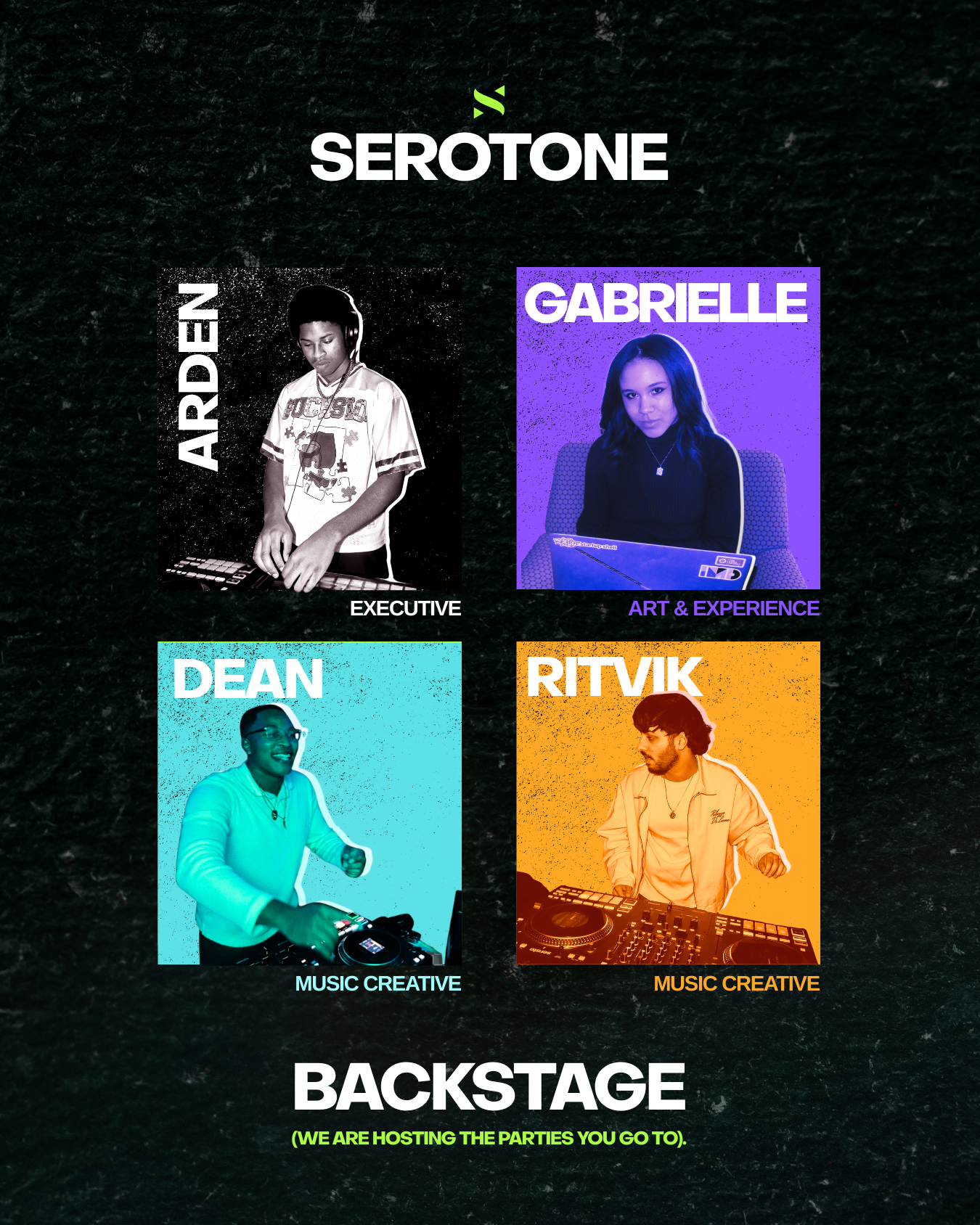
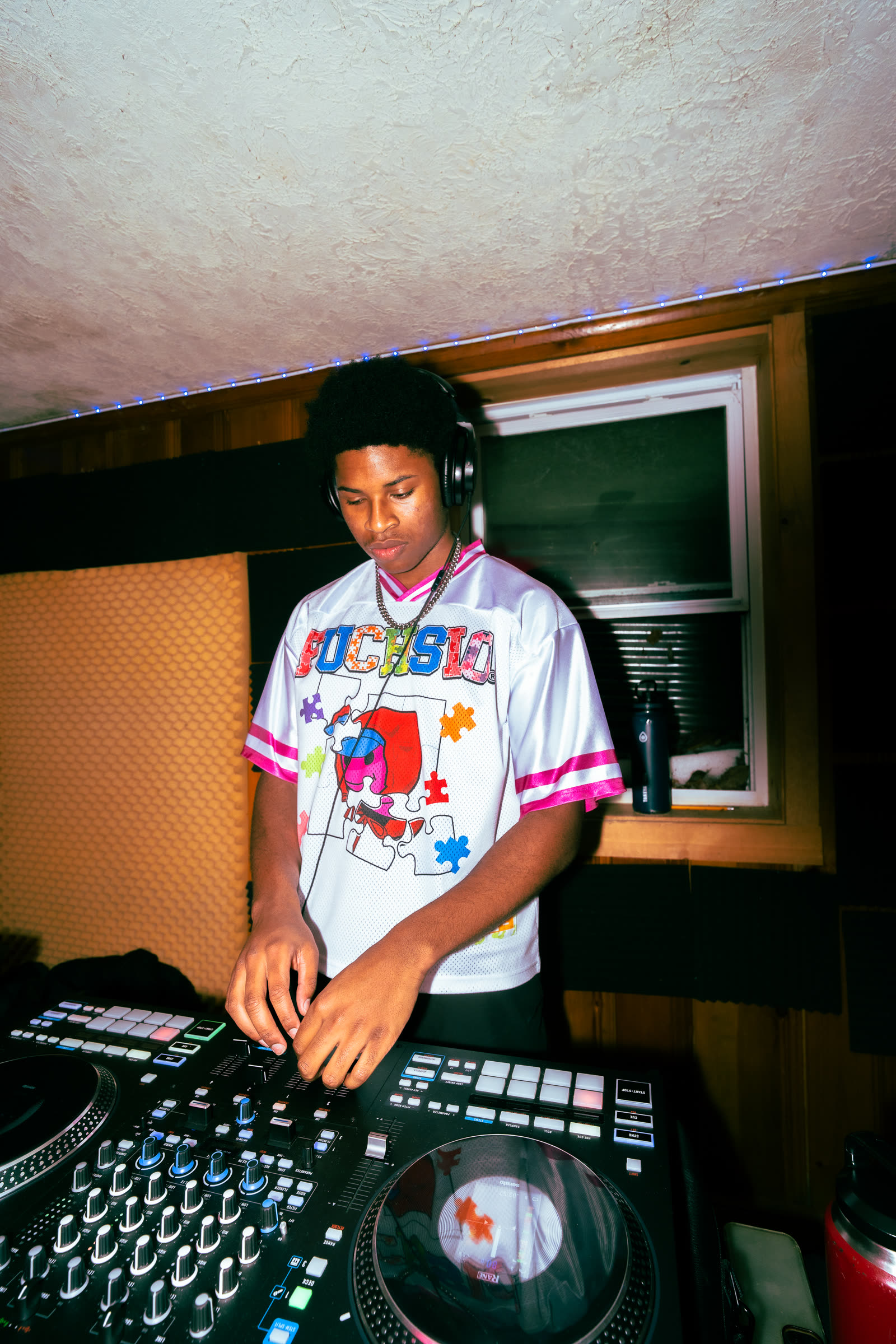
Serotone is a student-run DJ education and events collective, started by three UMD students who got tired of College Park's stale social scene. Rather than just throwing parties, they built out a pipeline: teaching people to DJ, giving them venues to practice and perform in, and building an audience.
DJs-in-training
1-on-1 and club training to build real mixing skills
Weekly community through the DJ club
A clear path from practicing to opening at real venues
DJs
Exposure through socials and curated parties
Venues to play and recorded mixes to build a portfolio
Merch and brand alignment with a name people recognize
Party-goers
Social content that builds energy before the night even starts
Nights curated enough to be worth clearing your schedule for
Somewhere to belong, not just somewhere to wait in line
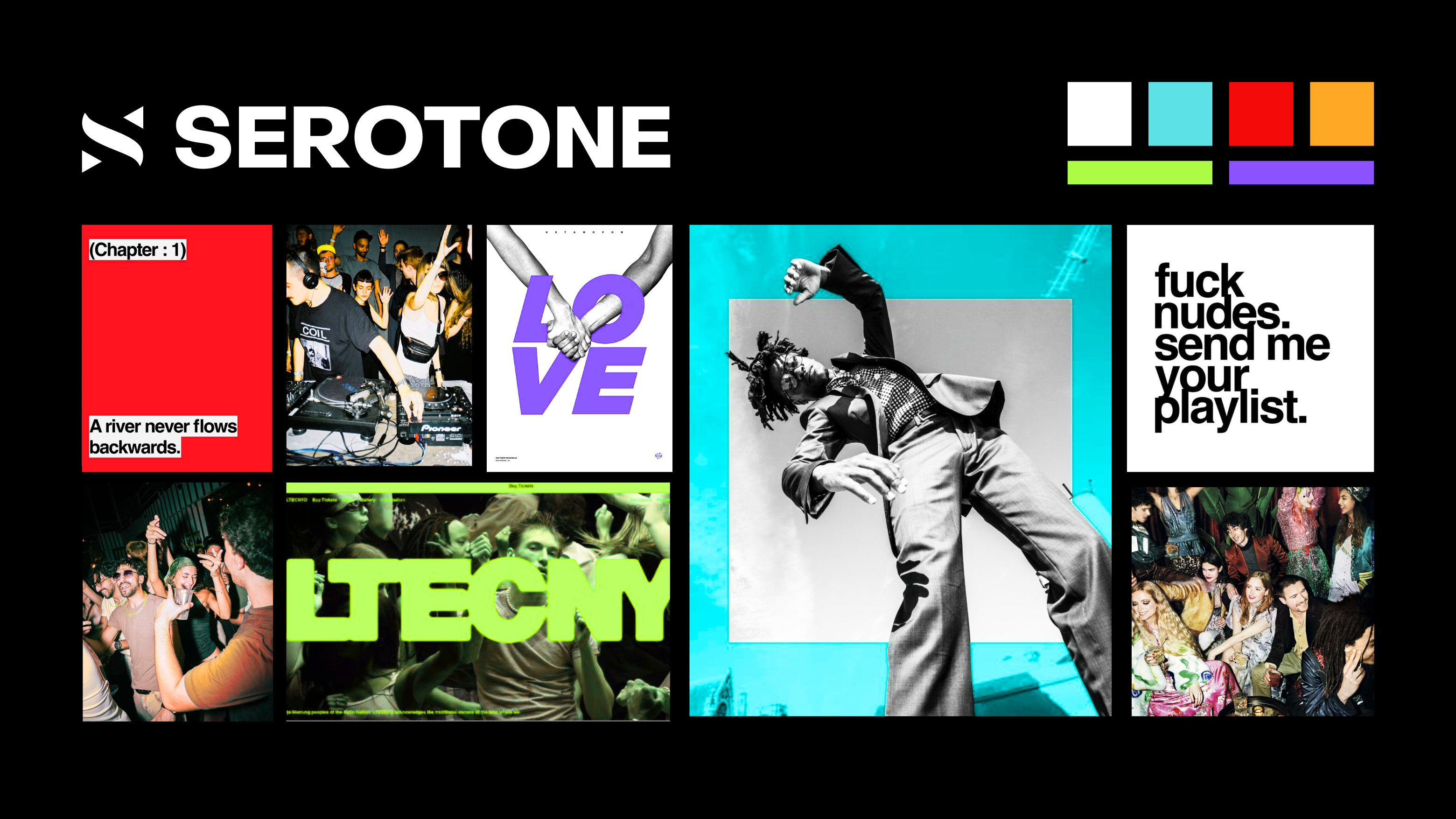
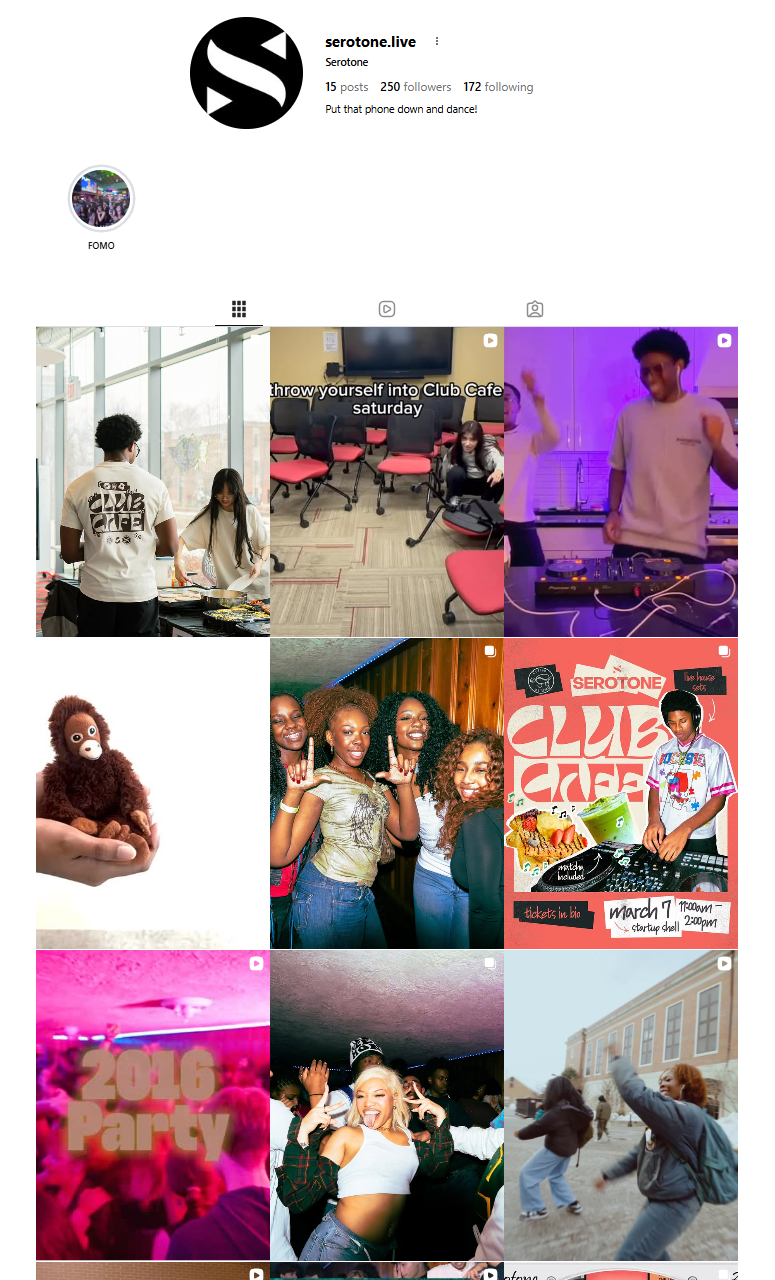
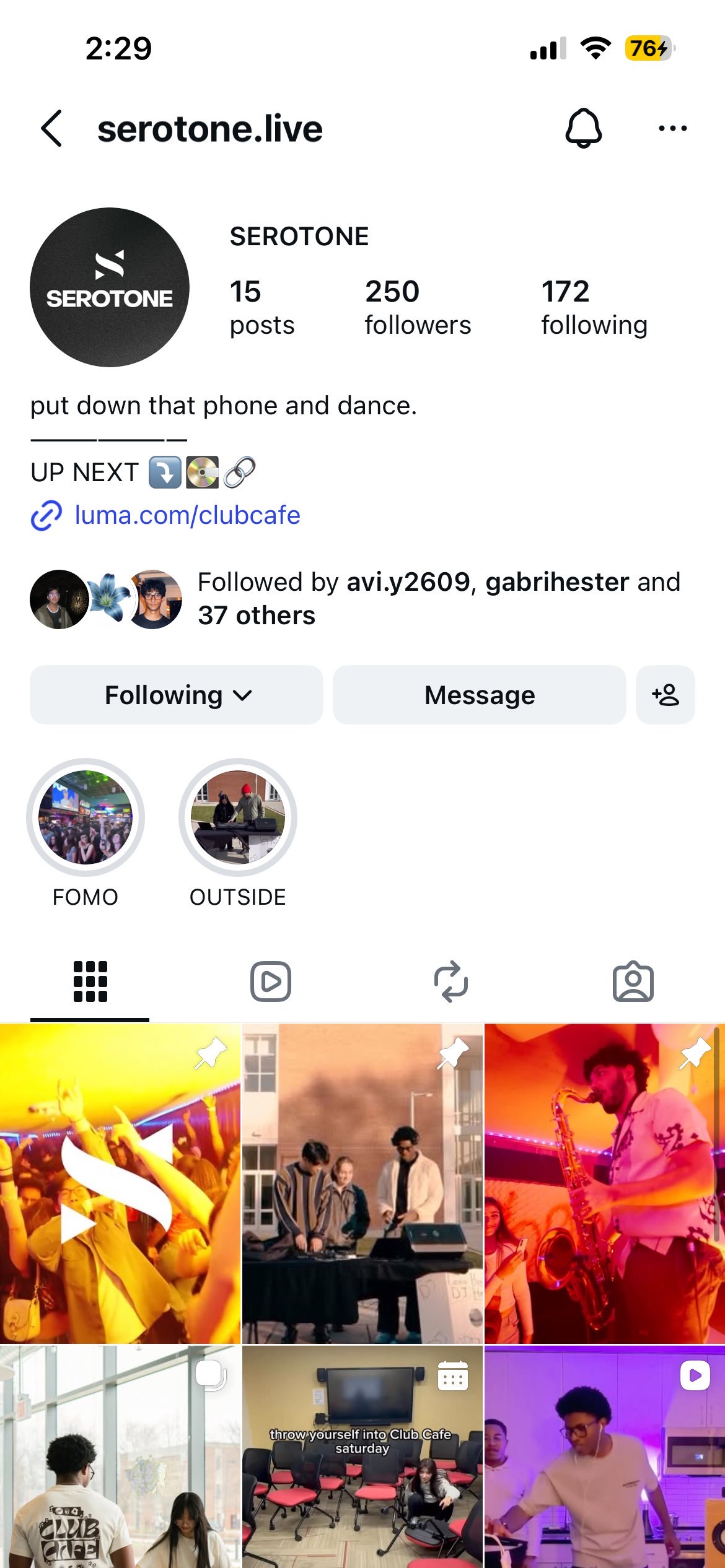
I aligned every online page and piece of media to one moodboard so nothing felt disconnected.
Visual Identity
The name comes from serotonin, where “tone” stands for both the music and the shared feeling that brings everyone out. Keeping this visual identity consistent with this energy meant a flyer, story post, and the site needed to always feel unified.
After my first executed campaign:
11.8K
Accounts reached,
off ~300 followers
33.3K
Total content views,
2× the last campaign
61.4%
Of new followers, in
ticket clicks from the site
Reach and follower figures from Instagram Business Analytics; ticket-click attribution from site link tracking.
Realizing the room's problems came from spatial layout, not the music, meant building every fix into AfroFusion After Dark's plan.
Fixing the Venue
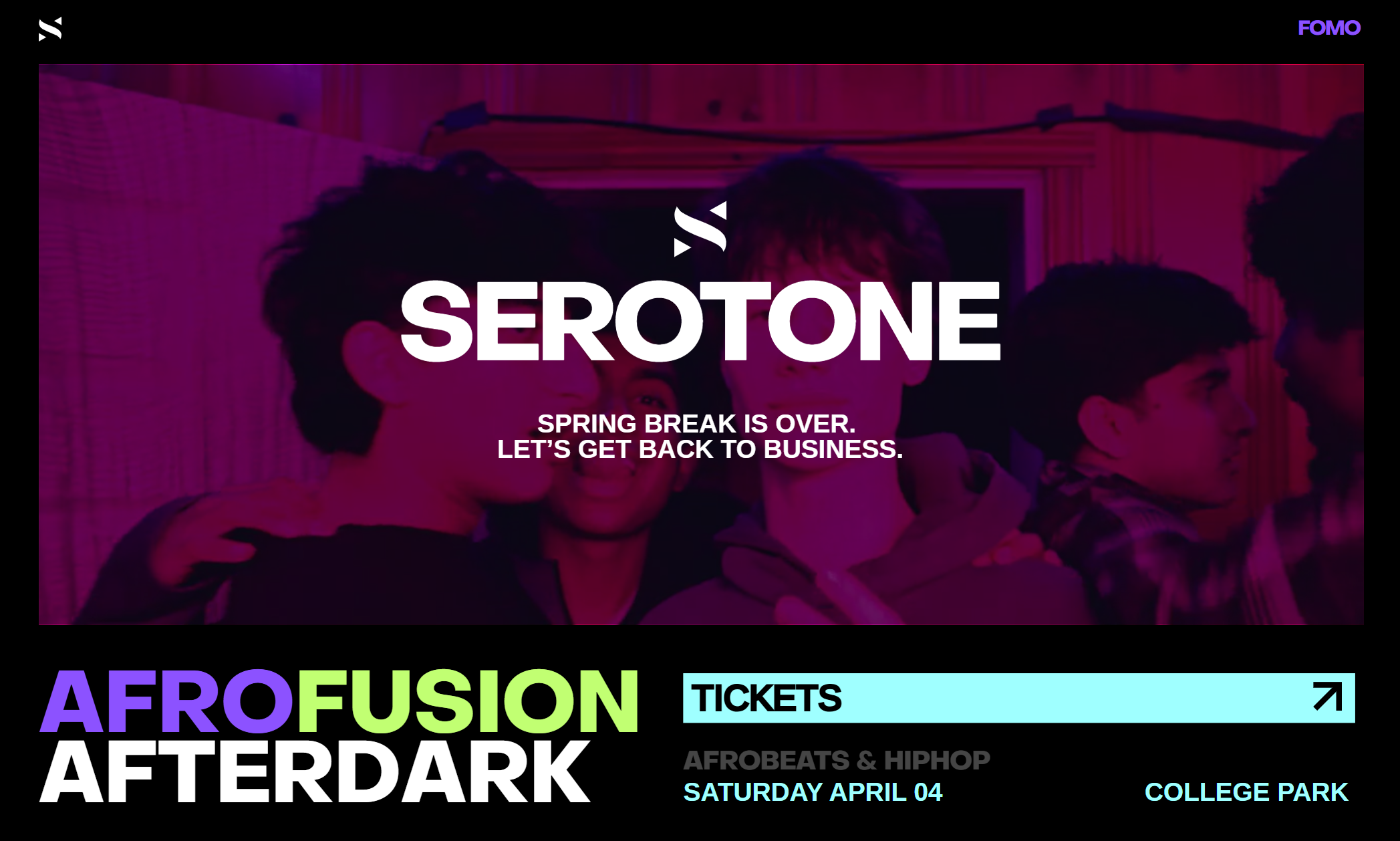
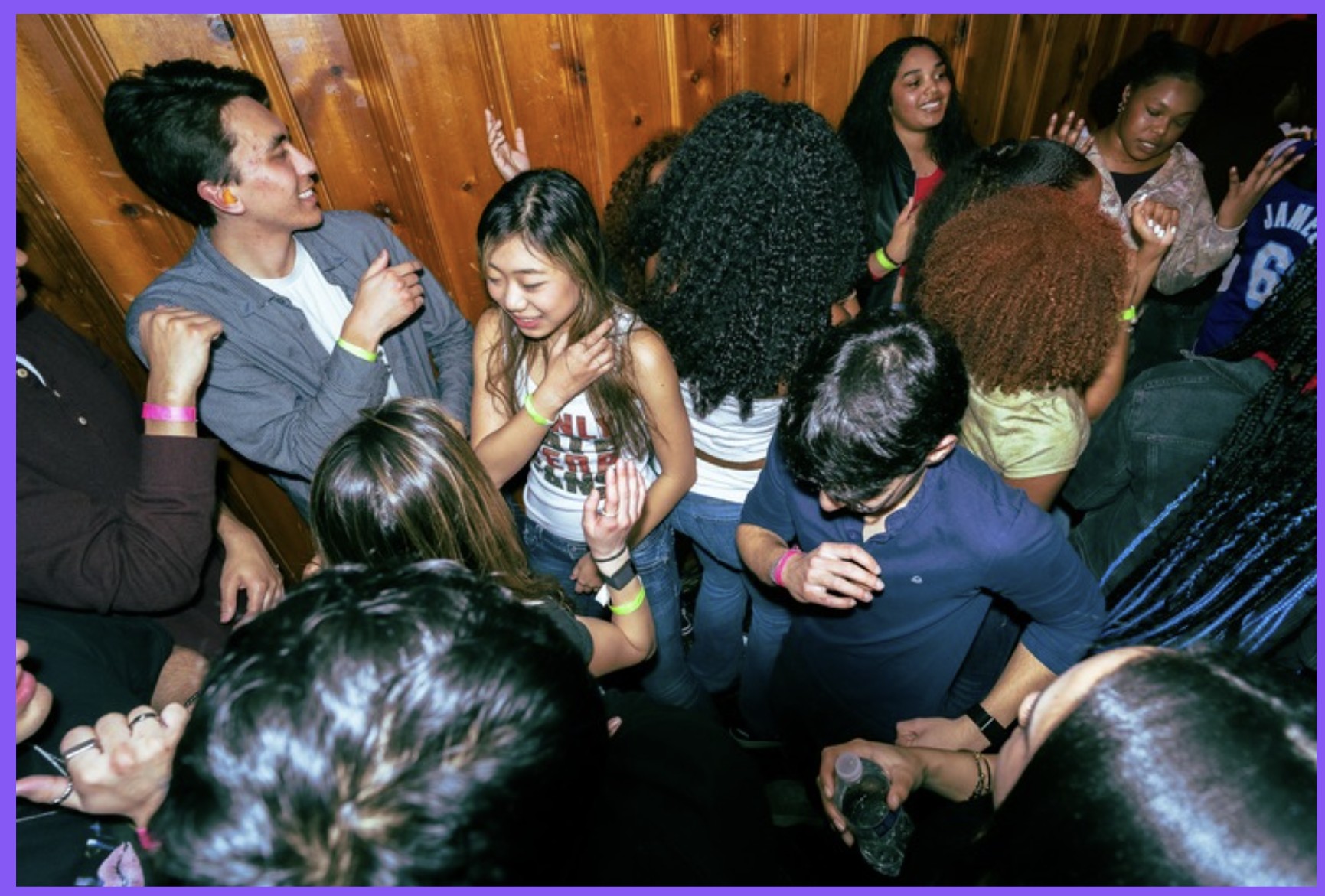
The first Serotone party I went to had great energy, but the physical room itself kept getting in the way. AfroFusion ↗ was the first event where I could implement solutions for the issues I experienced.
Dark corners & cobwebs → lit and given a job
Sticky, unlit beverage station → fast jug pours, real lighting
Dirty walls, no theme → clean requirement, real branding
No water, slow line → separate water cups, jug pours
Unlit entrance stairs → lit before you even hear the music
Nothing to do but dance → a glow-in-the-dark activation
Coats dumped on a dark couch → a real coat check
No directional signage → wristbands and directional cues
Results of the venue fixes:
33%
In-venue purchase
growth per attendee
61%
More in-venue transactions
per attendee
<8%
Of in-venue revenue was cash,
down from ~24%
Sales figures from venue POS records.
Watching Serotone's old setups blend into the background meant building a marketing suite, then bringing DJ tours straight to the bar lines.
The Marketing Kit & Activations
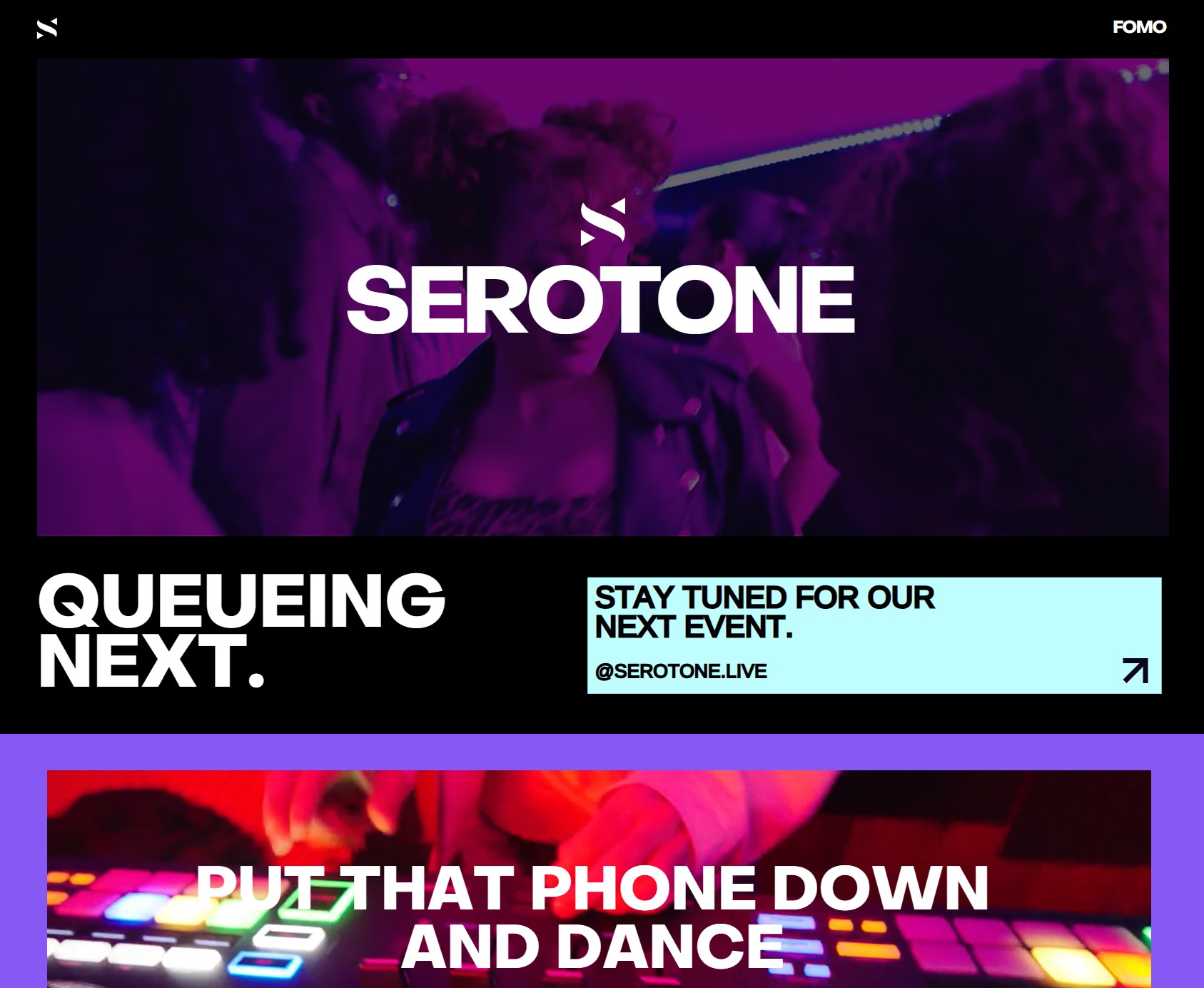
Before I joined, Serotone's DJ tours ran off folding tables set up in different spots around campus with nothing on them that said Serotone; I built out a marketing suite for our tabling setups to give us a consistent look.
My idea for the Nighttime DJ Tours came from watching where people already were; standing in line outside the bars downtown with nothing to do but wait. We brought the DJ tour right outside the line; this turned into relationships with the venues themselves because we were keeping the crowds entertained before they even walked through the door.
After
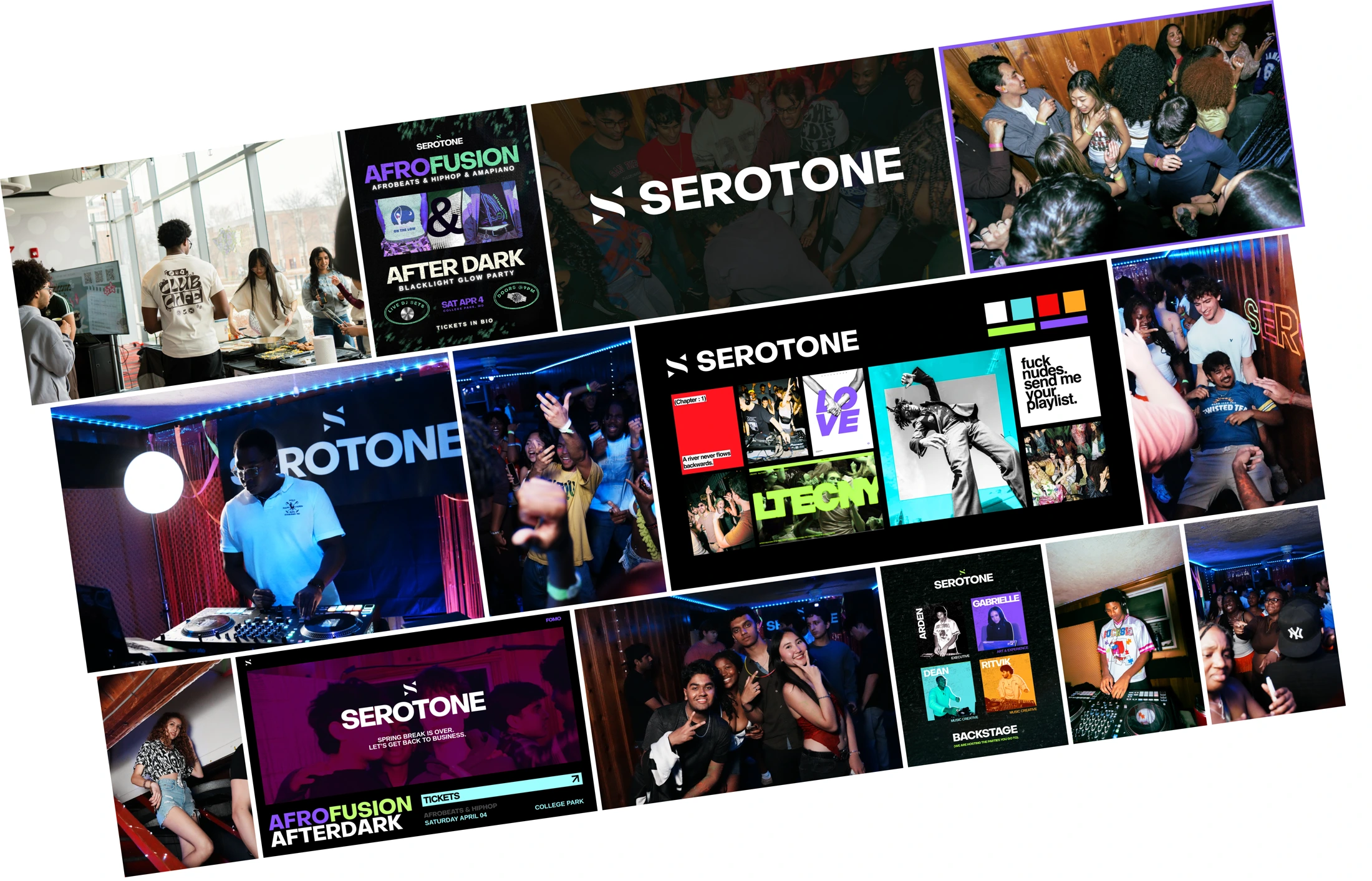
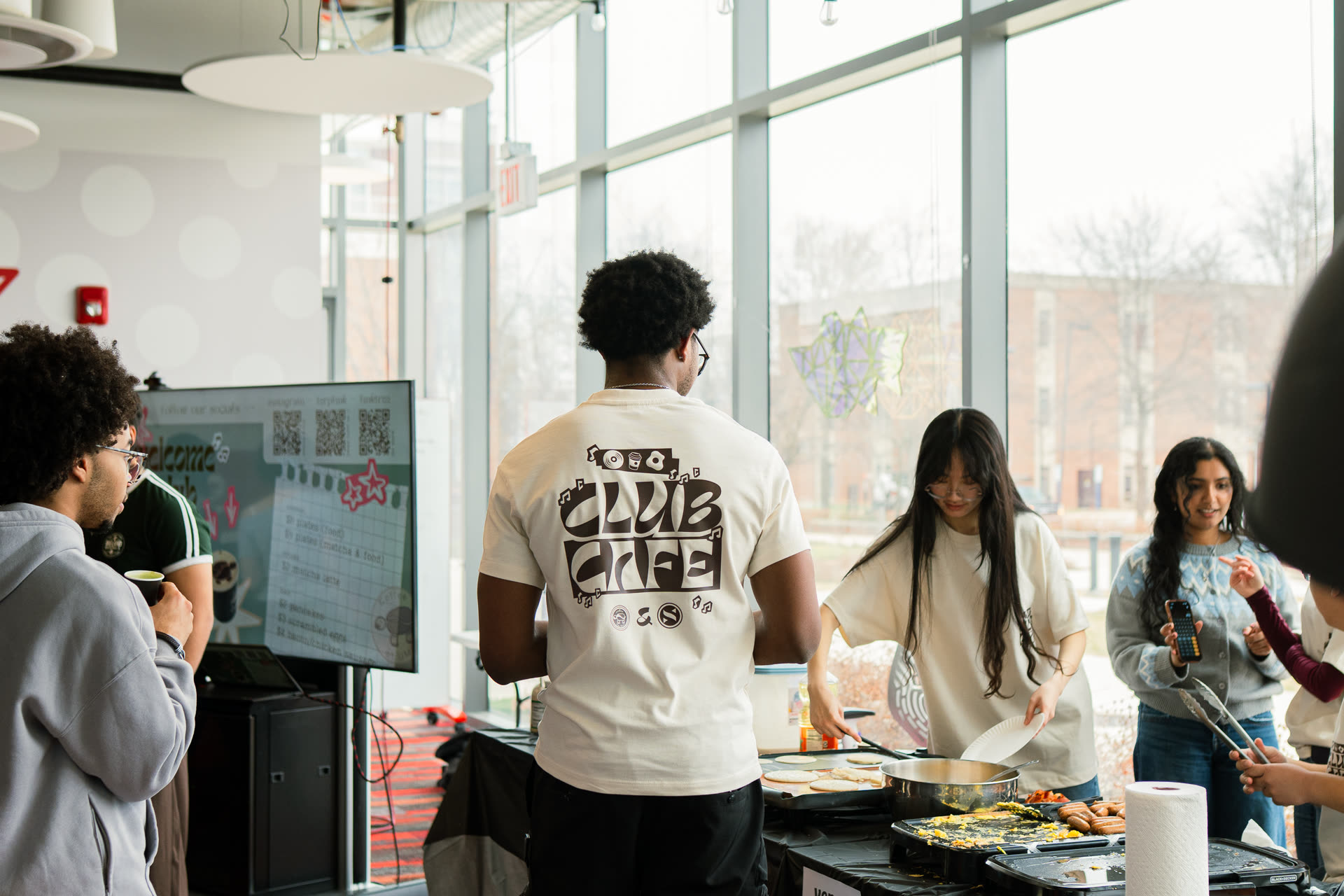
I mirrored the physical room's energy into the graphics, at AfroFusion After Dark and Club Café.
Featured Events
This established identity caught the attention of The Black Explosion, who profiled our work, which you can read more about in the case studies below.
Four years of accumulated skills landed in one place.
Reflection
Bringing four years together.
Serotone became the culmination of my college experience; I pulled from my time at SEE to handle venue and equipment logistics, applied my work from the Petal Project to pace our marketing schedules, and used my spatial design background to map out the physical event flow. Applying all of those skills purely for the love of building something with my friends was one of the most fulfilling parts of my senior year.
A lasting community footprint.
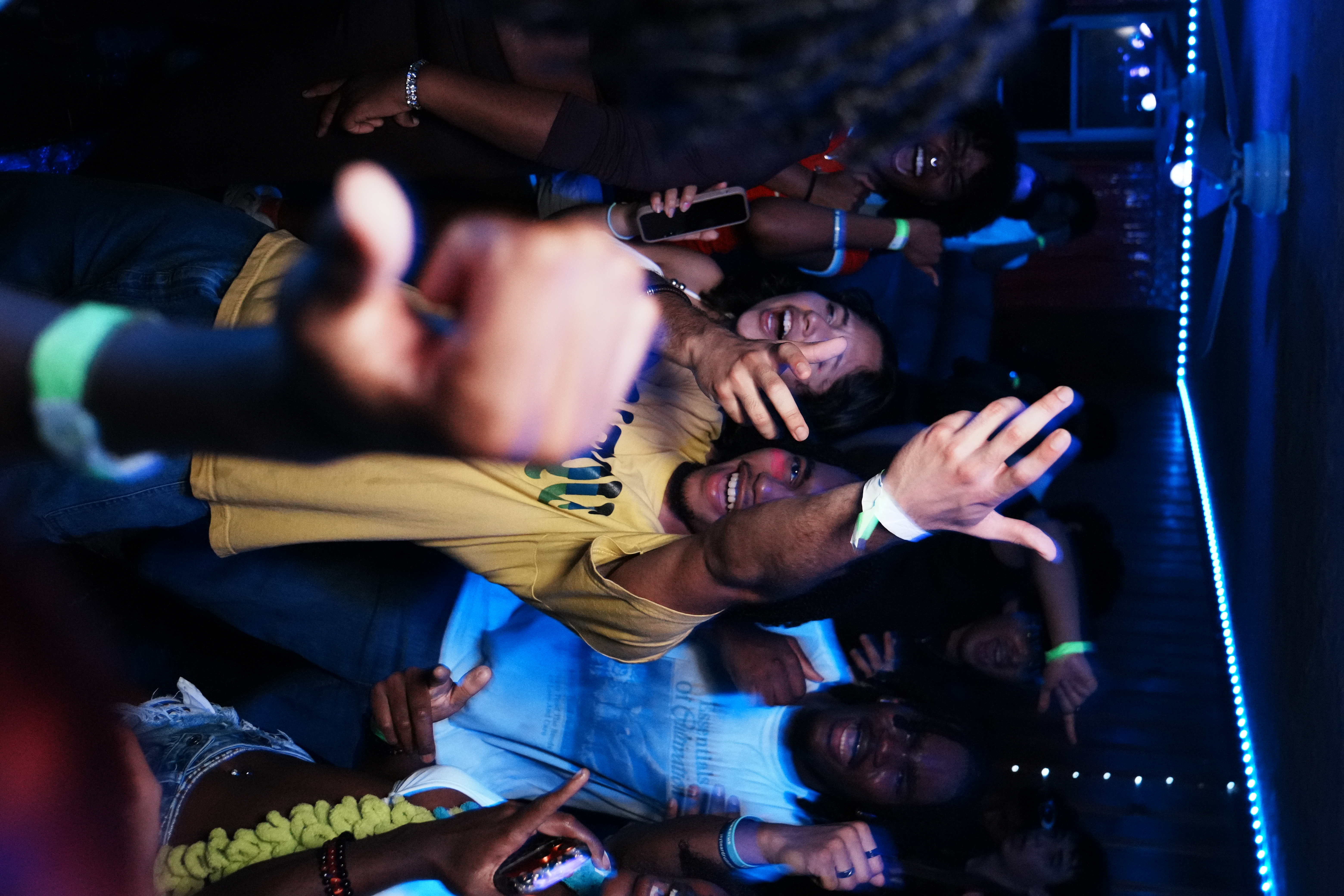
Walking around the space after setting it up felt completely different, as the environment was calmer, the photos looked amazing, and people could focus entirely on the music. In just one year, we built enough traction that the brand is still growing into year two, even after graduating.
Designing for a space I doubted.
I do not like dancing, so going to the early Serotone parties was a tall ask; still, I loved watching people have fun and wanted to support my DJ friends. Being there firsthand made me realize how much the venue experience could be elevated, as the music was incredible, but the physical environment needed serious structure so guests could actually enjoy themselves instead of worrying about minor details.