Experiential · Furniture Design · Craft

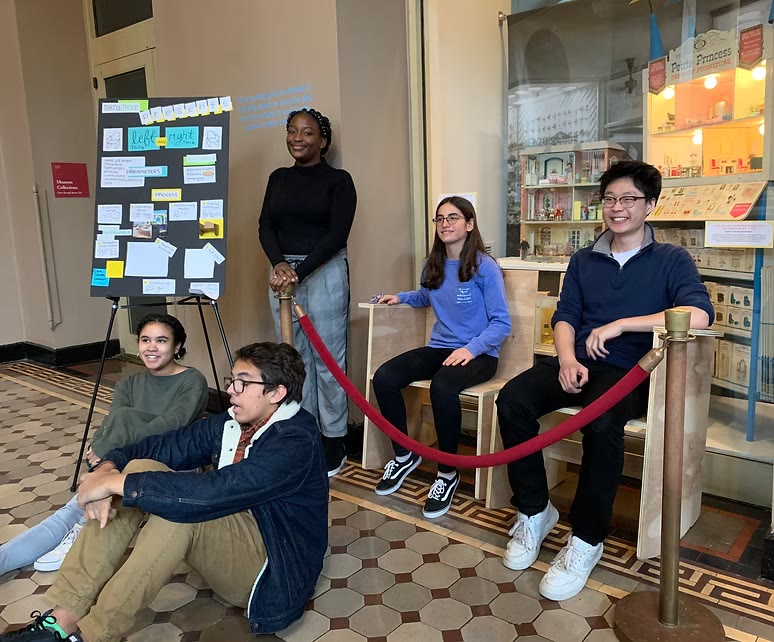
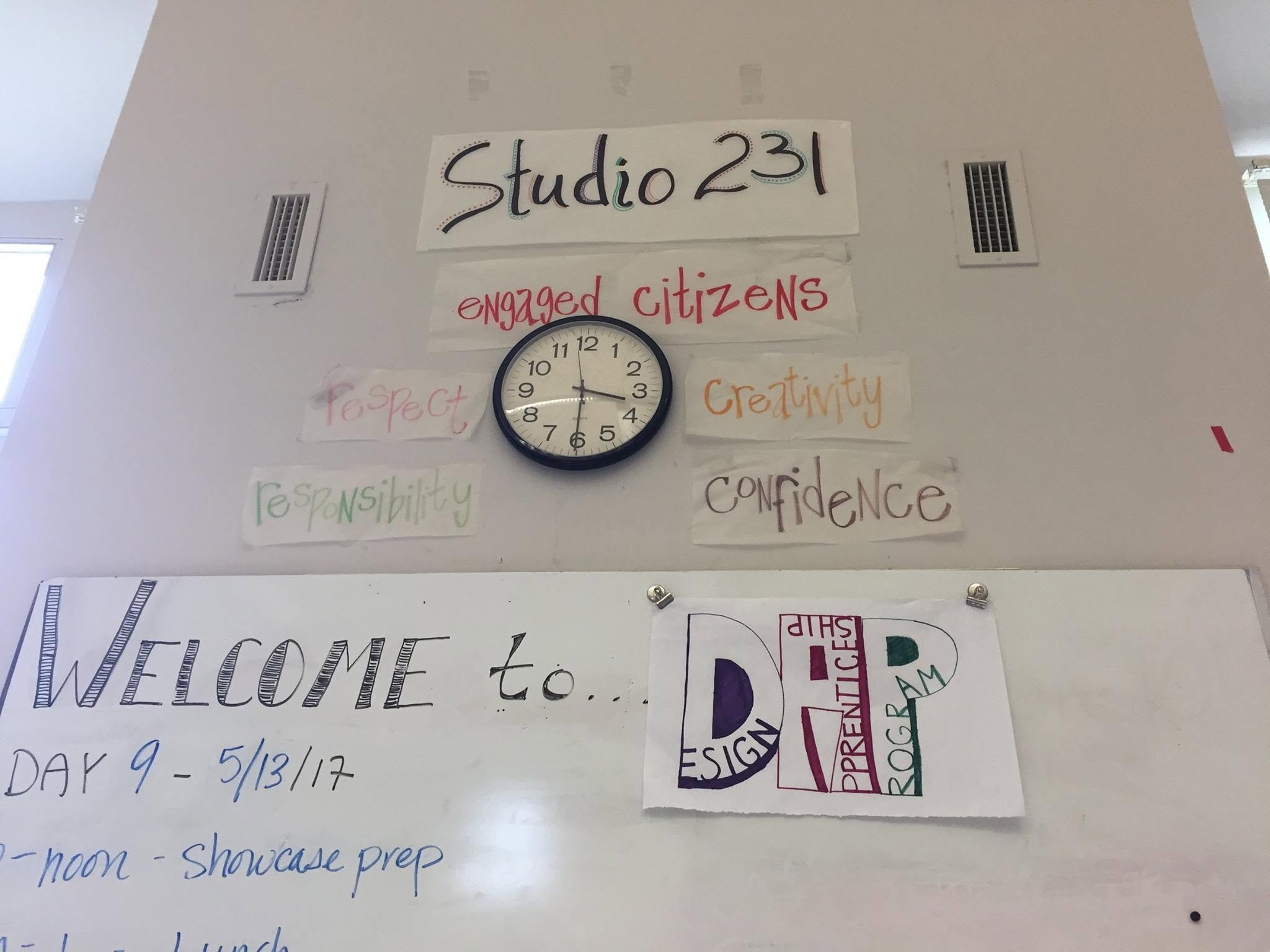
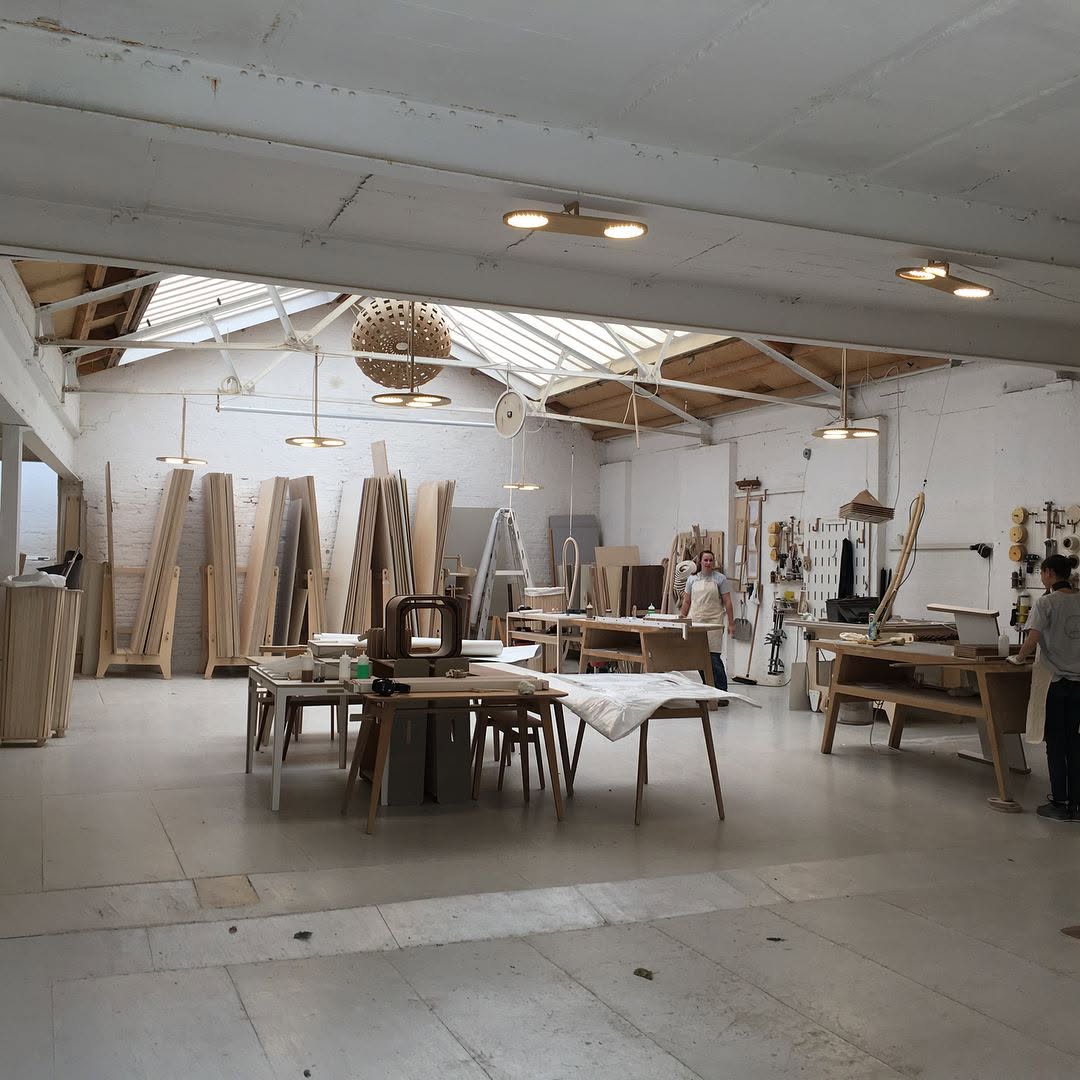
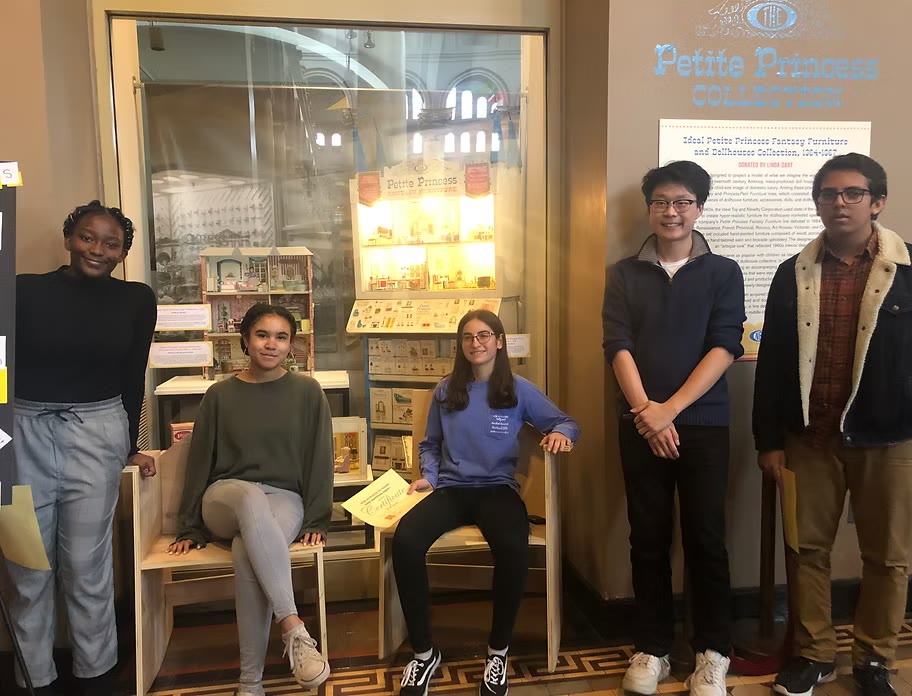
Working out of Studio231 at the National Building Museum, twenty-four of us were picked, split into small teams, and asked to design, build, and present modular seating for museum visitors.
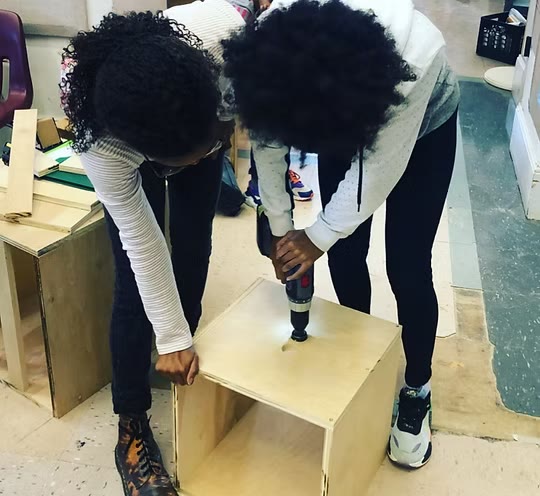
I came in with a graphic design background; by the end I'd used a table saw, a biscuit joiner, and more wood glue than I'd ever touched a physical material for a school project before.
Over eight weeks we were mentored by graphic designers, engineers, and residential planners.
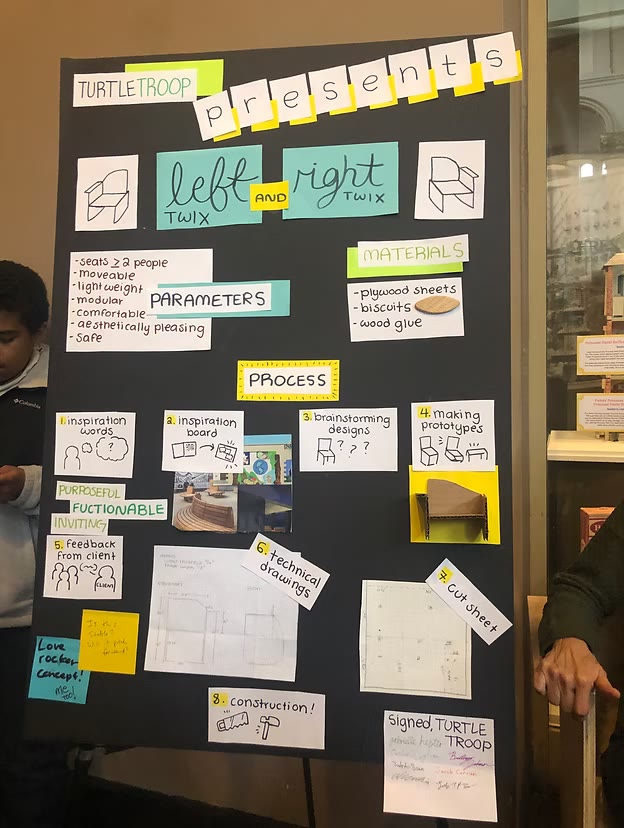
After initial guidance from these experts, I helped shape and cut the physical chair, and I was the one who illustrated our final presentation board.
Nobody had thought about the person standing in an exhibit holding a one-year-old on their hip for twenty minutes, or a nursing mother needing a calm space to breastfeed.
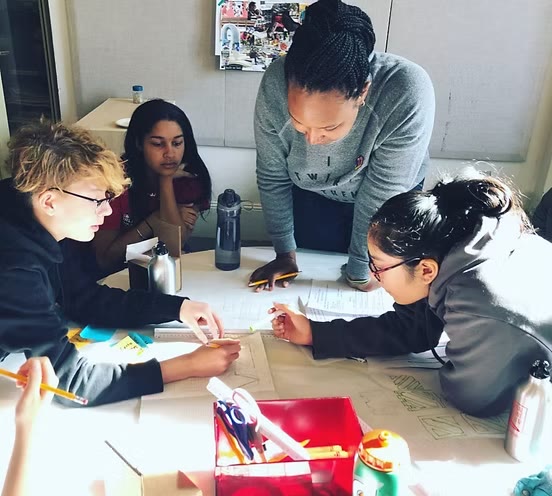
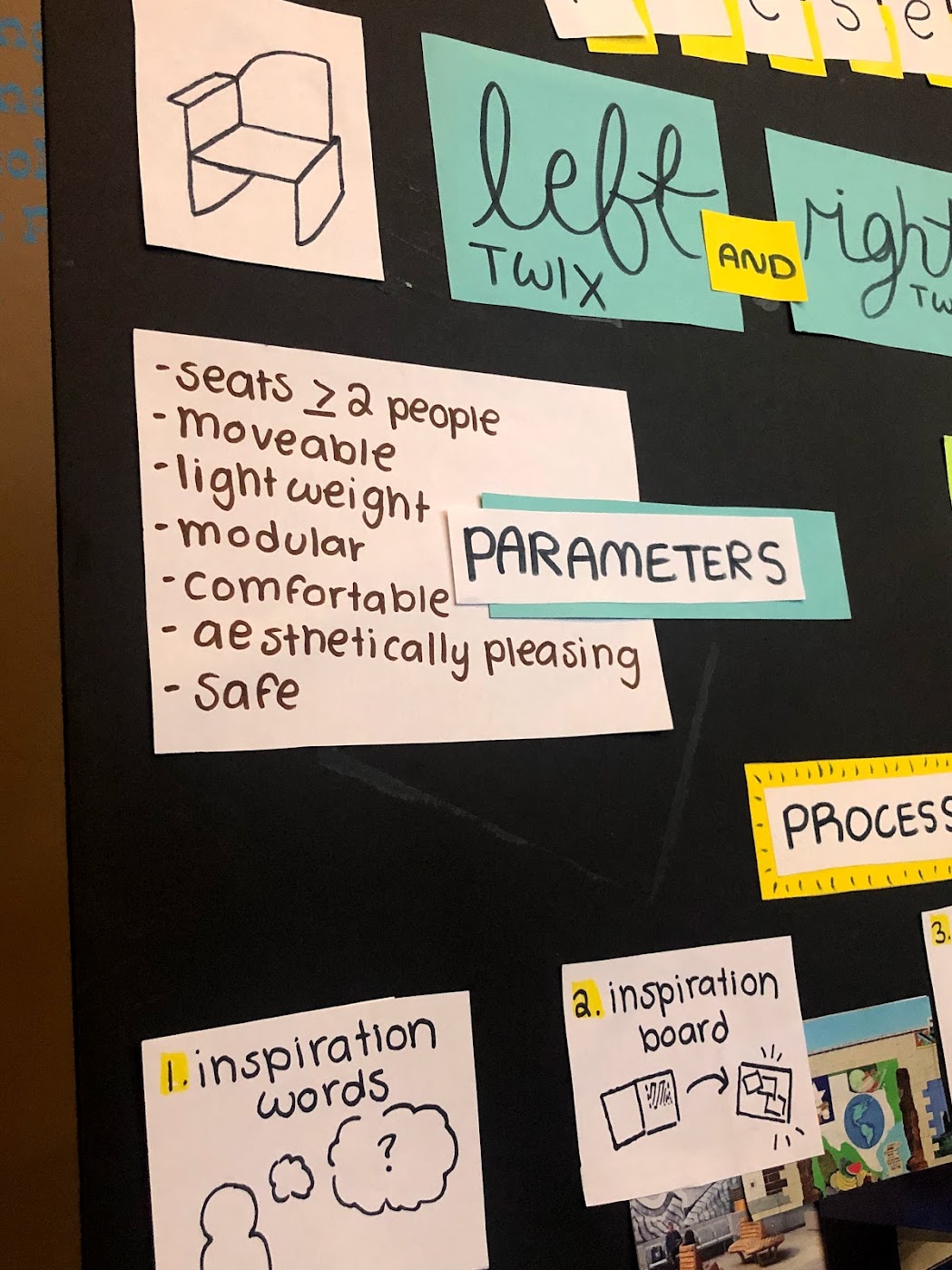
We started with sketching and talking through who we were actually designing for, then had to translate that into something that could survive being cut, glued, and sat in.
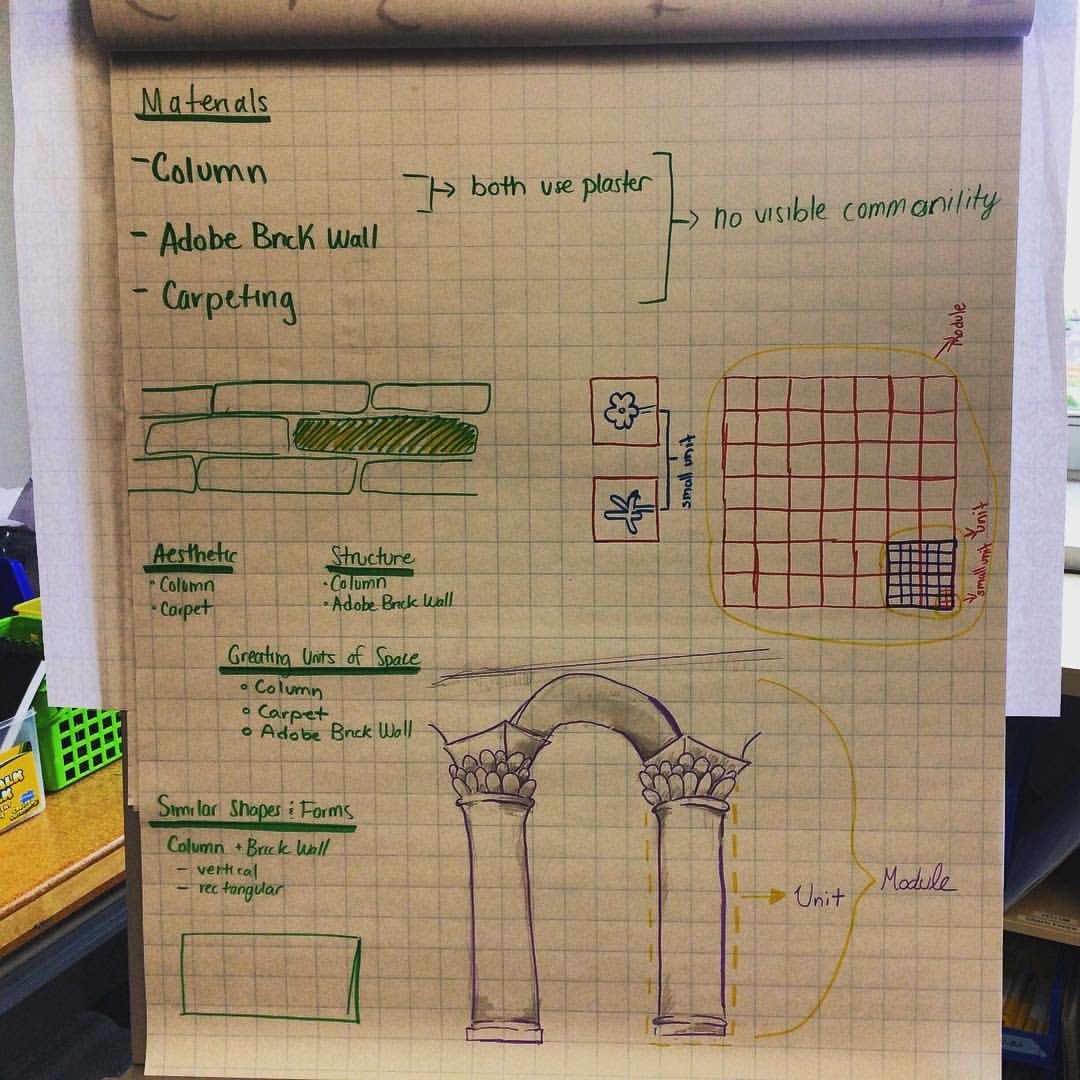
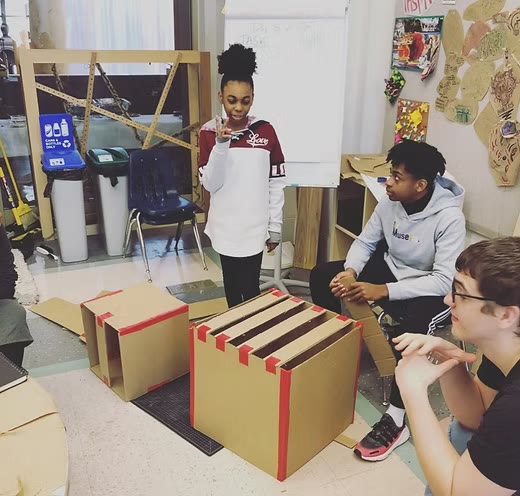
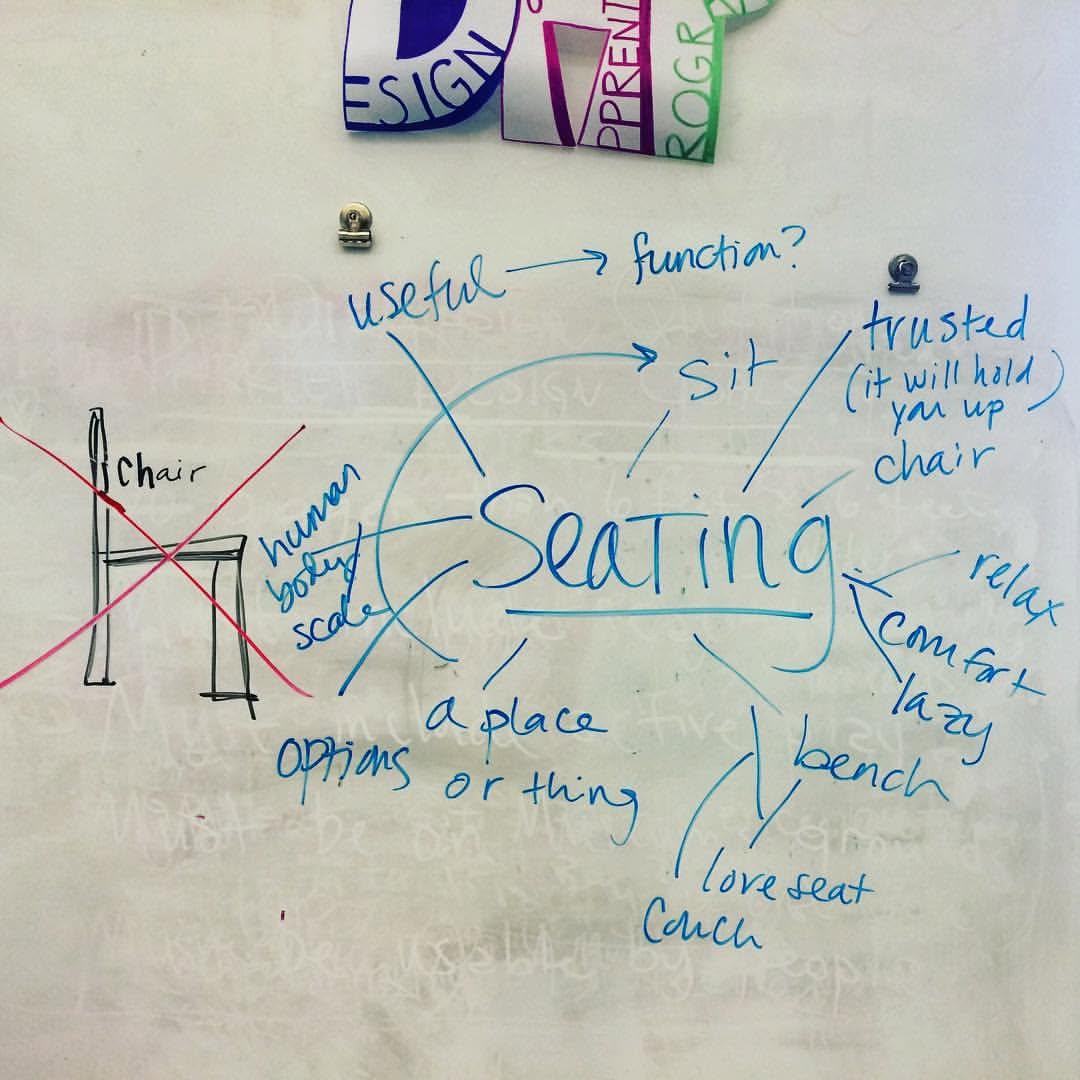
Before any of us sketched a chair, we spent a session just building things (stacking, connecting, and taking apart whatever modular pieces we had on hand), just to get our heads around what modularity actually felt like. As we worked we wrote down words and phrases that came to mind, so we had a shared vocabulary before we tried to design anything real.
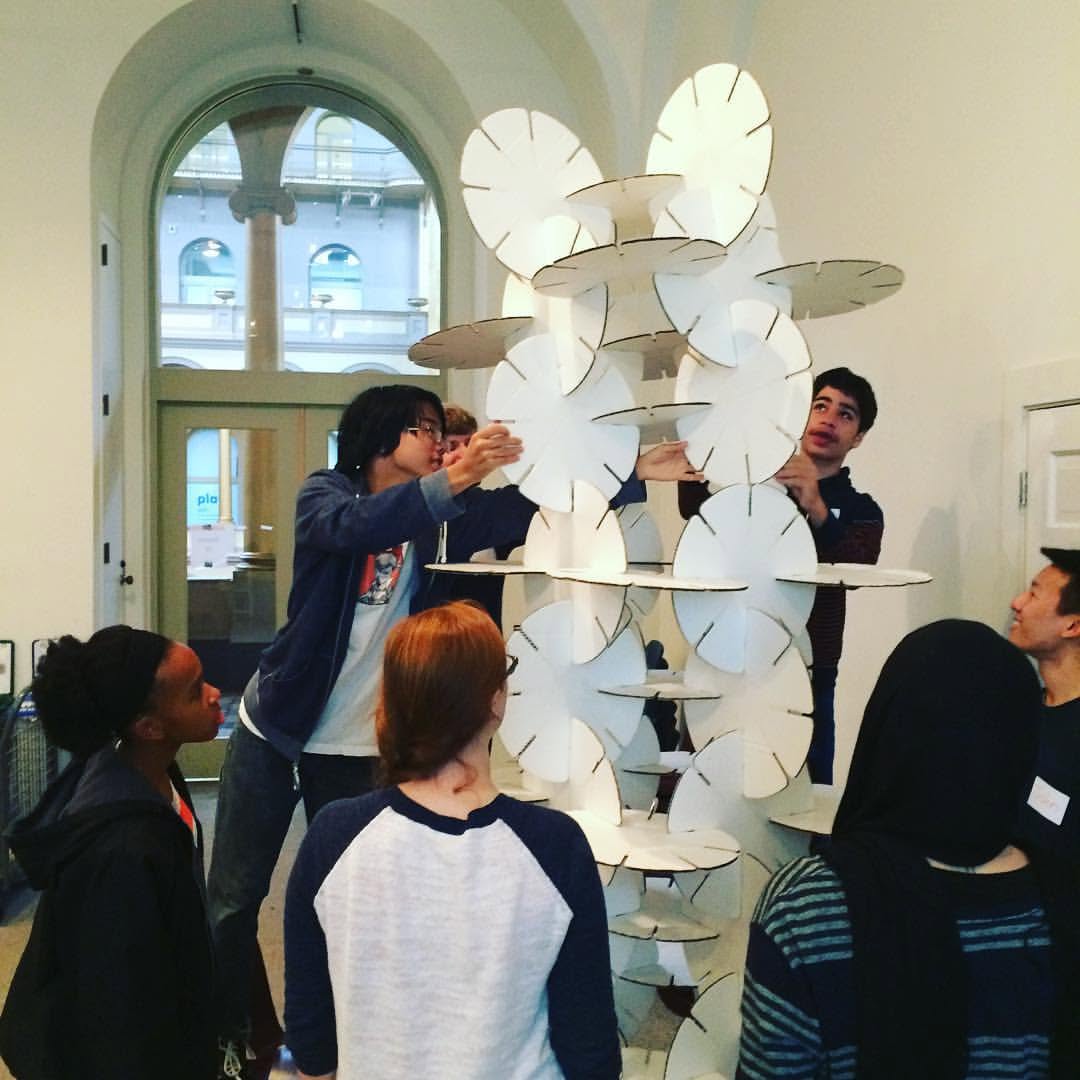
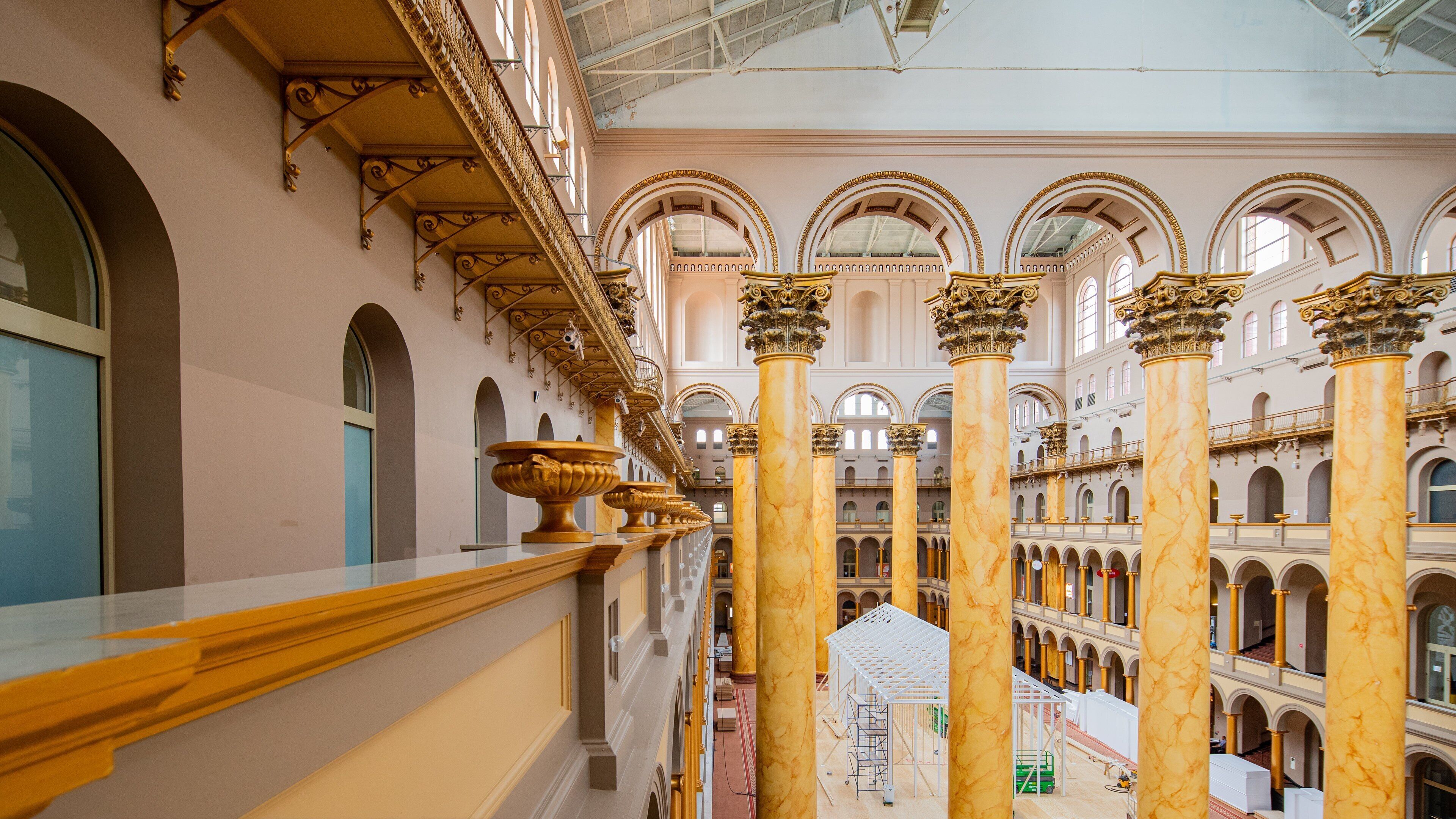
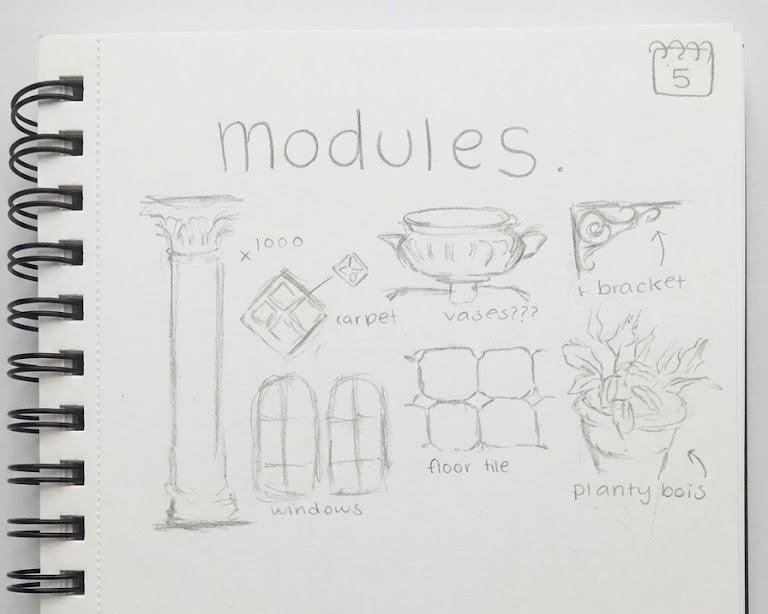
From there we walked the museum itself and looked at its own pillars: how they repeated, where they joined, what was actually carrying the load.
We sketched what we saw and turned those observations into quick diagrams, which is where the idea of a chair built from repeating, joinable pieces started.
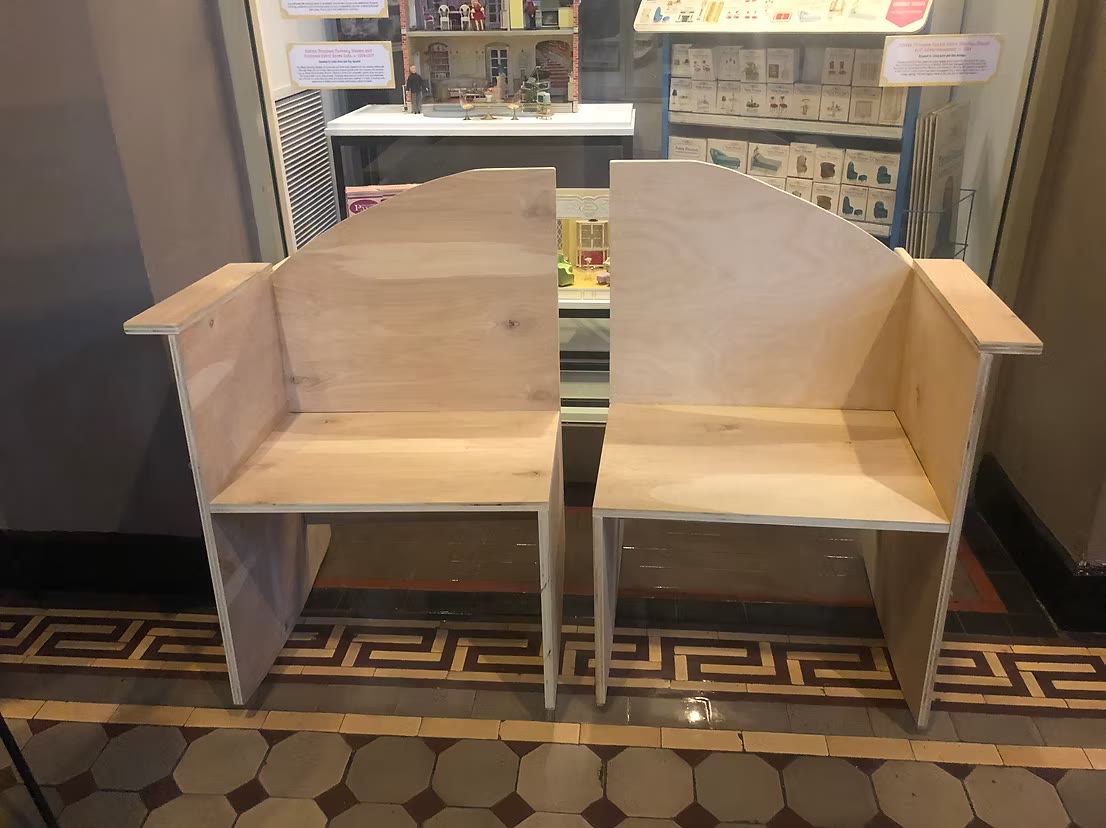
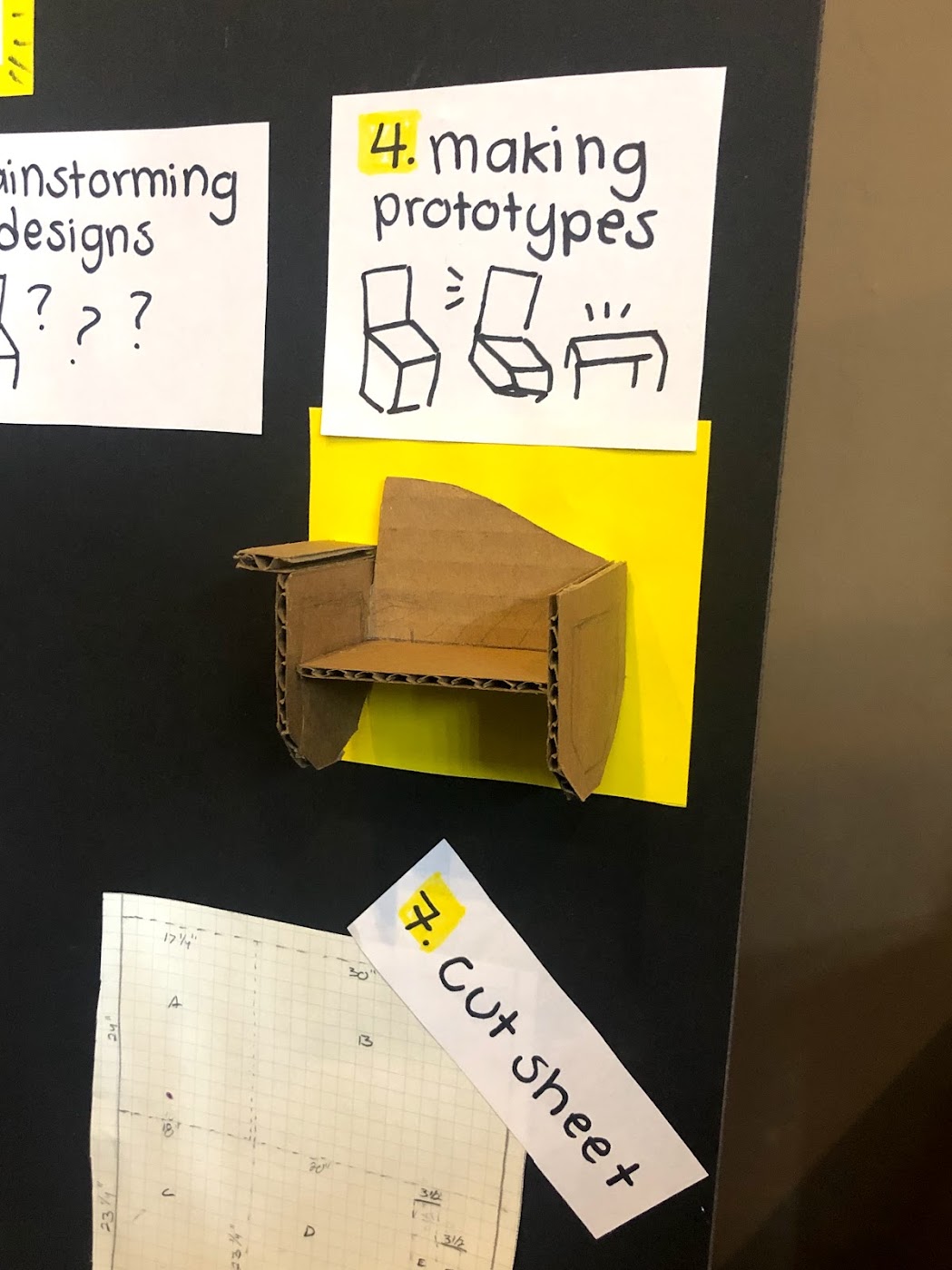
Planning the faces of the seating meant thinking in joints and grain direction; we prototyped in cheap material first, checked that the rocking motion actually felt calming instead of unstable, then moved to the real wood once we trusted the shape.
Before any wood was cut, we mapped every piece onto a cutsheet, making sure to account for the notch at the back of the chair needed to stabilize the rocking motion.
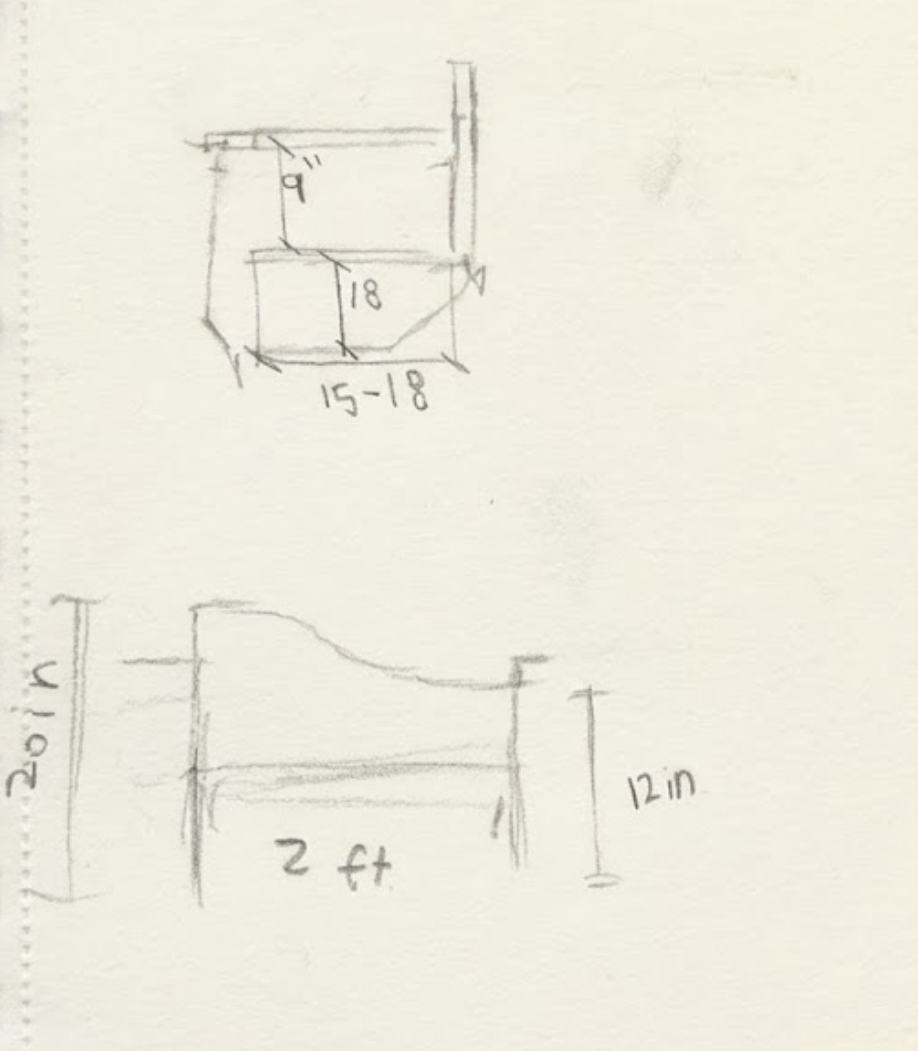
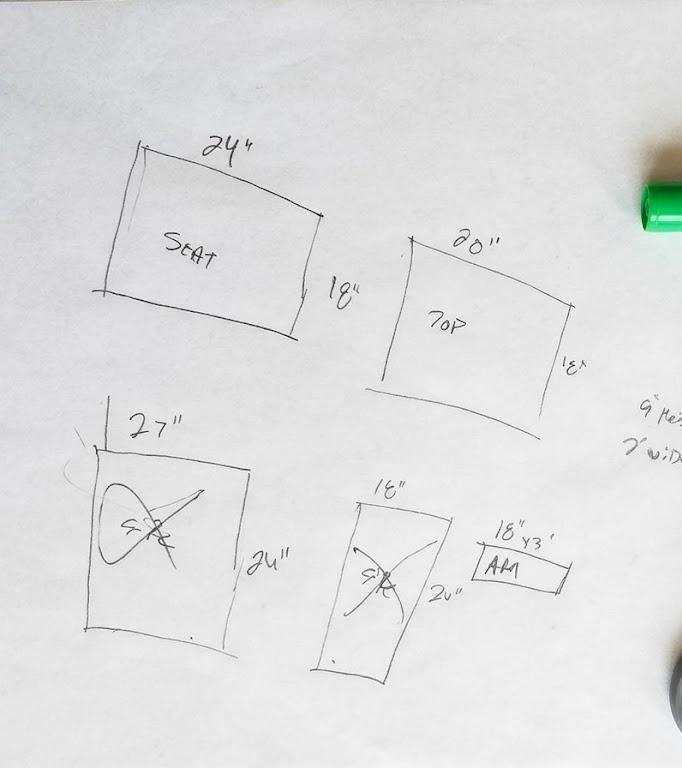
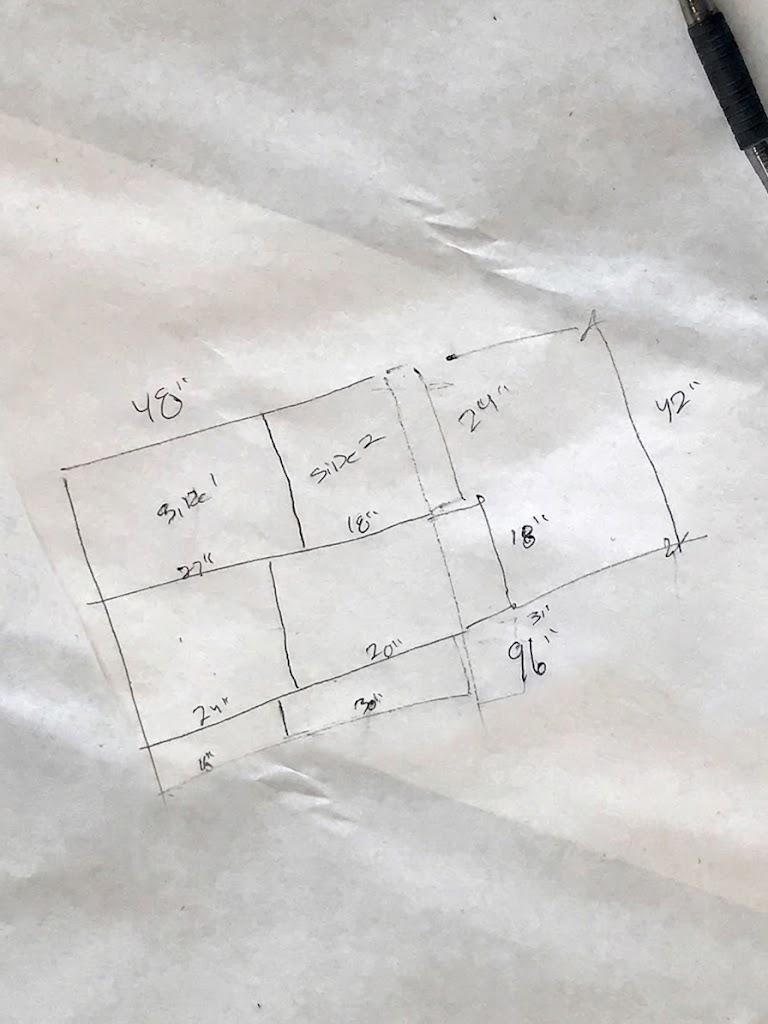
For the final build we used wood glue and biscuit joints instead of visible hardware, which meant every seam had to be measured and cut right the first time (there's no hiding a bad joint under a screw head).
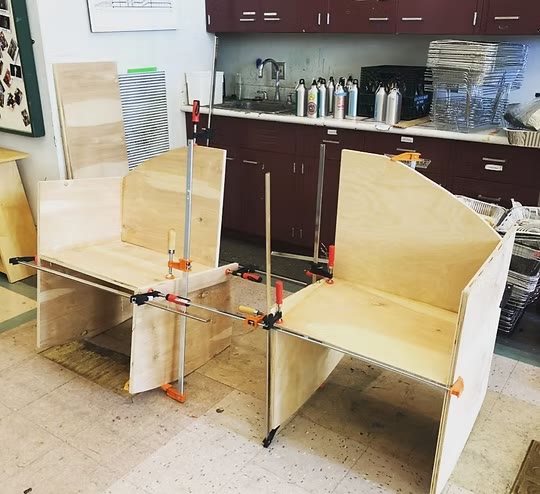
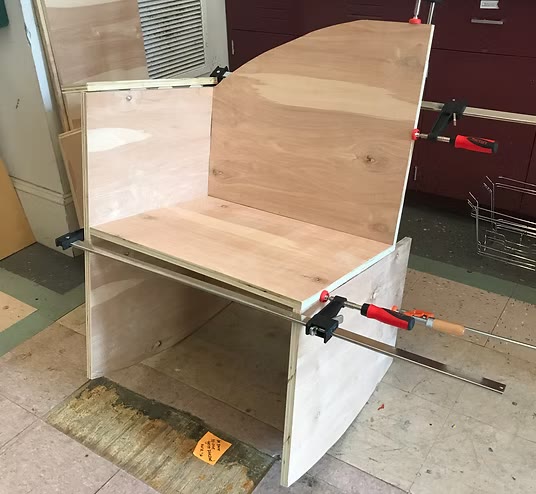
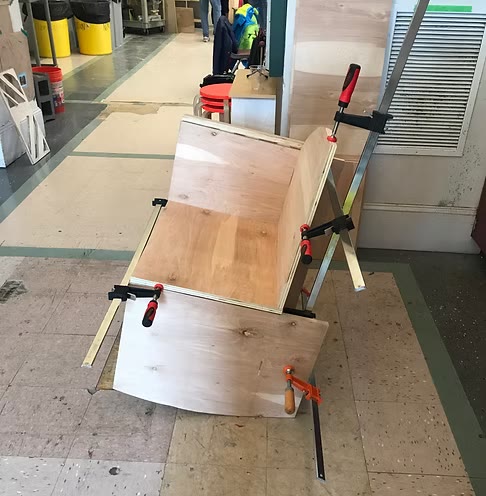
Binding glue and wooden biscuits together.
We placed the finished chairs directly in front of the museum's dollhouse exhibit, where kids already gravitated on their own, so the seating met their caregivers exactly where they already were.