Brand · Advocacy · Experiential · 2024 – Ongoing
At the end of my freshman year, when I had officially left my relationship, I was watching Maid on Netflix. There's a scene where one of the characters says it: on average, a person goes back to their abusive relationship seven times before leaving for good.
I had gone back multiple times, with associated feelings of shame and embarrassment. Hearing that statistic said out loud didn't fix anything, but it made me feel less alone in my feeling.
In that moment, I realized, that same feeling is what I wanted to give people. Not specific information or a hotline, but a feeling of not being alone.
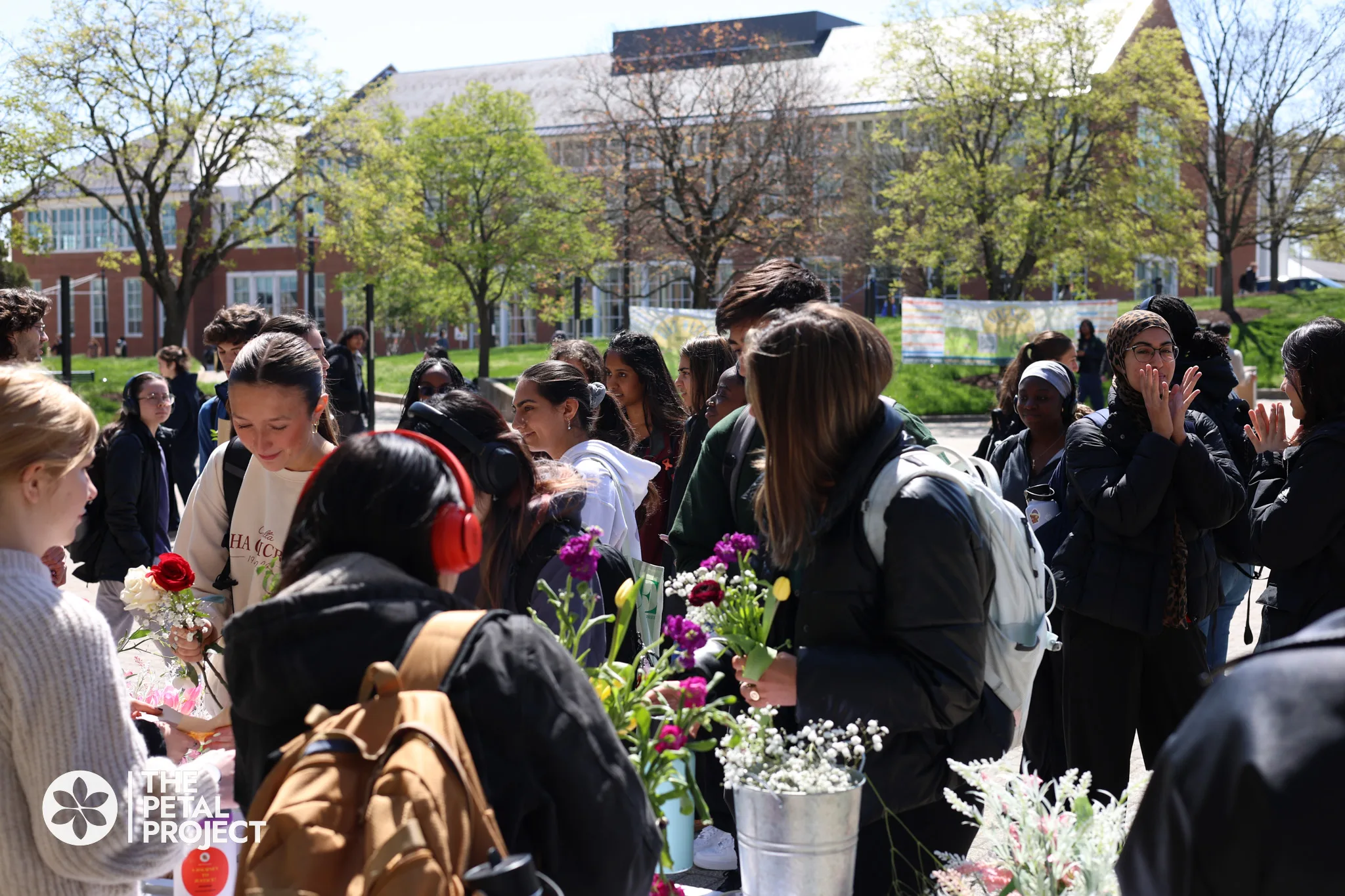
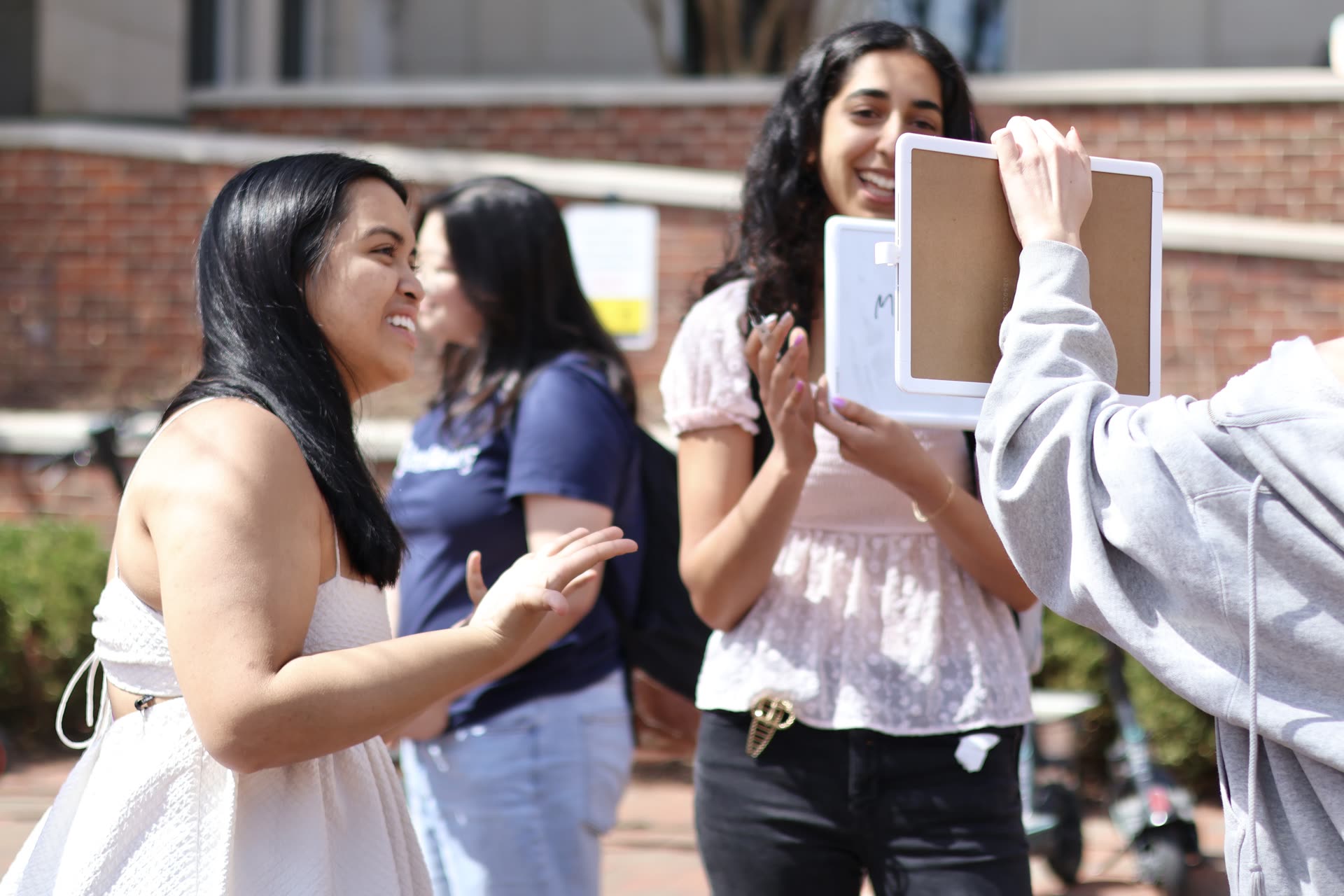
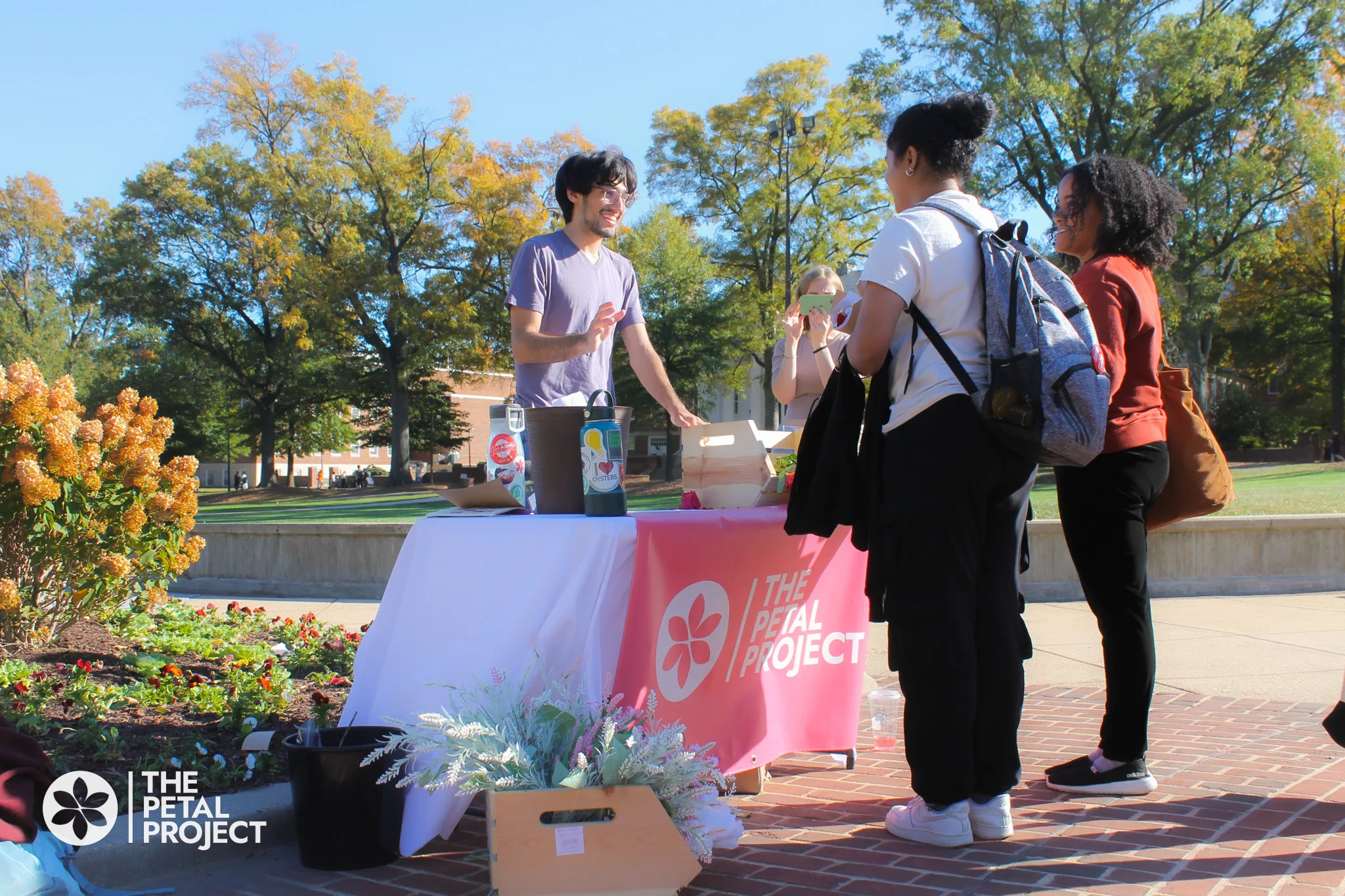
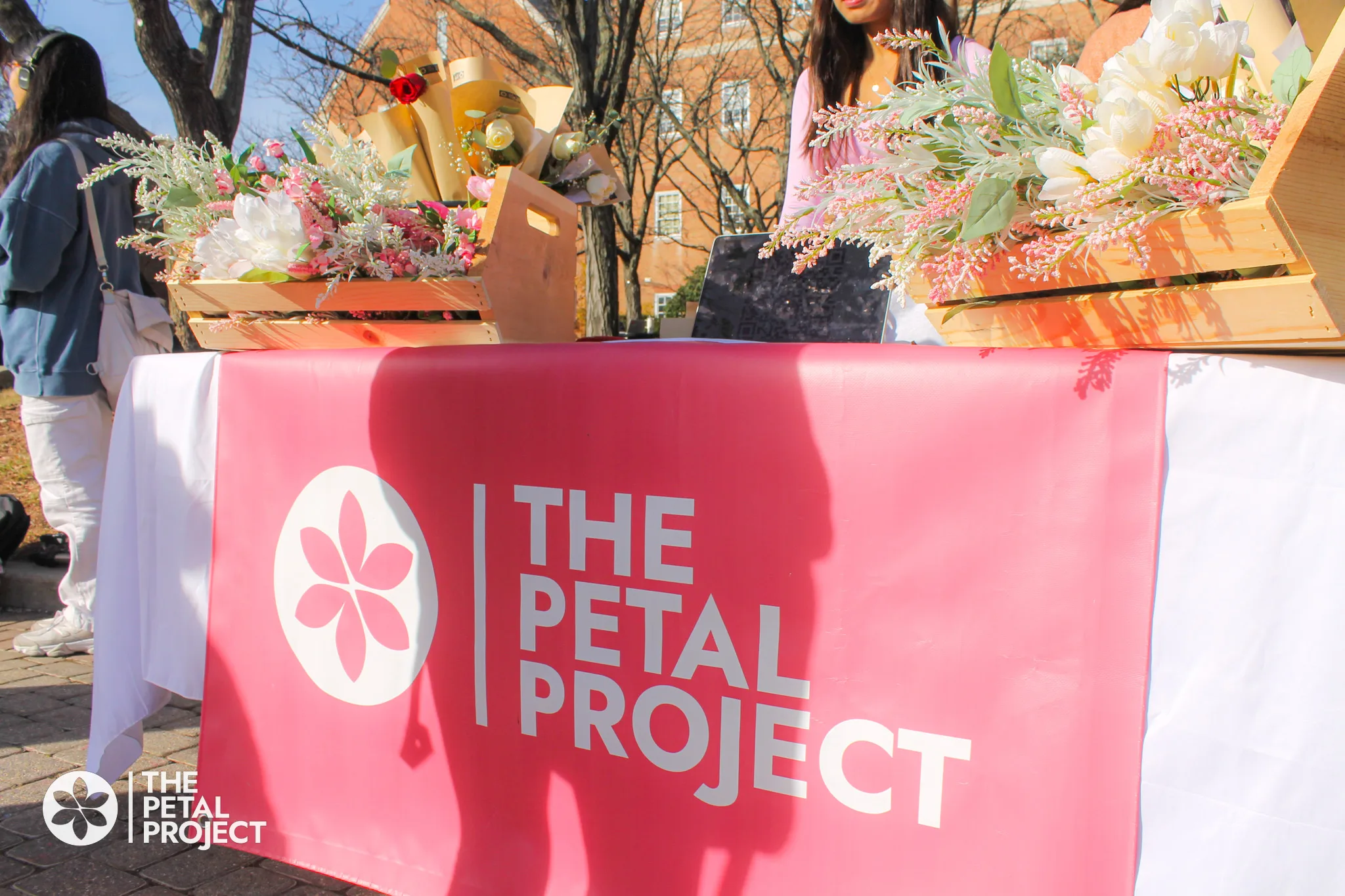
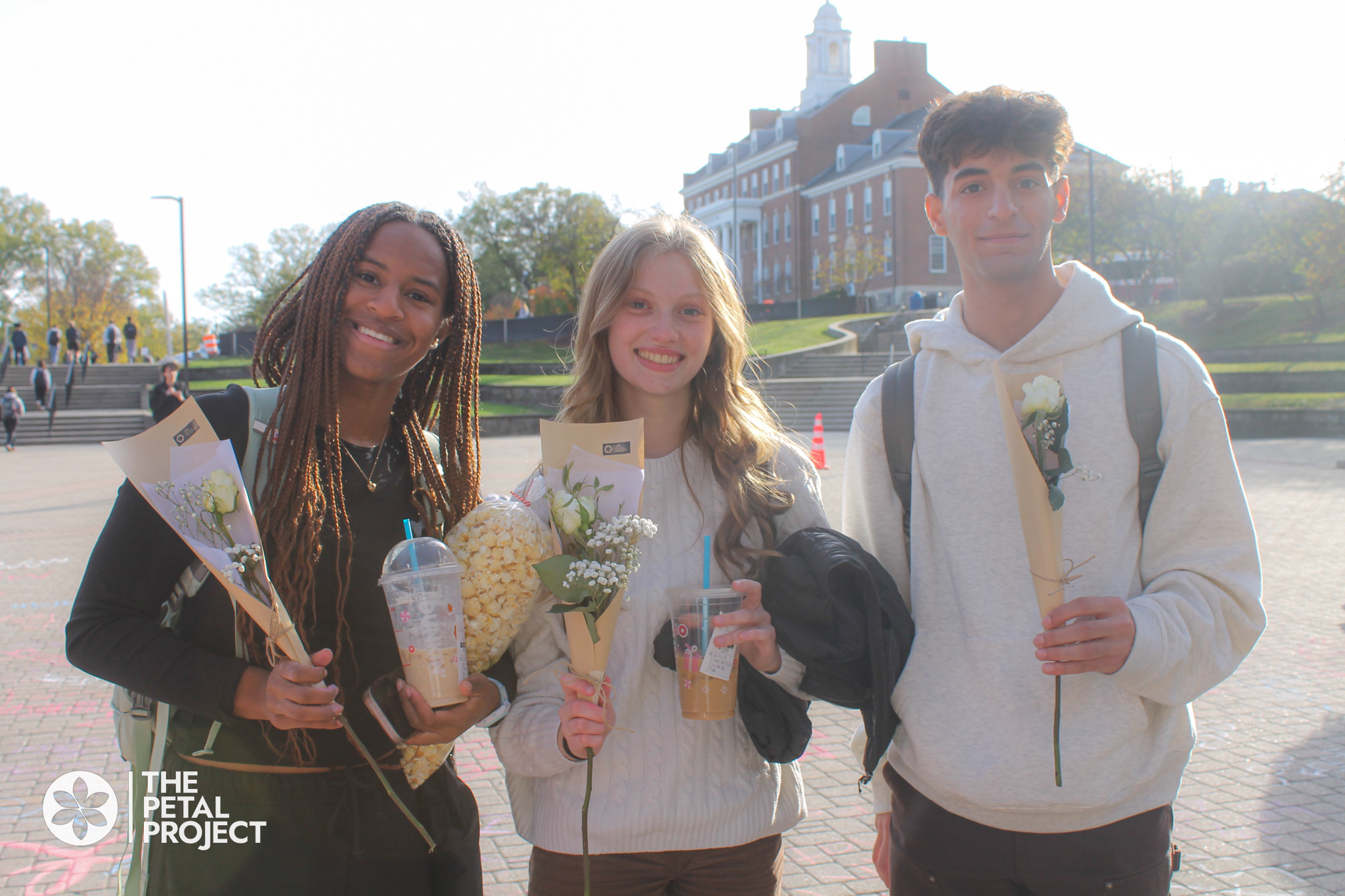
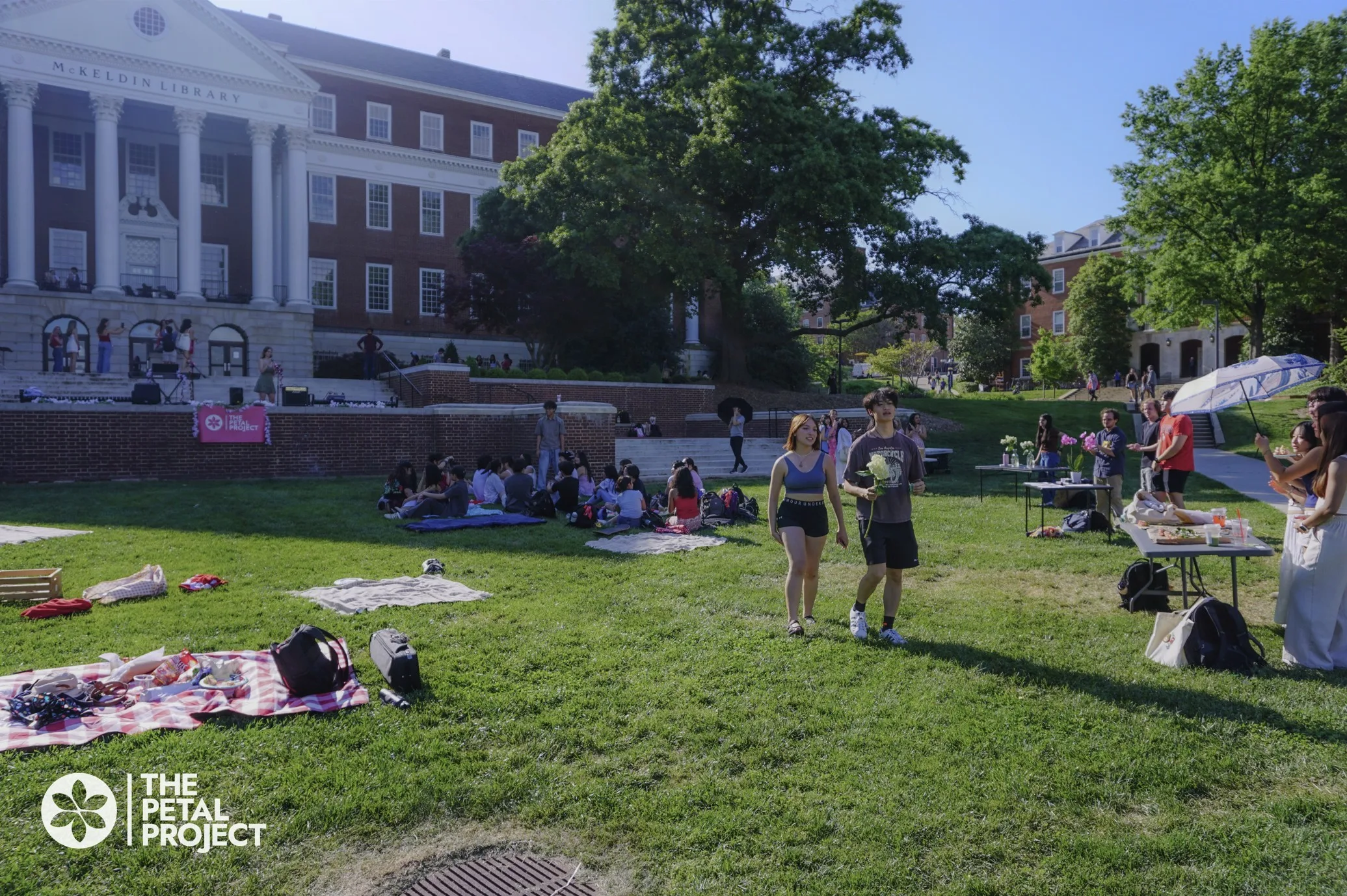
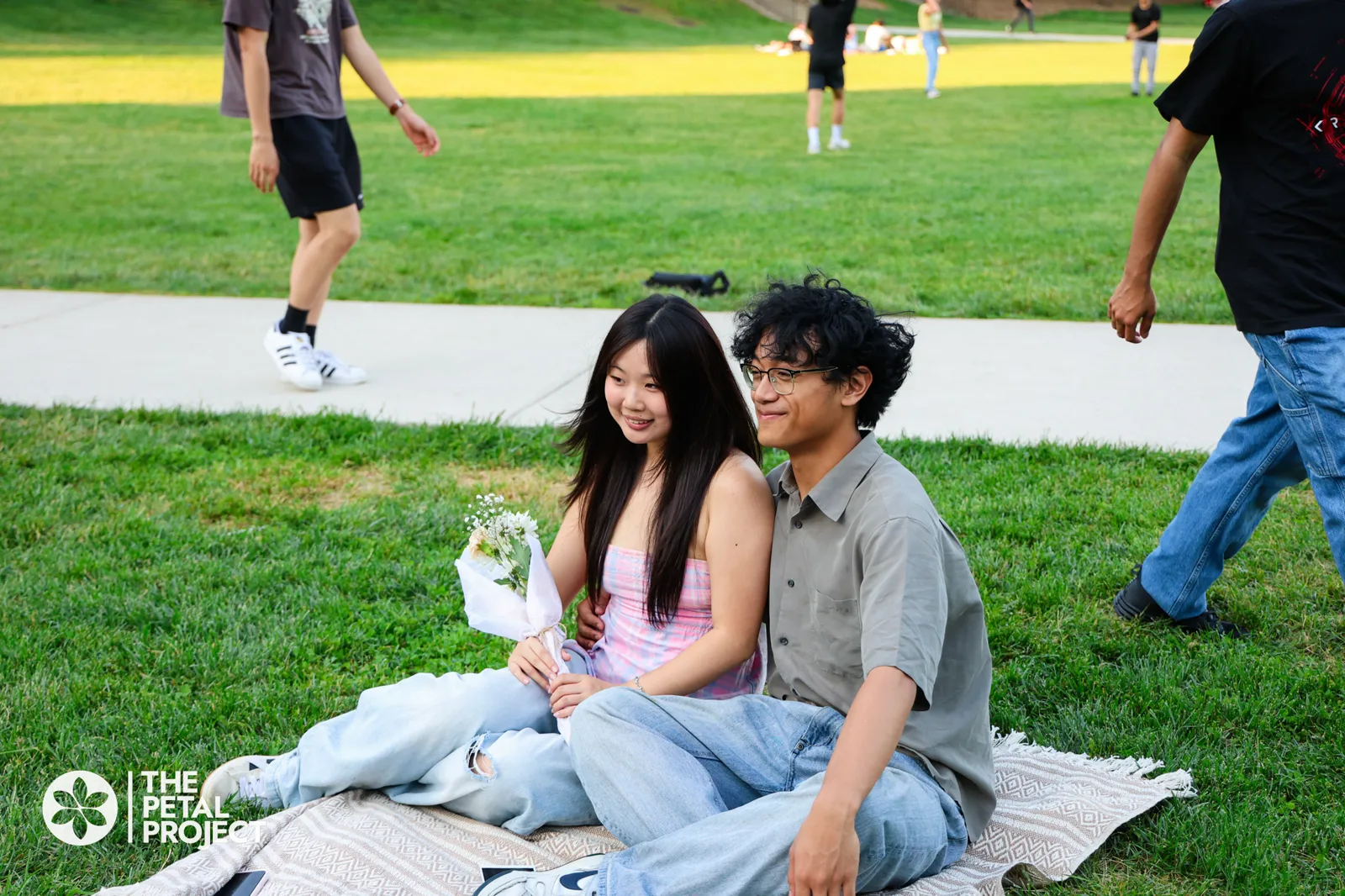
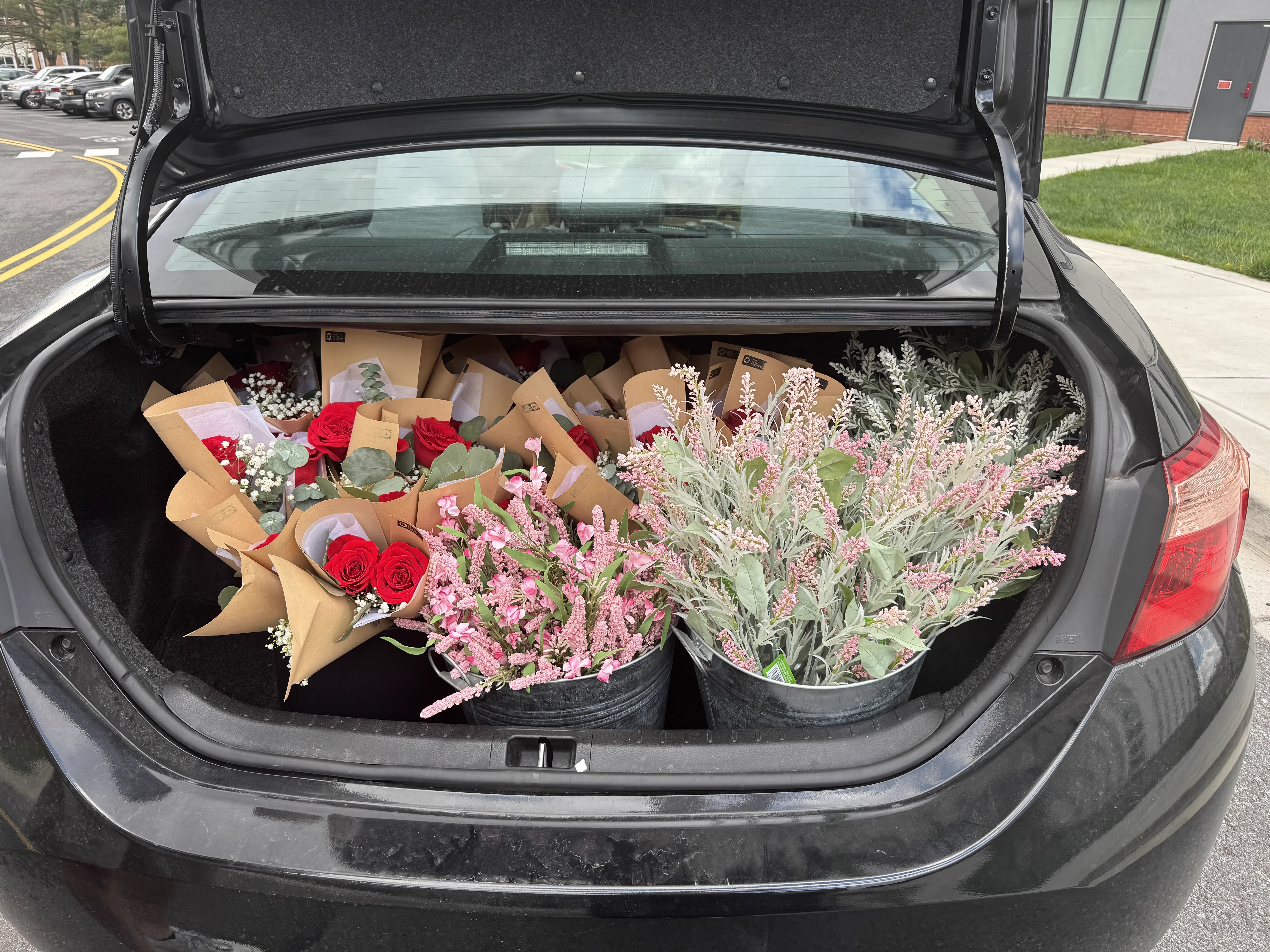
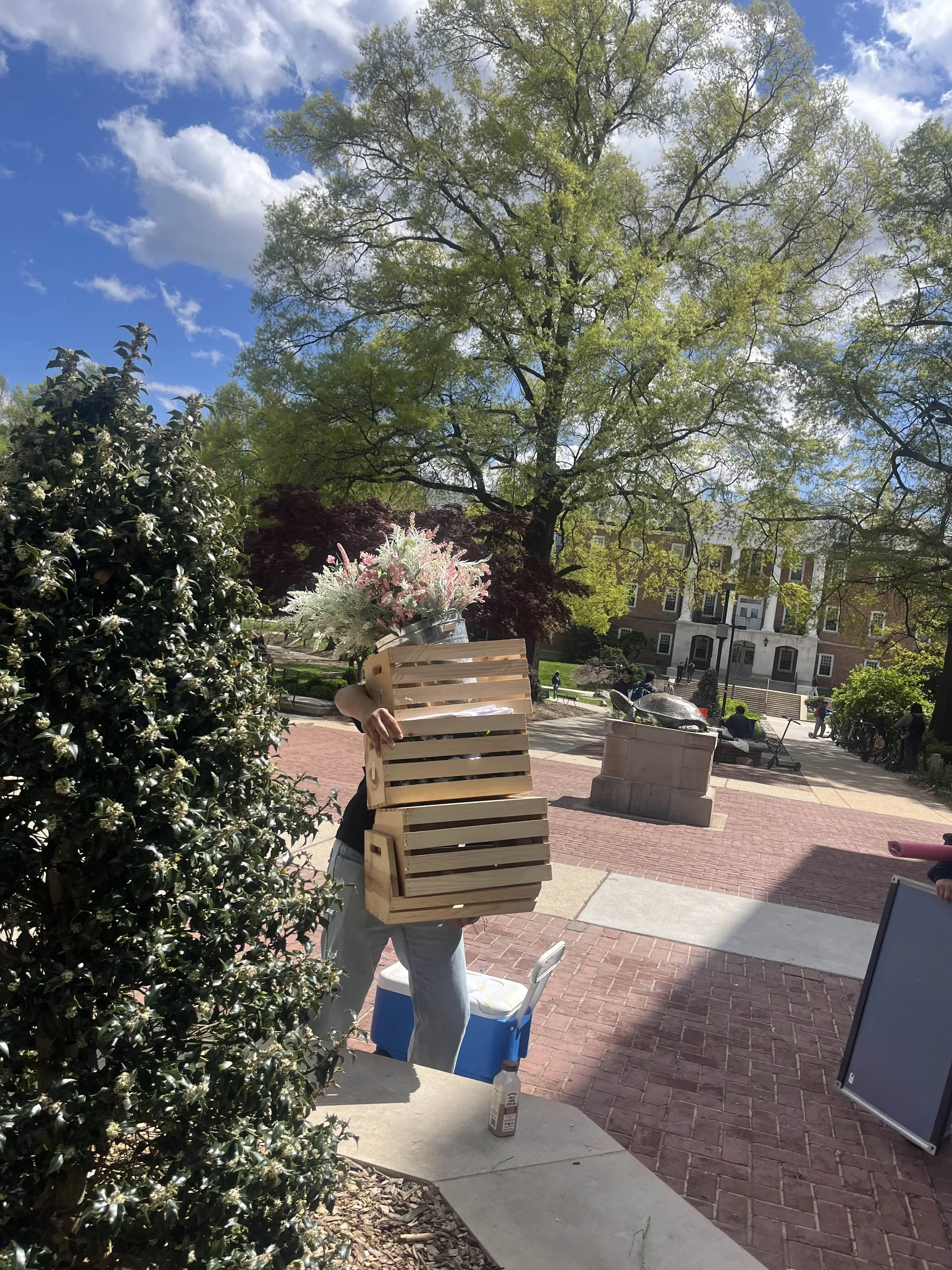
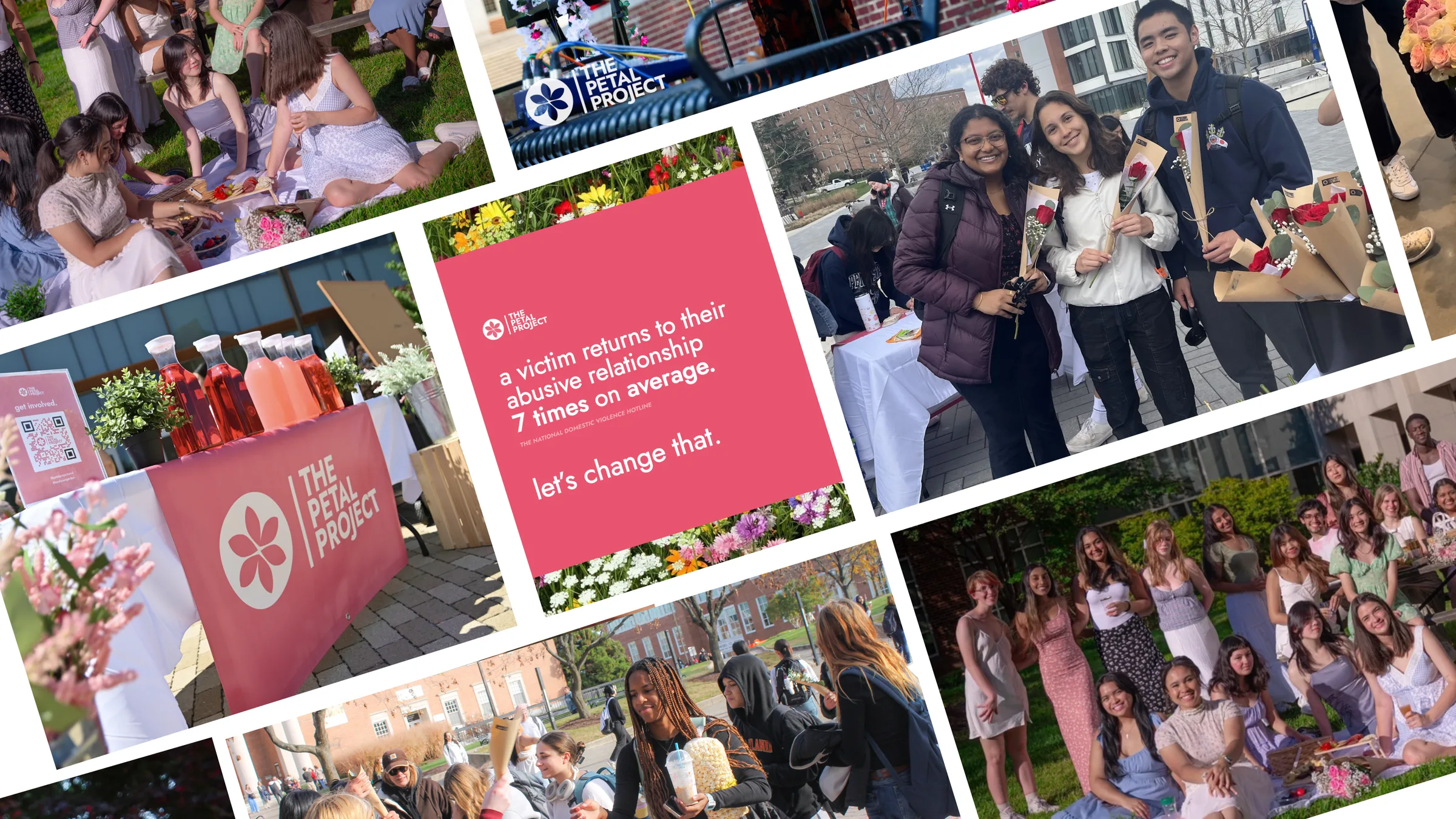
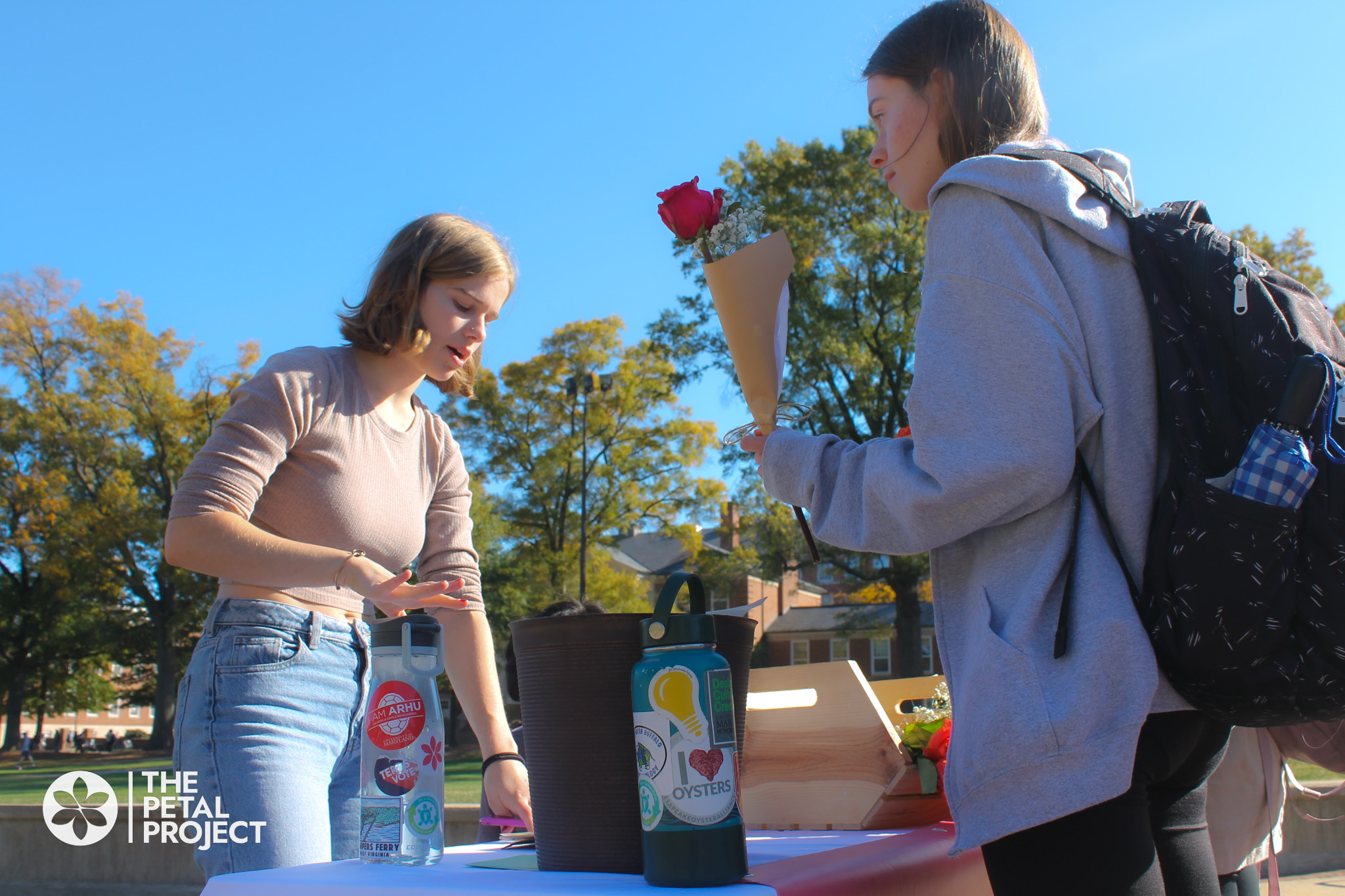
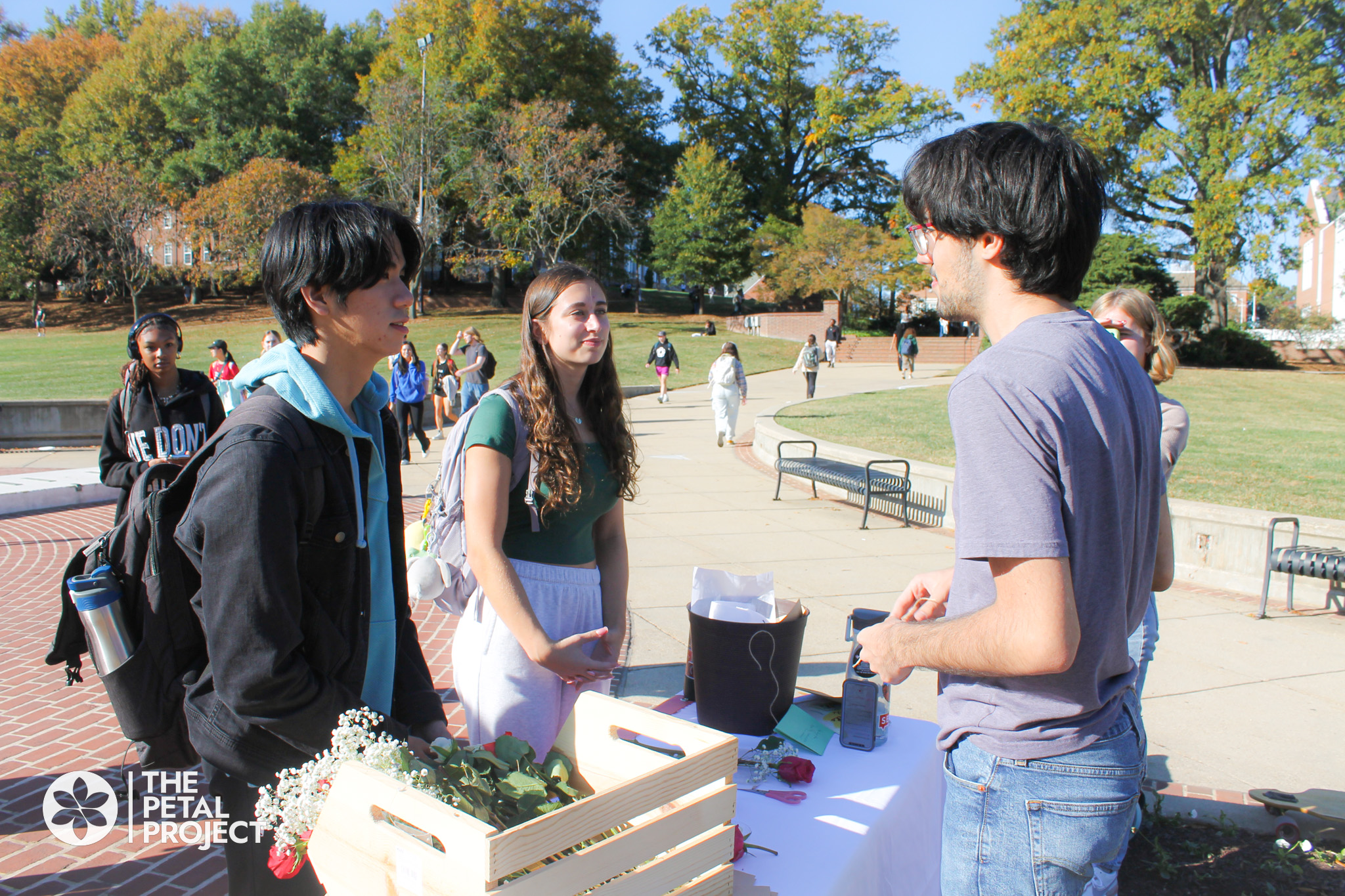
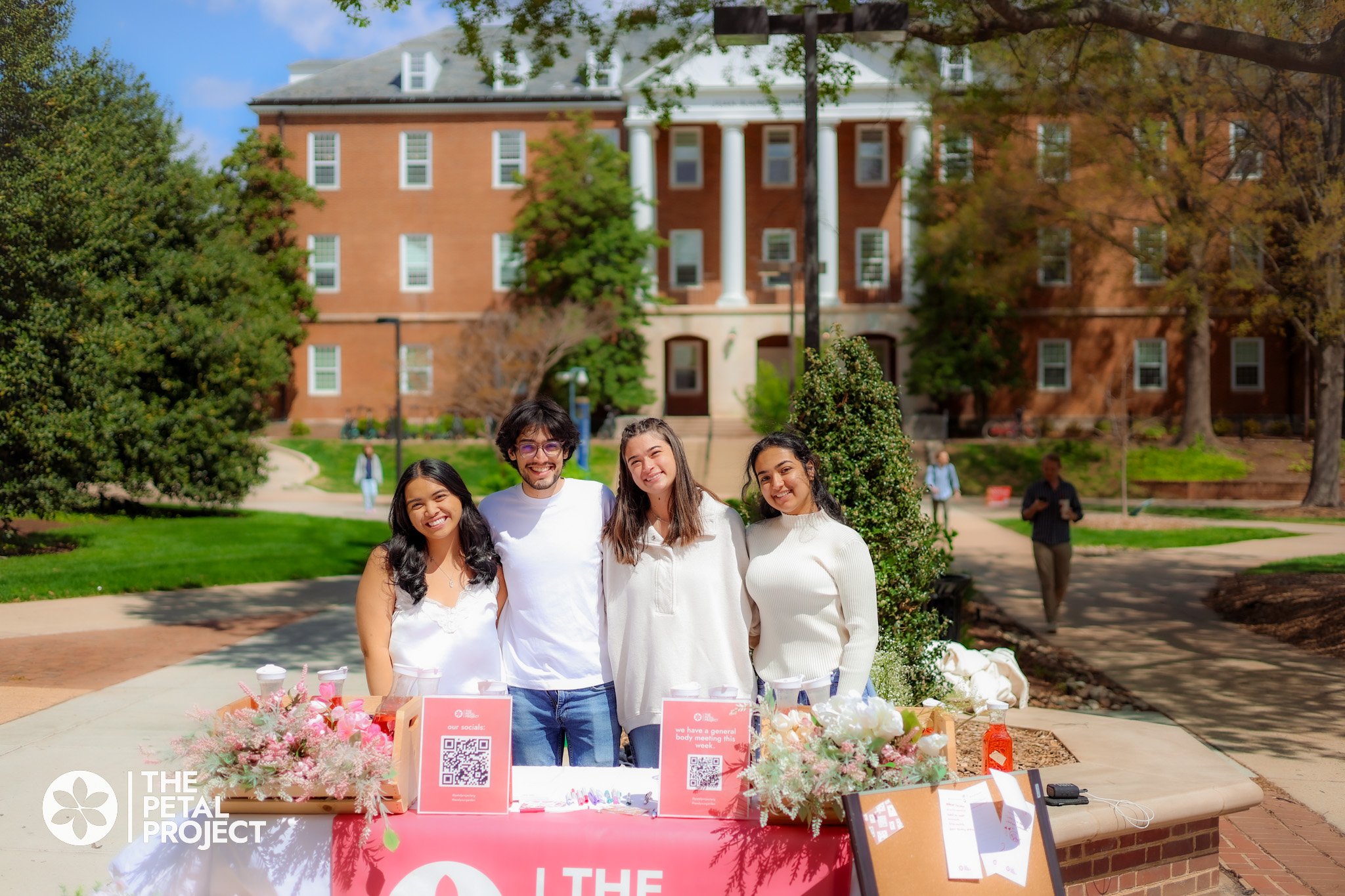
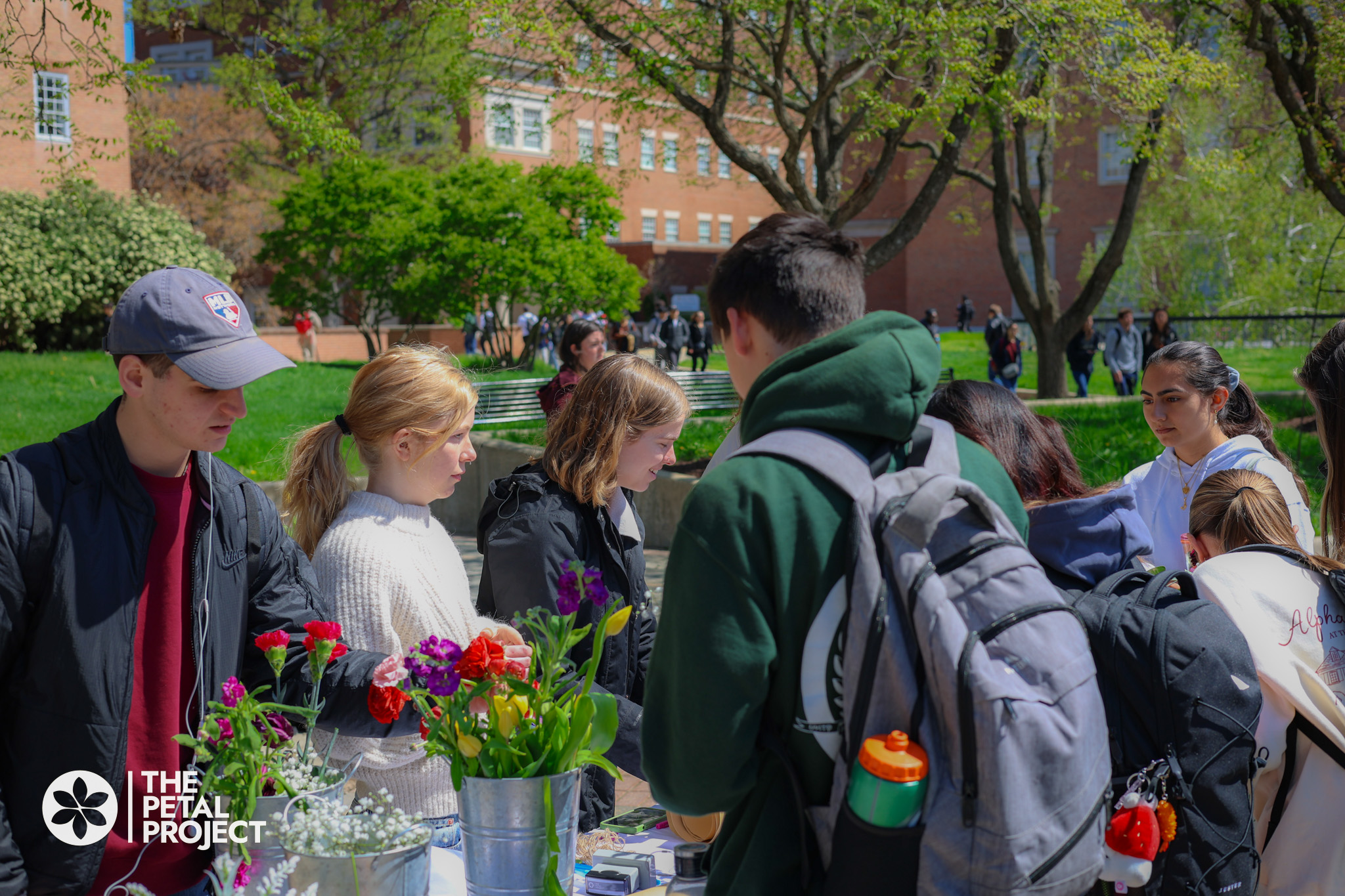
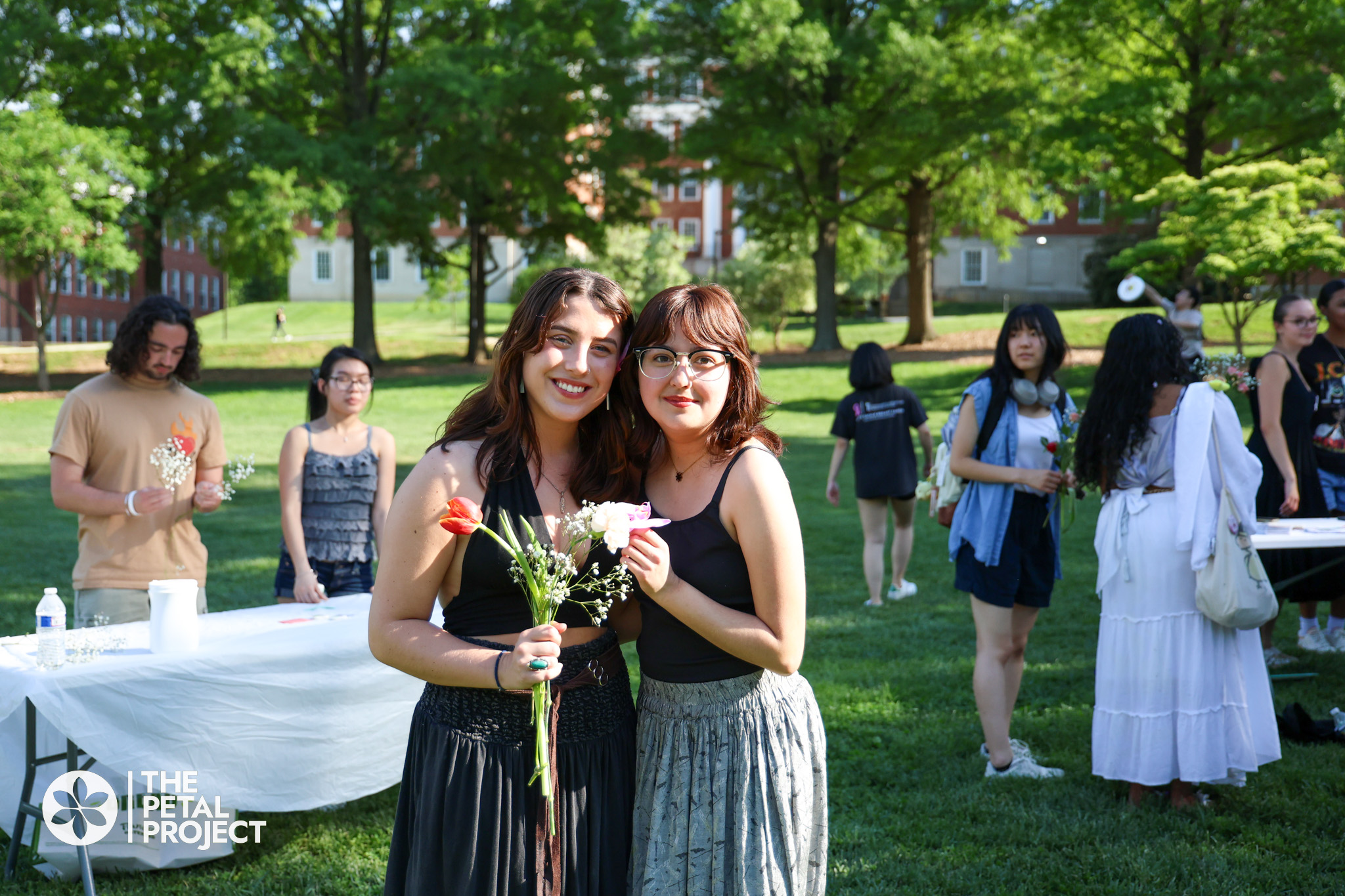
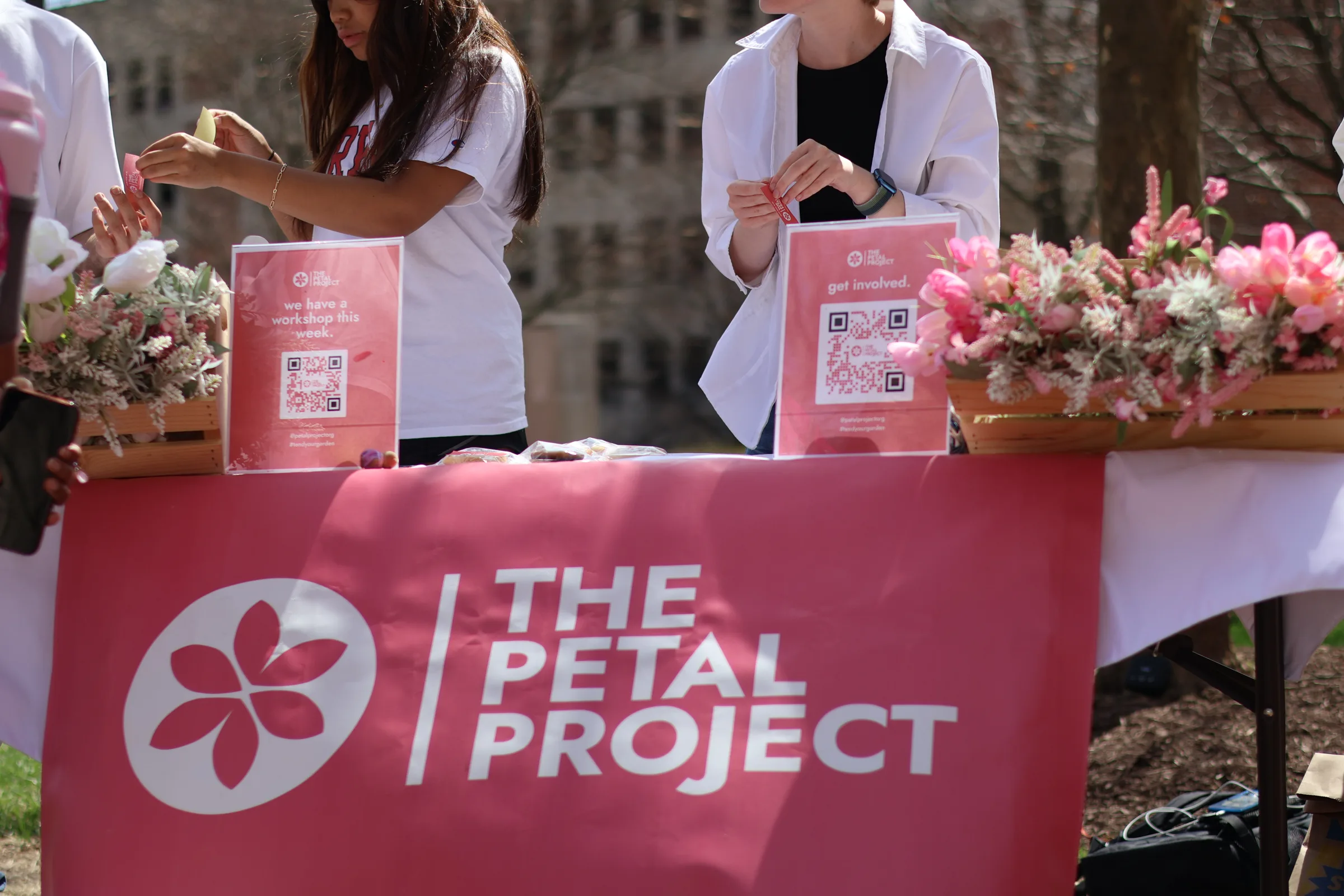
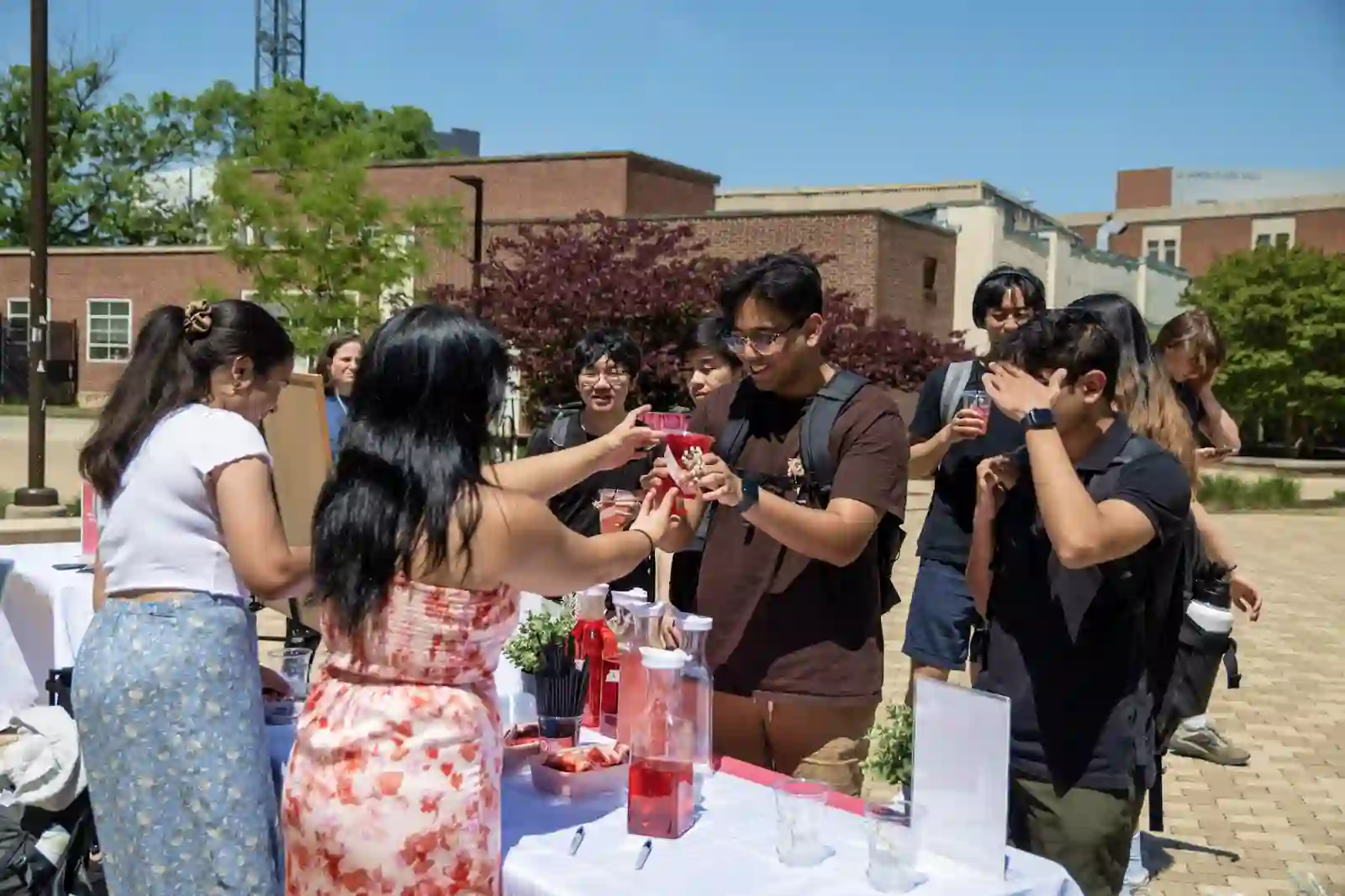
The Petal Project at McKeldin Mall, Spring 2024.
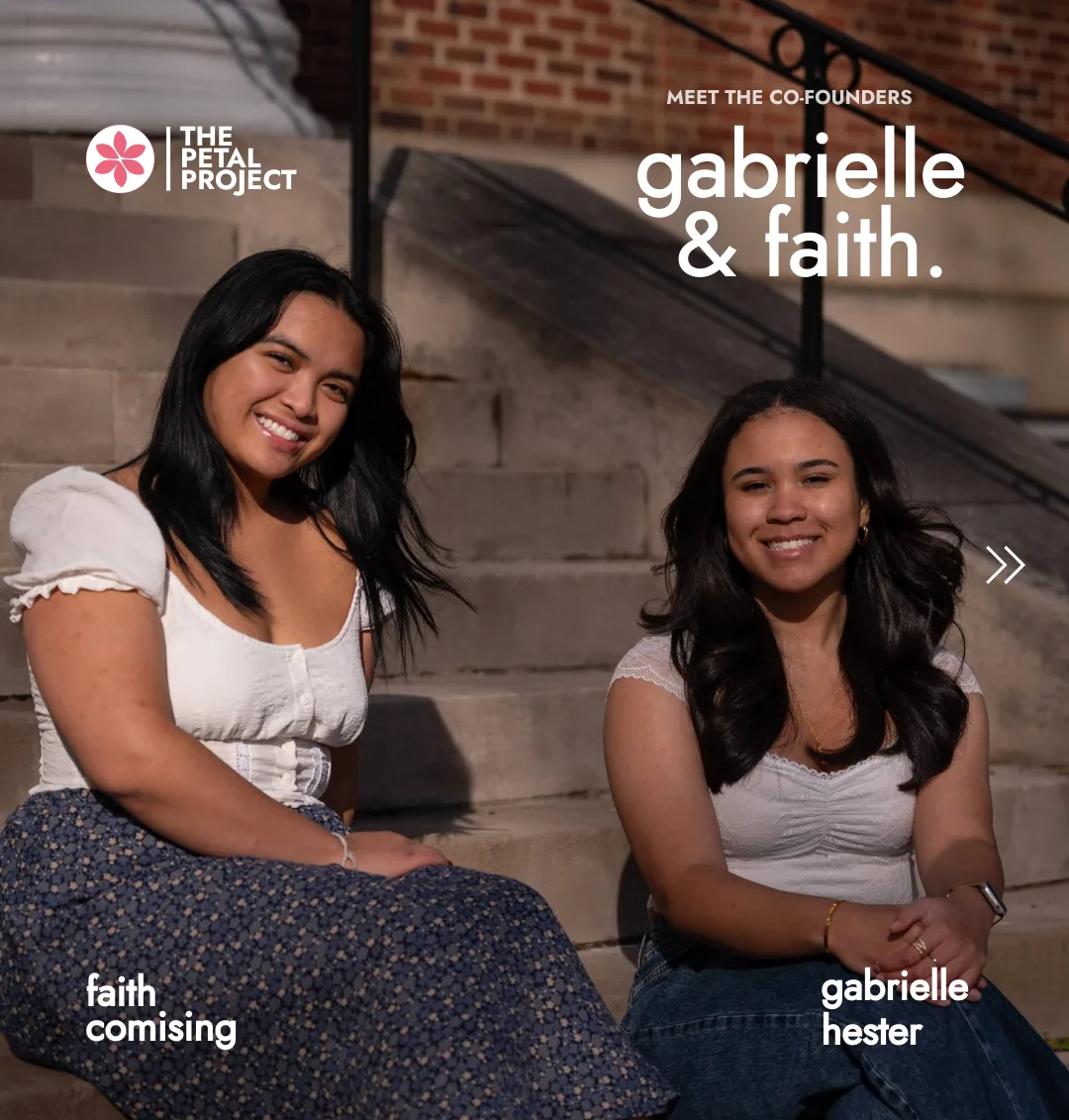
Three months later, my co-founder Faith and I met on a bus to a convention. During that bus ride, we realized we'd been through versions of the same thing, and so had a lot of other people on our college campus. We came to the conclusion that the conversation around relationship abuse needed to exist somewhere larger.
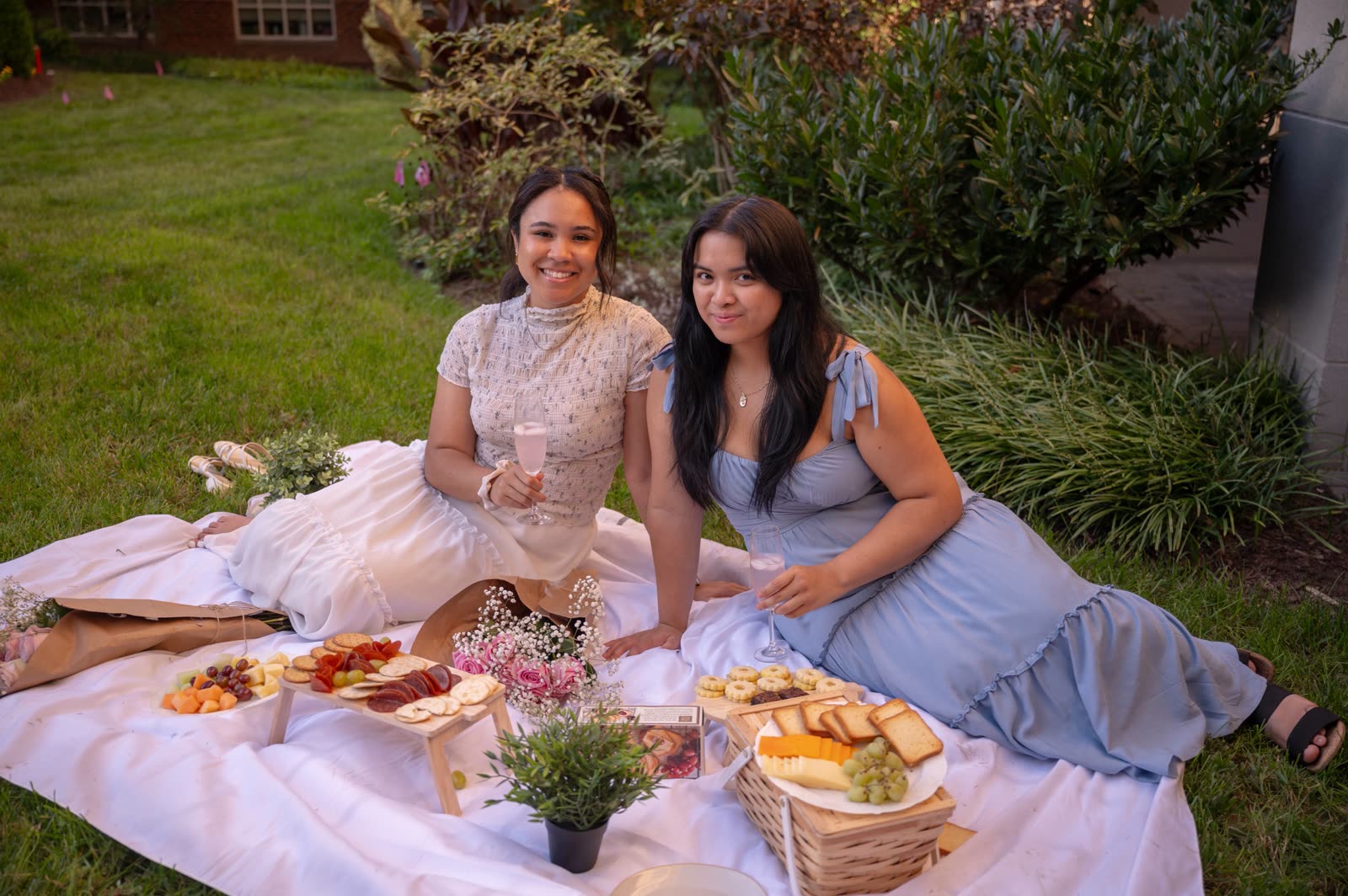
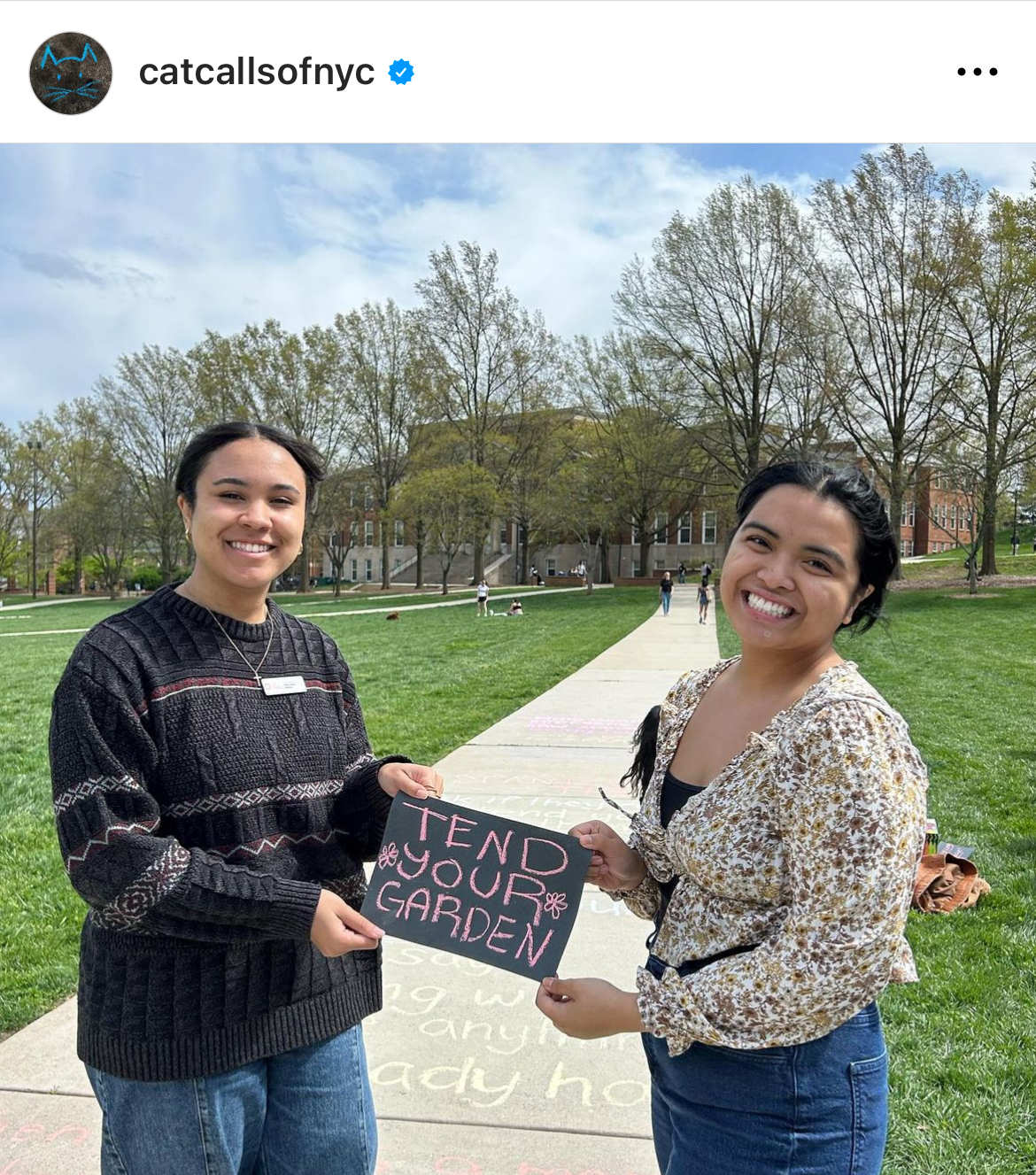
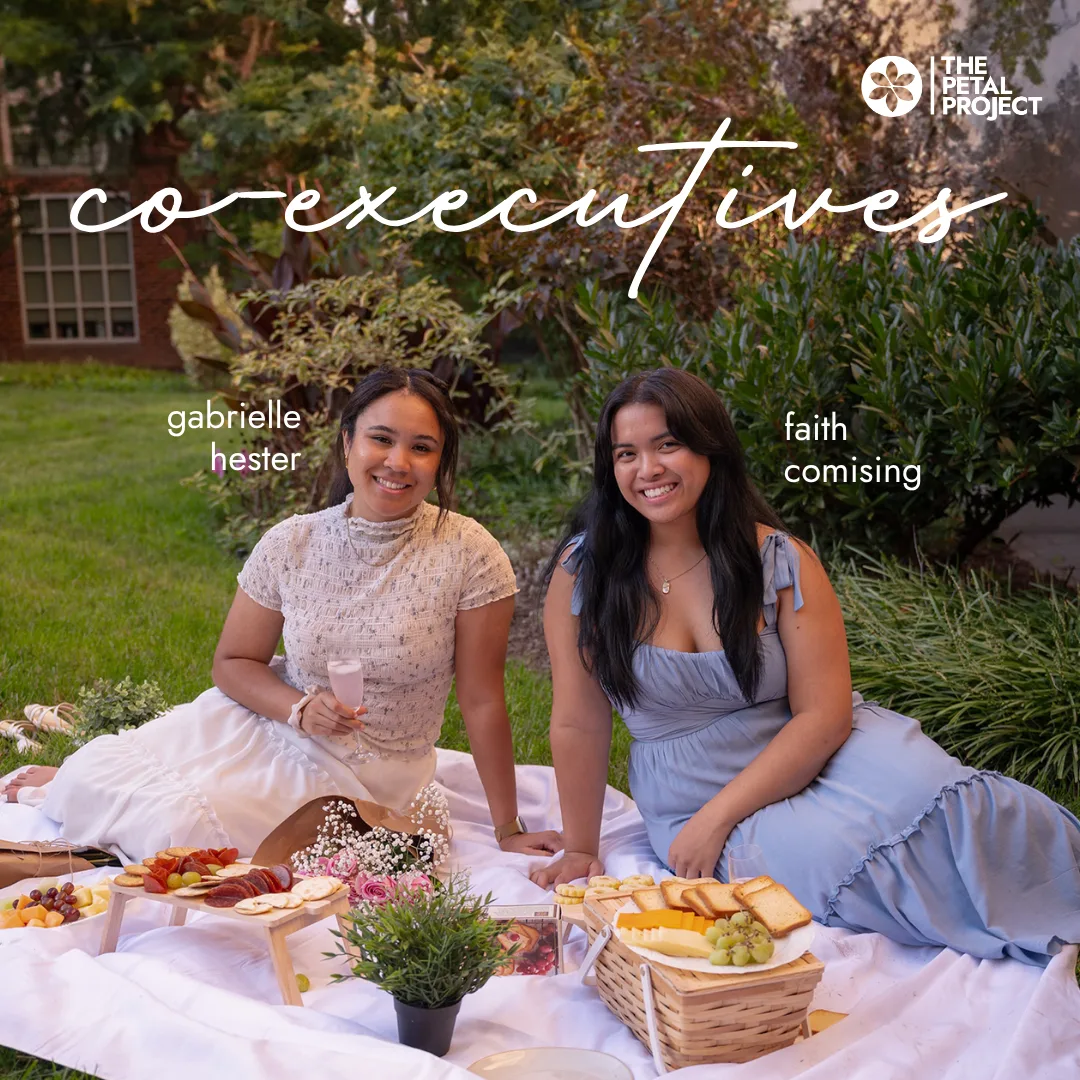
Myself (left) and my co-founder, Faith (right).
We founded The Petal Project, an advocacy organization aiming to build community to combat relationship abuse in young adults, and lead those who do need resources to the information they desire.
At its conception, the original plan was one large event on UMD's McKeldin Mall. The problem: nobody knew who we were yet, and we didn't know what turnout would look like.
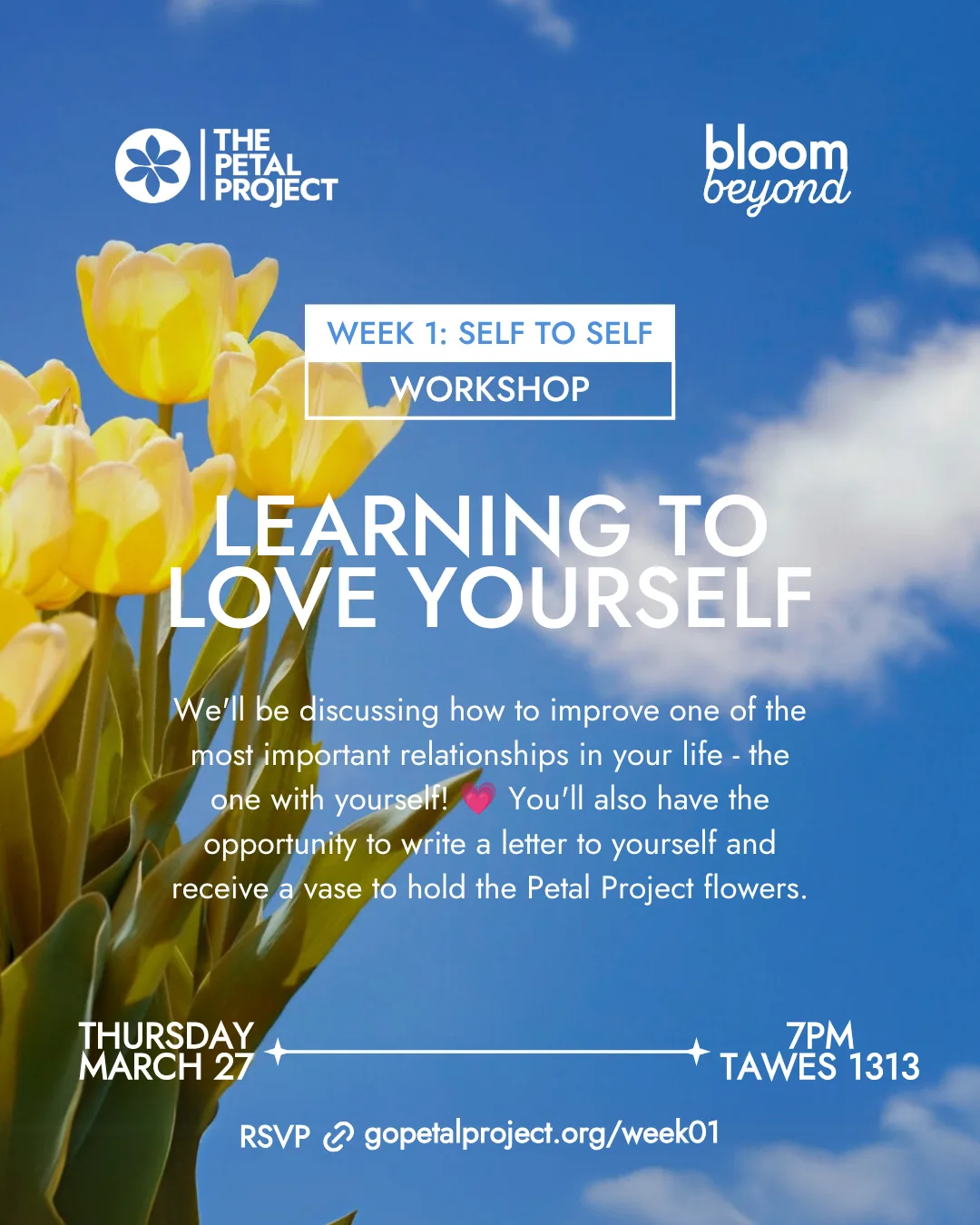
Year Two theme intro post.
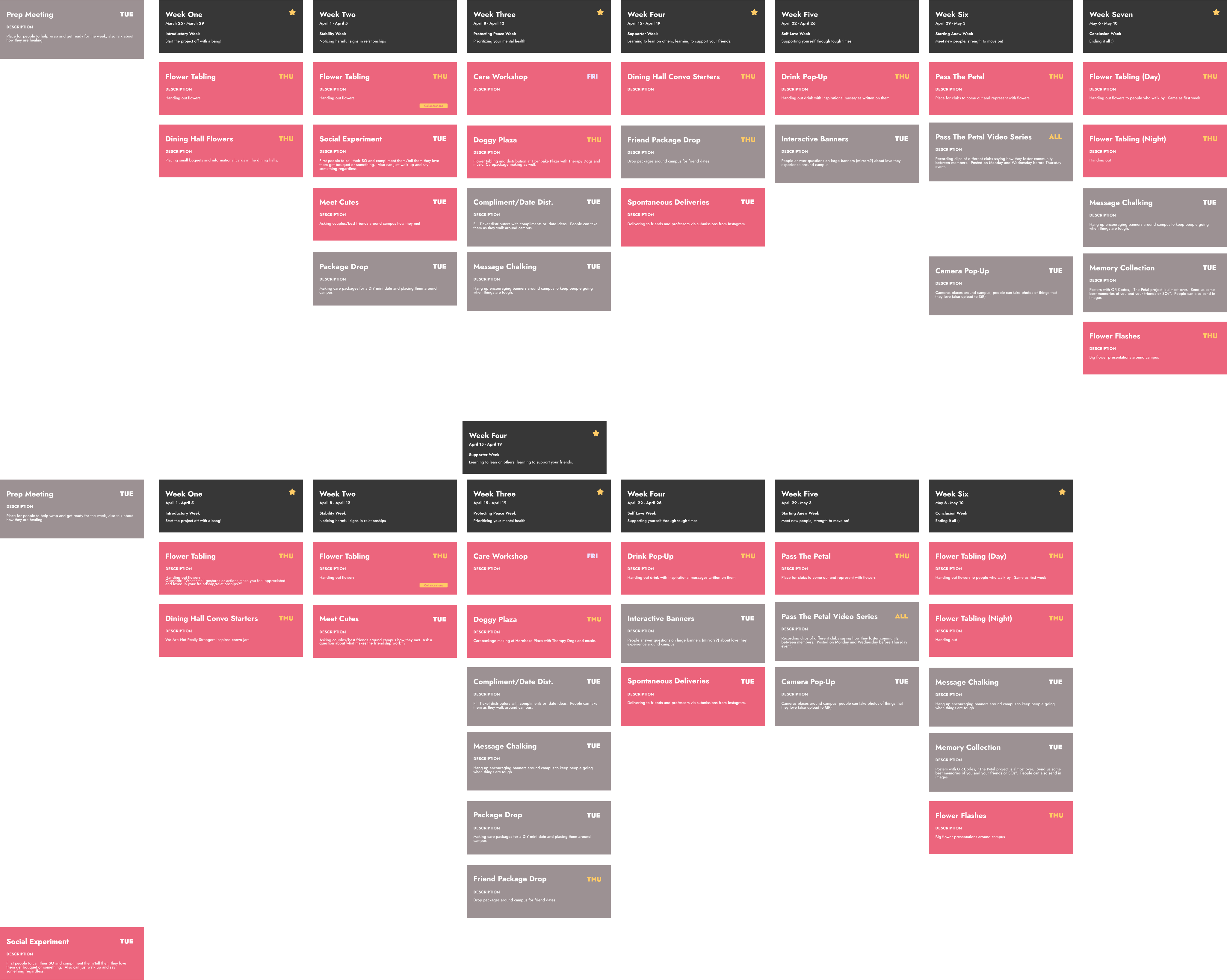
In order to spread our programming and our grant budget, we instead moved to a six-week campaign with 3 smaller events per week. Each week opened with something higher-traffic and lower-stakes, then closed with more educational programming.
This gave people 18 chances to show up to engage with us. The live activation was the introduction, and the educational content was the destination.
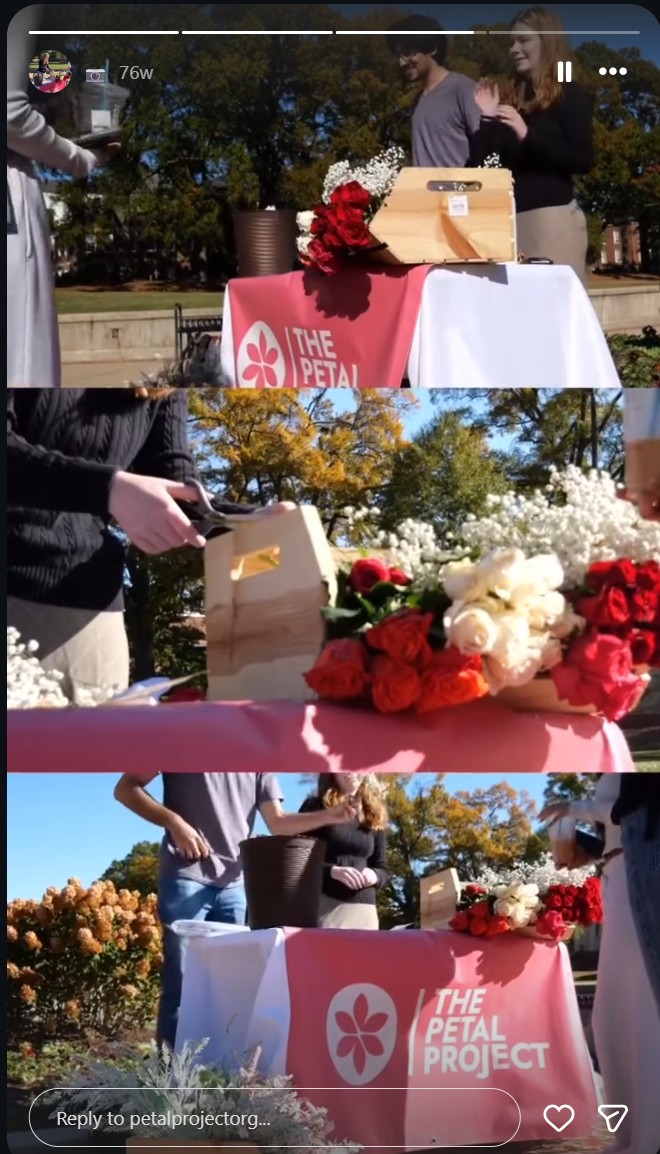
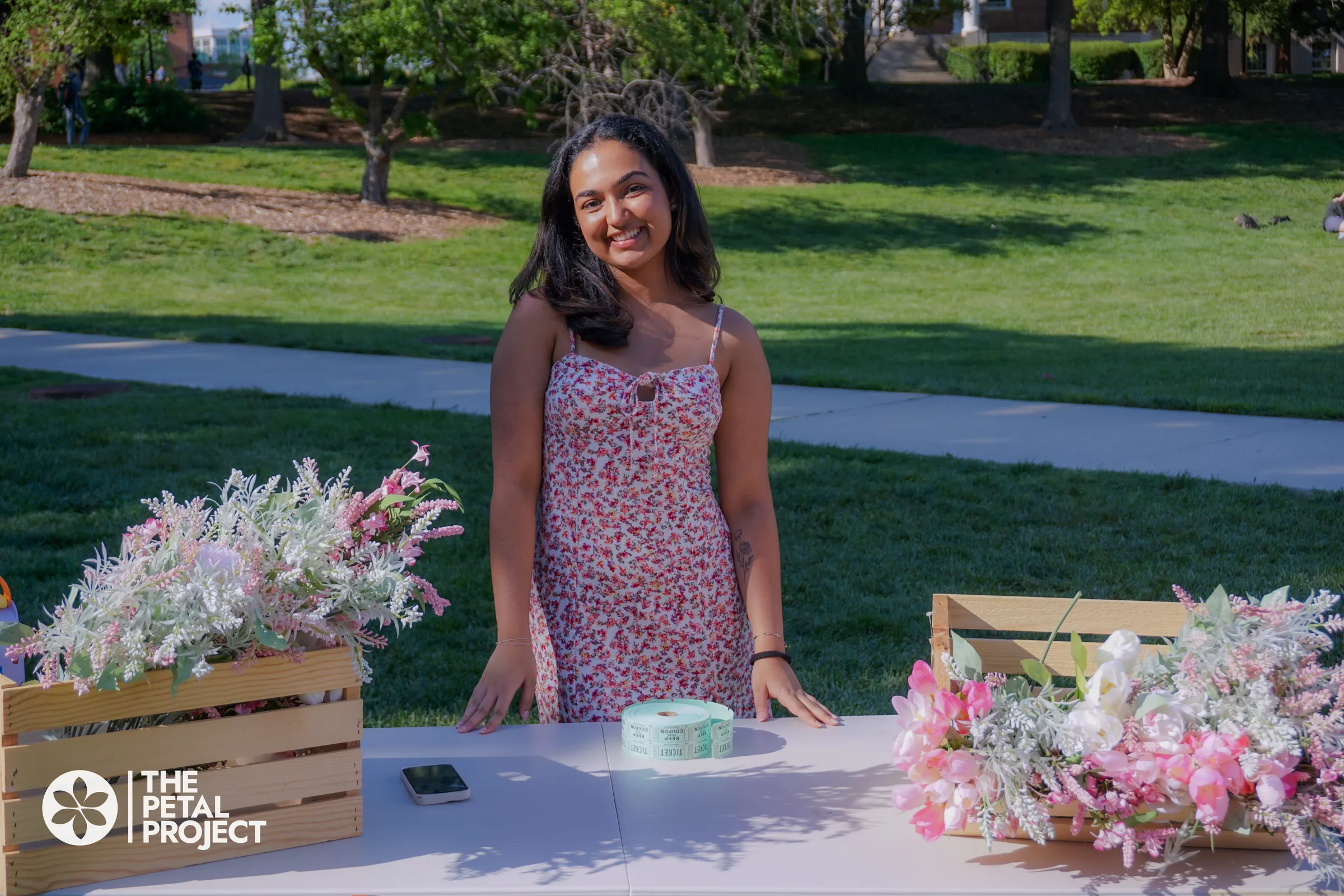
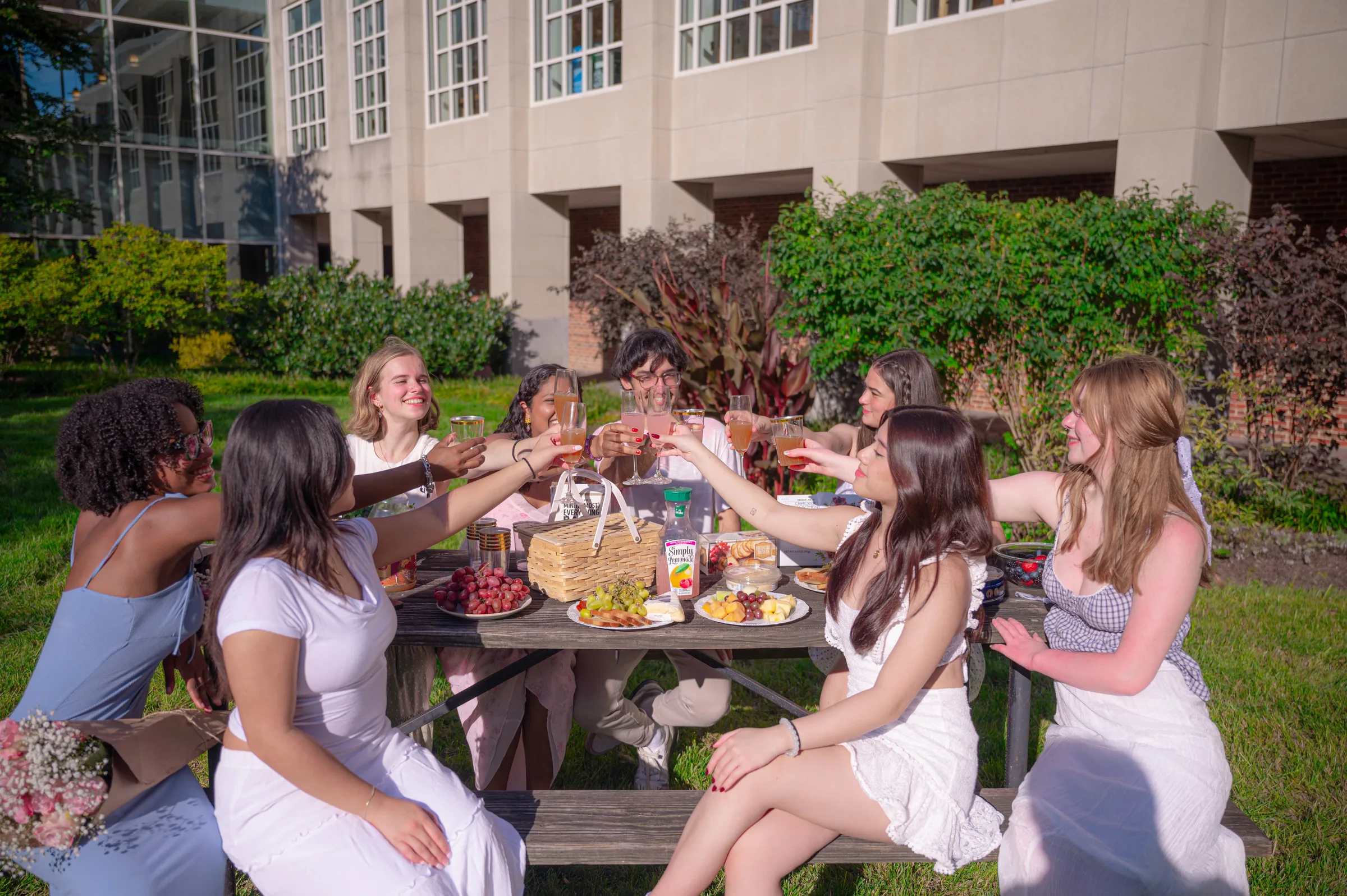
Documentation from the campaign weeks.
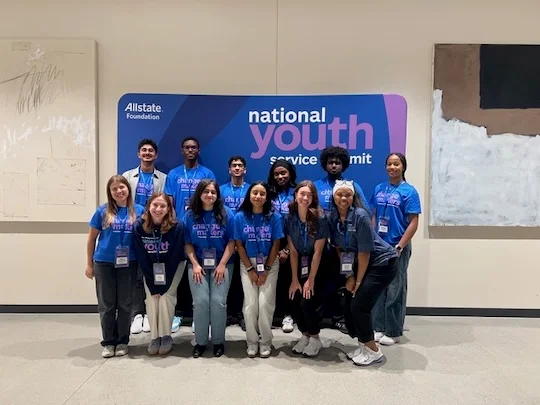
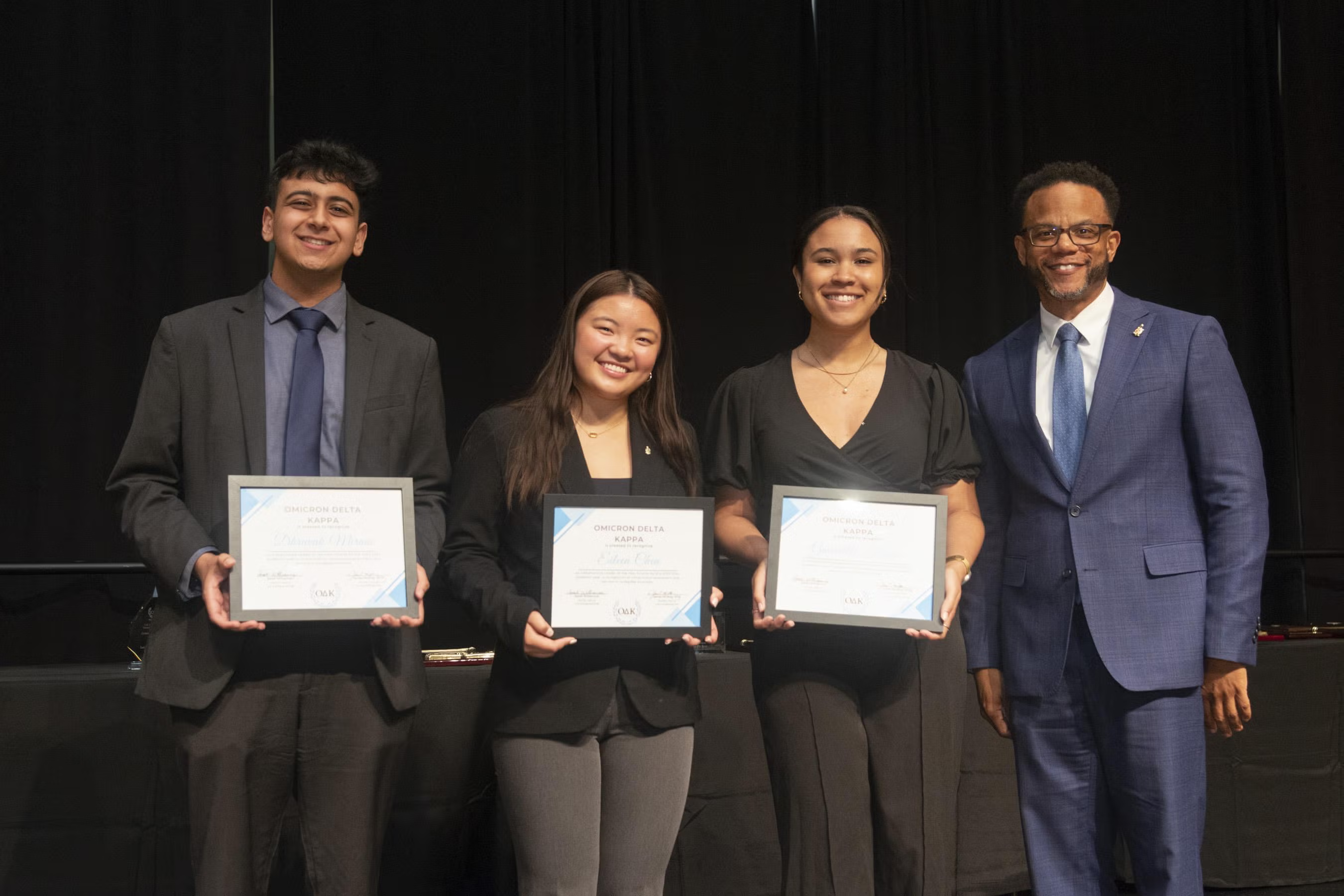
We raised over $5,000 through writing and winning grant proposals, and the org has since been recognized by the Allstate National Youth Service Summit, UPenn Our Voices Summit, Catcalls of NYC, and earned multiple University of Maryland awards.
None of those were things we set out to earn, they felt more like the organization speaking back to us in its success.
Year 1 was deliberate but not yet systematized; we made structural decisions early, built a coalition of close friends and peers, and figured out the process while still inventing it. What we didn't have yet was a consistent way to repeat it.
Year 2 was that: a 26-person board with defined roles, a more defined curriculum, a following that showed up on its own, and a waitlist of other orgs wanting to collaborate.
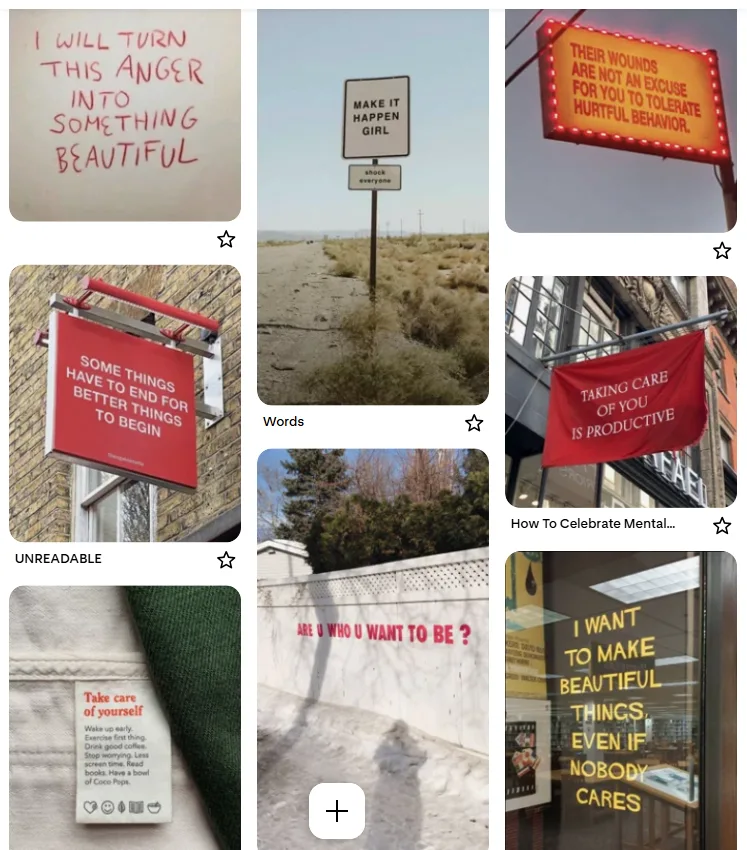
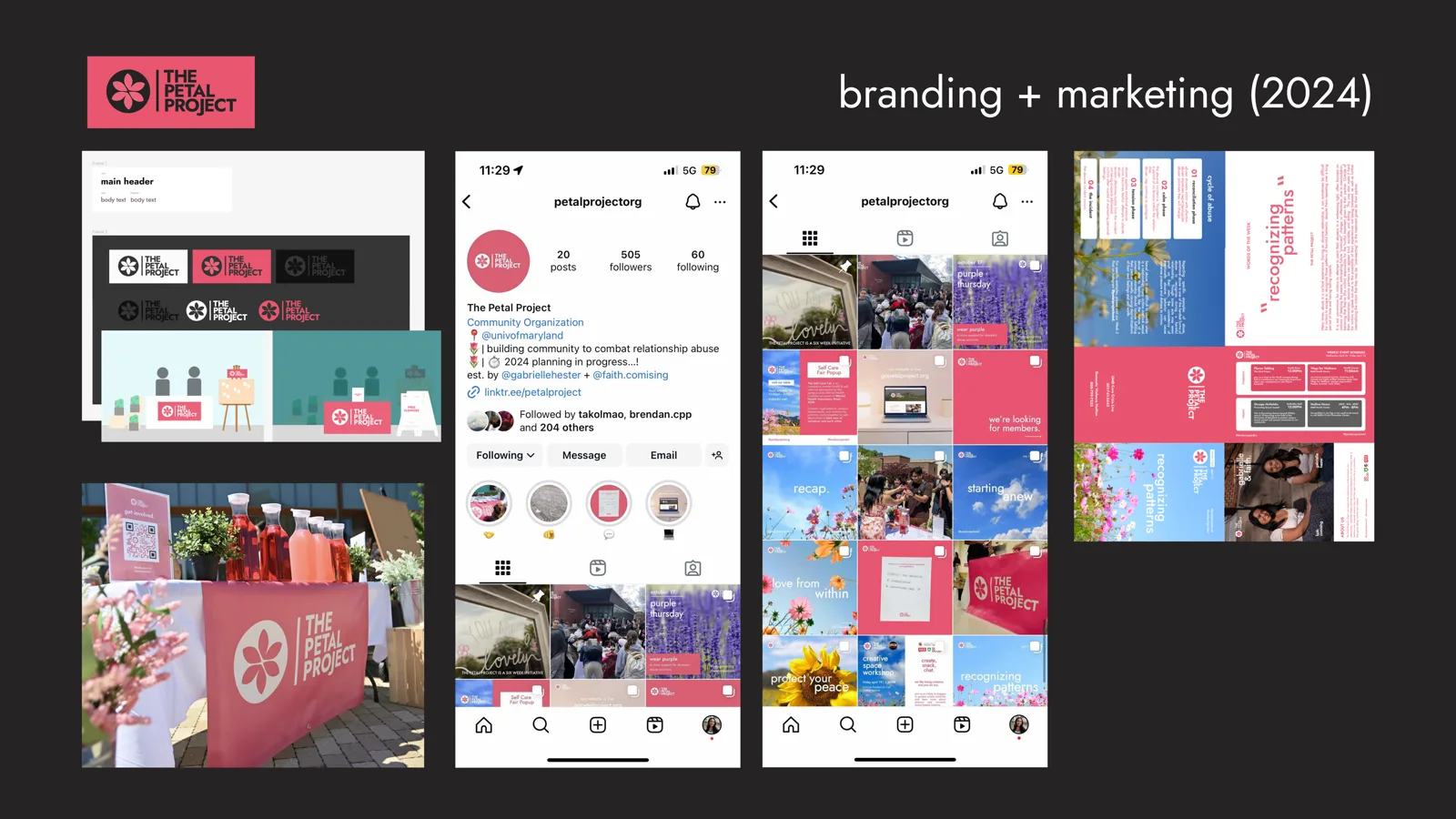
Advocacy design has a default register: serious, institutional, heavy on PSA energy, which was something I saw in many social good clubs on campus and was trying not to emulate.
I wanted to create something friendly, but not fragile, and something you would actually want to wear or carry around campus, regardless of gender or level of involvement with the organization.
I also wanted a voice that wasn't mushy or coddling, and wasn't too blunt, but real, vulnerable, and honest in the way that real people are.
The six-petal motif was made to represent the statistic that started it all; if we can help reduce the number of times a person returns to their harmful relationship, even by just one below the average (7), then our job as an organization is done.
Going into it, I thought about how easily a flower shape can read straight into precious, delicate, or overtly feminine. While women make up the majority of victims, I did not want to exclude our other audiences in spreading our message.
What I ended up designing was a flower that I felt could transcend object placement to digital placement, as well as be attractive to both female and masculine audiences.
Pink can go wrong very fast, the original signature pink was much, much lighter and pastel, and also paired with a light, breathy font. This resulted in a mix that created a feeling way too whimsical for the subject I wanted to tackle (and additionally was just generally poor contrast).
Getting the right version meant darkening it to a more mature coral, grounding it with a mono type pairing, and letting saturated, bold colors juxtapose with hard blues and whites. This allowed each piece of content to make a concrete visual impact, heavy enough that felt appropriate for our mission.
The experiences we were cultivating needed to tie in both the physical and digital space; meaning guidelines were not just visual, they were behavioral. Everything published under The Petal Project name had to meet the same standard, which meant documenting that standard down so anyone joining the team could pick it up without a briefing from me.
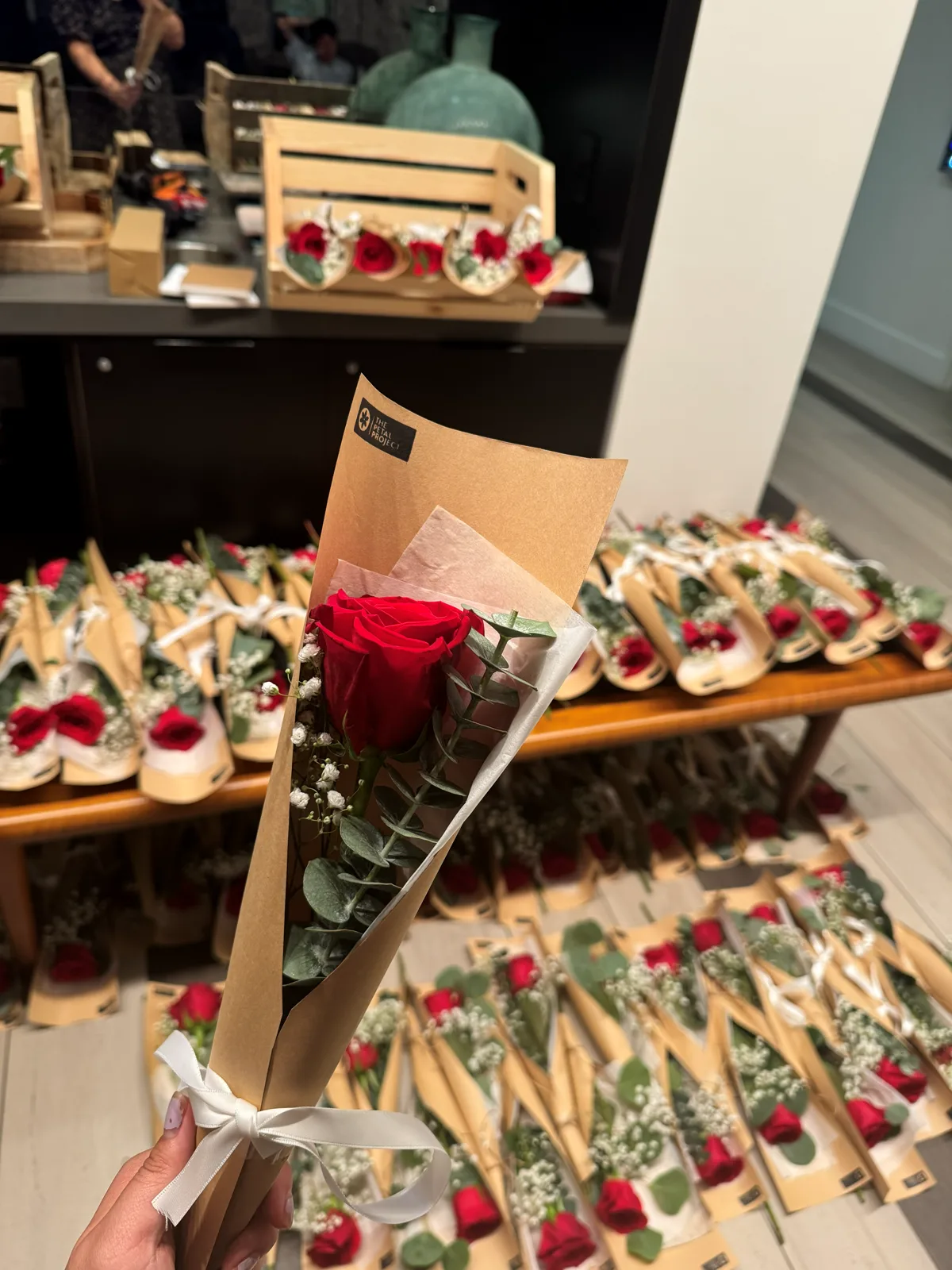
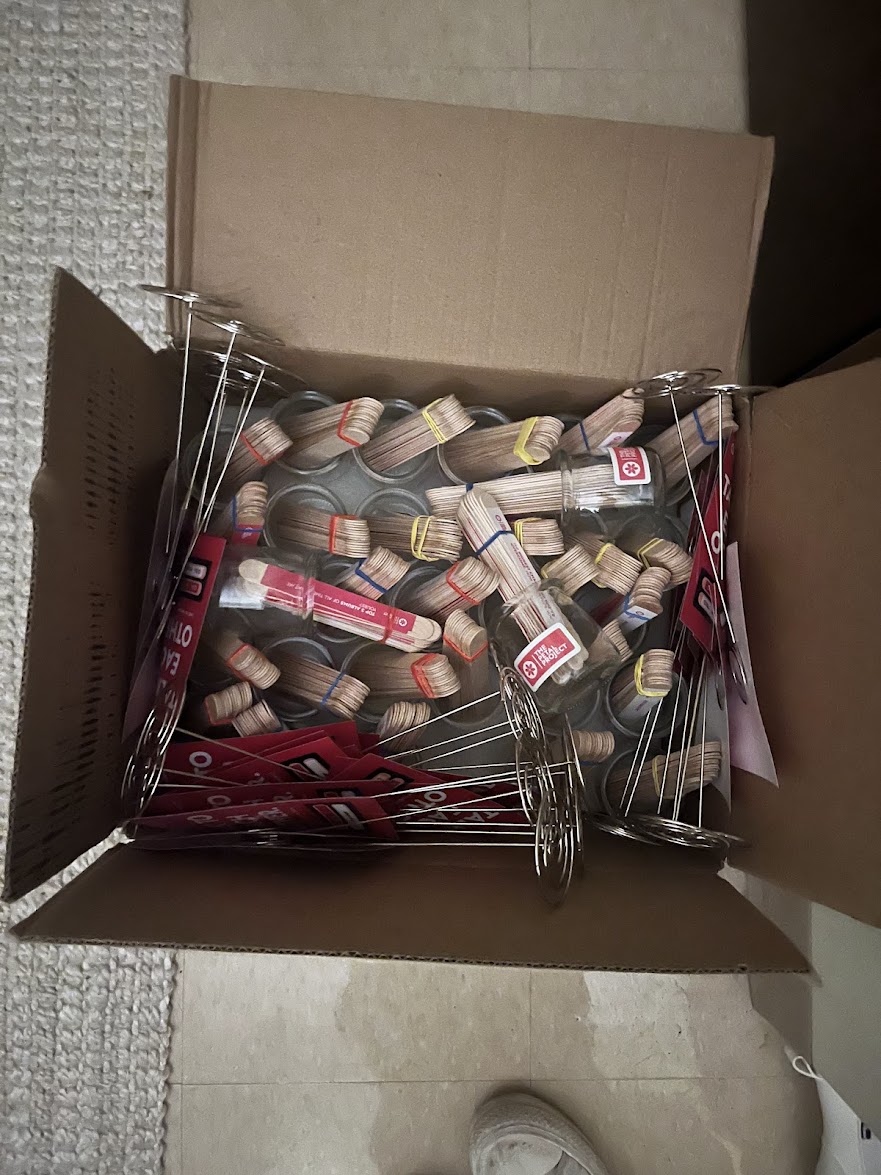
Some of the signature motifs included video footage running as backgrounds on still graphics; every flower or takeaway item having a stamp or sticker, and custom Petal Project zines and notecards created for each live event.
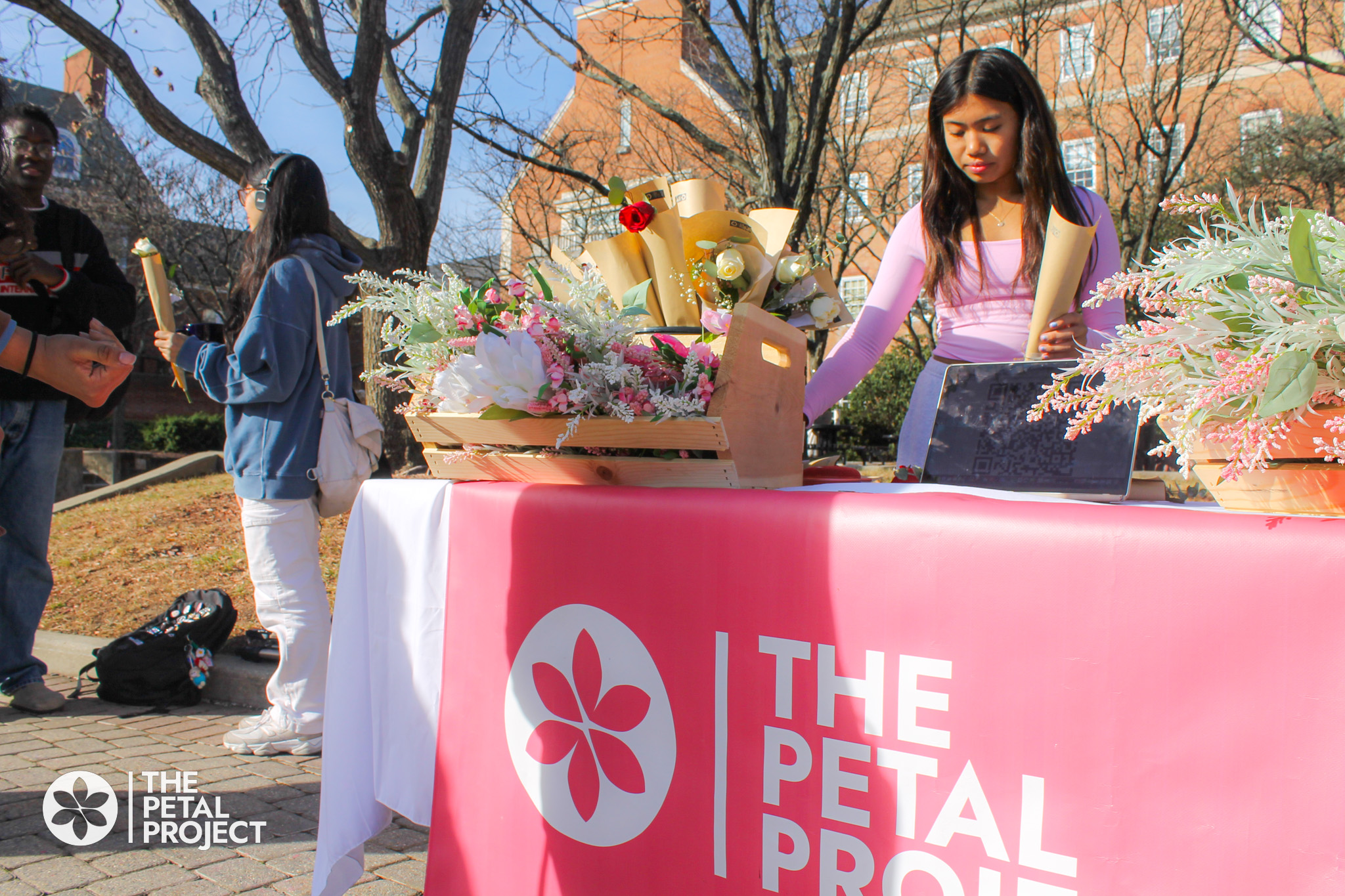
This attention to detail was about what the brand communicated without saying anything. We evaluated every booth setup before attendees arrived, every time, and looked for easy ways to elevate our experiences (ie: a simple ribbon around the bouquet).
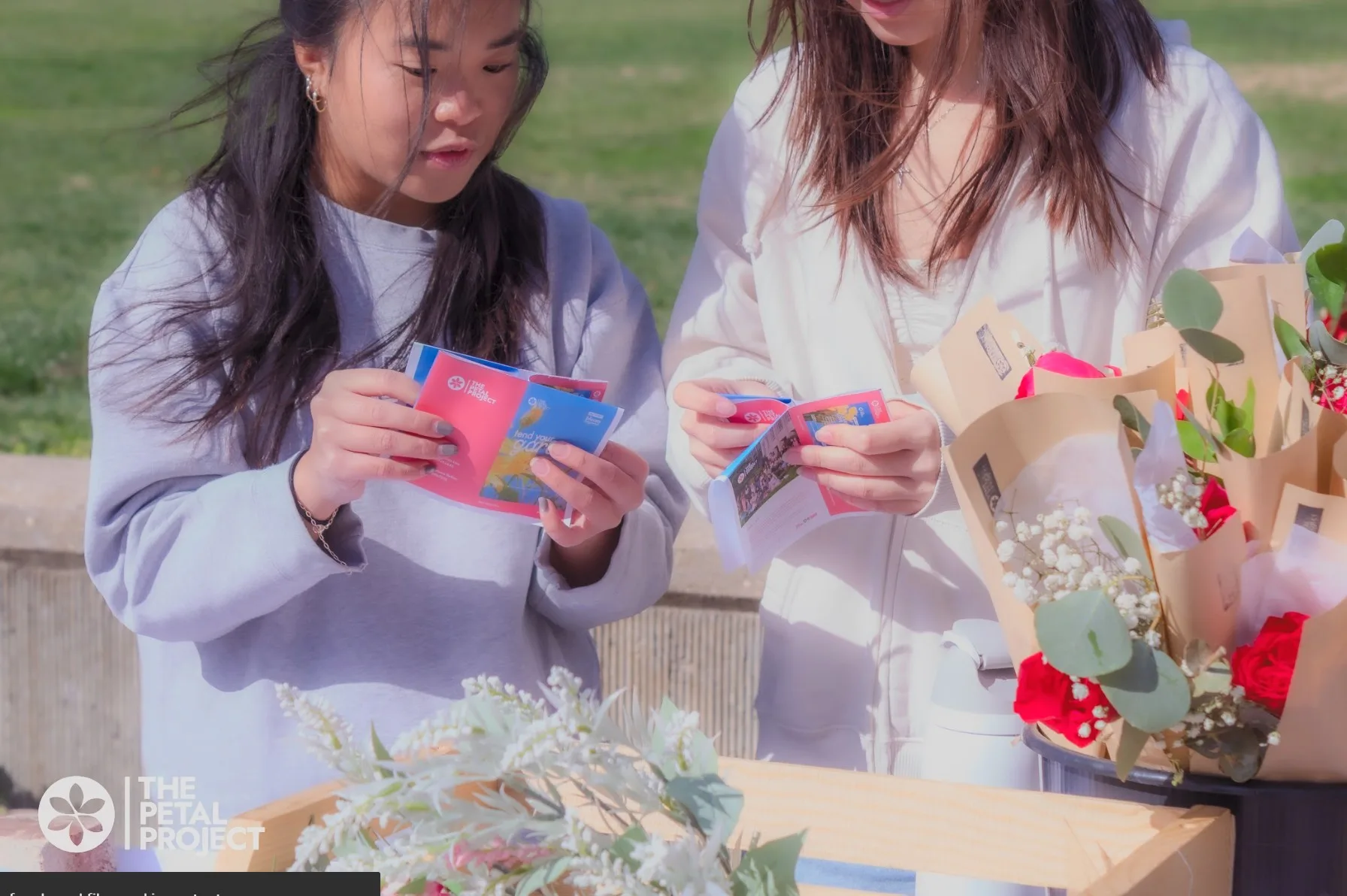
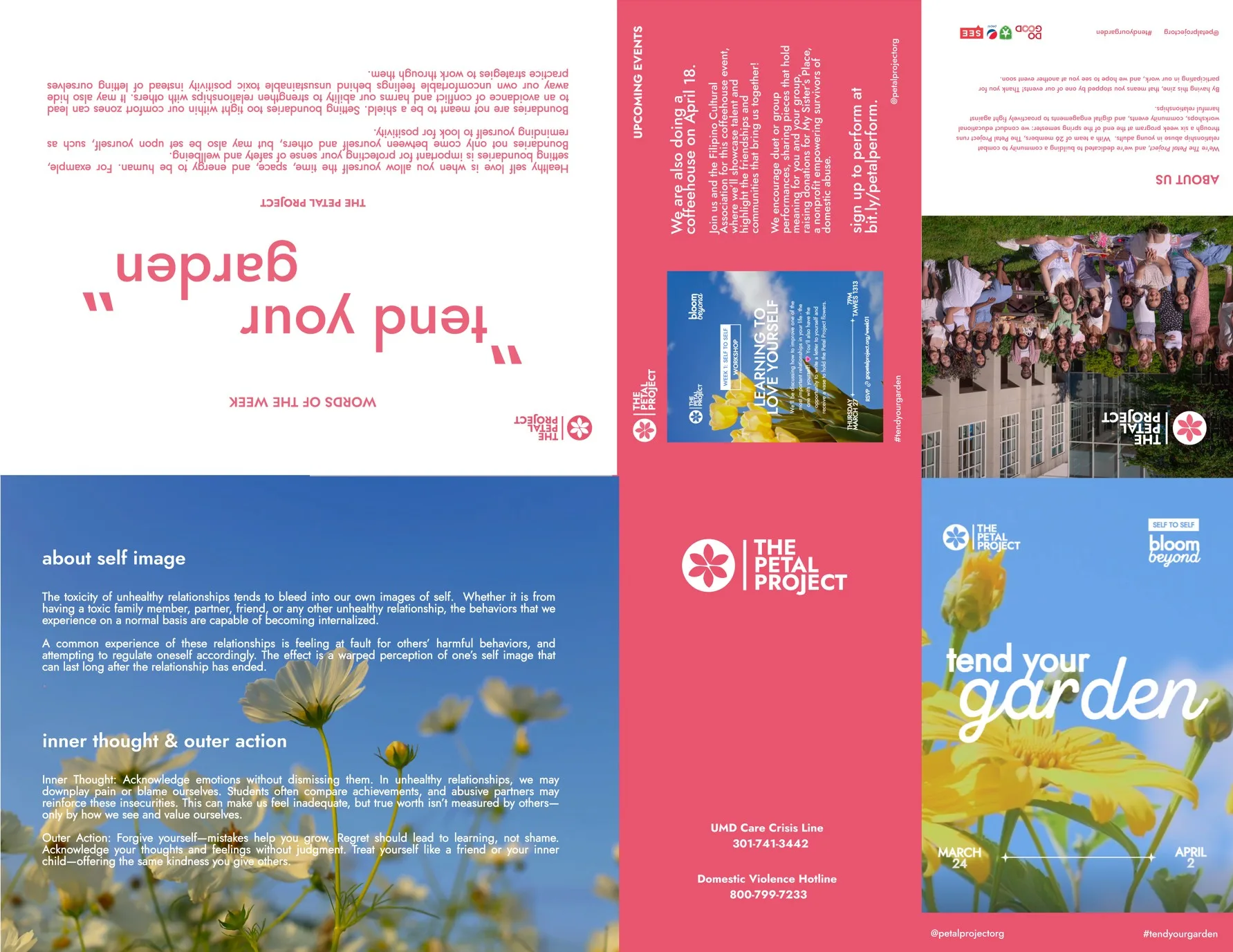
Every week, we took that week's theme and educational content and adapted it into a zine, which was the easiest and most cost effective way to communicate everything from our curriculum to our personal advertising in a physical way.
We crafted and handed out around 200 zines per live event, and a template format made it easy to replace info each time.
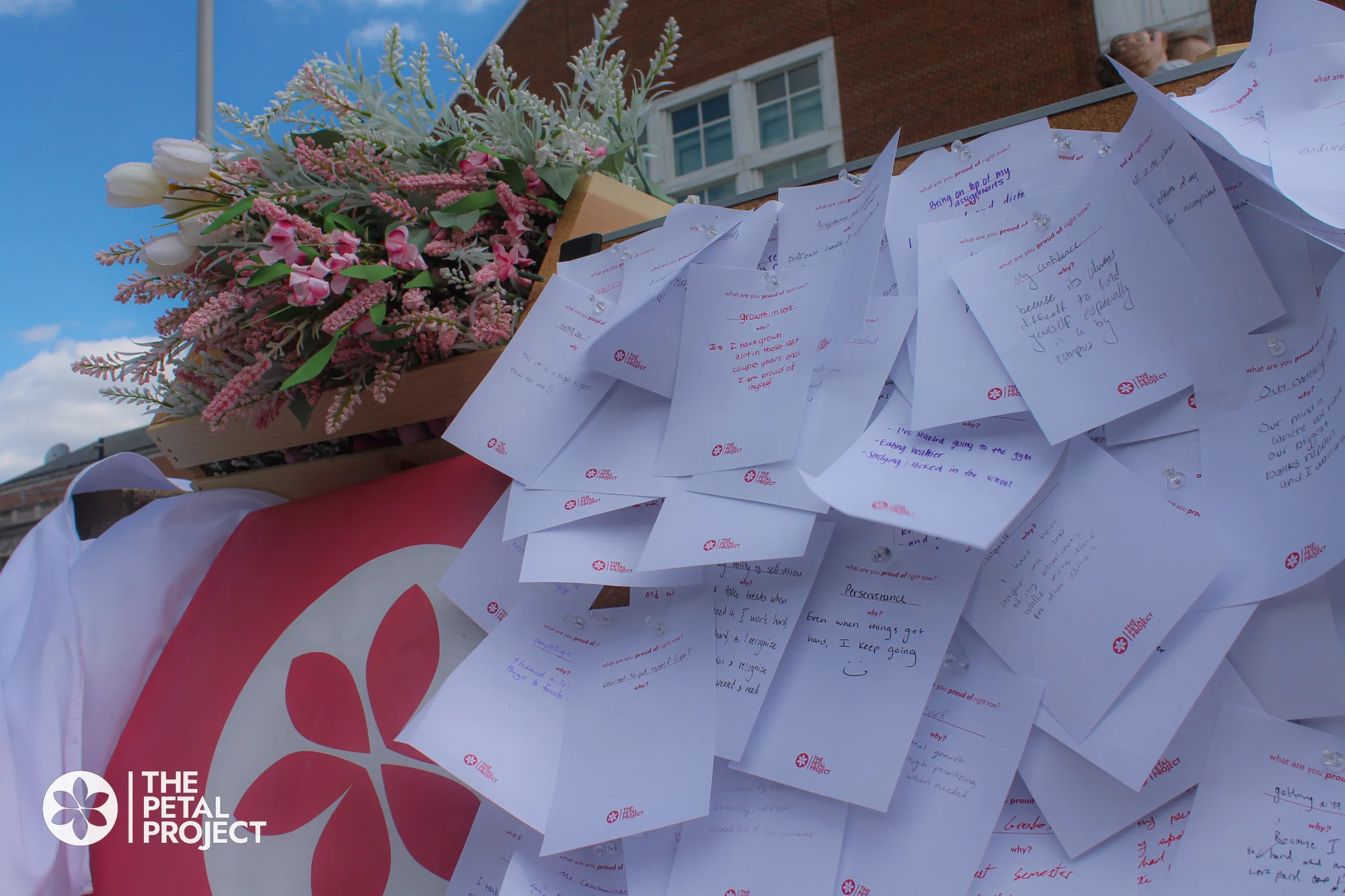
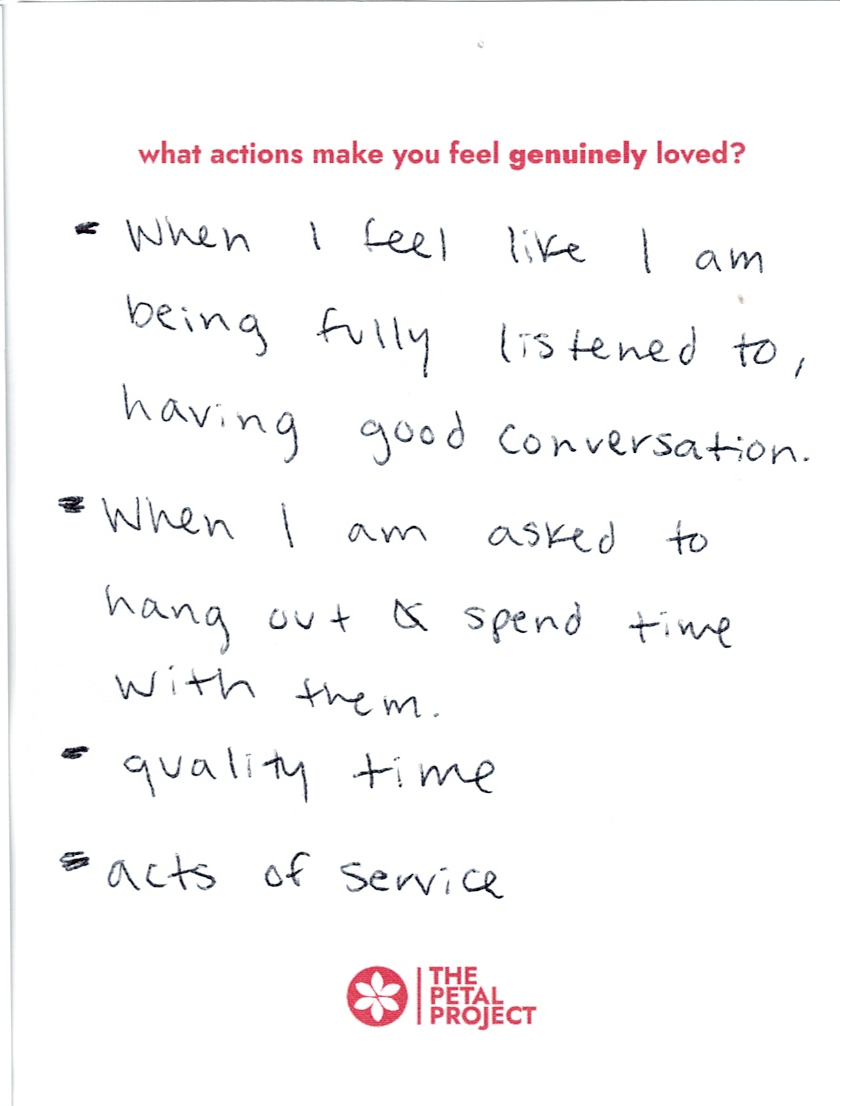
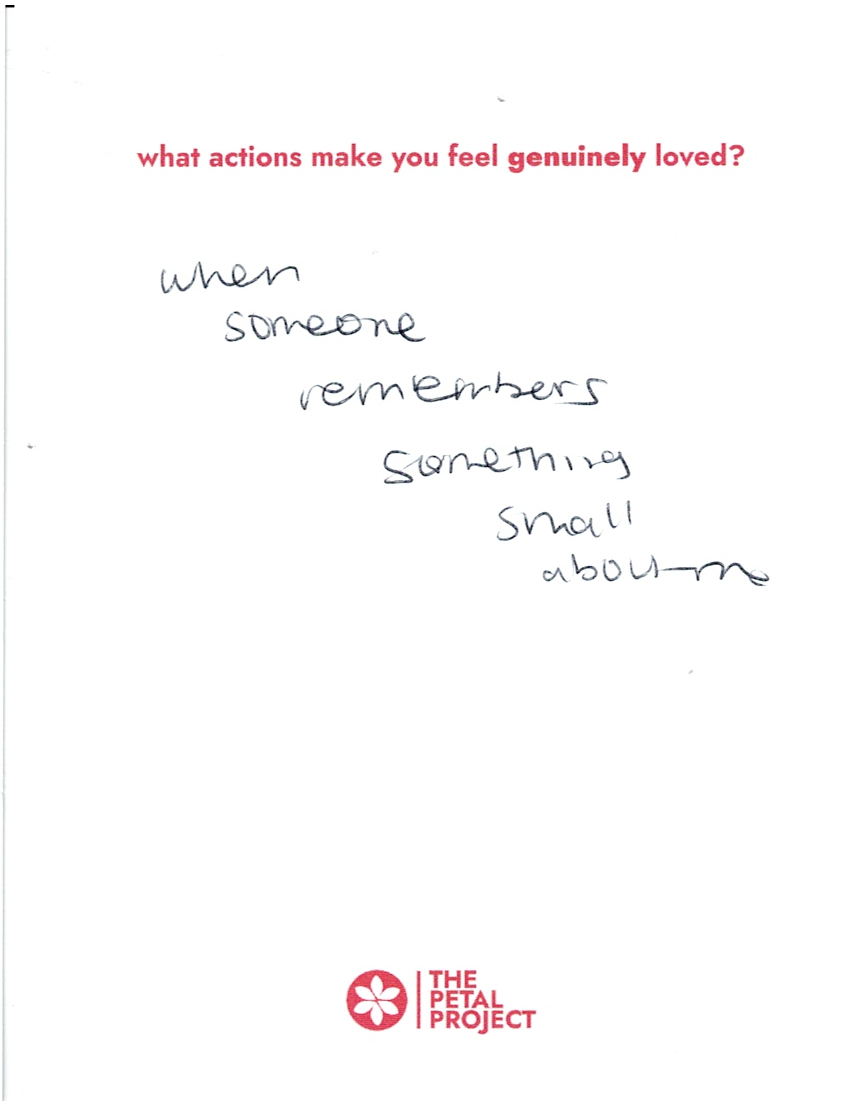
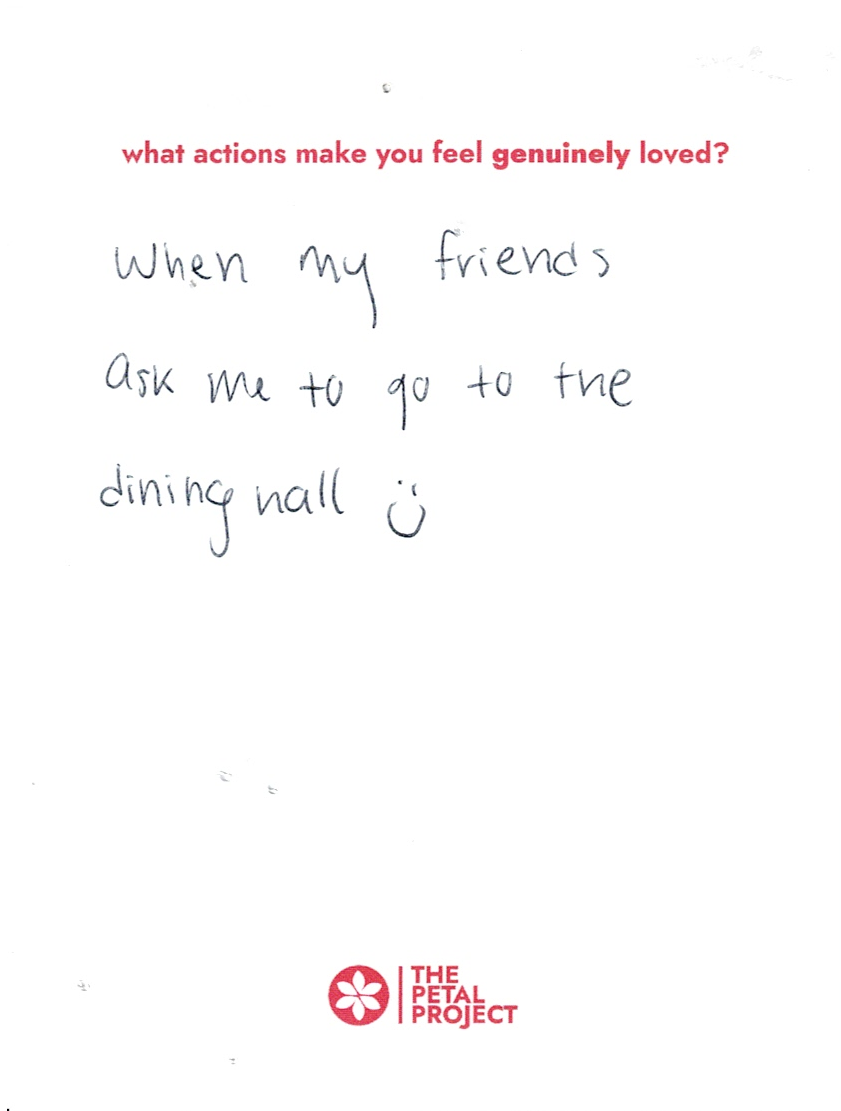
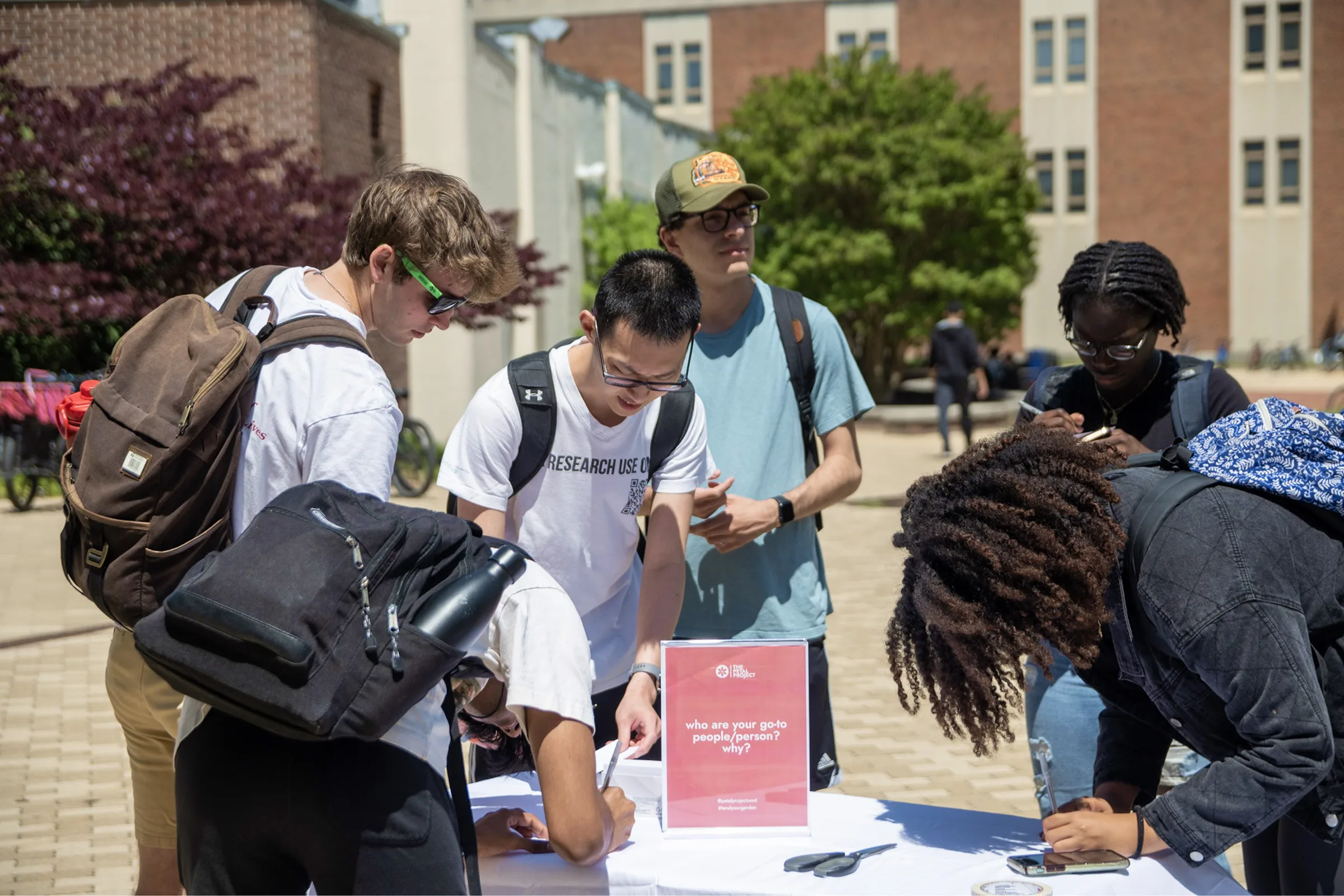
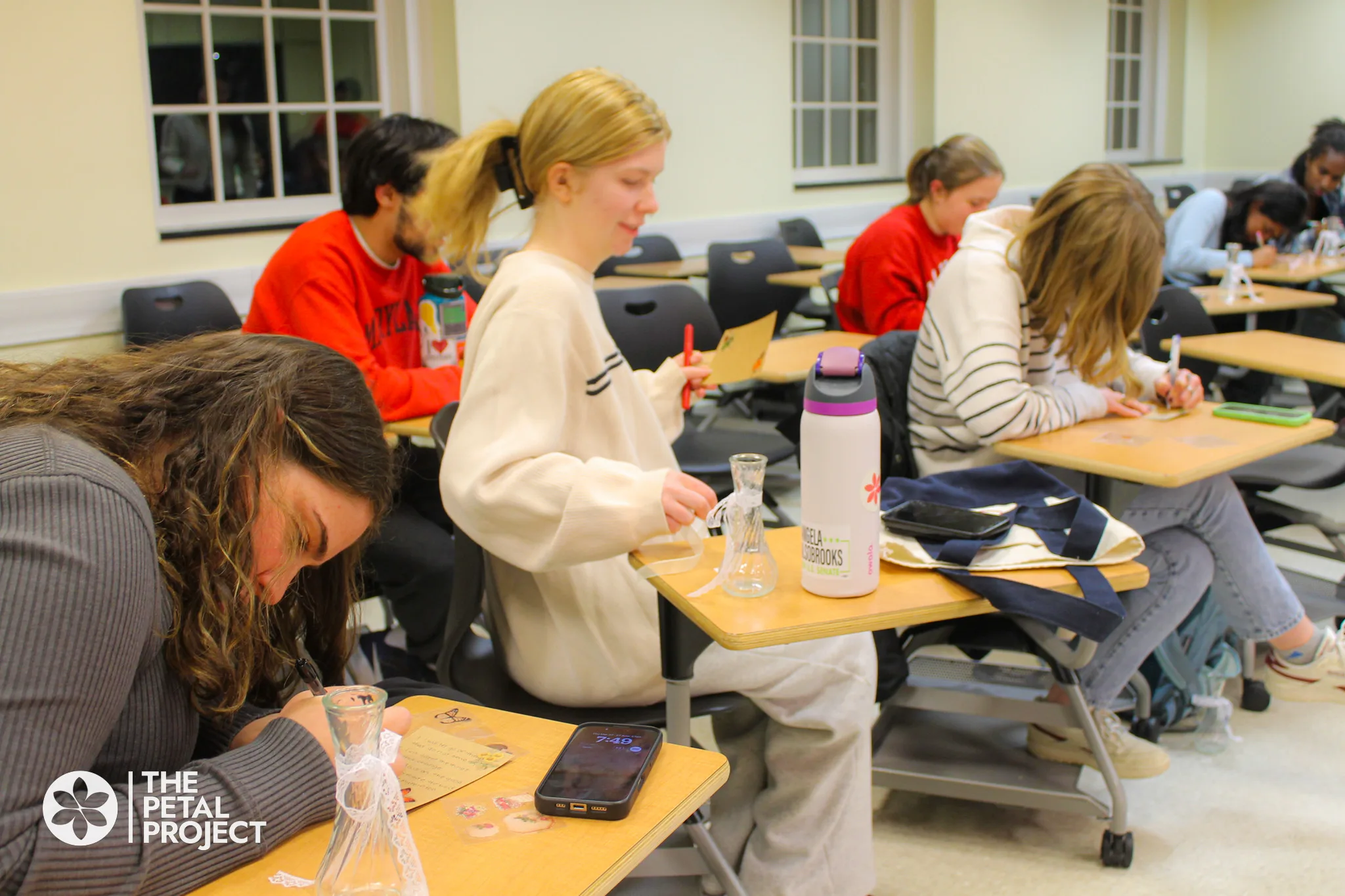
Prompt notecards were our most common form of live event engagement; attendees filled out notecards in response to prompts about relationships, community, and what it means to feel supported (each prompt changing per event/weekly theme). We posted these to the account and archived them on the website.
Posting them gave the account something no amount of designed graphics could: proof that people were actually there, and that our audience was highly receptive to the content and events we were sending out.
Per each week, theme release + educational content came first; event details were buried behind the slides in order for audiences to move through the knowledge first.
Photo event recaps went up immediately after events throughout the week, which gave time for our videographers to edit a larger recap video that would be posted at the very end of the seven days.
Education first, event details tucked behind the slides.
Posted immediately after events while excitement was highest and before the full edit was done.
Recap videos went up last, at the end of the week, giving our videographers time to actually edit.
This format would then repeat, giving us consistent engagement, energy, and anticipation for the length of the six week curriculum.
Pass the Petal was a video series to advertise Tunes and Ties ↗ at the end of the 2025 campaign. The concept was a twist on the Disney Channel "Pass the Plate" format: the video opens with UMD club founders holding a bouquet, each sharing what their community has meant to them. It gave each org something to share with their own audience, that the people around you are part of how you heal.
Open in Google Drive ↗Turning around six weeks of content meant detailed shot lists, organized file handoffs, and consistent naming. Every system was designed to get content from event to post as fast as possible without straining our designers and videographers.
We wanted the recaps to feel like something you would want to watch even if you had not been there, and to make people feel like they had missed something worth showing up for next week and encapsulated the true energy that was felt during the live interactions.
During the 2025 campaign, a full documentary was developed structured around the six-week arc from the planning phase through the sprint.
Faith and I's first step was identifying how we wanted to frame such a long, consecutive project: each week had a focus, and the themes were designed to tell a complete story together.
Year 1 covered how an abusive relationship starts, how to identify the signs, and how to heal from one. Year 2 zoomed out to self to self, self to partner, self to family, self to friends, self to community. The idea was that healthy relationships don't exist in isolation.
The logic was layered access; someone not ready for a workshop could still take a flower, and someone curious could stop at the smaller activation.
This also gave us a chance to allow our team breaks, and accommodate for busy executive board schedules with school running concurrently.
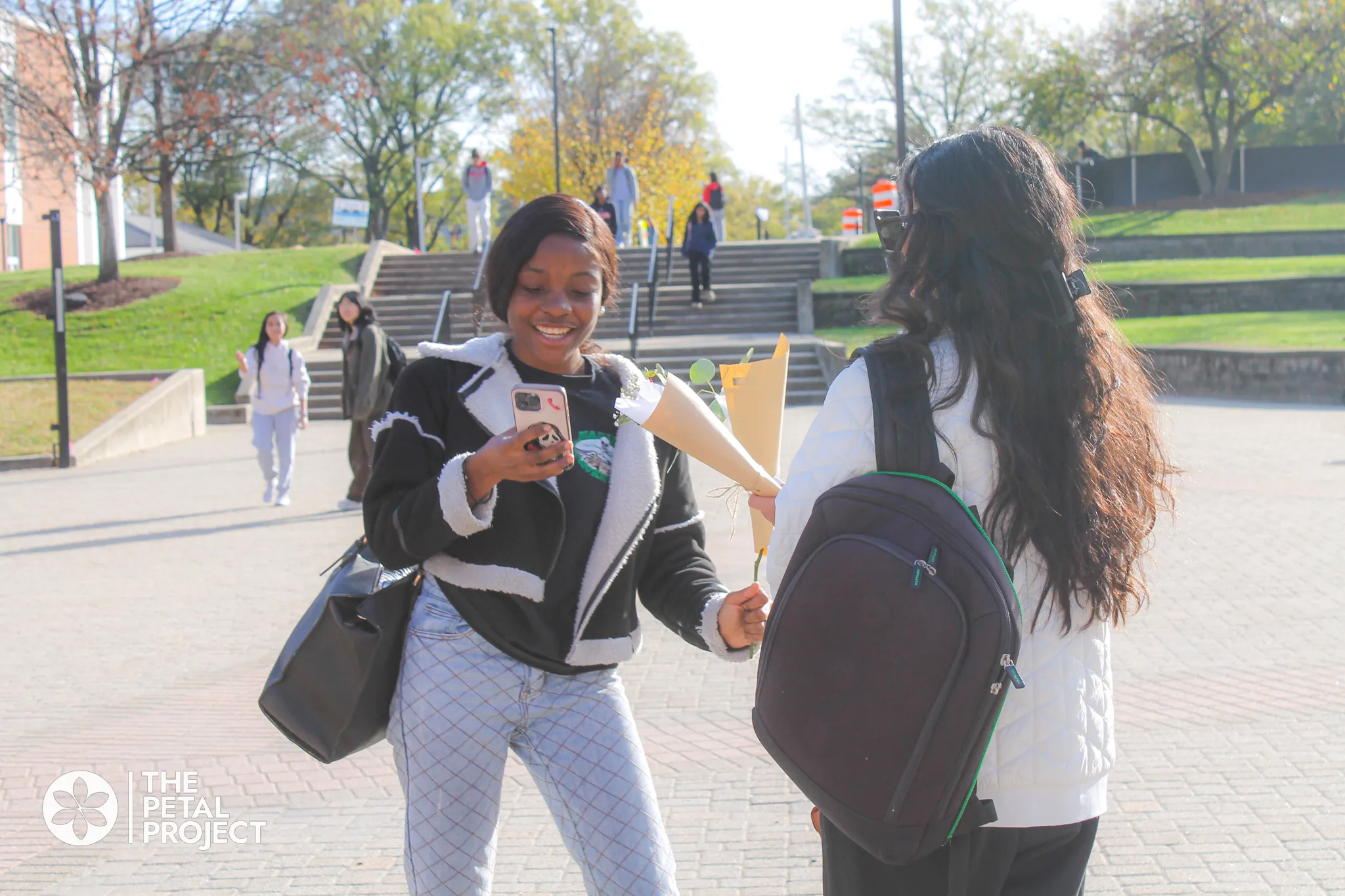
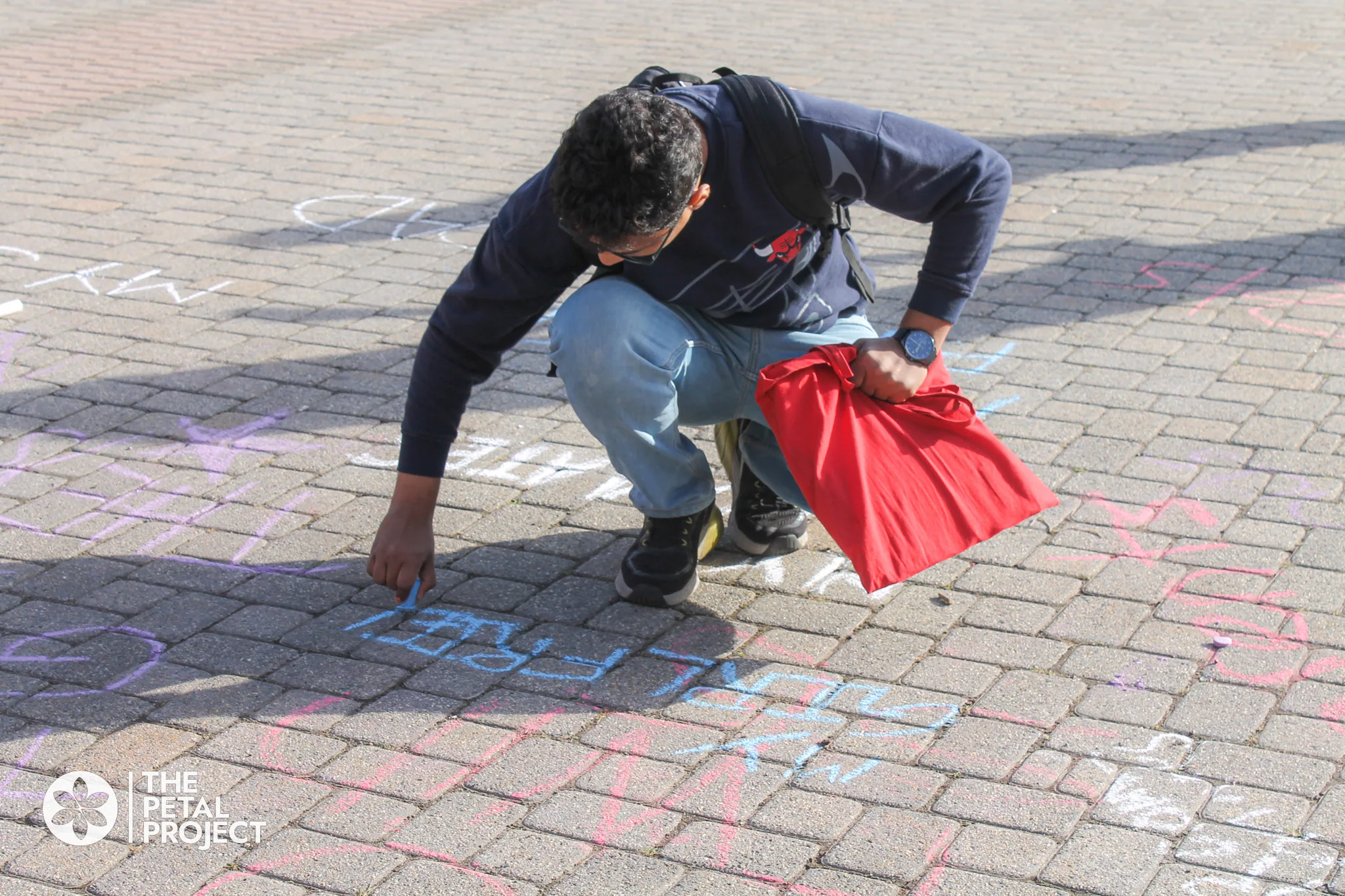
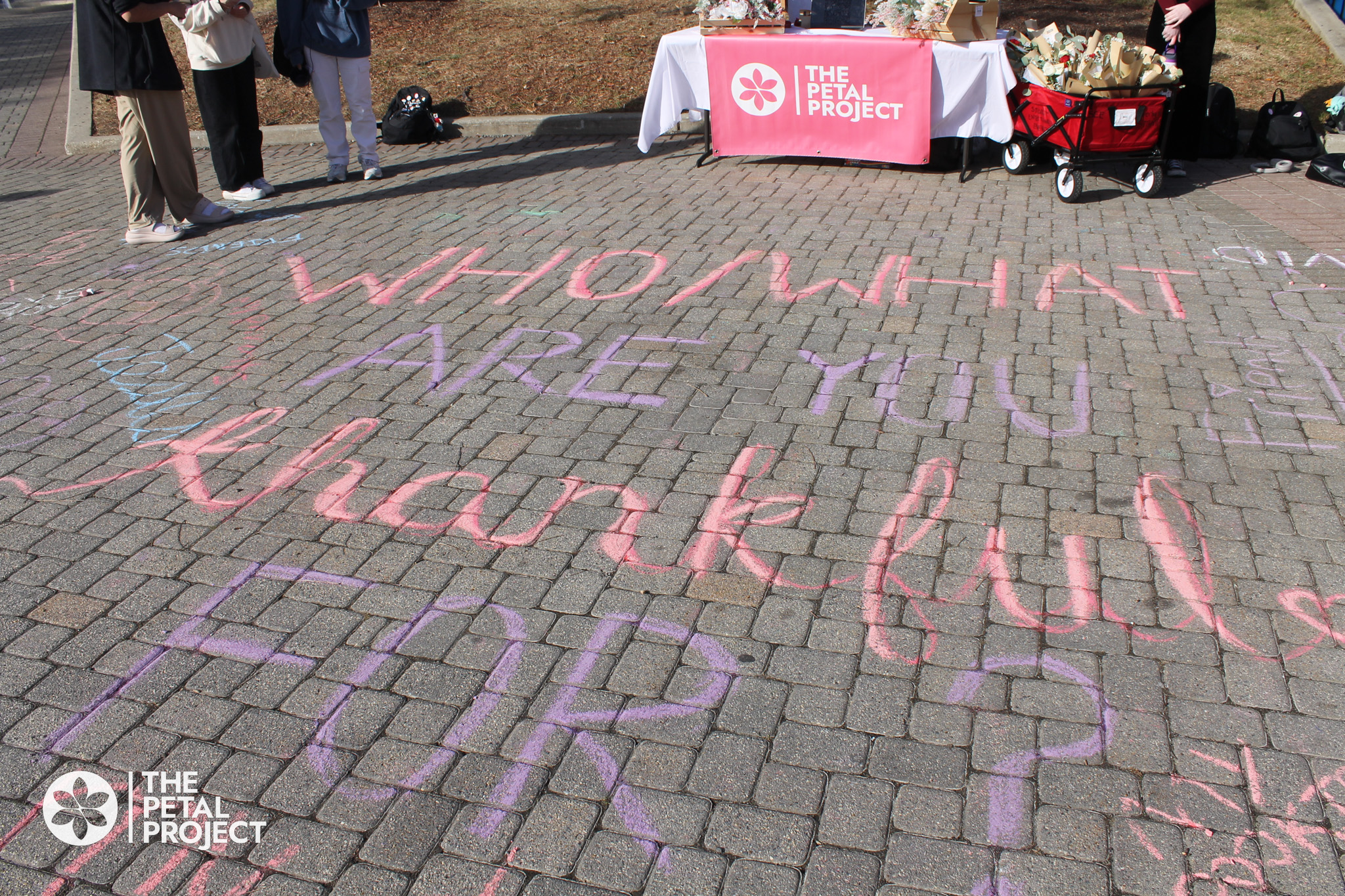
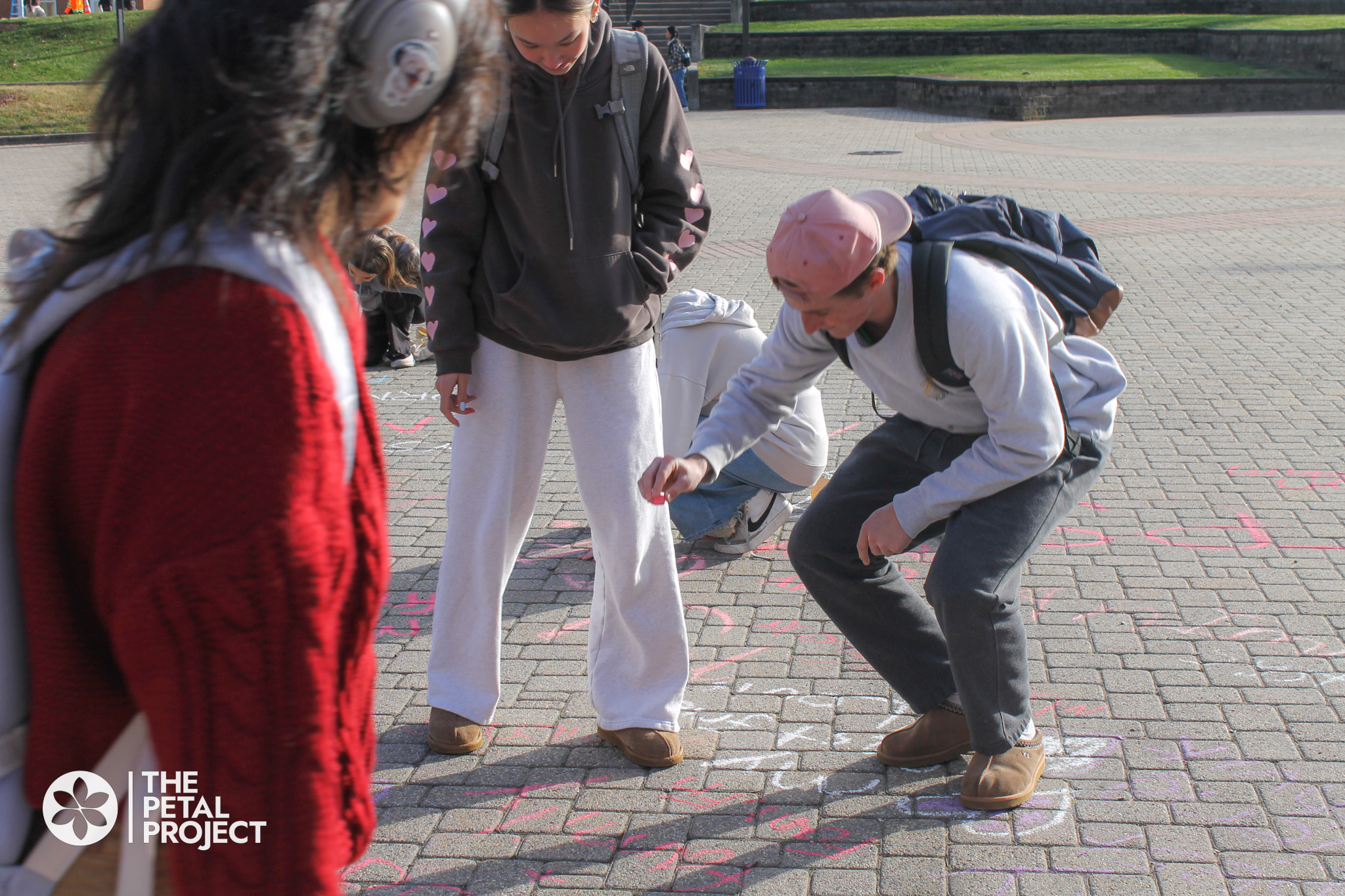
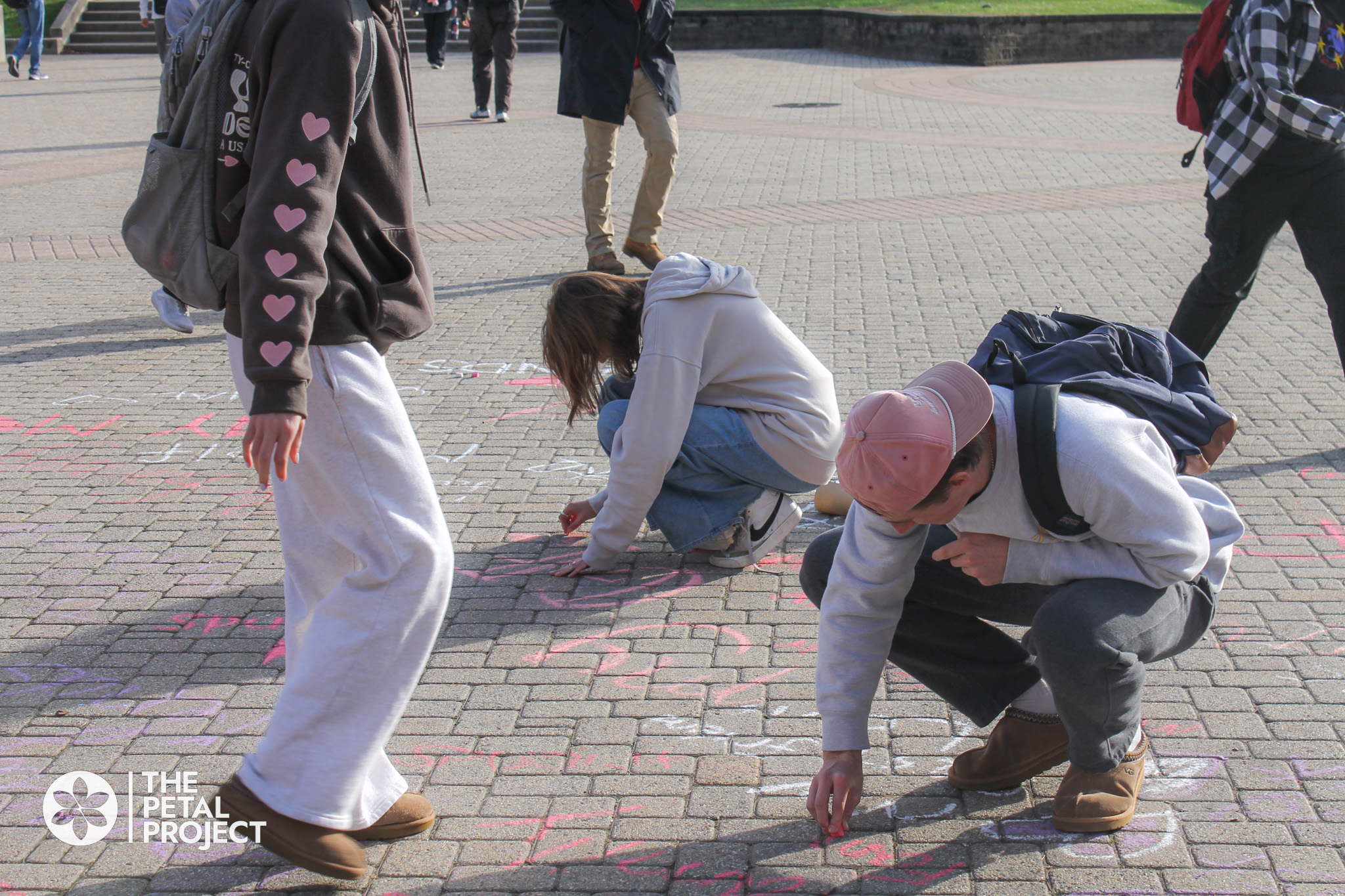
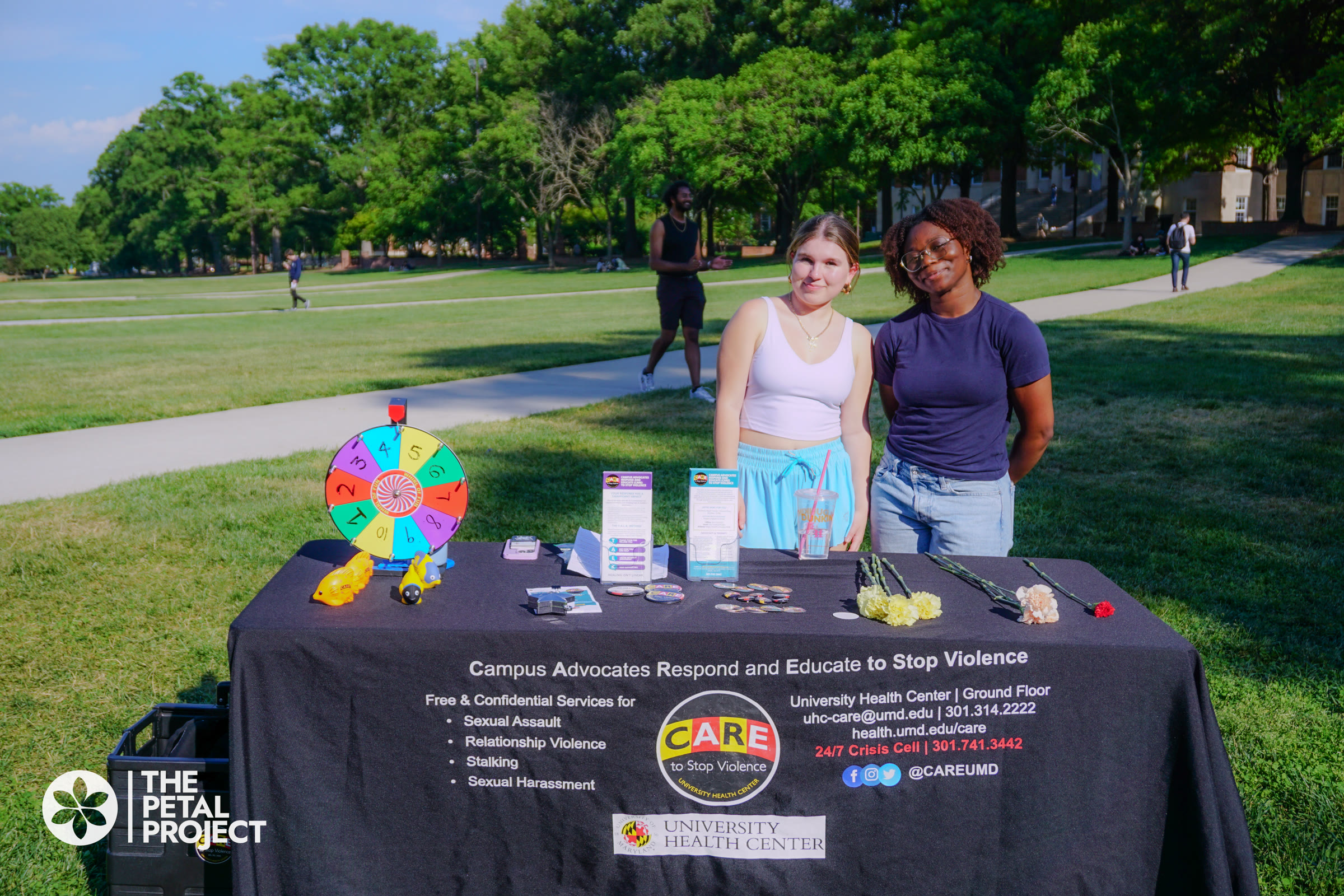
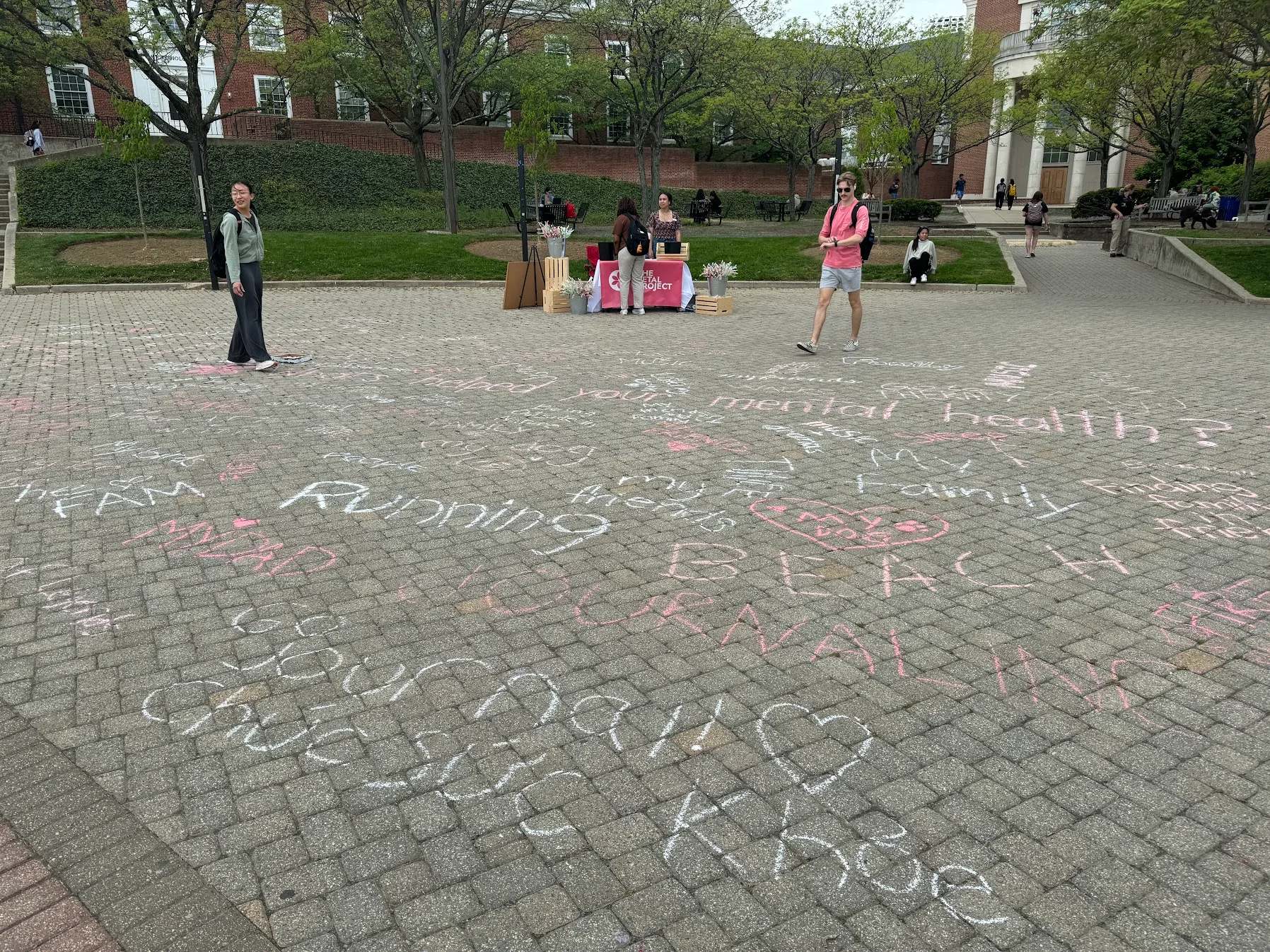
Not every activation required us to be there. Chalk prompts, flower buckets, note-writing stations: these extended the reach beyond our hours (often being up from 8am-5pm) and left marks that stayed. While we weren't physically able to be there, the campus became part of the campaign.
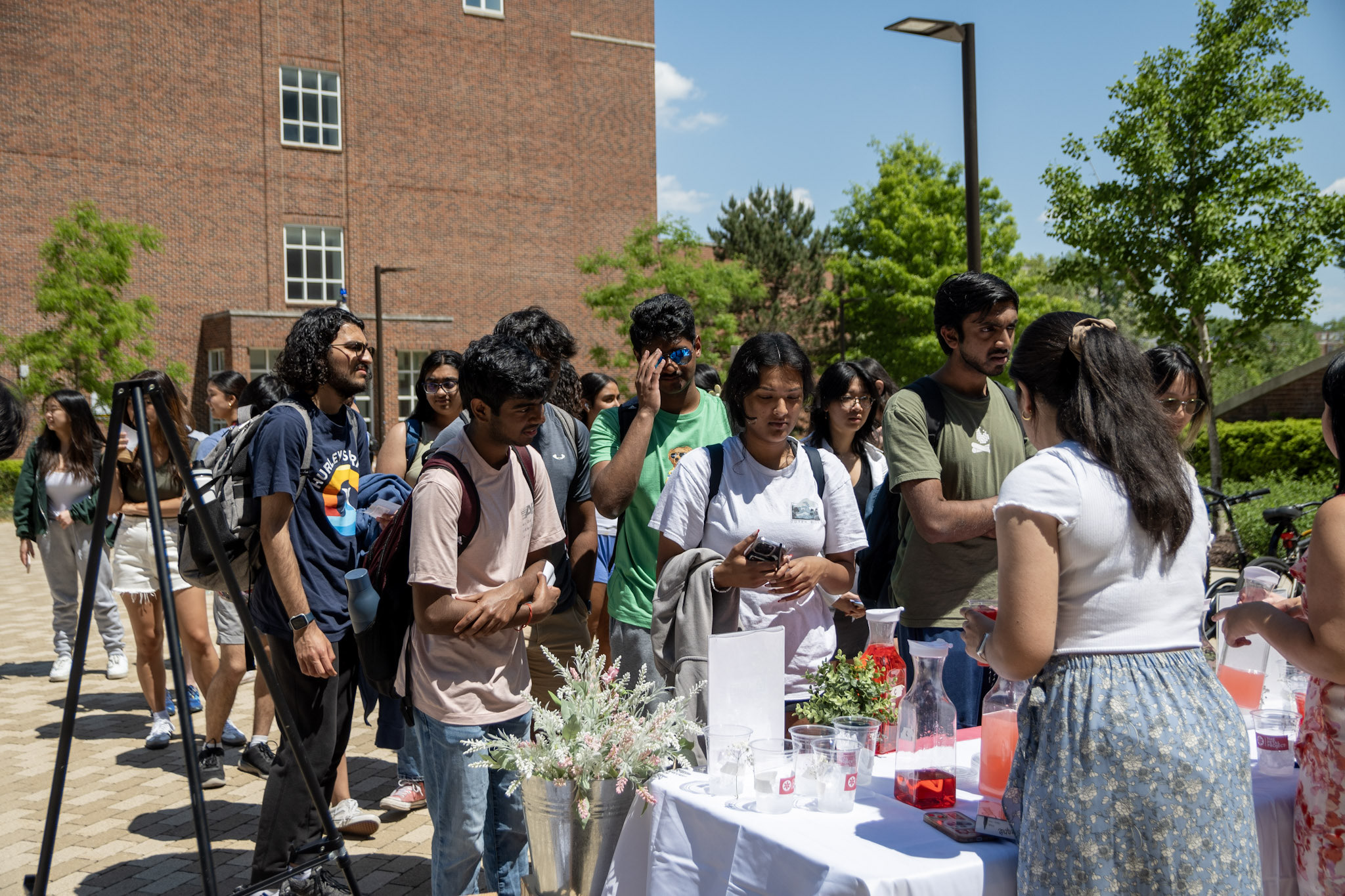
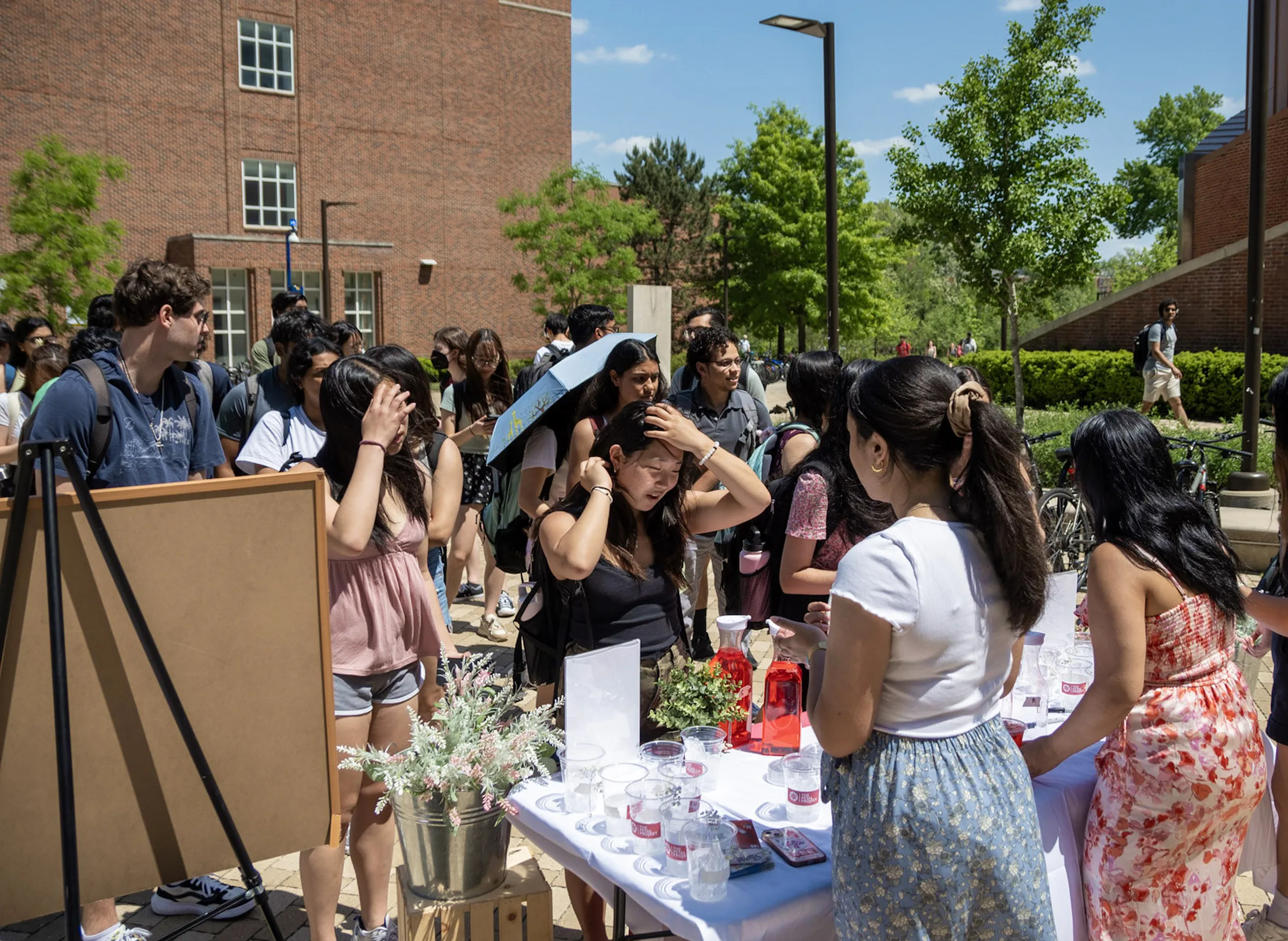
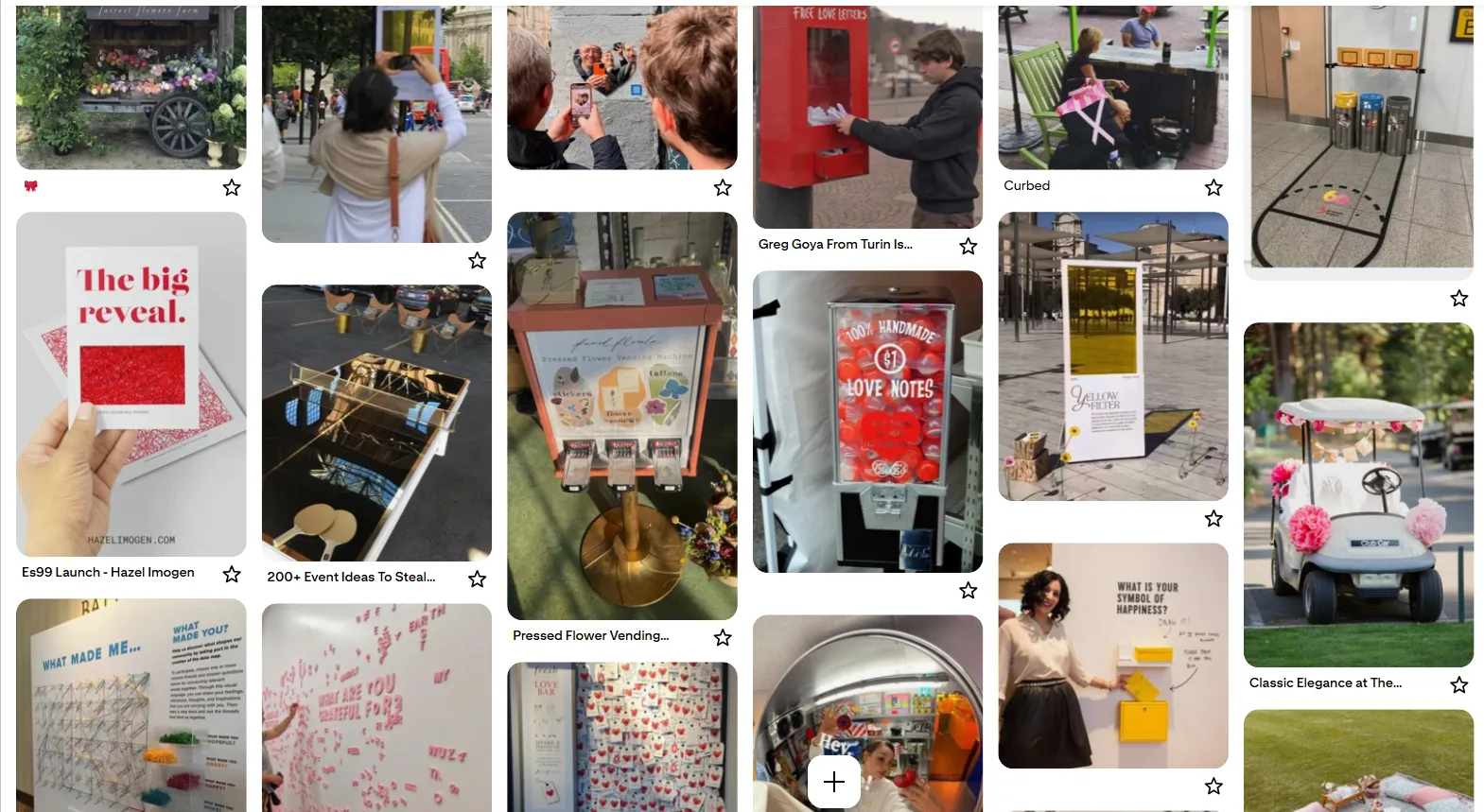
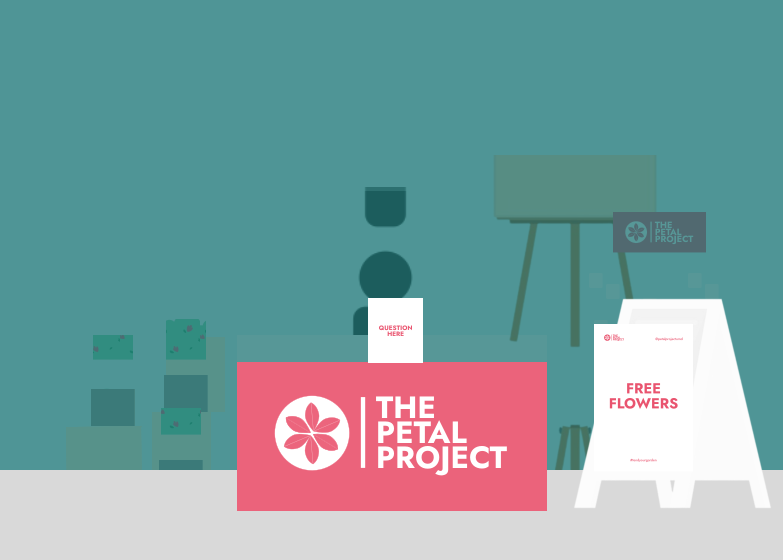
Especially for larger events, the physical user flow was its own design problem. With large crowds and a booth that had both an activity and a flower/item giveaway, I knew that large queues were bound to form. In order to accommodate this, I ideated on what a split flow would entail.
Separate tables meant two things could happen at once, meaning shorter queues. And where there was a queue, team members were stationed in line to ask trivia questions, give out information on the org, and entertain those waiting.
We also thought hard about location: foot traffic patterns, line direction, where the sun would be (especially for food/beverage giveaways), and how close we were to building entrances. All of it got walked through before event day, making it easier for our setup crew to do quick and efficient work.
Splitting the booth into activity and flower tables solved the single-line problem and made the wait feel like participation.
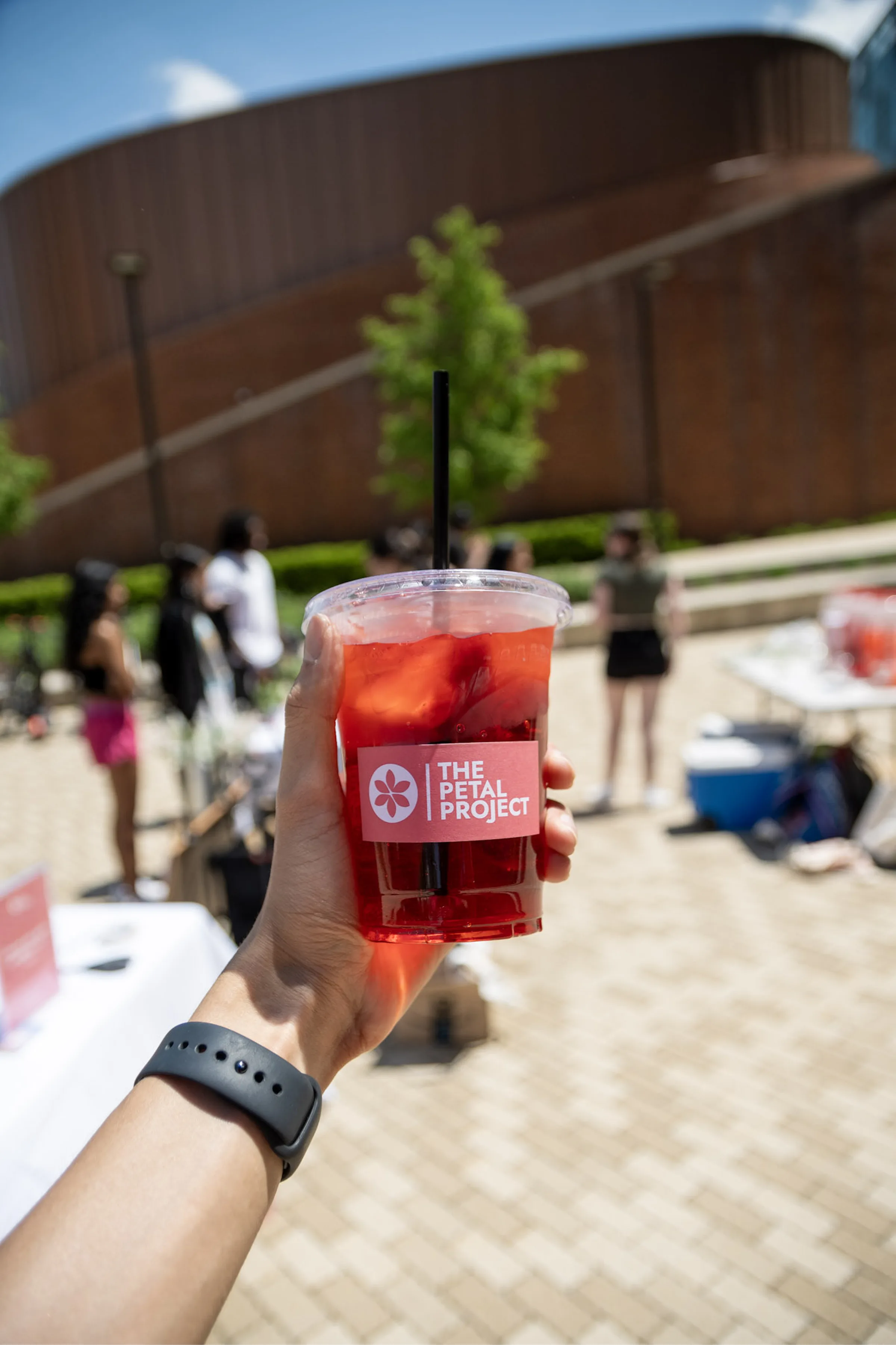
We also designed small moments of delight into the physical touchpoints themselves: custom stamps on the zines ↗, names handwritten directly onto the drinks.
For beverage giveaways, I deliberately avoided a pre-packaged setup, which would have moved lines faster, and instead engineered a flow where we put the ice in, poured the drinks, and added the toppings ourselves.
This built a deliberate 30-second interaction that let us actually look guests in the eye and talk about the prompt they'd just filled out, turning the giveaway into a real experience instead of a transaction.
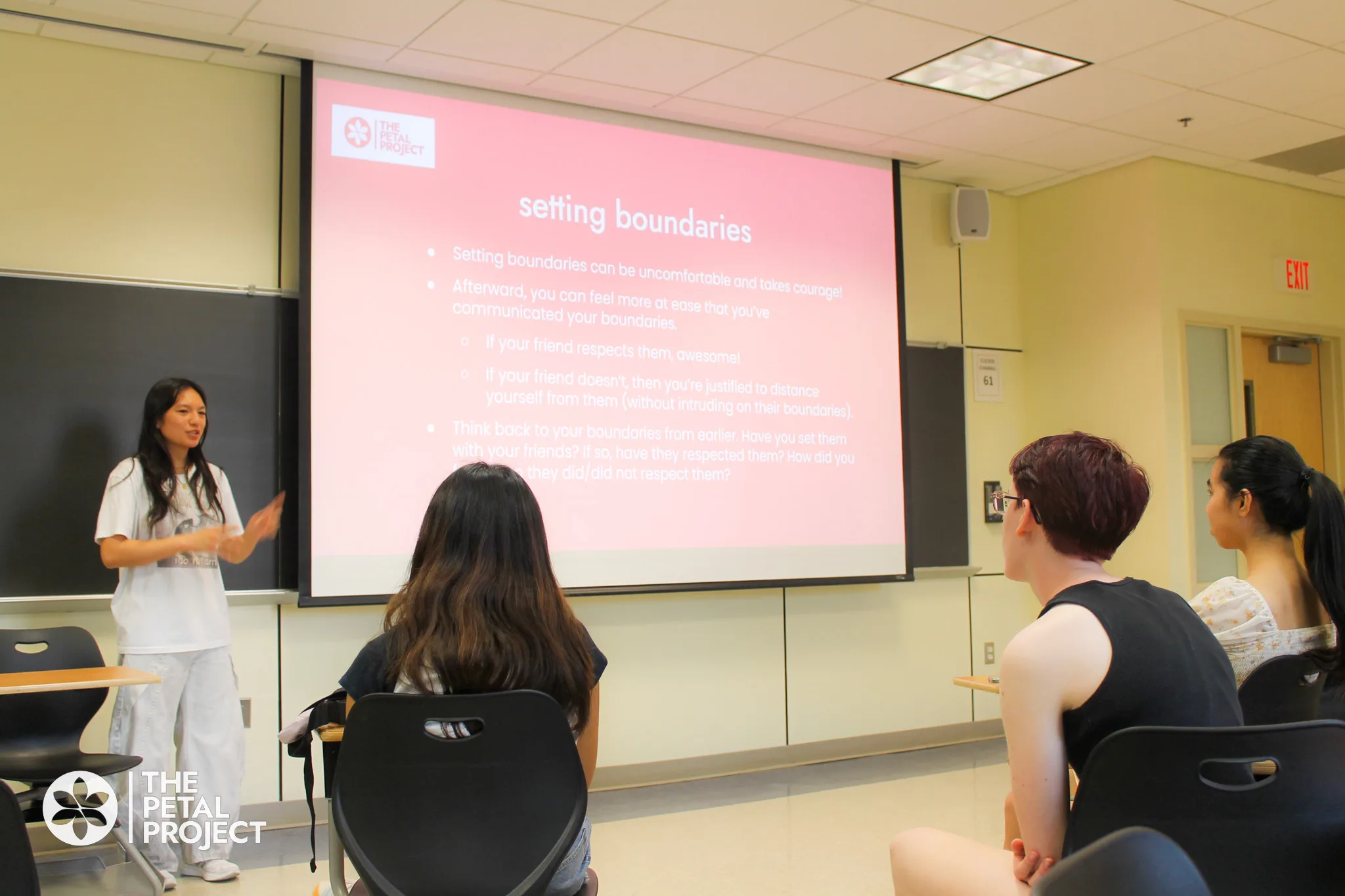
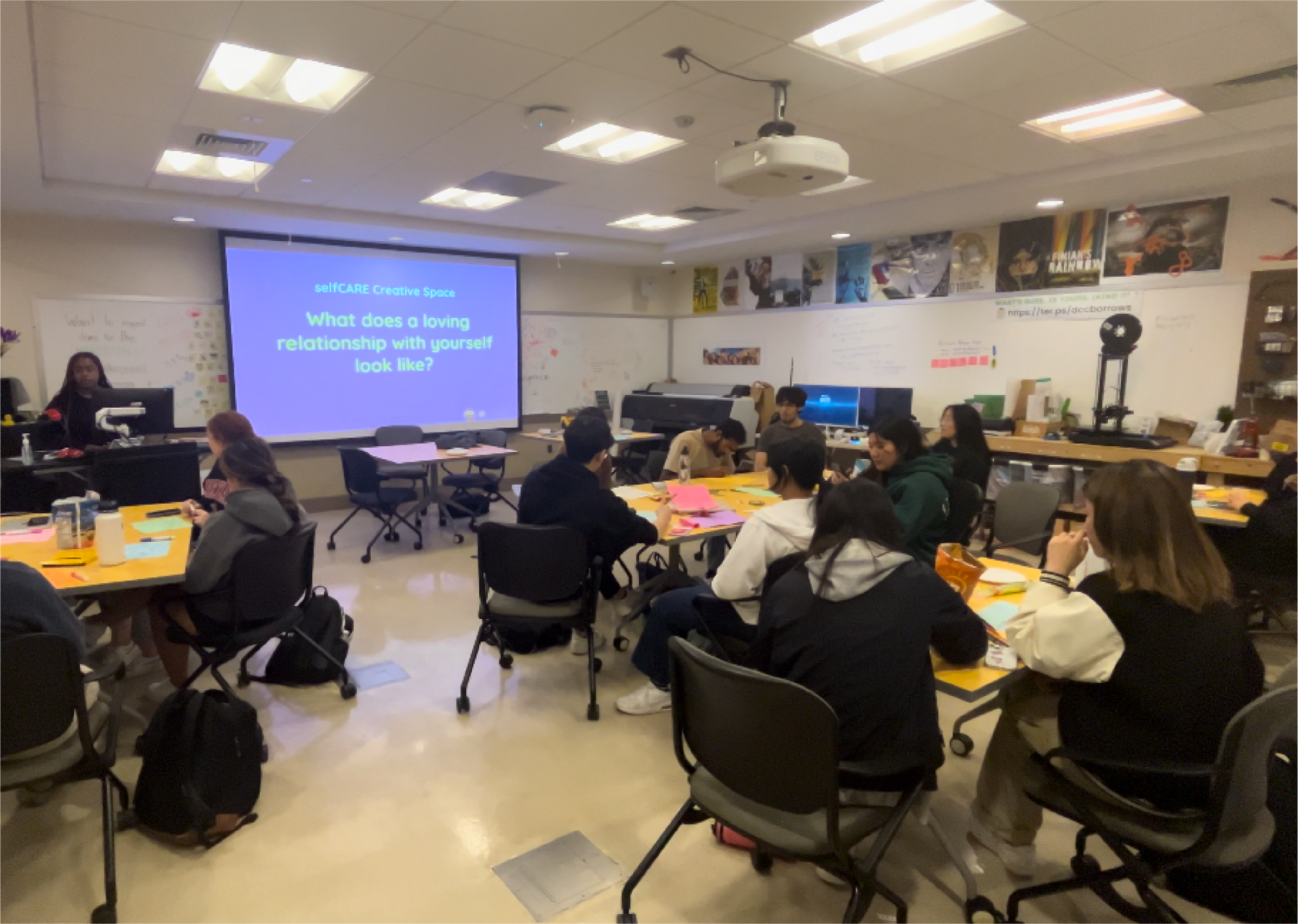
Where tabling events met people in motion, workshops were for the ones who wanted to actually sit with the topic. The curriculum for workshops came from our web team's research every week, then got handed to design to adapt into event materials and zines. Whether someone came to the workshop, took a zine, or swiped through the Sunday carousel, it was the same story told.
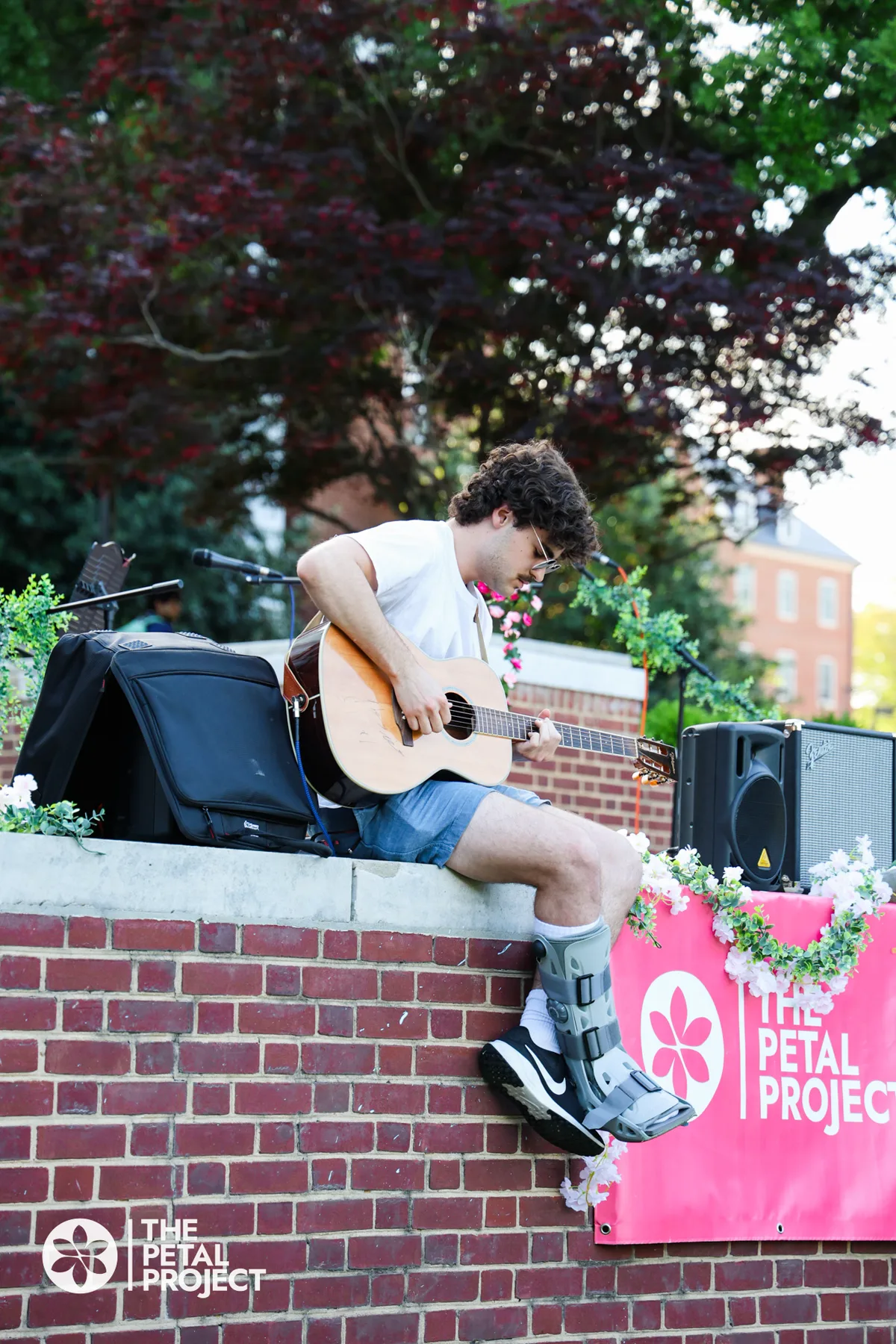
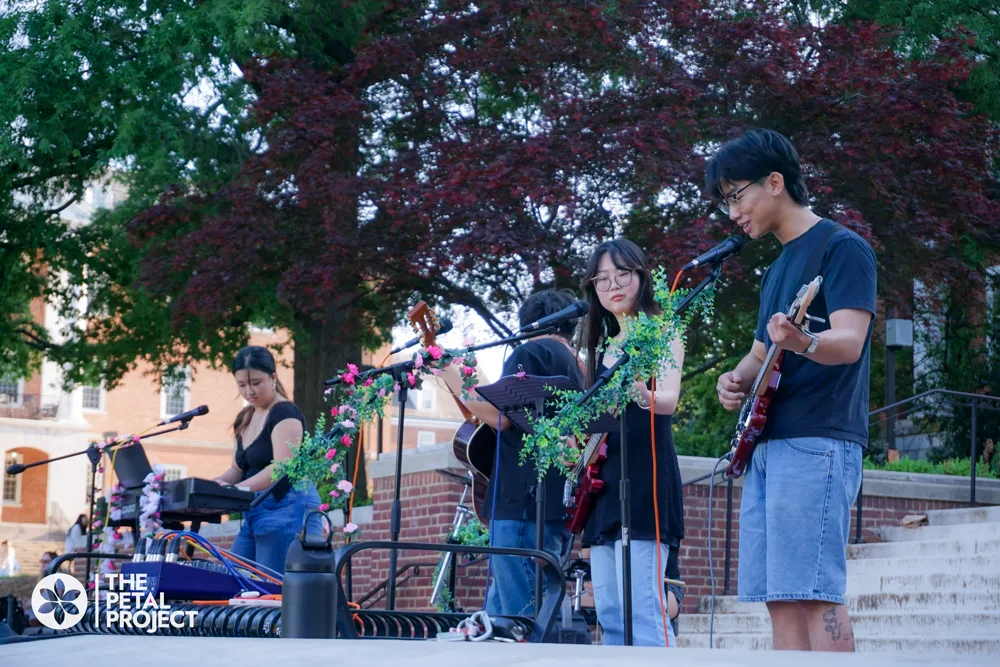
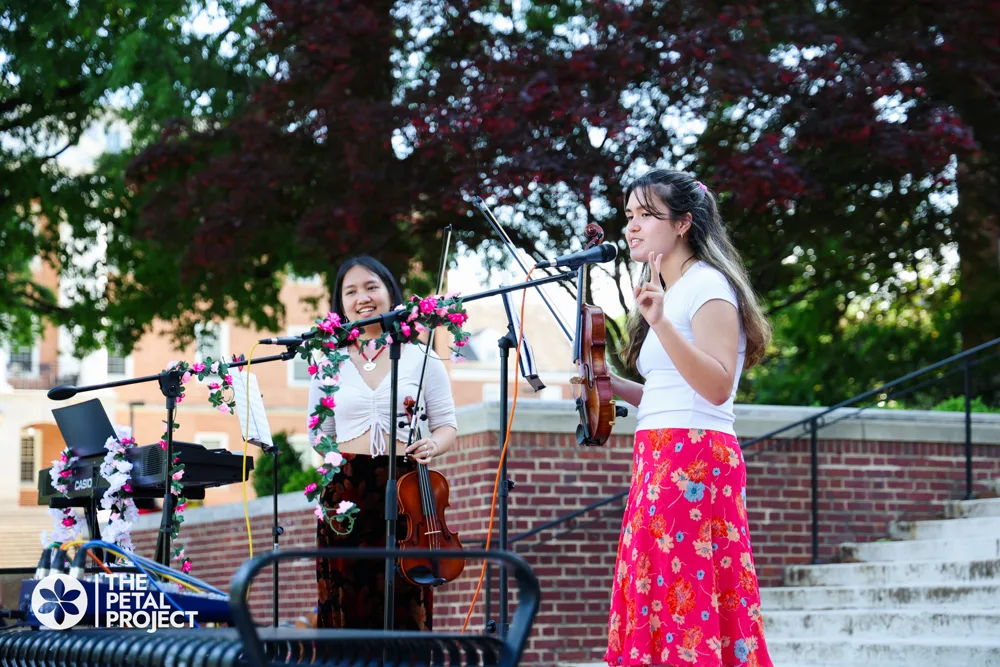
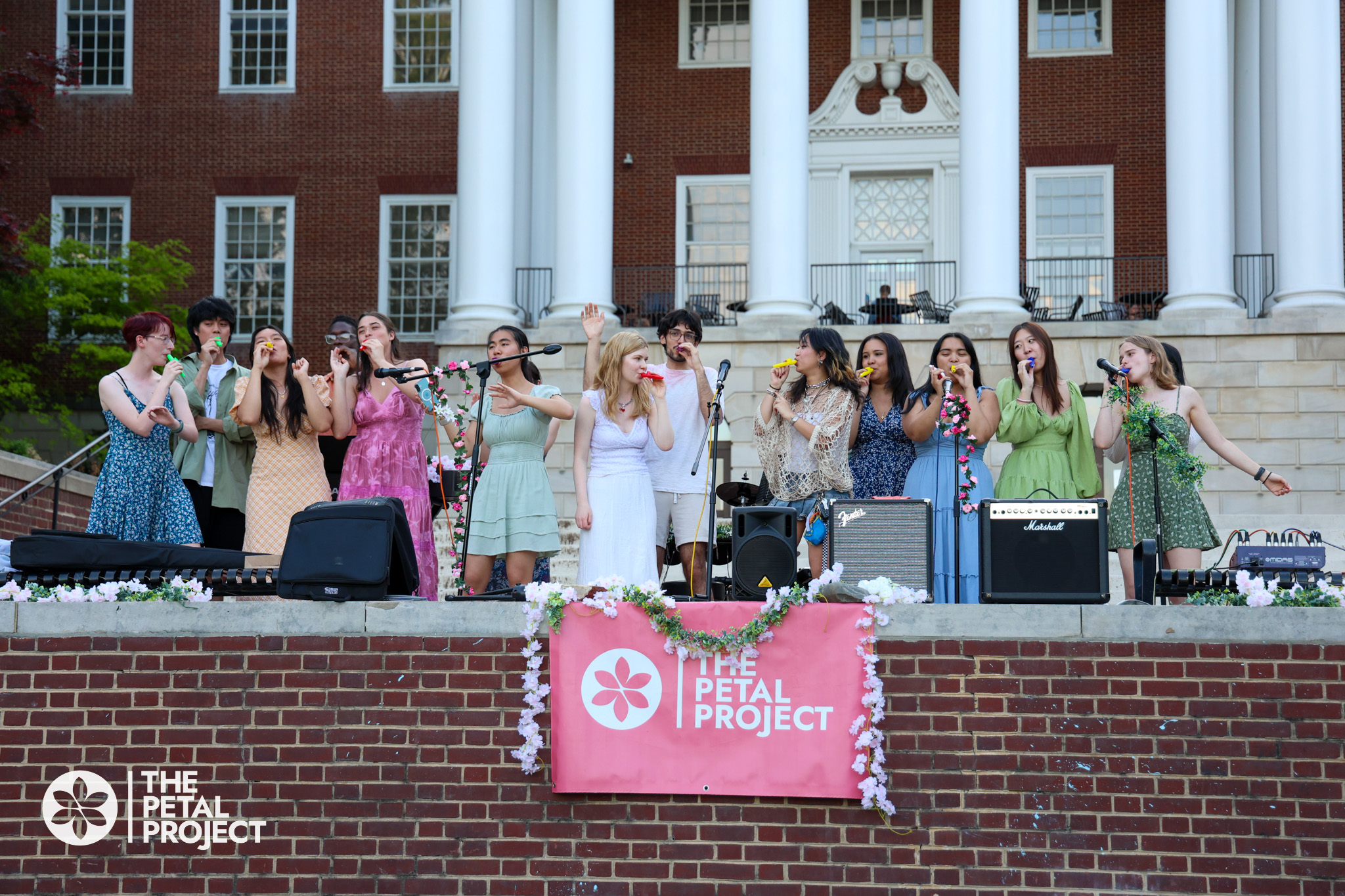
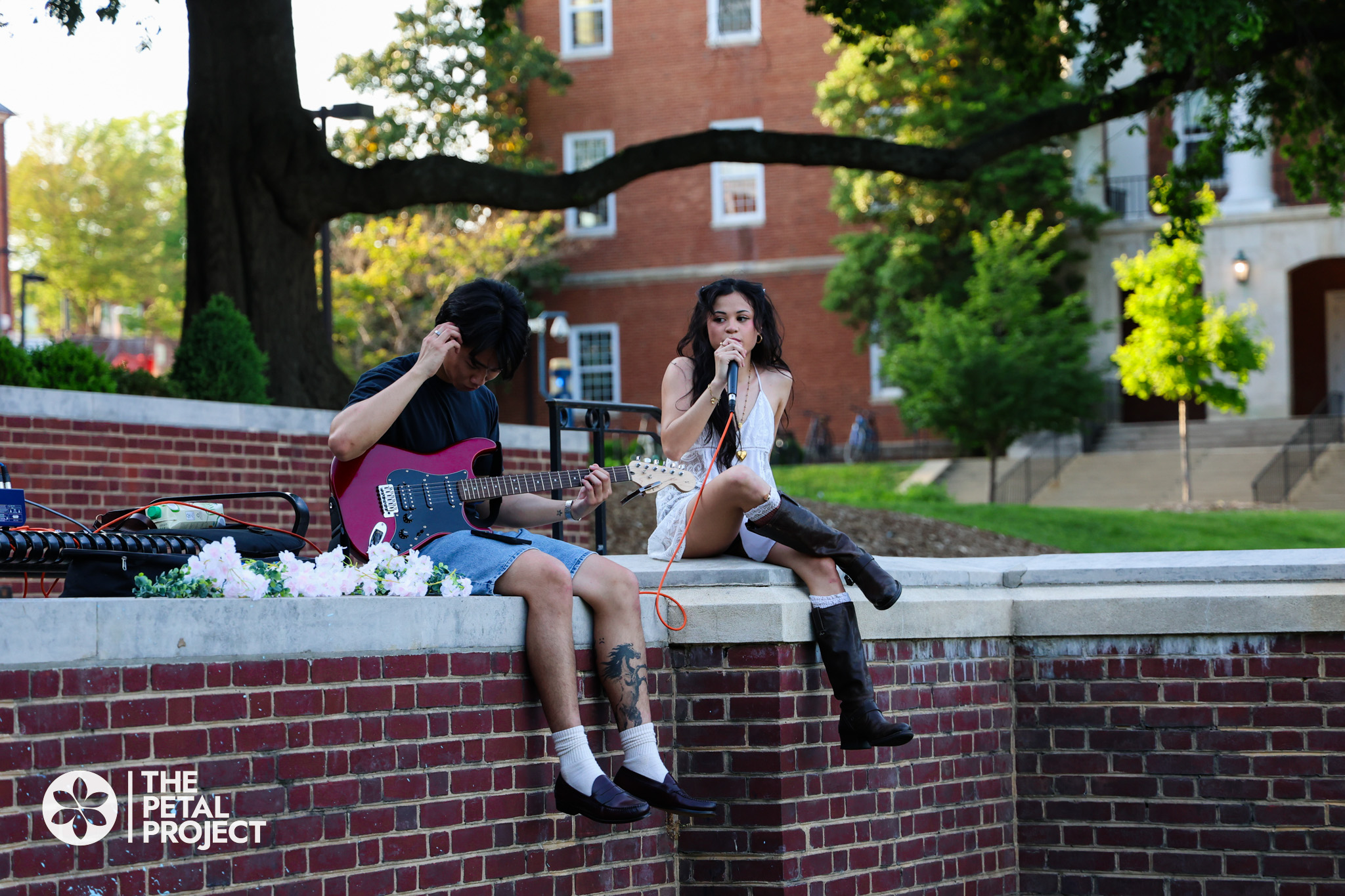
We pitched Tunes & Ties back in 2023, before we'd ever run a single event, but we didn't have the club relationships or the track record yet to pull off something at that scale. Two years and two full campaigns later, we finally did it: partner clubs, live music, food, flowers, and all proceeds to My Sister's Place ↗.
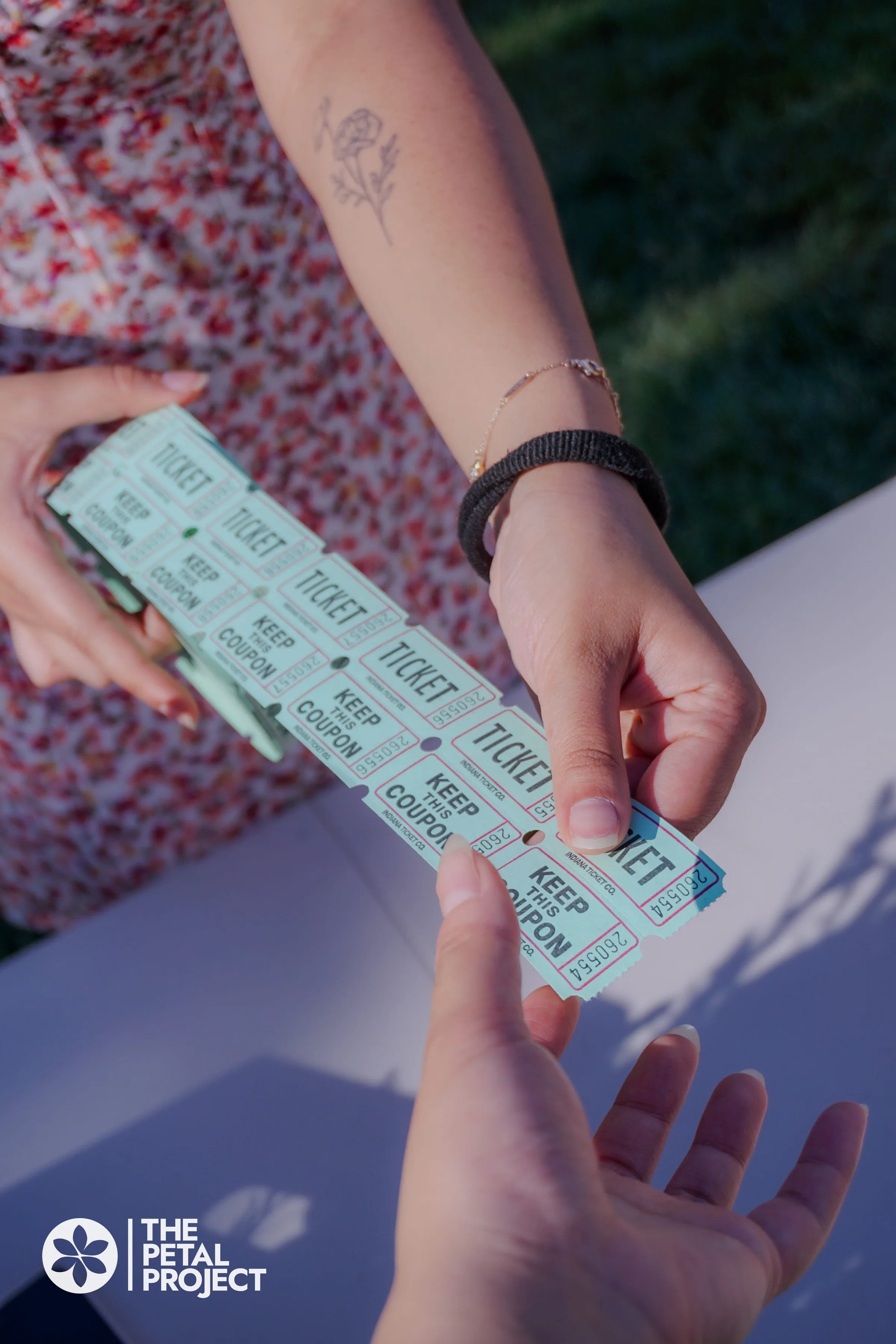
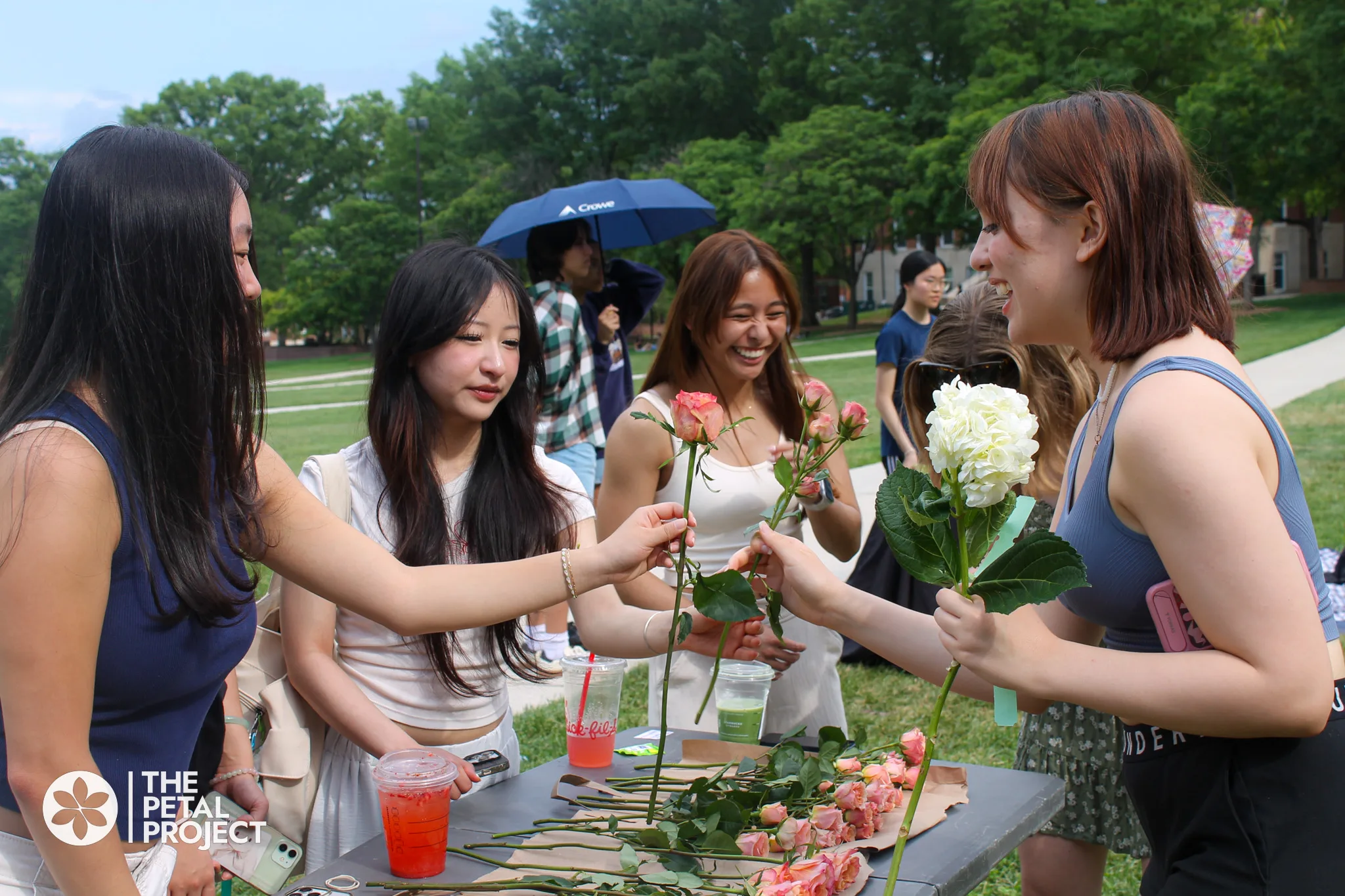
Students bought $1 tickets, and each ticket bought one flower from any club's table. To build a full bouquet, you had to visit multiple clubs, which meant every org got to share their mission with every attendee.
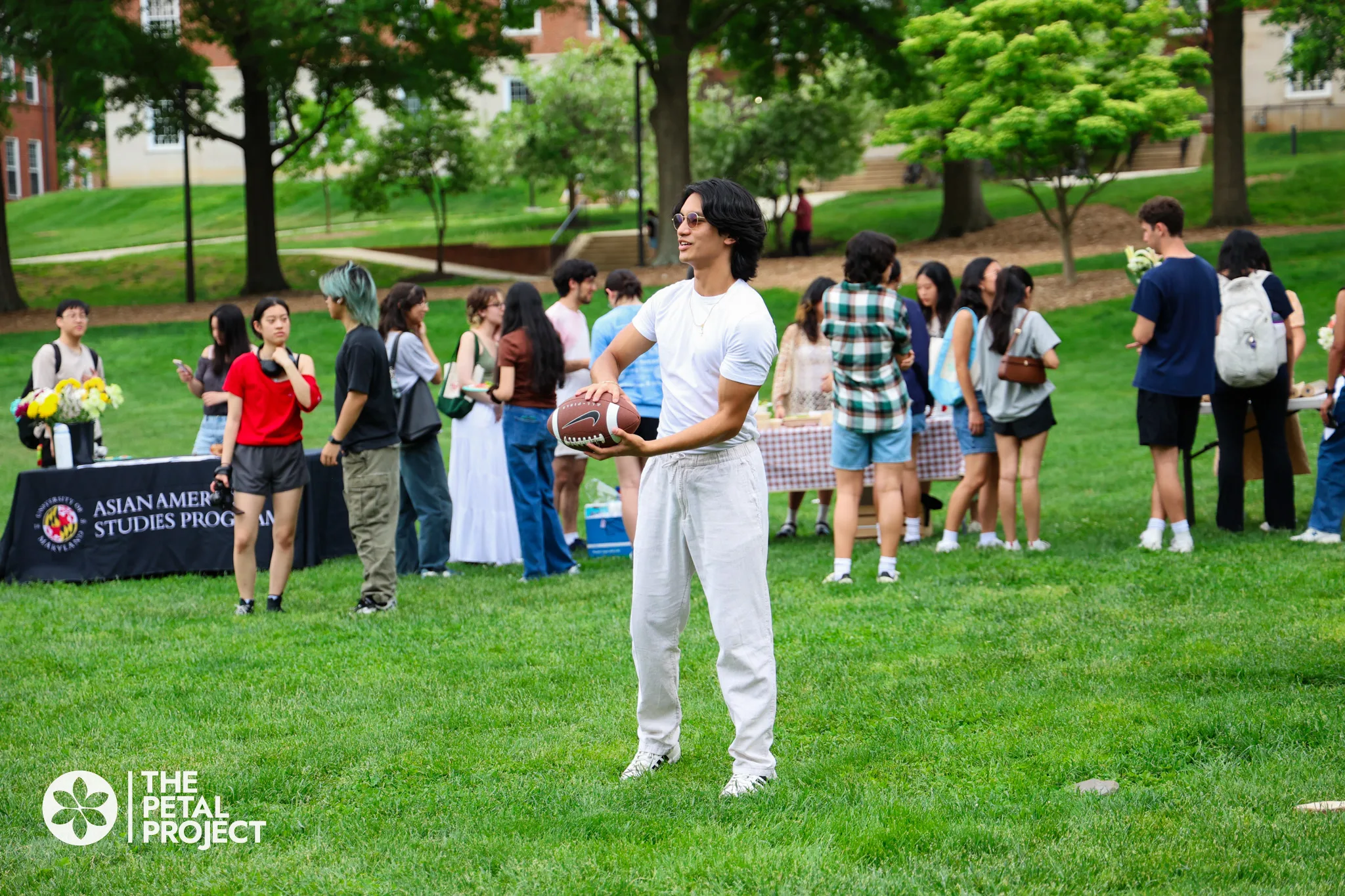
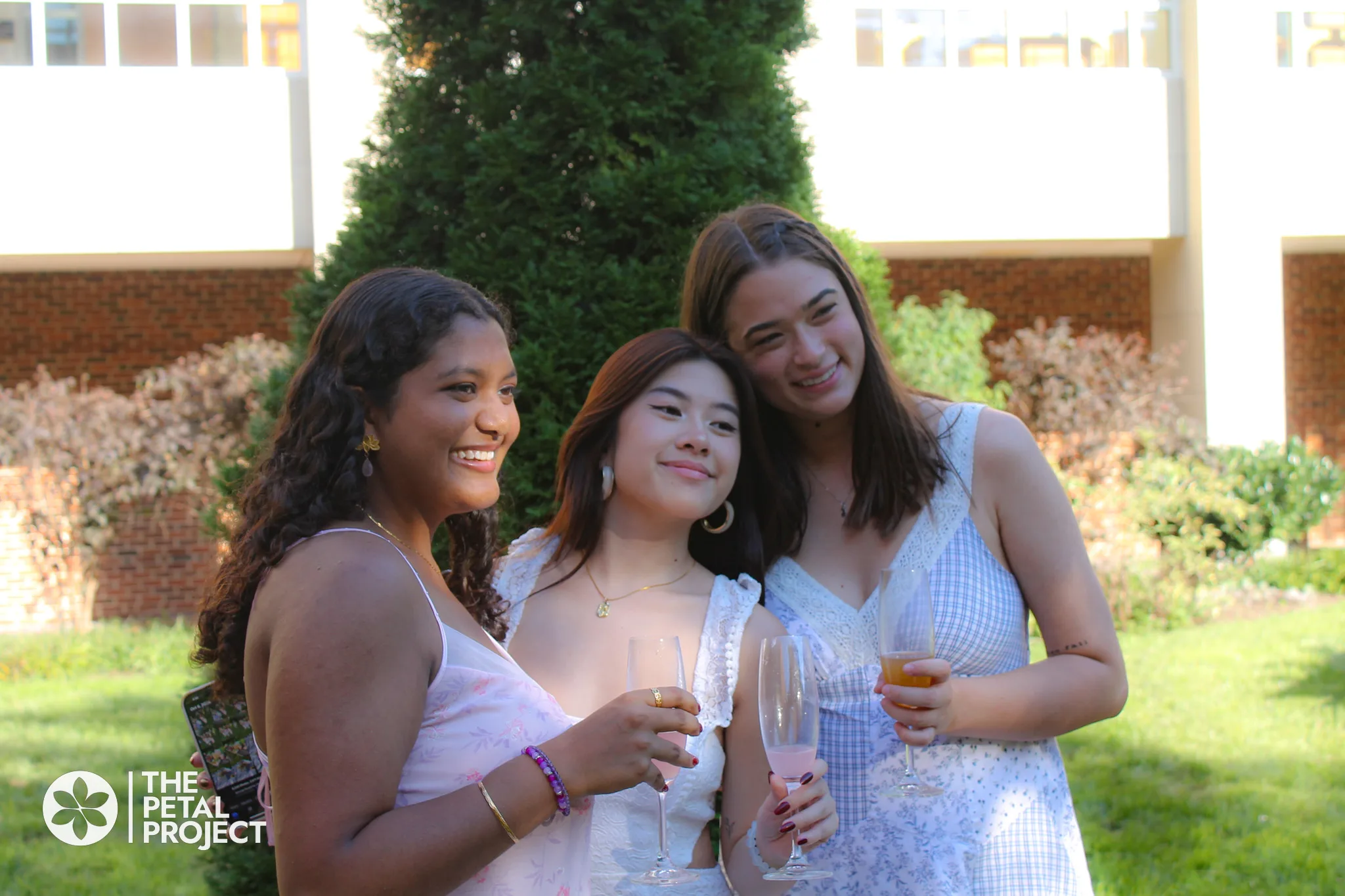
Tunes and Ties, Year 2 — McKeldin Mall.
The lineup spanned tech orgs, cultural and identity-based clubs, mental health and advocacy groups, and Greek life, so no matter who someone came to see, they left having walked through several other missions to build their bouquet.
While I knew exactly the events I wanted to put on, and exactly the way to do it, I realized we were missing one crucial component: manpower.
Transport help for load-in and load-out; extroverted general helpers to draw crowds and keep lines moving; photographers and videographers; people with connections to cheap flowers and food; even two college newspaper reporters for press.
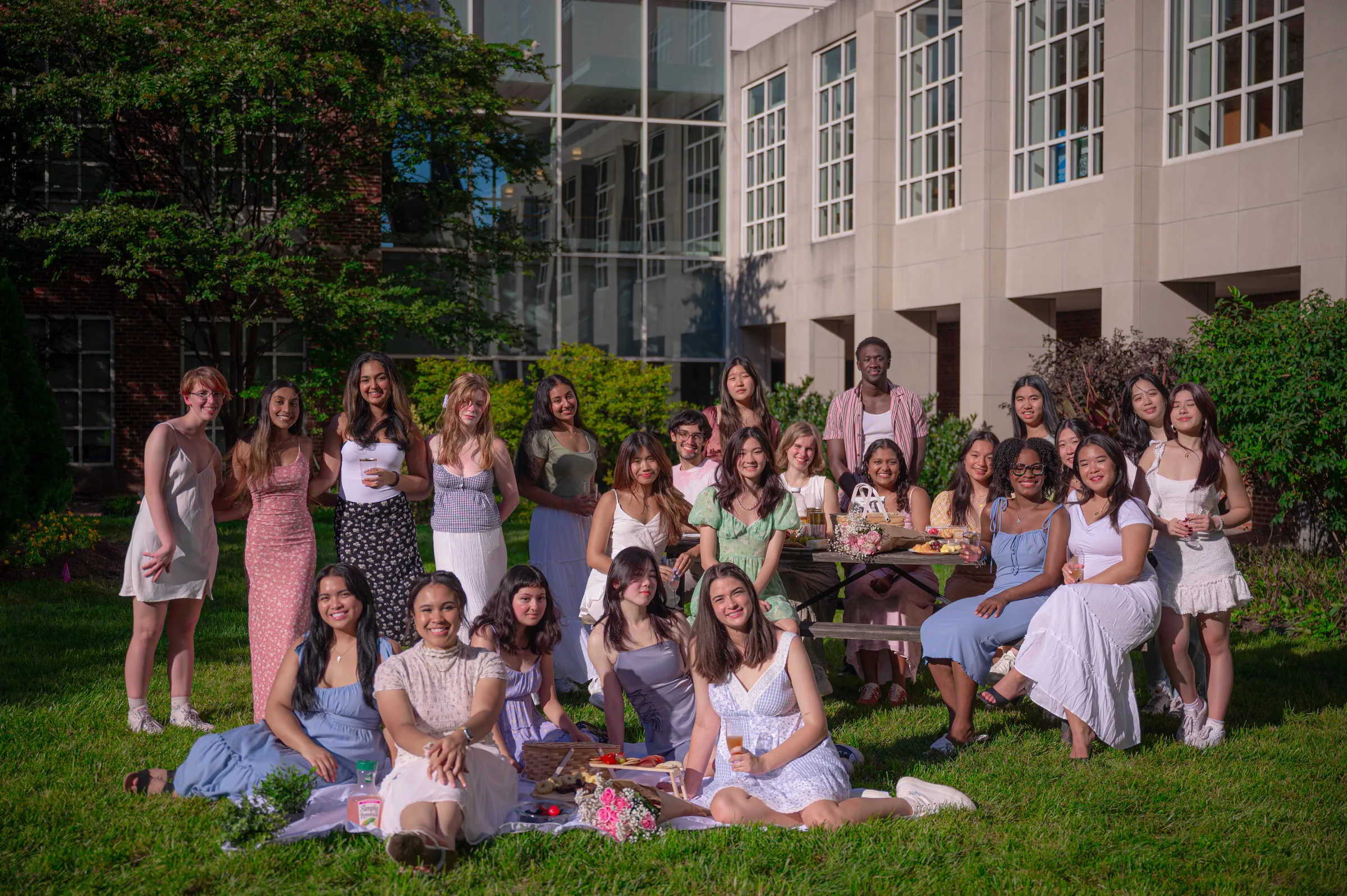
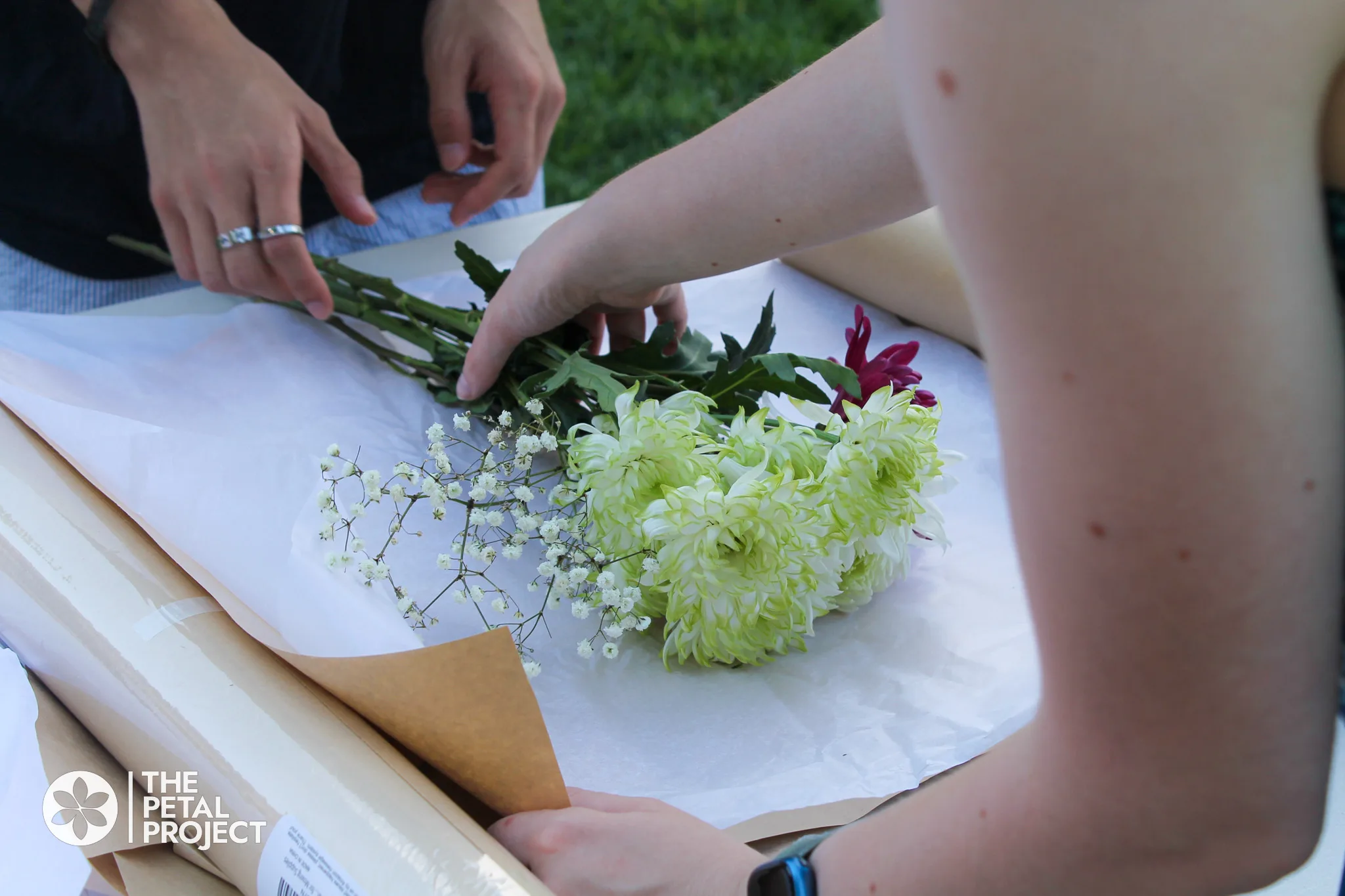
Once we realized we needed help, we feared we wouldn't have enough hands. To our surprise, we had a group of 15 people consistently show up to help us wrap hundreds of bouquets, fold zines, drive cars, man booths, and allow our project to take off.
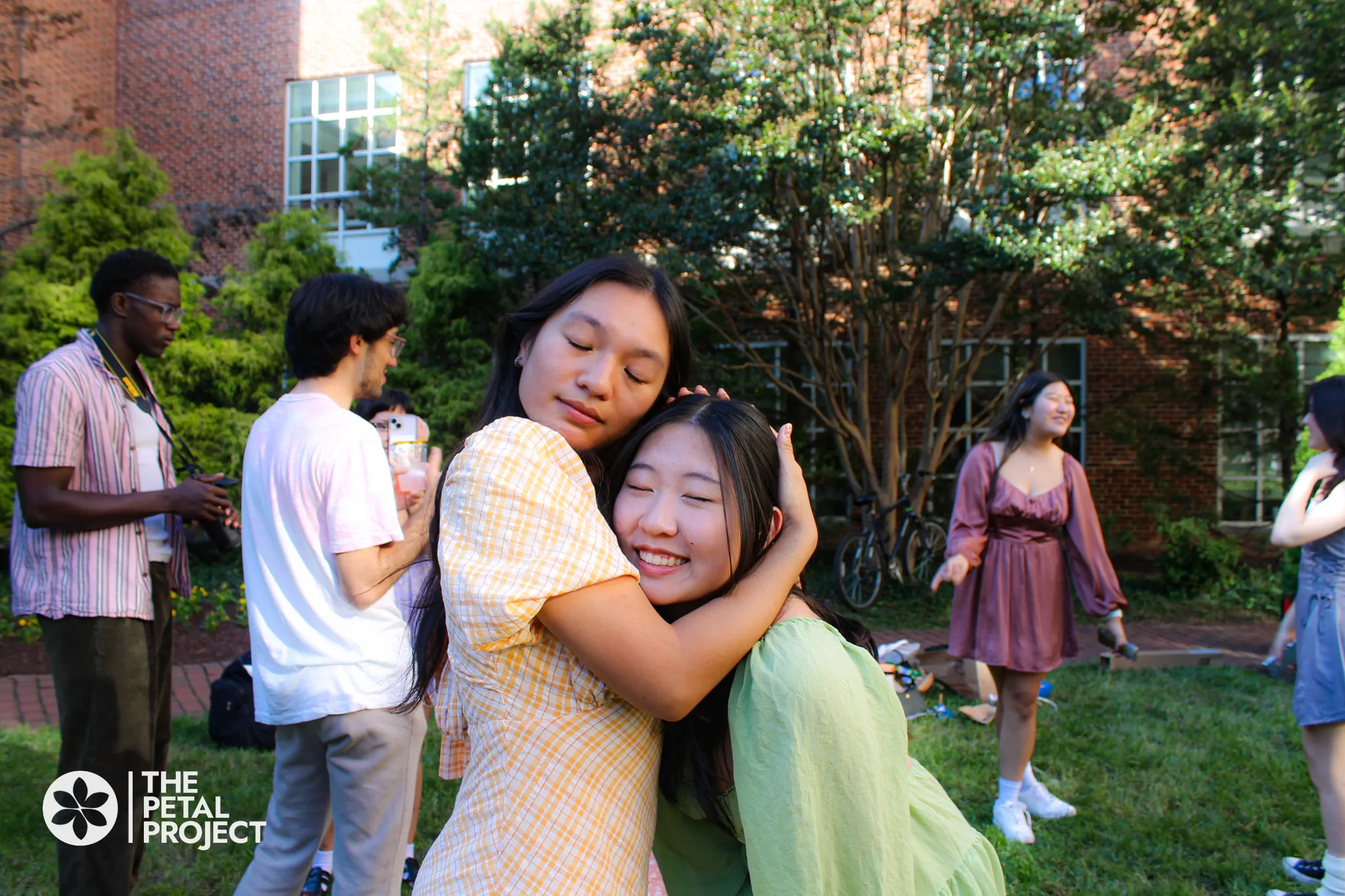
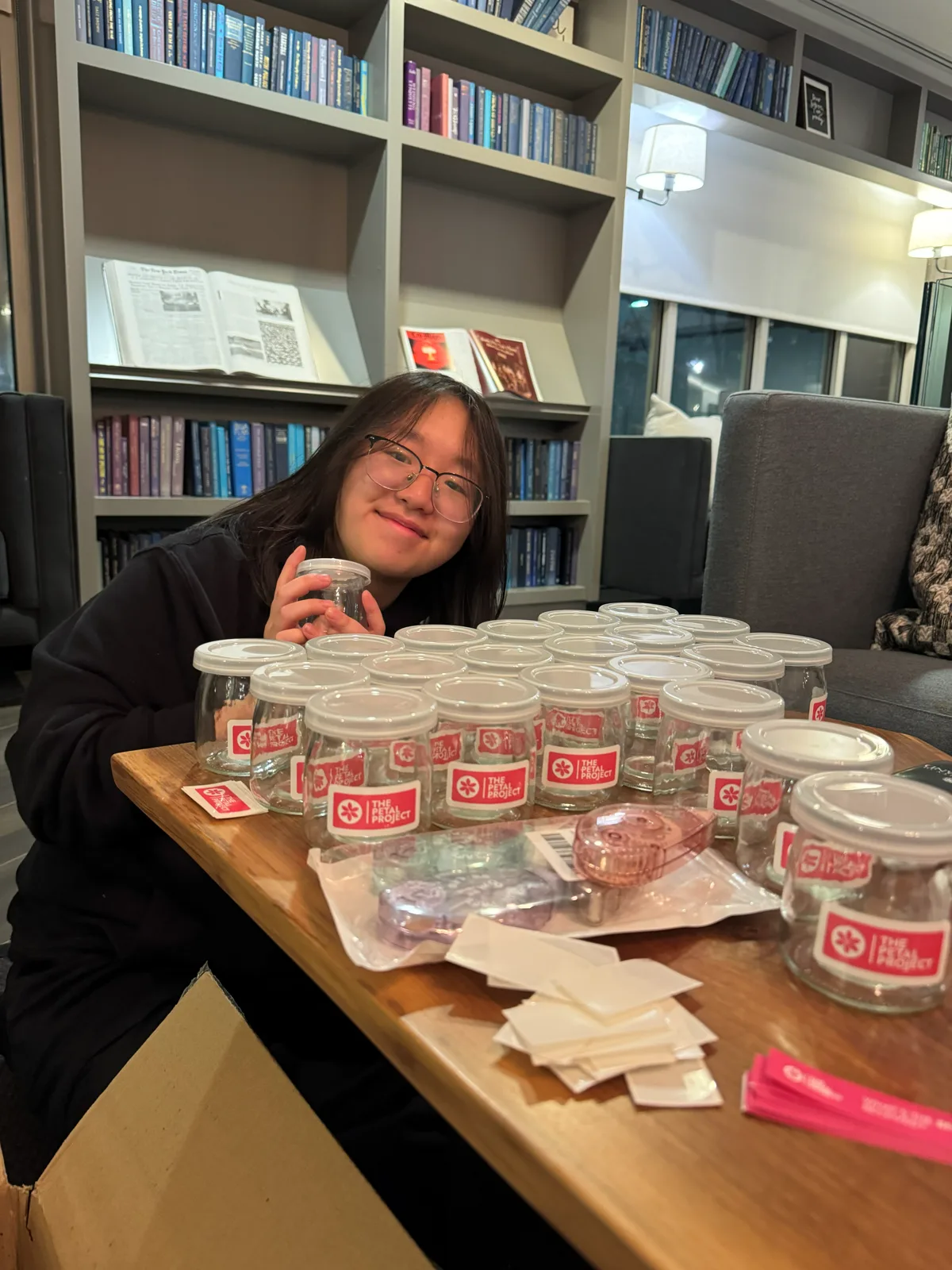
Our prep time eventually became routine enough to develop a name, Yap & Wrap, where people would bring snacks and music to enjoy while prepping (usually, wrapping bouquets). Faith and I's friend groups merged throughout this time, and many of those who routinely attended ended up becoming directors the following year.
To make our money stretch the entire curriculum, nothing got purchased without a plan for it first. Every item went into a running spreadsheet before it was ever purchased, mapped against which week it was for and what else that week's budget already owed.
When we found a relatively cost-effective item, we thought about ways we could repurpose it in fresh ways: bouquet baby's breath could also be used as accents on the drinks, 3 different beverage flavors could all come from the same Sprite base with different flavor additions. Through everything, all items were priced and tallied before being committed to.
We raised over $5,300 through various grants, writing and submitting proposals ourselves alongside the rest of the budgeting process. Each application meant putting our mission and our numbers down in writing, which forced us to say what we were building more precisely than we had before.
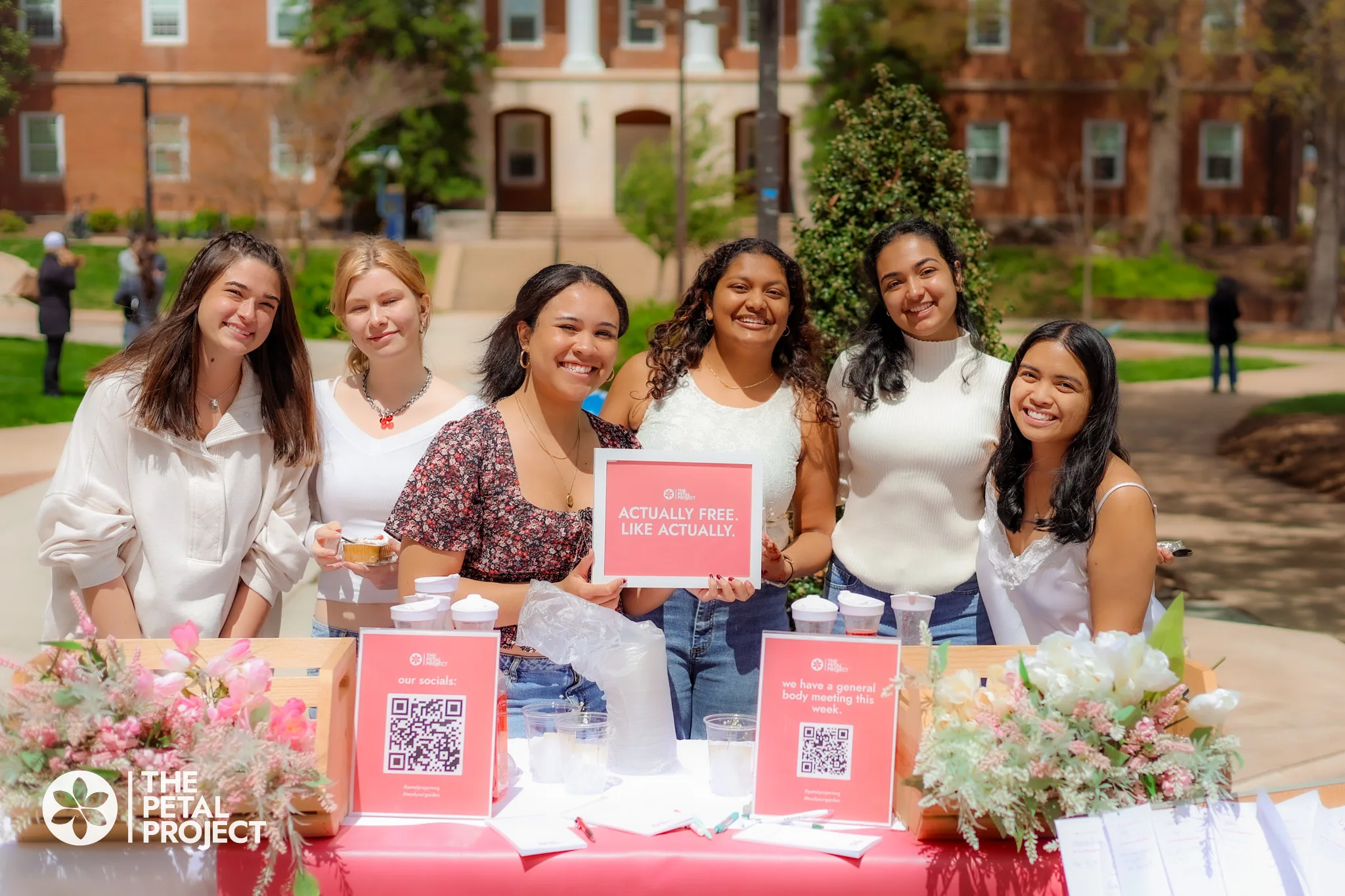
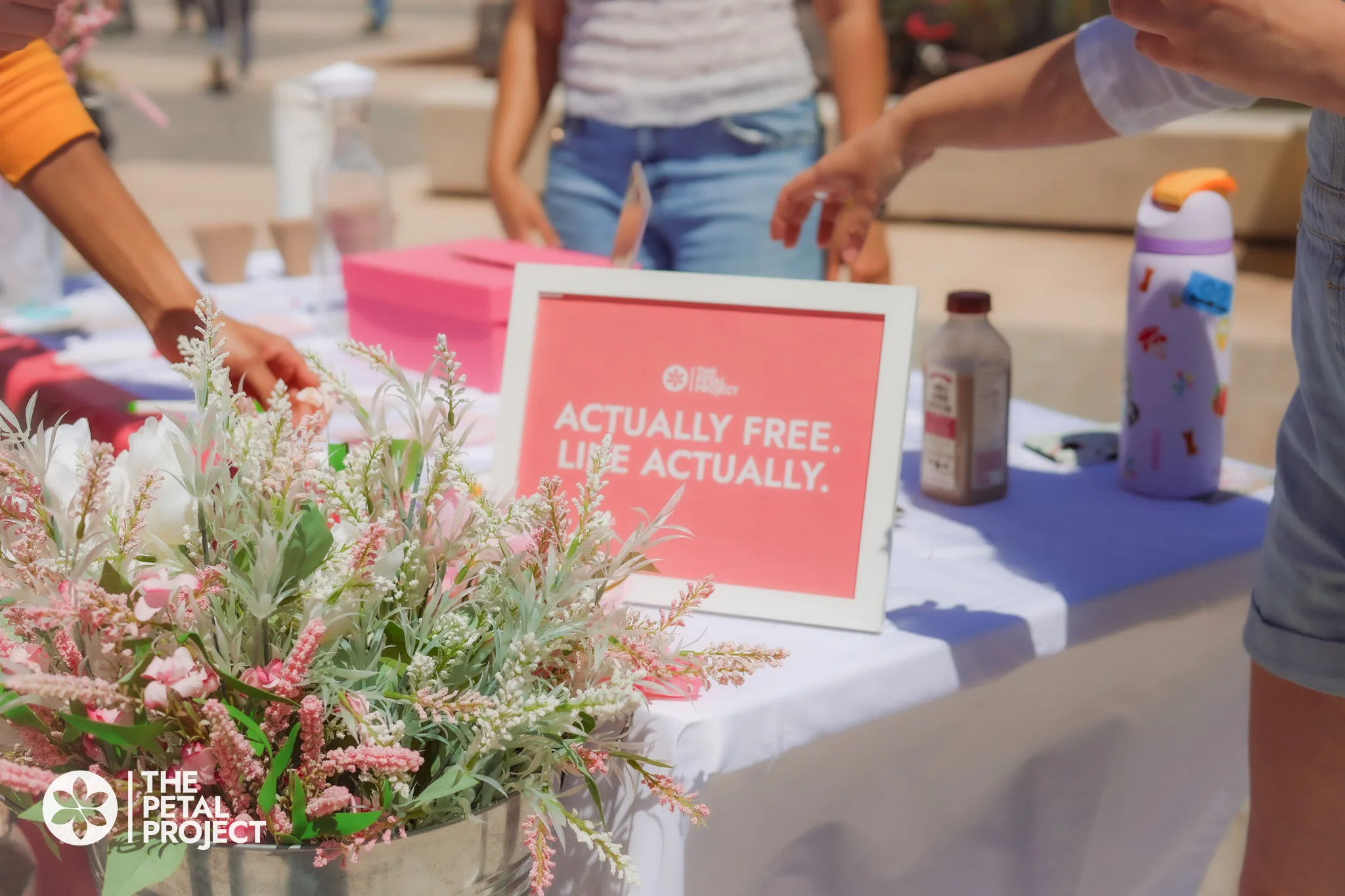
It was really important to me that most interactions were free to students (we literally had to create a sign to say things were free, because people thought we were tricking them). This created the least barrier to interaction, and the most joy, focus on our message, and heighten the participant's mental engagement with the activity).
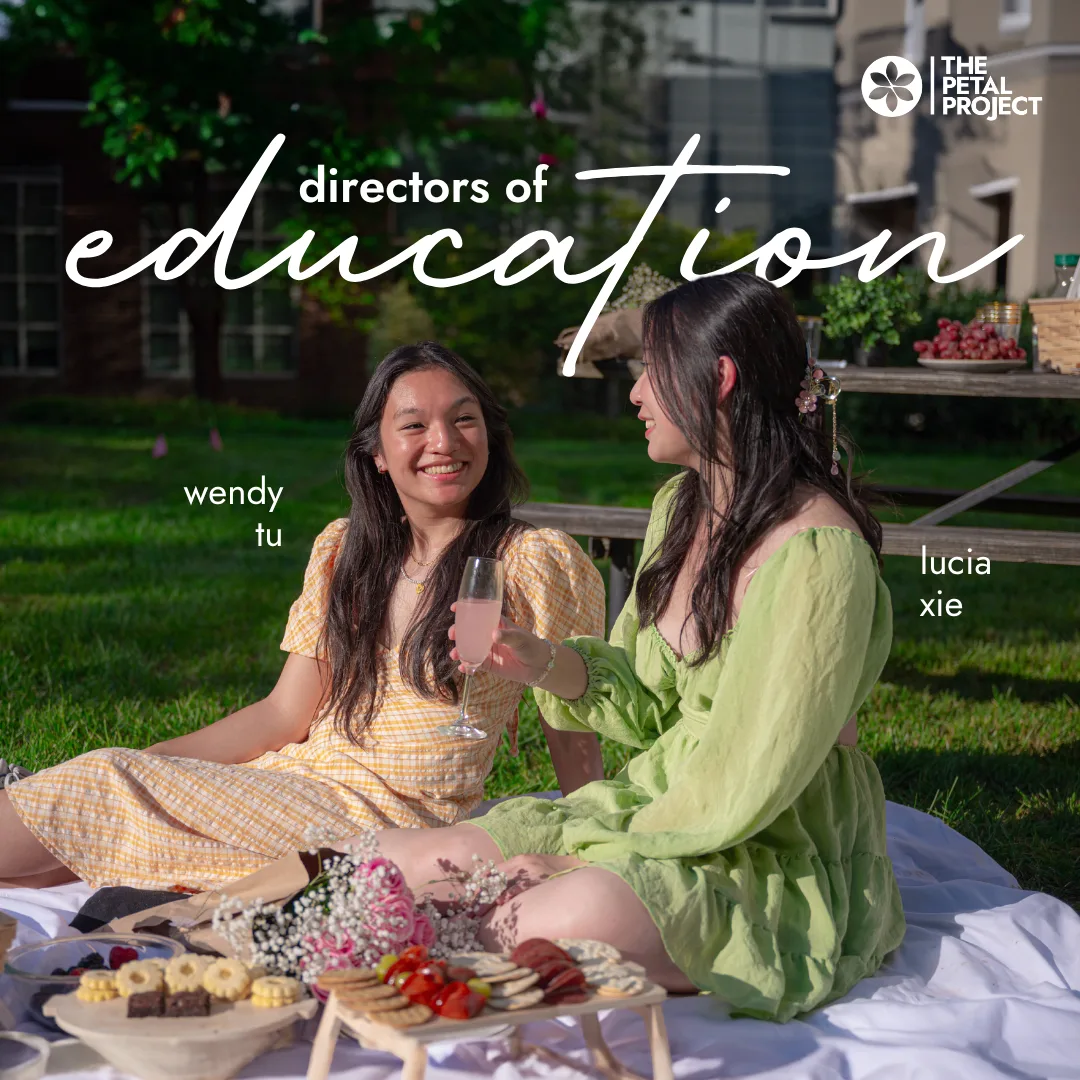
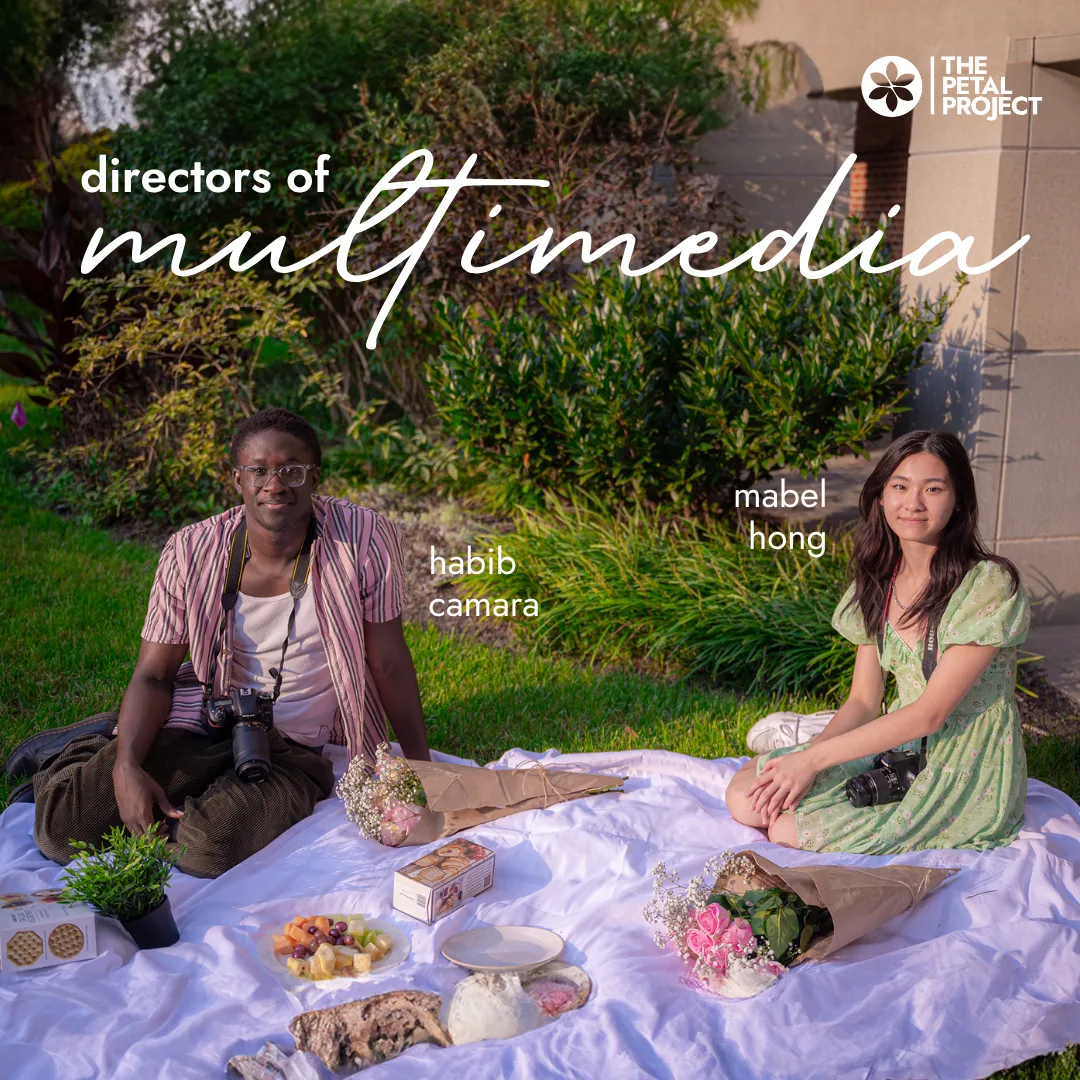
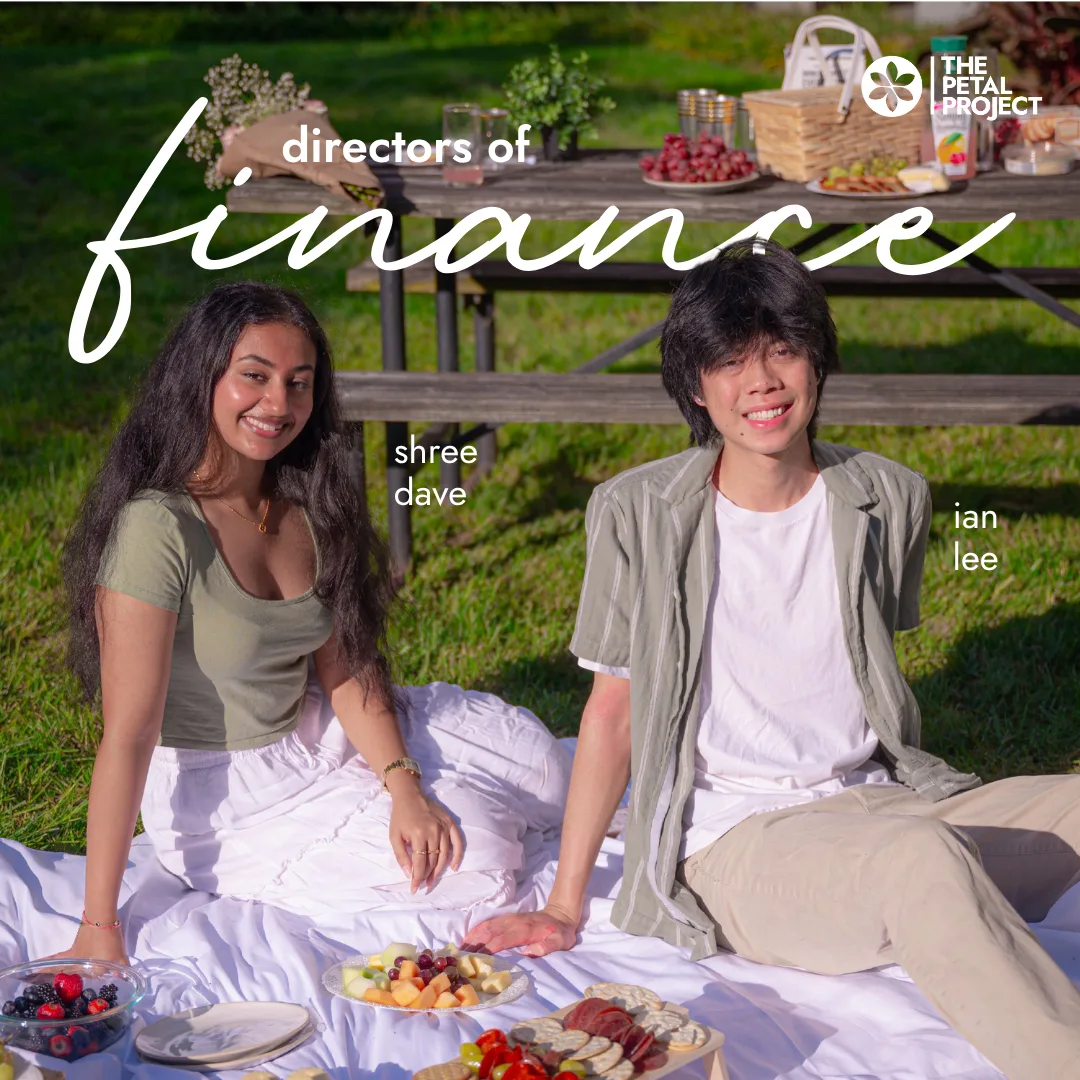
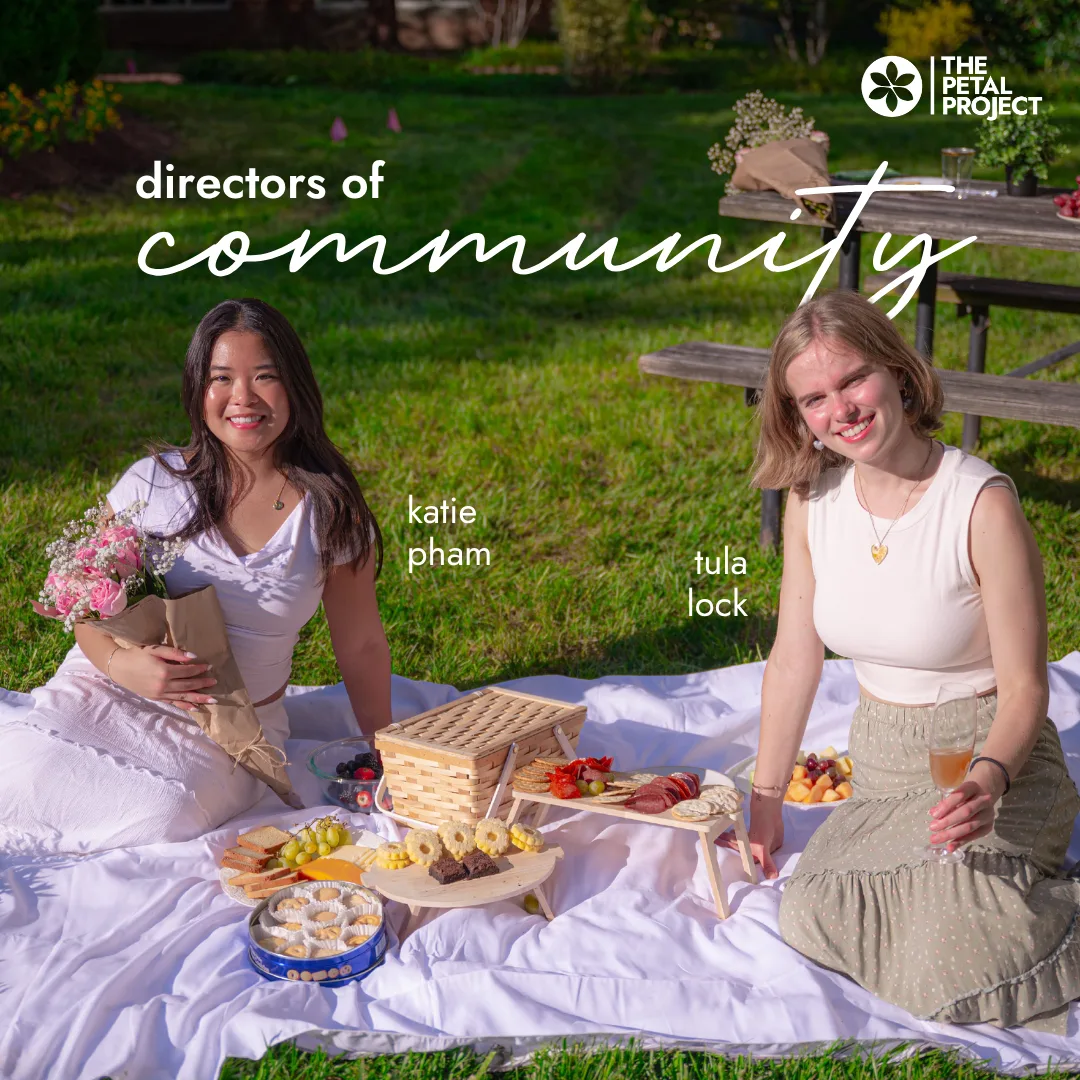
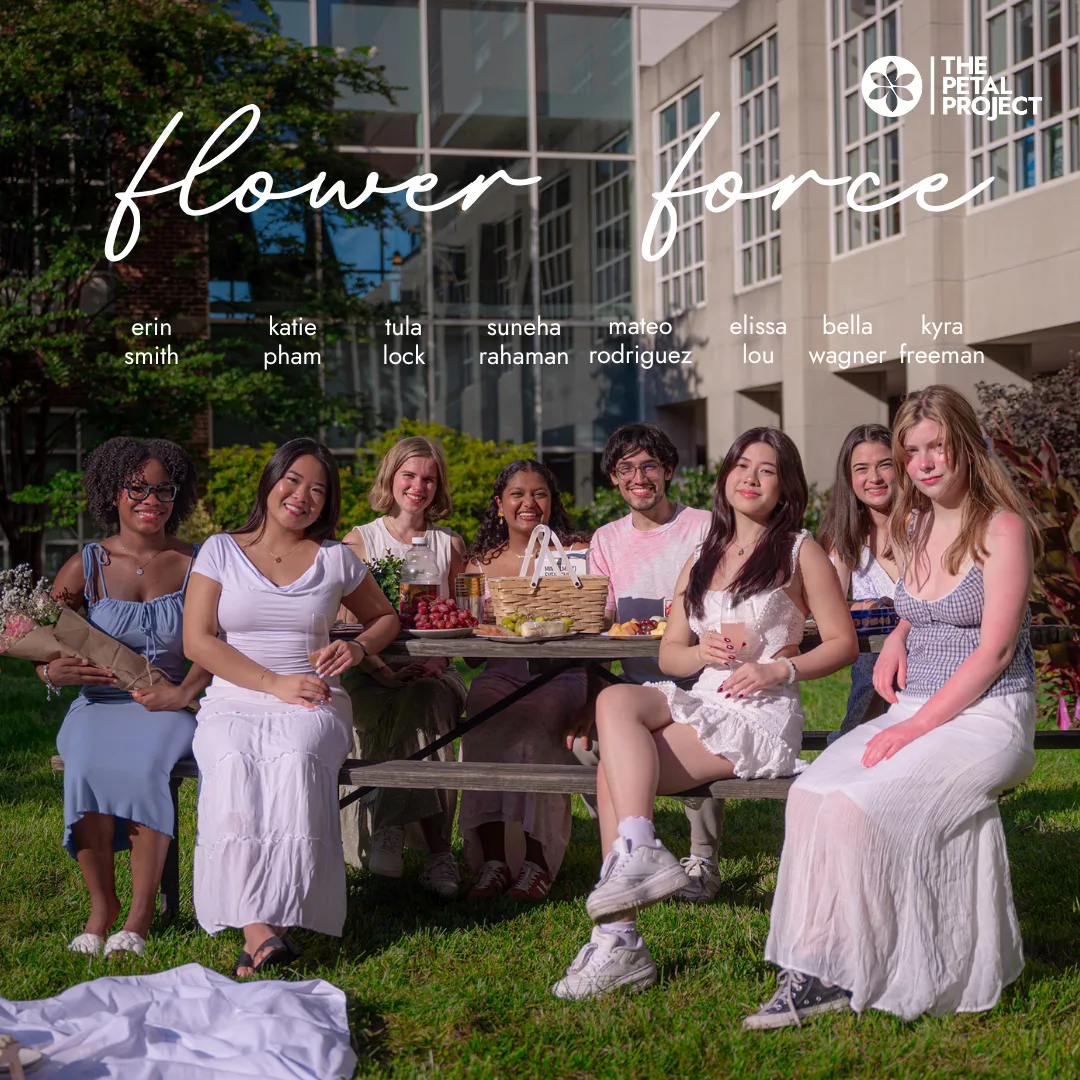
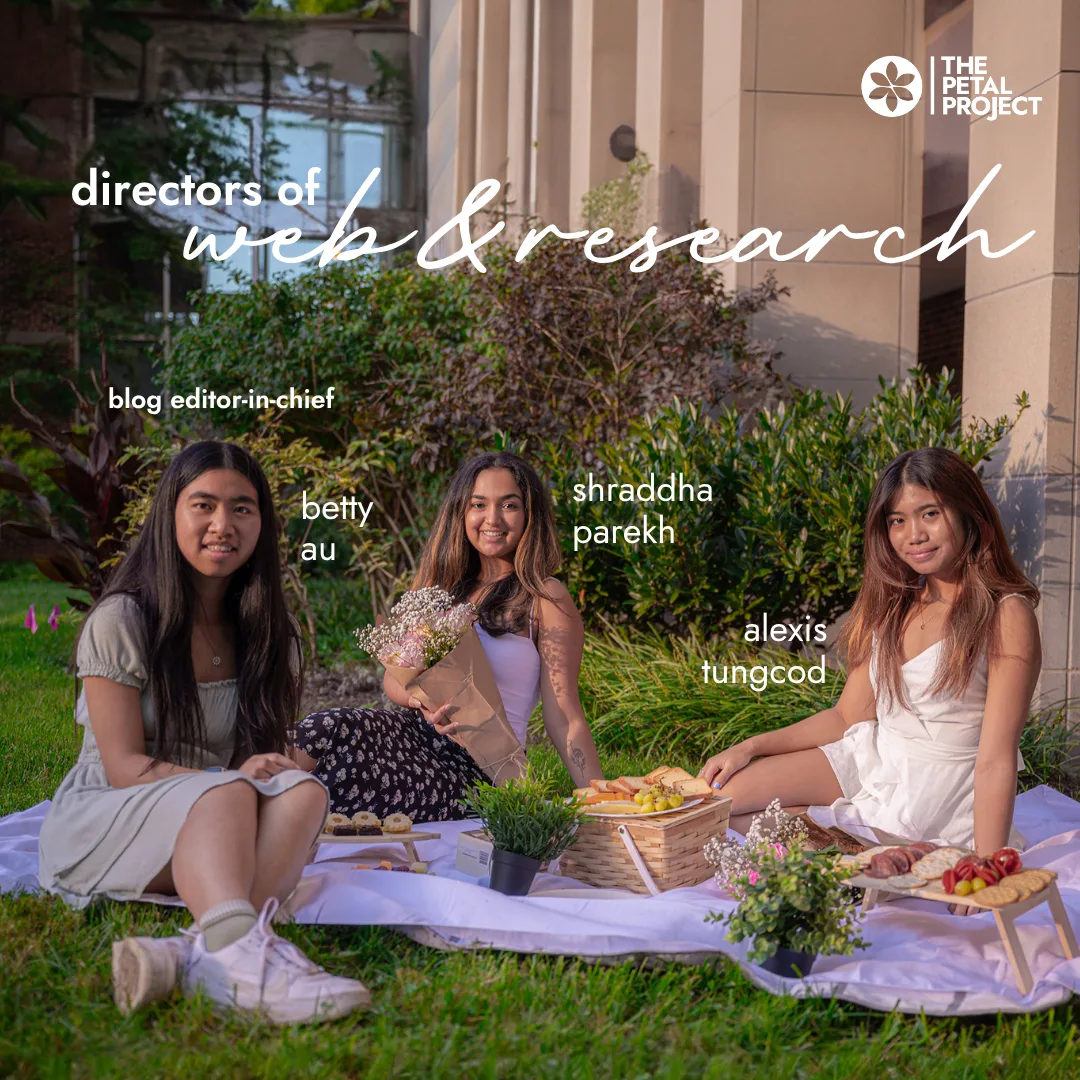
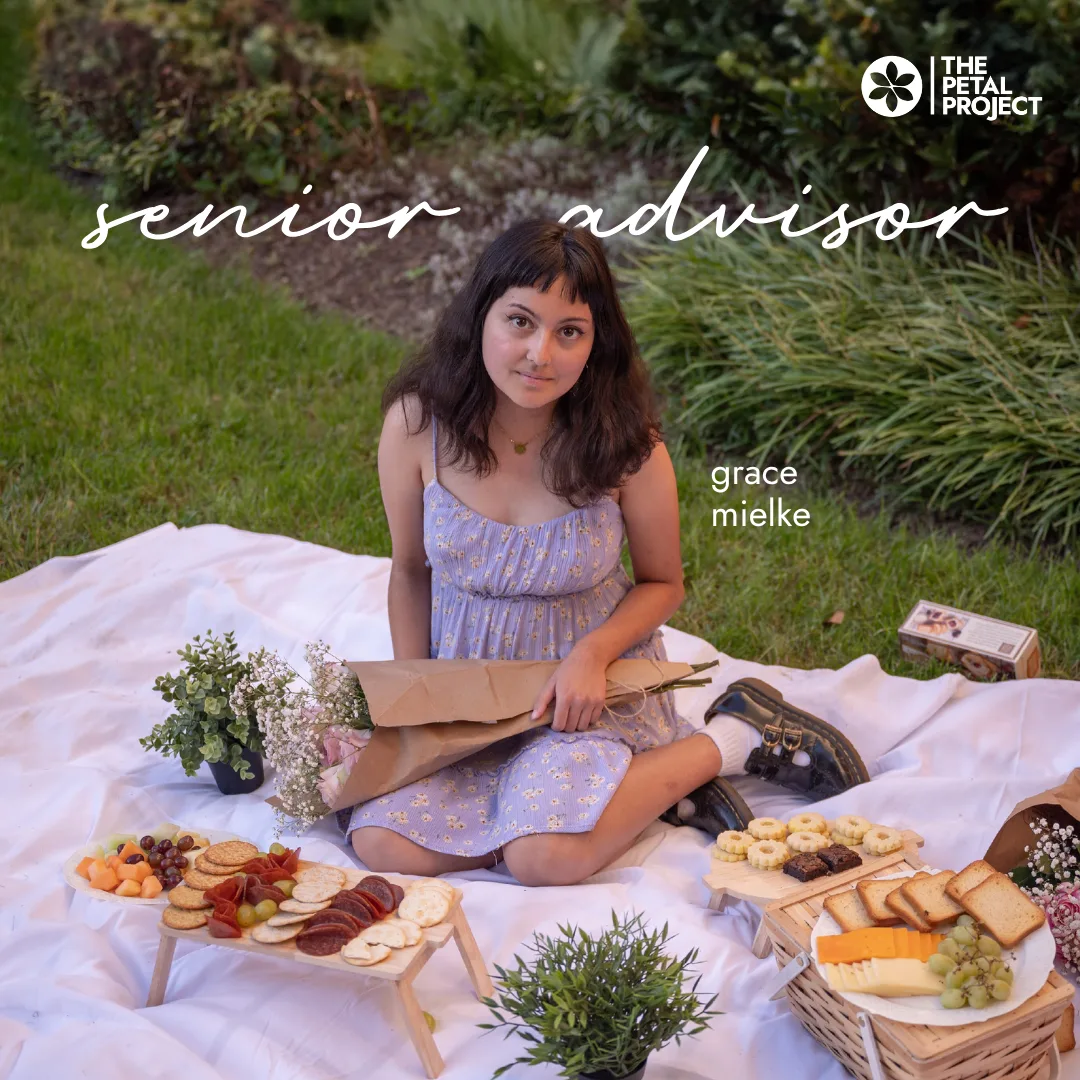
By Year 2 we conducted an application and interview process to develop our executive board, with individuals dedicated to managing specific moving parts that the planning process needed to be systematized.
Each role had a specific job and we tried not to let them overlap, though we grouped roles into Promotions, Programming, and Logistics in order to split weekly check-ins and communications between Faith and I.
| Team | Responsibilities |
|---|---|
| Executives | Overall direction, proposal finalization, cross-team coordination, budget approval |
| Community & Education | Event activity design, workshop content, partner outreach, weekly educational research |
| Design | All visual assets, graphics, handouts, zines, signage, brand consistency |
| Operations | Room reservations, inventory, setup and breakdown logistics, equipment, transportation |
| Business & Finance | Budget tracking, purchase lists, grant management, reimbursements, weekly cost reporting |
| Multimedia | Photography, videography, shot lists, file handoffs, weekly recaps, documentary |
| Web & Research | Website updates, weekly blog posts, research for educational content, interview scheduling |
I built a weekly pipeline coordinating community and education, design, operations, business and finance, and multimedia simultaneously.
All teams come together at the exec meeting to discuss ideas for the week's events: one main tabling event, one small event, one workshop. Logistical questions are raised in the room: foot traffic, crowd management, club collaboration, budget split, preparation time.
Programming team and execs select the central event plans. Formal statements sent via Slack by end of day: activity description, location, time, and what kind of club partnerships would work.
Each team moves on their lane simultaneously. Ops reserves rooms and equipment. Finance breaks the weekly budget per event. Design scopes graphics and handouts with education. Multimedia plans capture. Web locks the blog and site update timeline.
All information sent to execs → uploaded into the finalized plan document. Materials batched into two print orders: Weeks 1–3 before spring break, Weeks 4–6 during it.
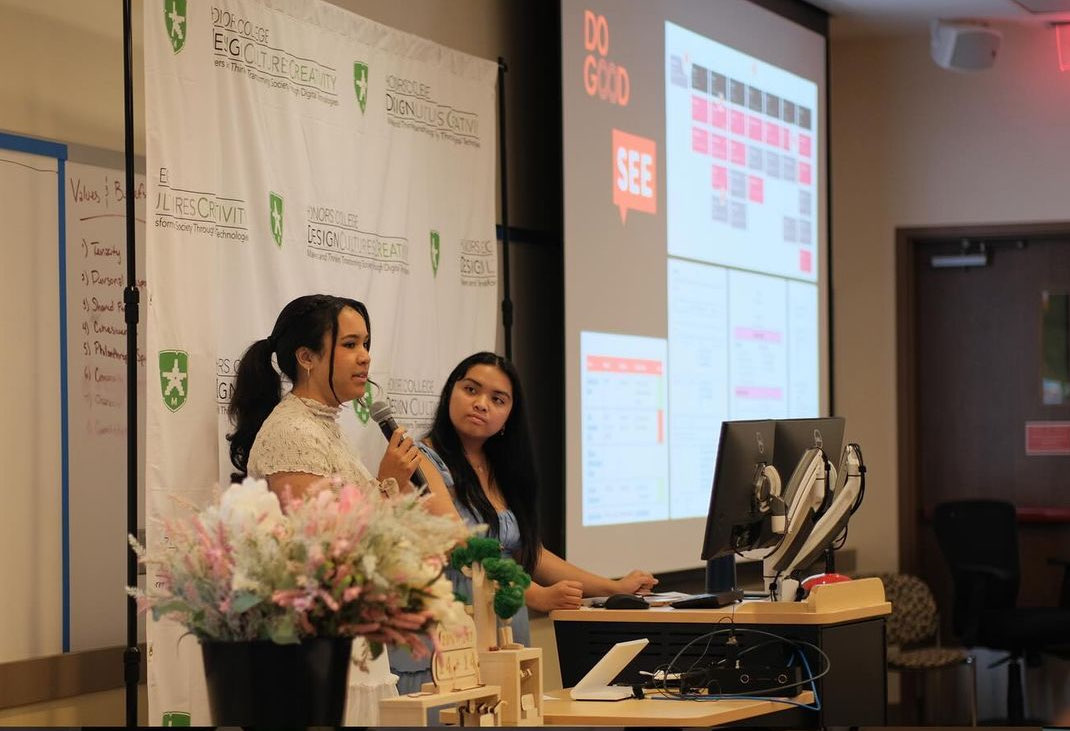
Gabrielle and Faith develop a proposal slide and present it at the exec meeting — before the new ideation stage begins. Changes are noted and folded back in before the week locks.
When reviewing proposed event plans, and the night before we executed, those two perspectives allowed me to catch different things before we were on site.
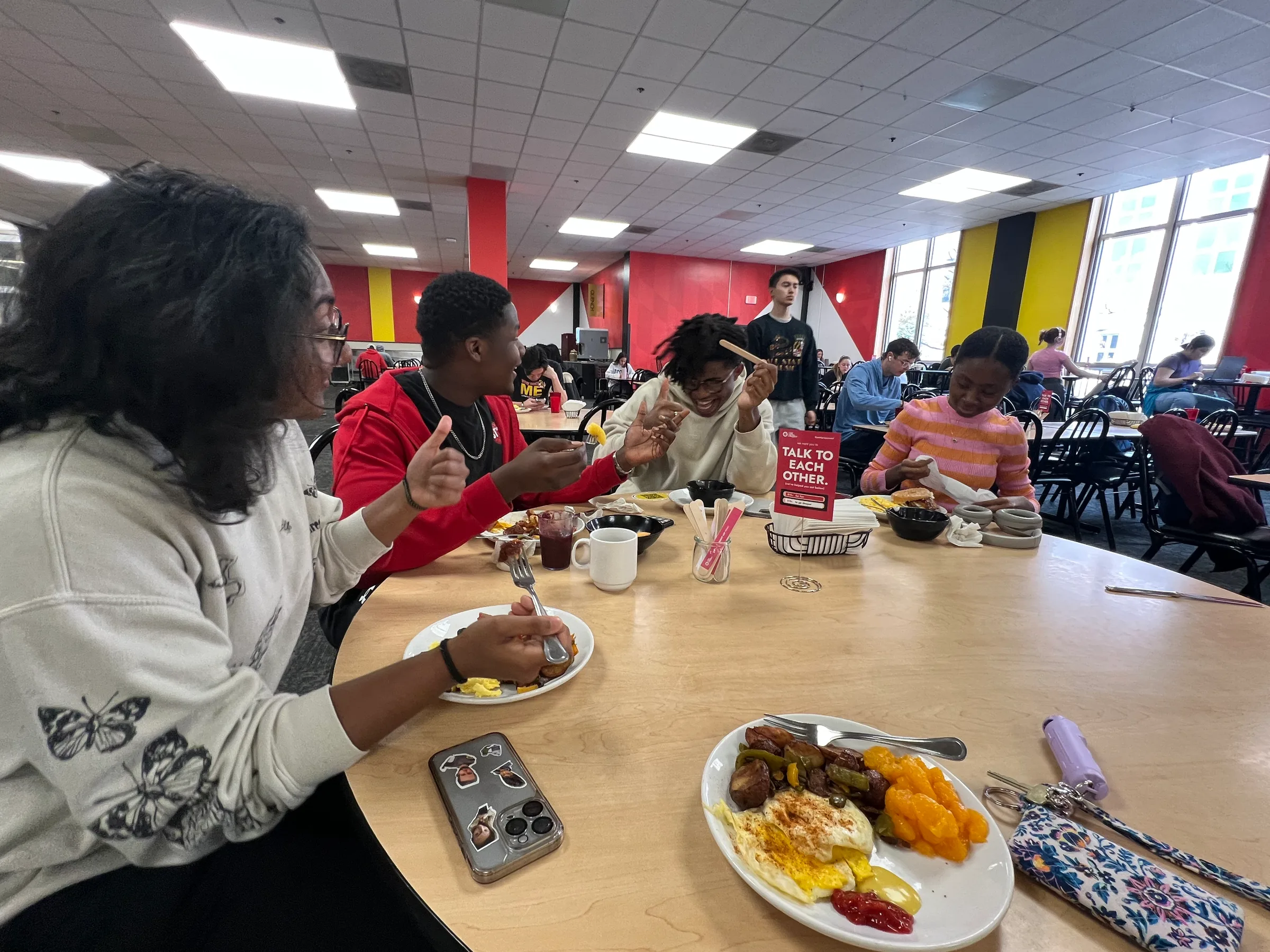
✿ Conversation sticks created for dining halls.
Writing it down was how we caught problems before they showed up on the day. If the event proposal template had an empty field, the event was not ready.
Most of the unglamorous work happened in spreadsheets and Slack threads. Every event required coordinating pickup times, setup crews, vehicles, space reservations, weather contingencies, and police notification for larger gatherings.
Operations owned the inventory tracker across all six weeks, updating it before each planning cycle: Weeks 1 through 3 before spring break, Weeks 4 through 6 during it. No last-minute sourcing the night before an event.
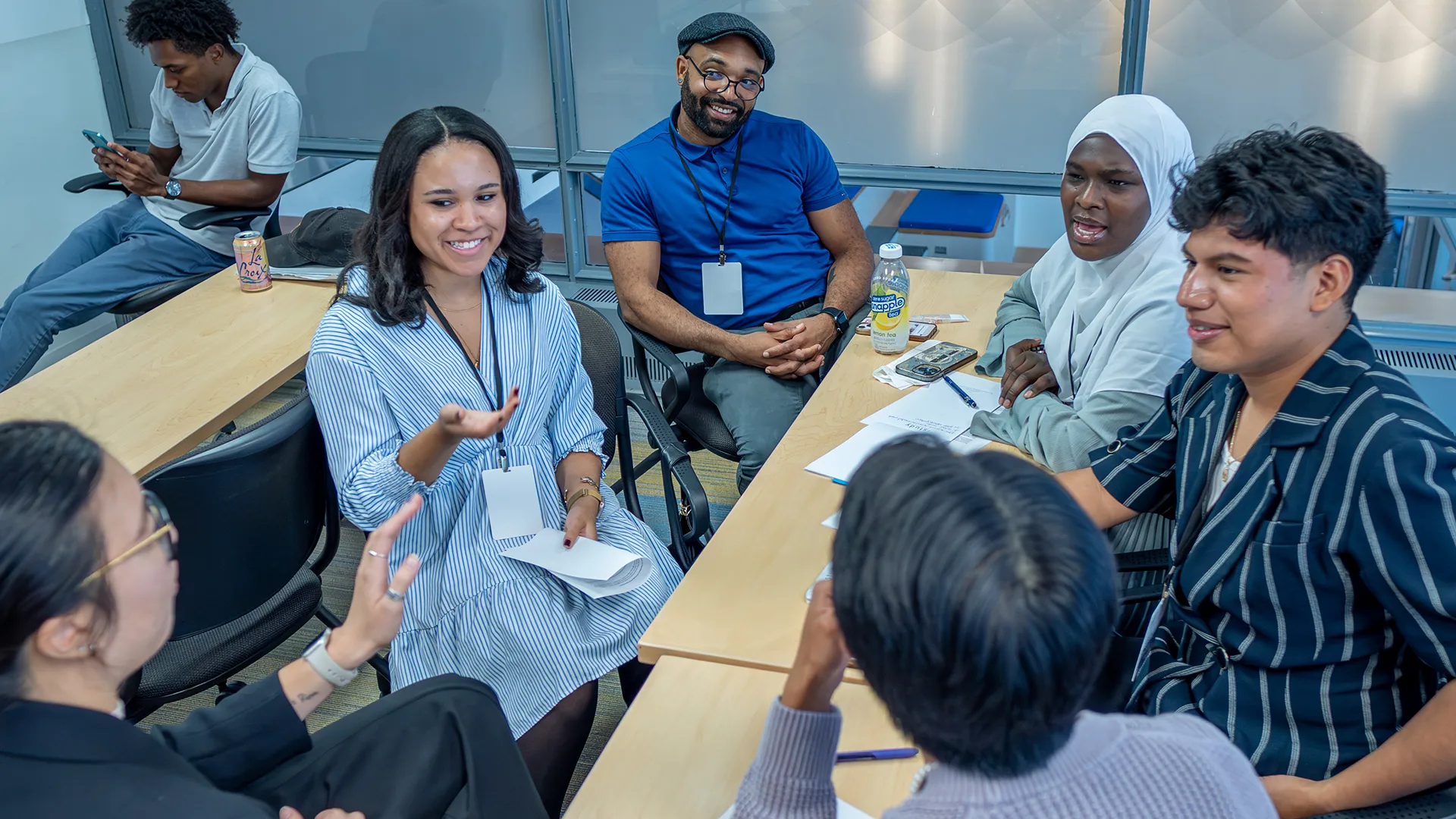
Opening it up to 26 people with defined roles required building the structure before the people came in: board applications, weekly exec meetings, a full planning semester before the campaign started. But the thing I felt most strongly about was making sure the board knew each other.
Shared passion gets you in the room; it does not tell you how someone works under pressure. Get people together when the work is not the point, and let the relationships form around something easier than a deadline.
What I found when managing a team of that size is that clarity of role, and their ability to rely on their teammates, matters more than anything else. When people know exactly what they own, and how to blend it with their team, the machine runs on its own. Otherwise, everything lands on Faith and I to untangle.
Immerse yourself in the full experience: listen to the playlist while you read.
Open on Spotify ↗