How do you fix an uninviting onboarding experience to get members actively using a physical incubator space?
Overview
Challenge
Inherited outdated onboarding systems for an application-based community. The existing public communication channels failed to reflect active community values, while the orientation program struggled to convert retention.
Strategy
Shifted focus from passive observation to active participation; I executed real-time event documentation and replaced onboarding presentations with a collaborative, physical building activity to initiate connection.
Solution
Increased content reach by over 160% and follower growth by 20%. The revamped onboarding strategy successfully raised onboarding-to-space retention from 30% to 70%, and established a blueprint for future orientations.
5,000+
Views on the first
redesigned post, up from 1,900
~44%
Share of the year's most-viewed
and most-reached posts were mine
20%
Rise in new followers, egg drop
post vs. our biggest open house
70%
Orientation-to-space
retention, up from ~30%
View and follower figures from Instagram Insights; retention figures from internal club records.
Inheriting a quiet Instagram and an unengaging orientation meant two systems built for people already on the inside.
The Problem
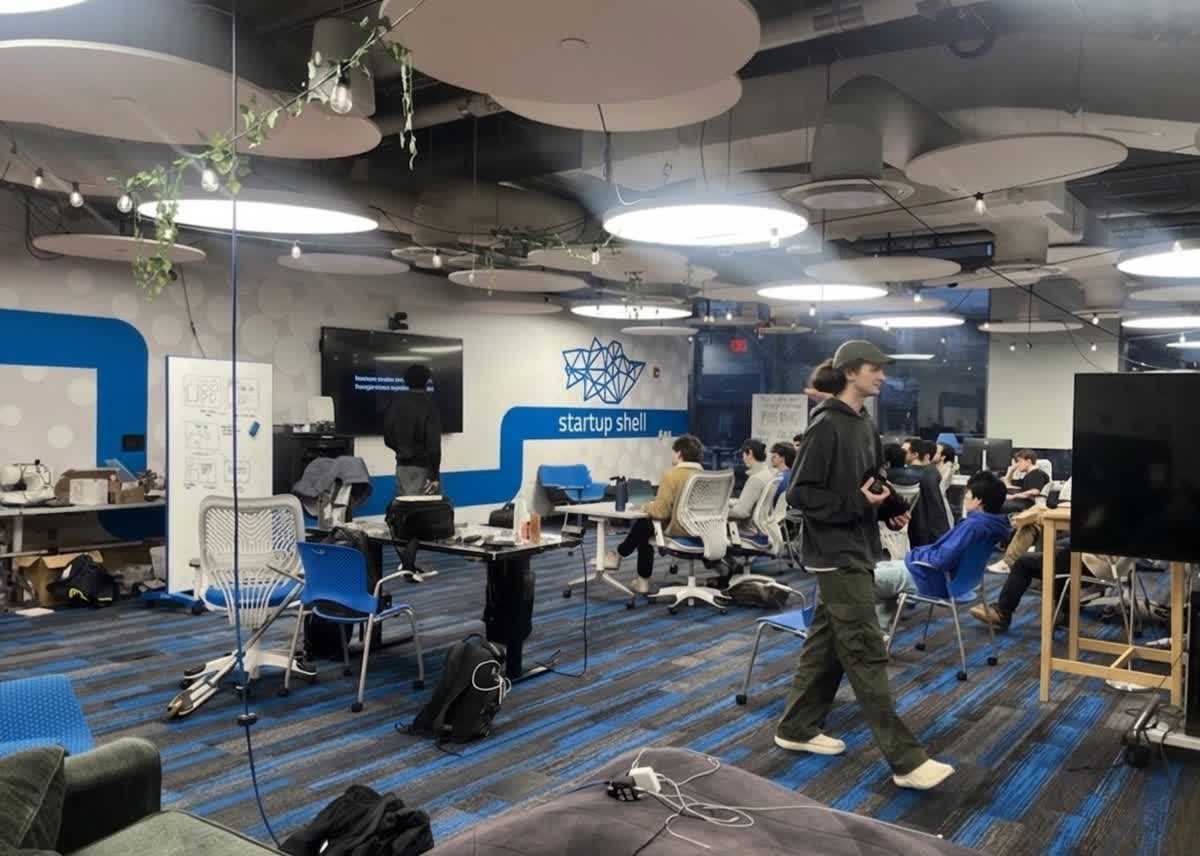
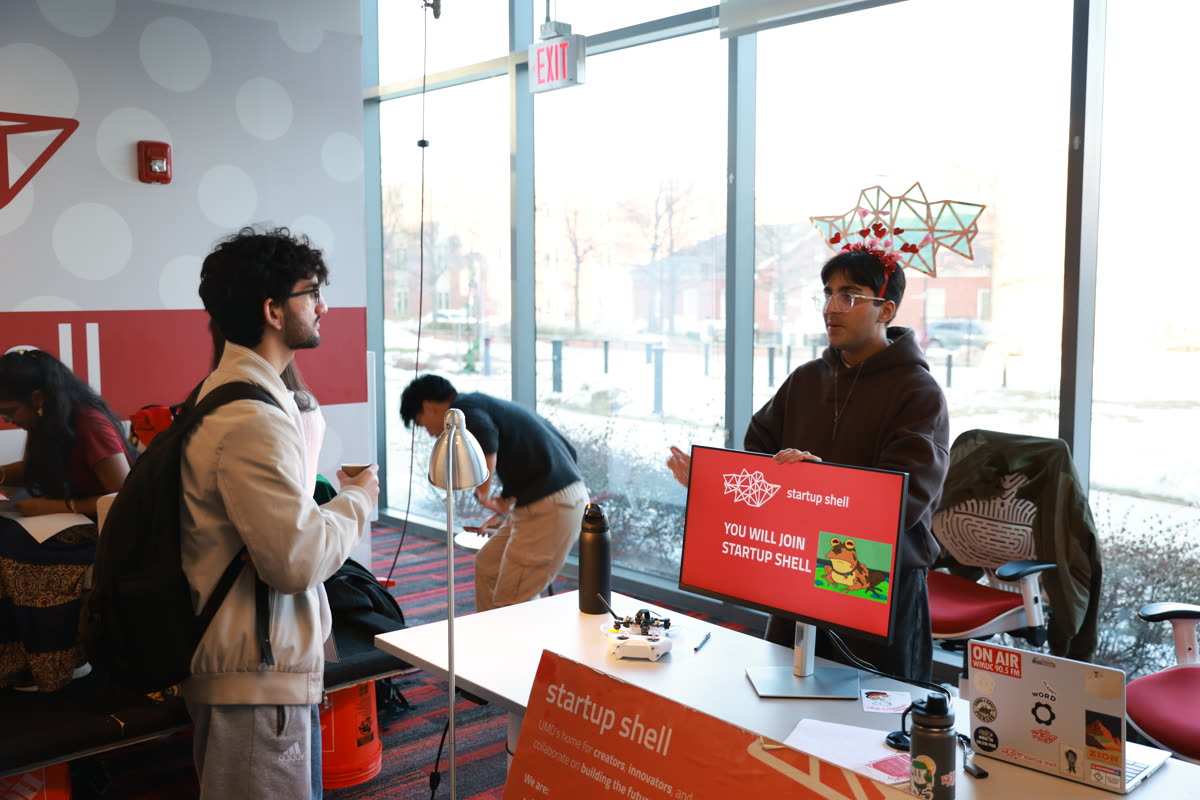
Startup Shell is a 24/7 coworking space and community of 600+ members that's graduated over 200 ventures, and like most application-based communities, a place where the people already inside know everything and the people trying to get in know almost nothing.
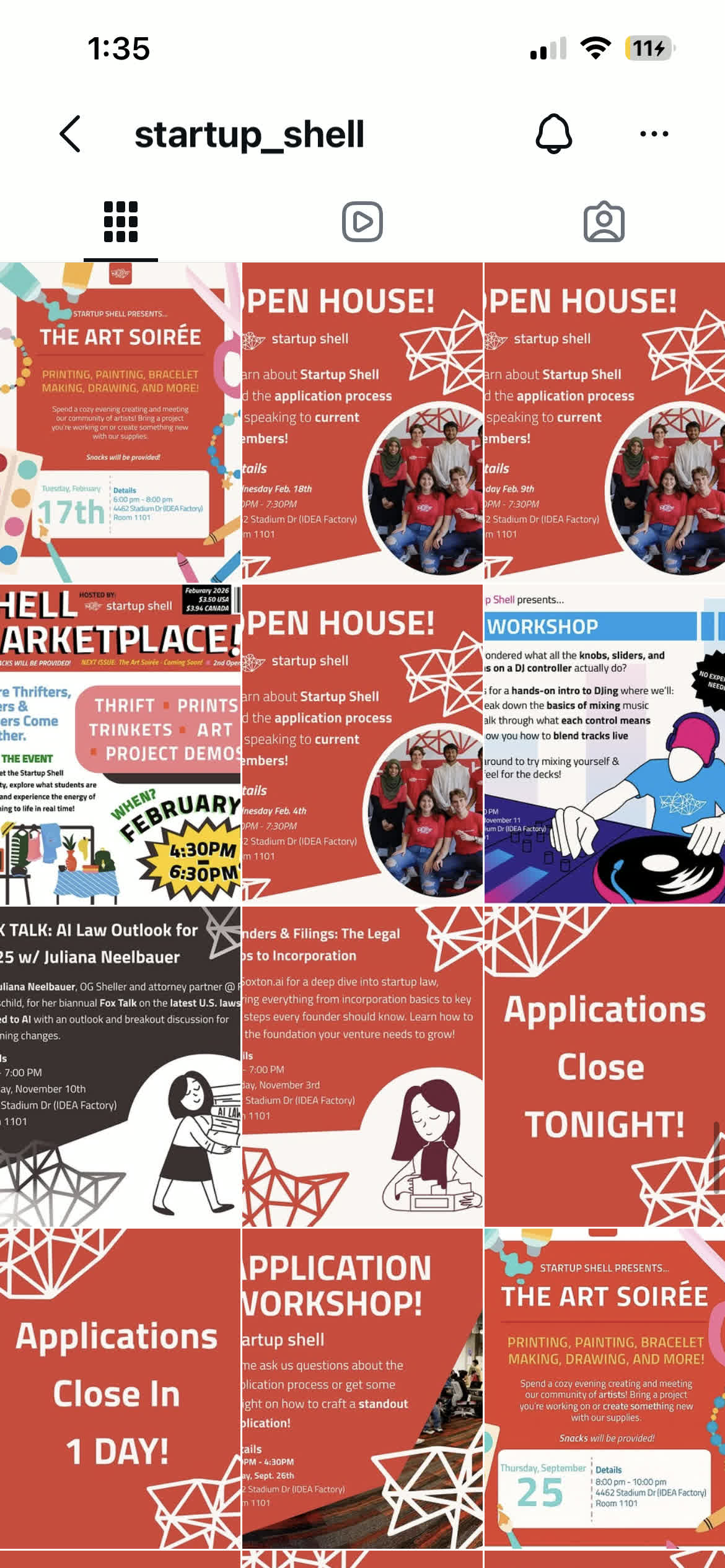
Every event got posted once, left there, and then absolutely nothing else, which did nothing for the applicant pool trying to decide if this club was worth a semester of their time.
Who
A UMD student who's heard of Startup Shell.
What they've seen
Maybe an invite graphic float by, never been inside the space, or less than a few times.
What they're deciding
Whether a semester of their time is worth it.
What they have to go on
The Instagram grid of the organization and a small amount of open house events.
Nobody was posting recaps, meaning the account looked like a calendar rather than a living community. The exact people who most needed to see the community part, the ones still deciding whether to apply, had no real way in.
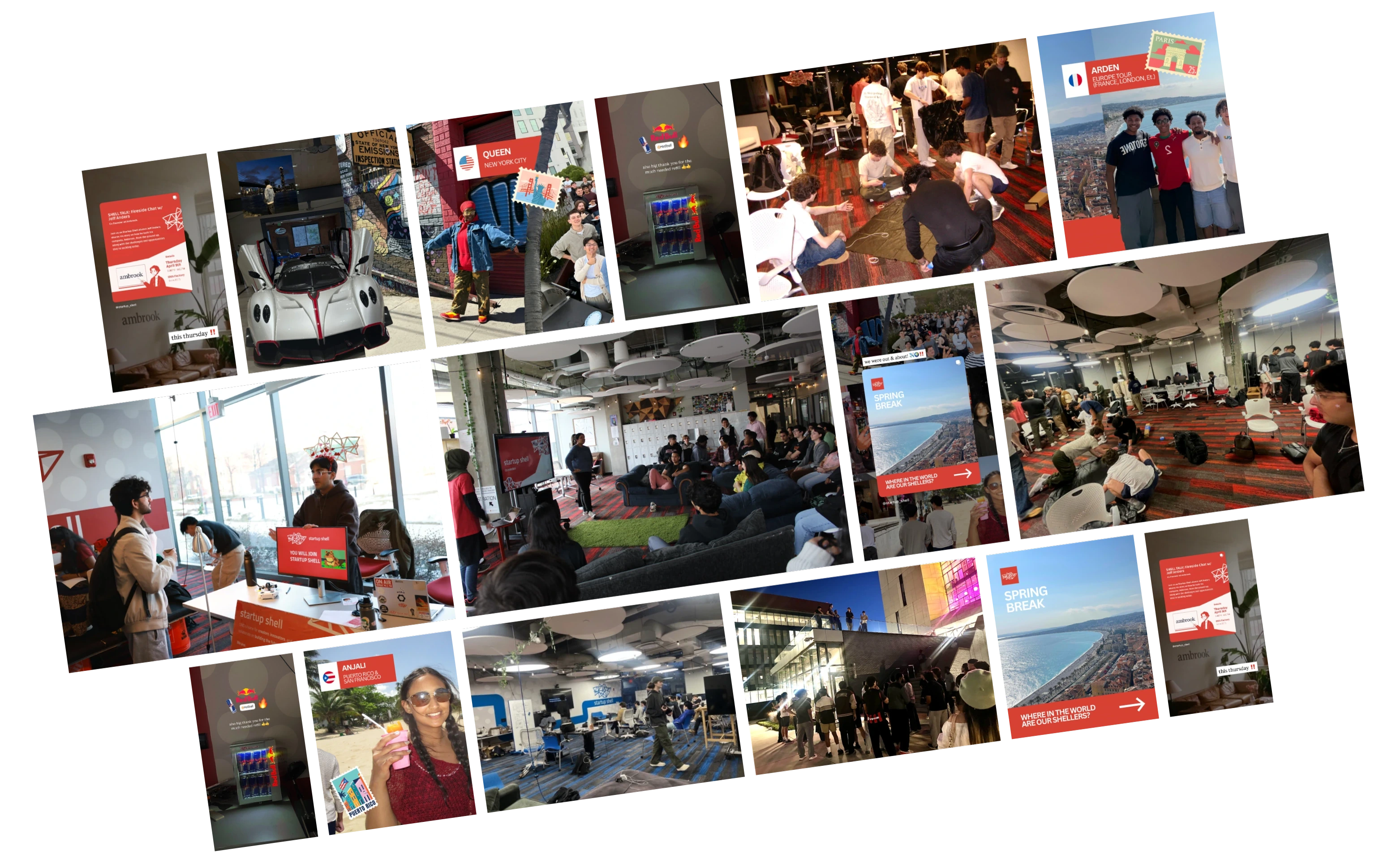
To show applicants what they'd actually be joining, I started documenting events live instead of only advertising them.
The Fix
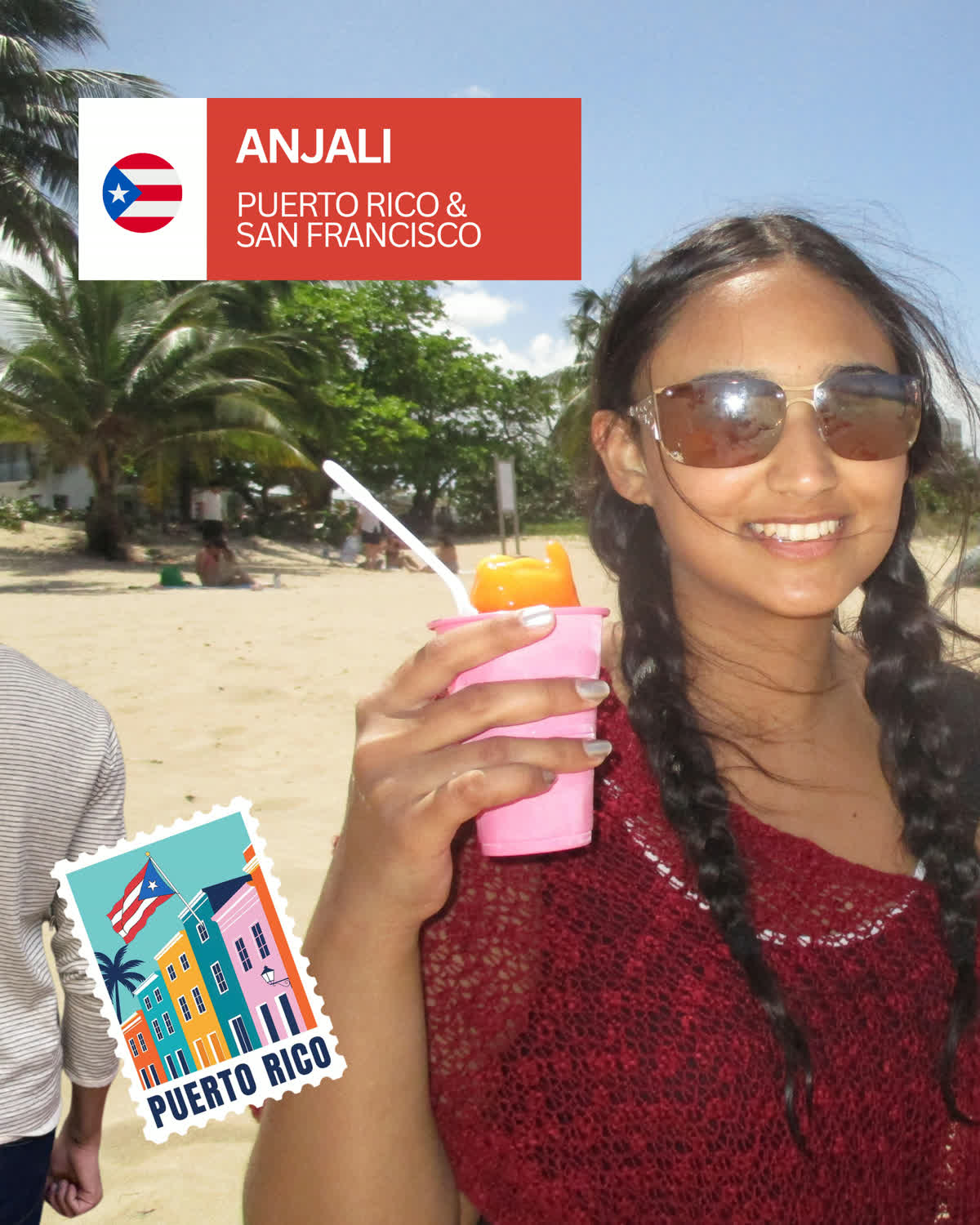
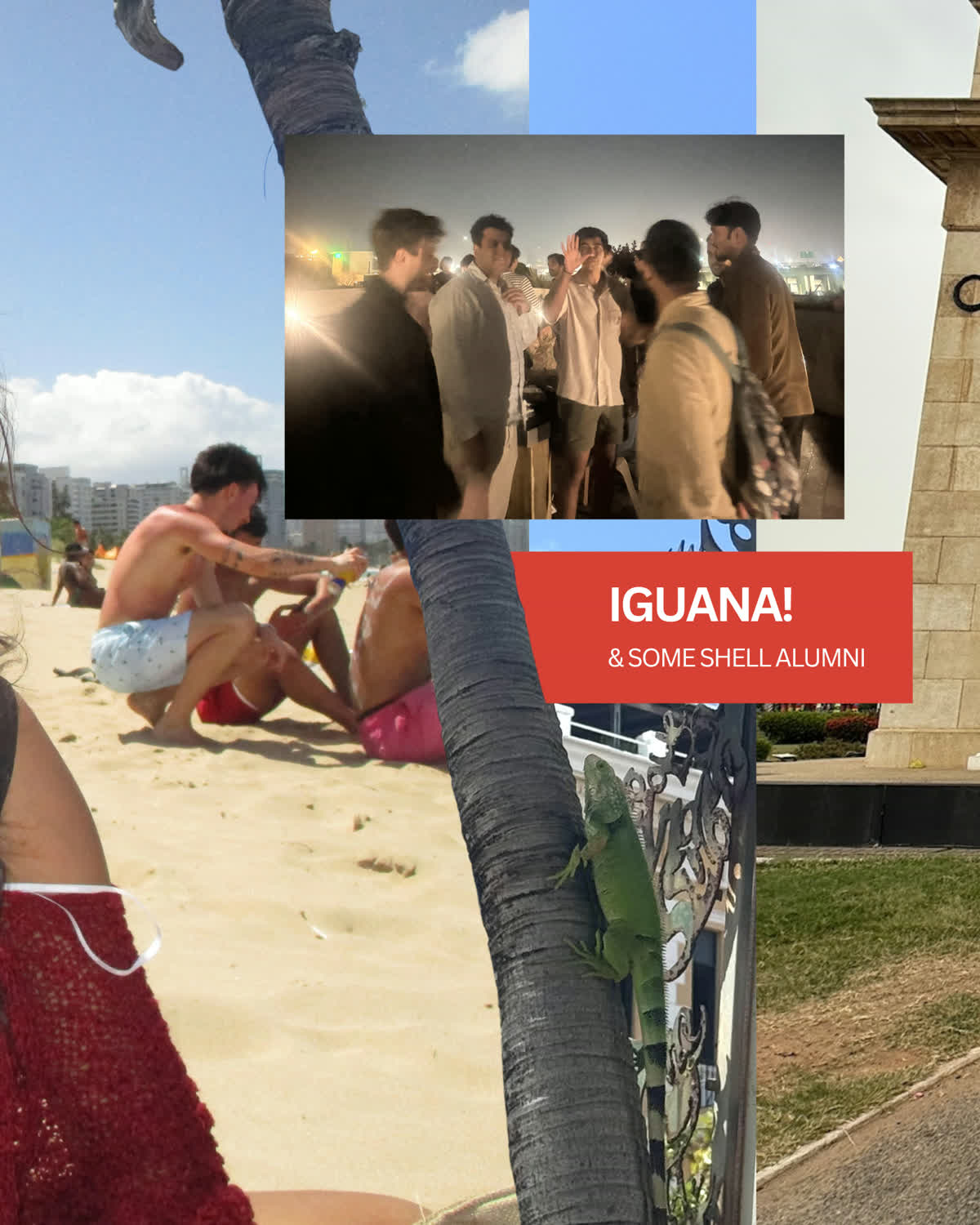
I started prioritizing content with real photos of people and the space on the feed, alongside lighter, funnier community content, the day-to-day of what being a Sheller is actually like, not just what the next event was.
Before
After
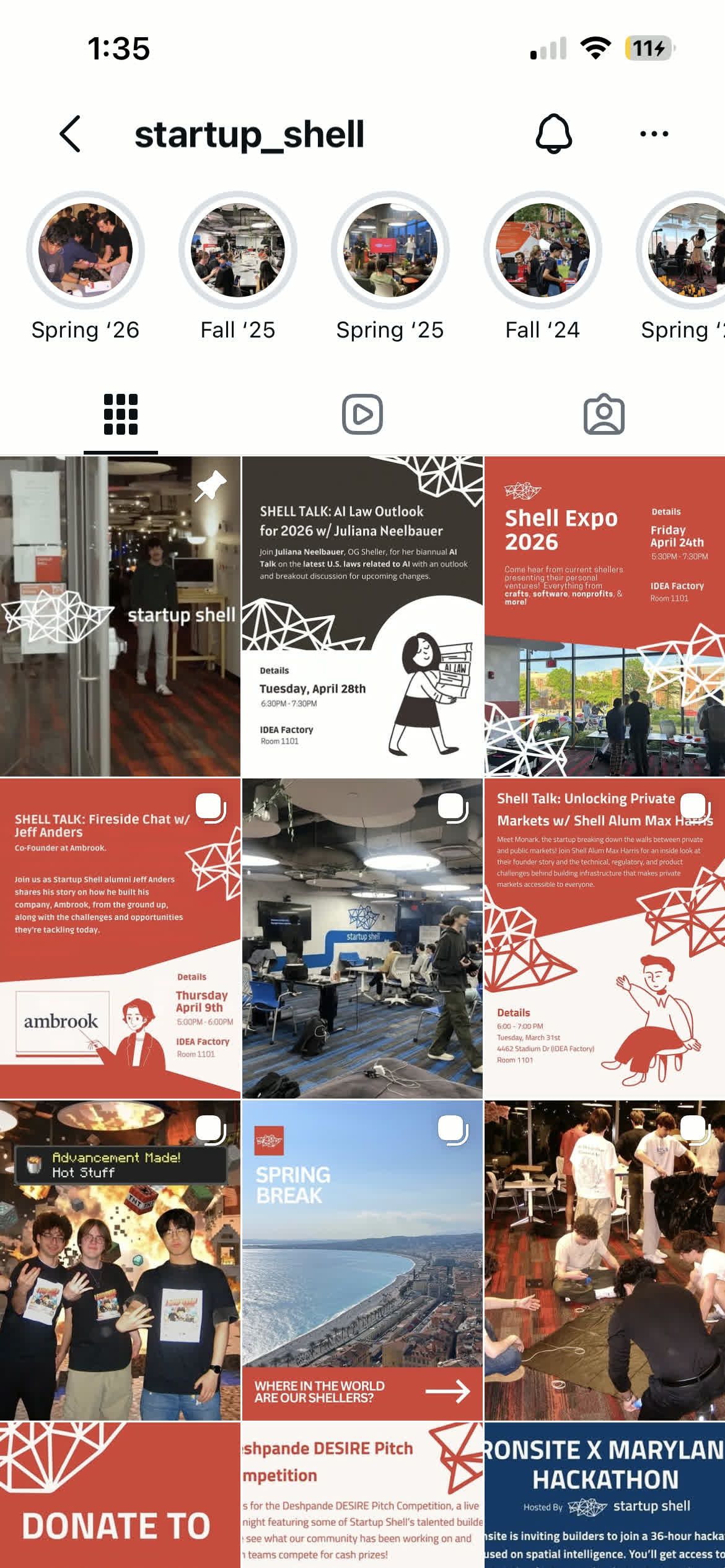
Before
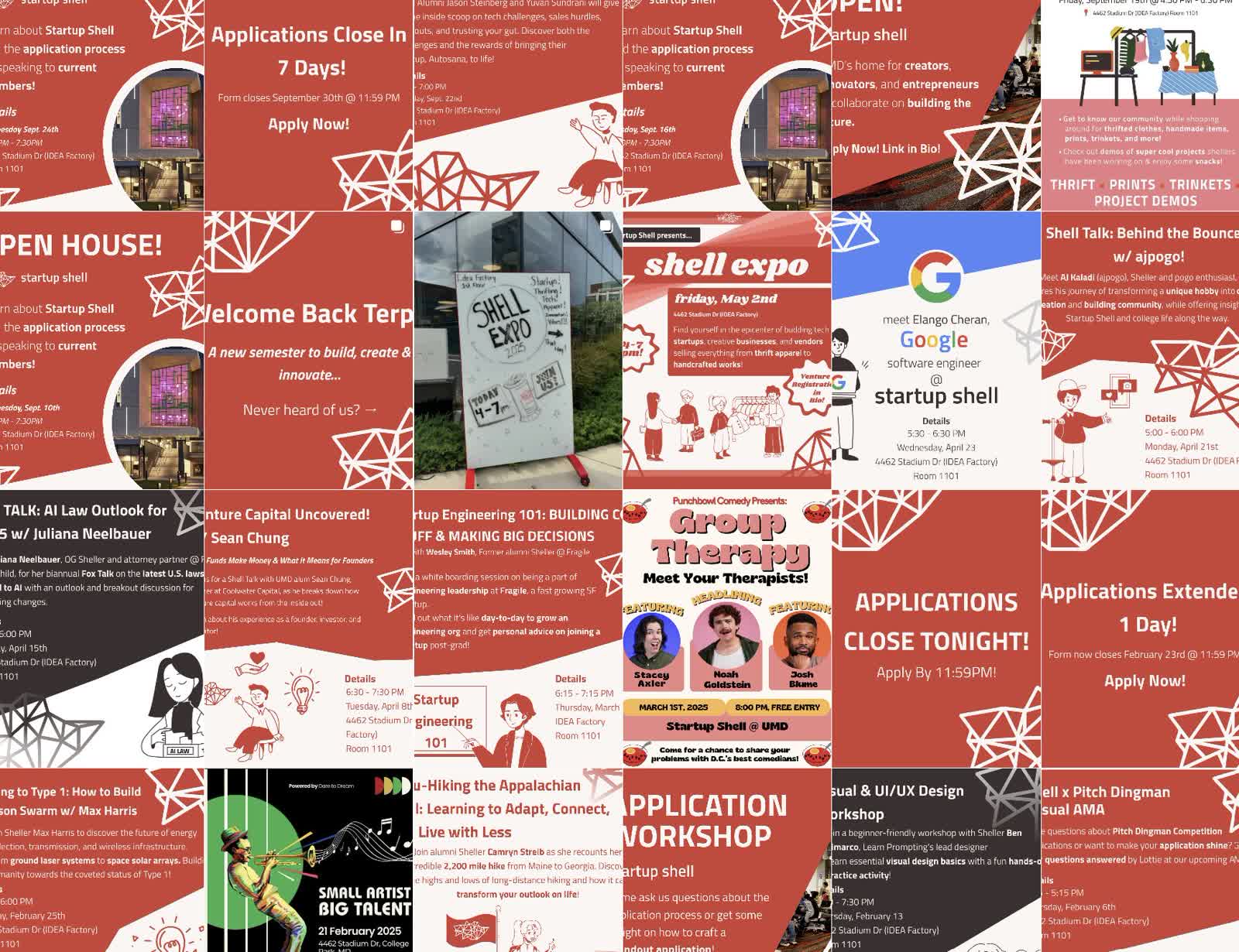
One invite graphic, posted once, then silence until the next invite.
→
After
Live story documentation, running commentary, and community content between events, not just before them.
The invite graphics were never the problem, it was that they were the only thing anyone outside the club ever saw. Once the account started showing what things actually looked like once you walked in, engagement moved with it.
400%+
Rise in average likes
per design post
Like figures from Instagram Insights.
Documenting Live Events
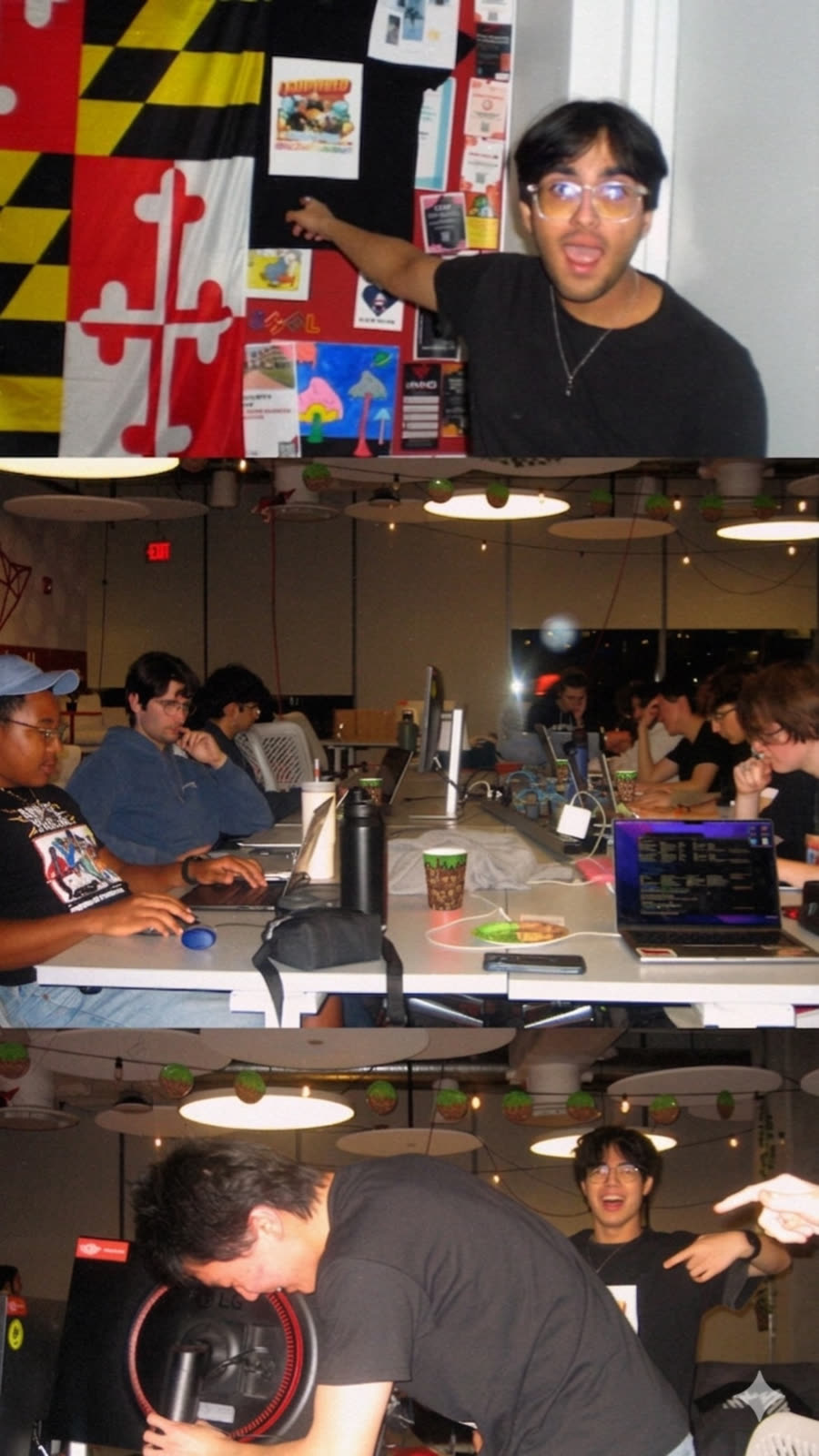
For live event content I'd always try to aim for at least three posts, not just one, to actually round out the progression of the event.
Beginning
Setup, the room filling in, what the event actually was.
→
Middle
The actual thing happening, live, while people were still in it.
→
End
The wrap, the aftermath, proof it was actually worth being at.
Those got saved to highlights too, so they stuck around well past the 24 hours for people to look back on each application season.
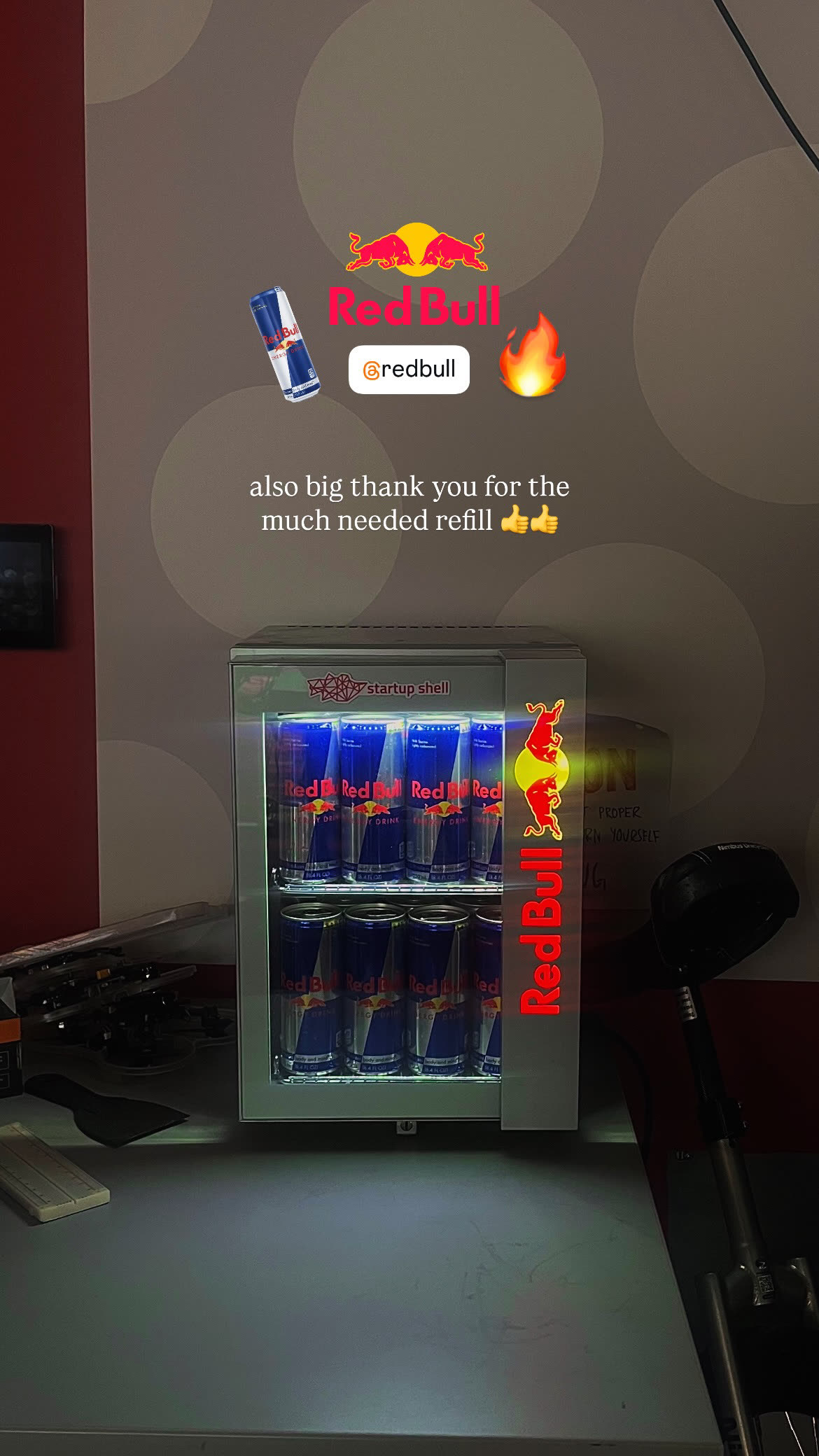
Red Bull Basement Visit
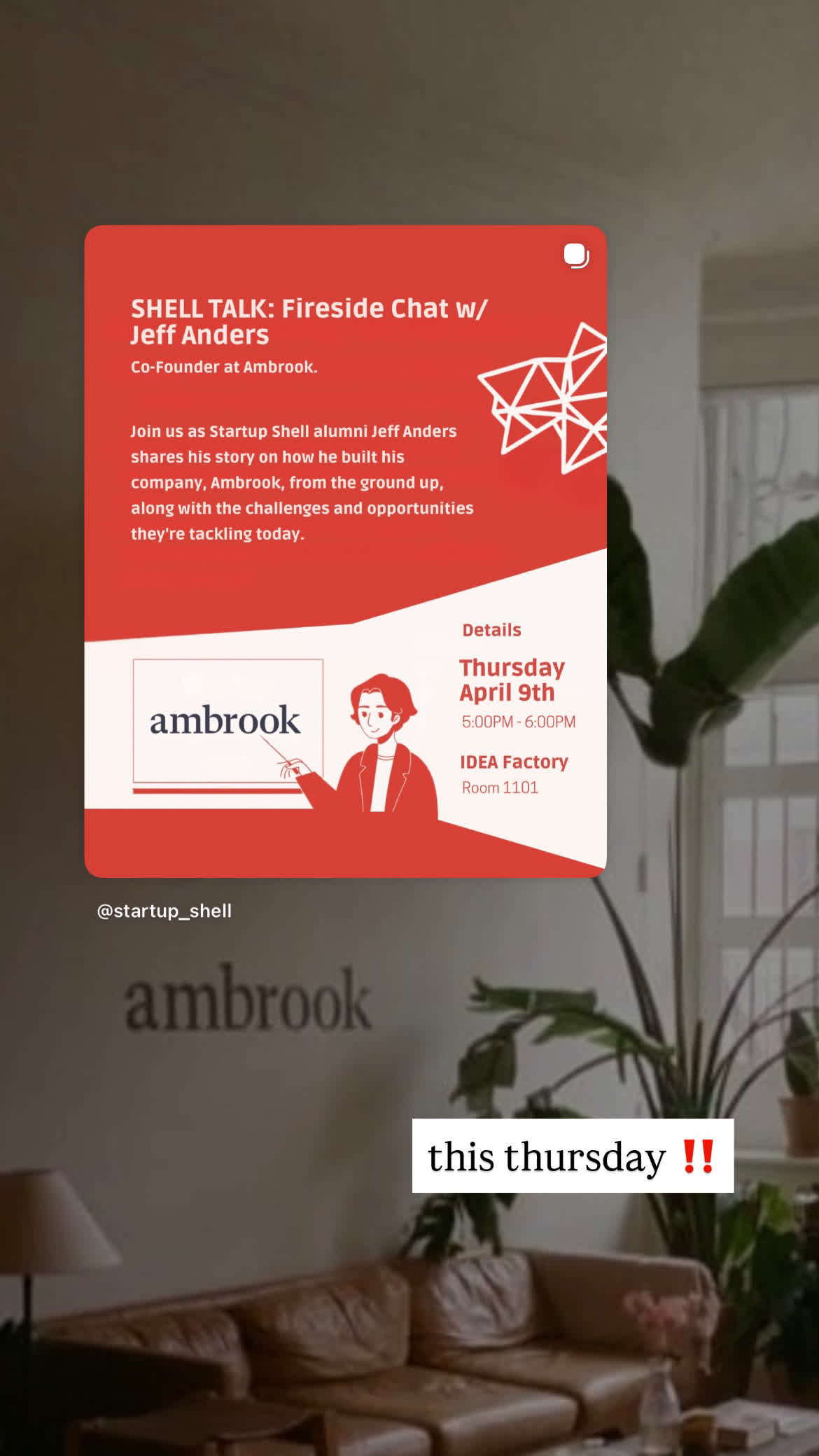
Ambrook Shell Talk
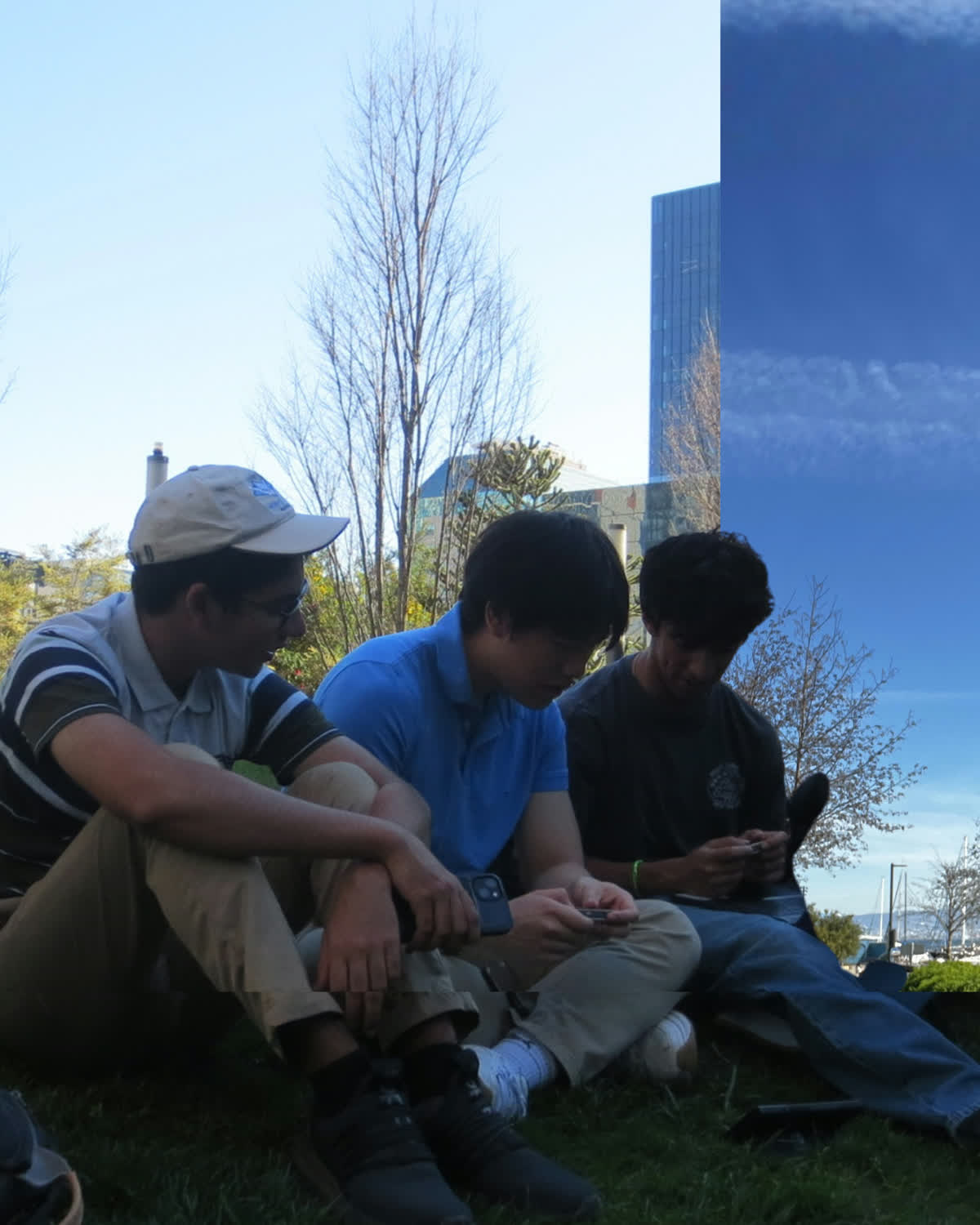
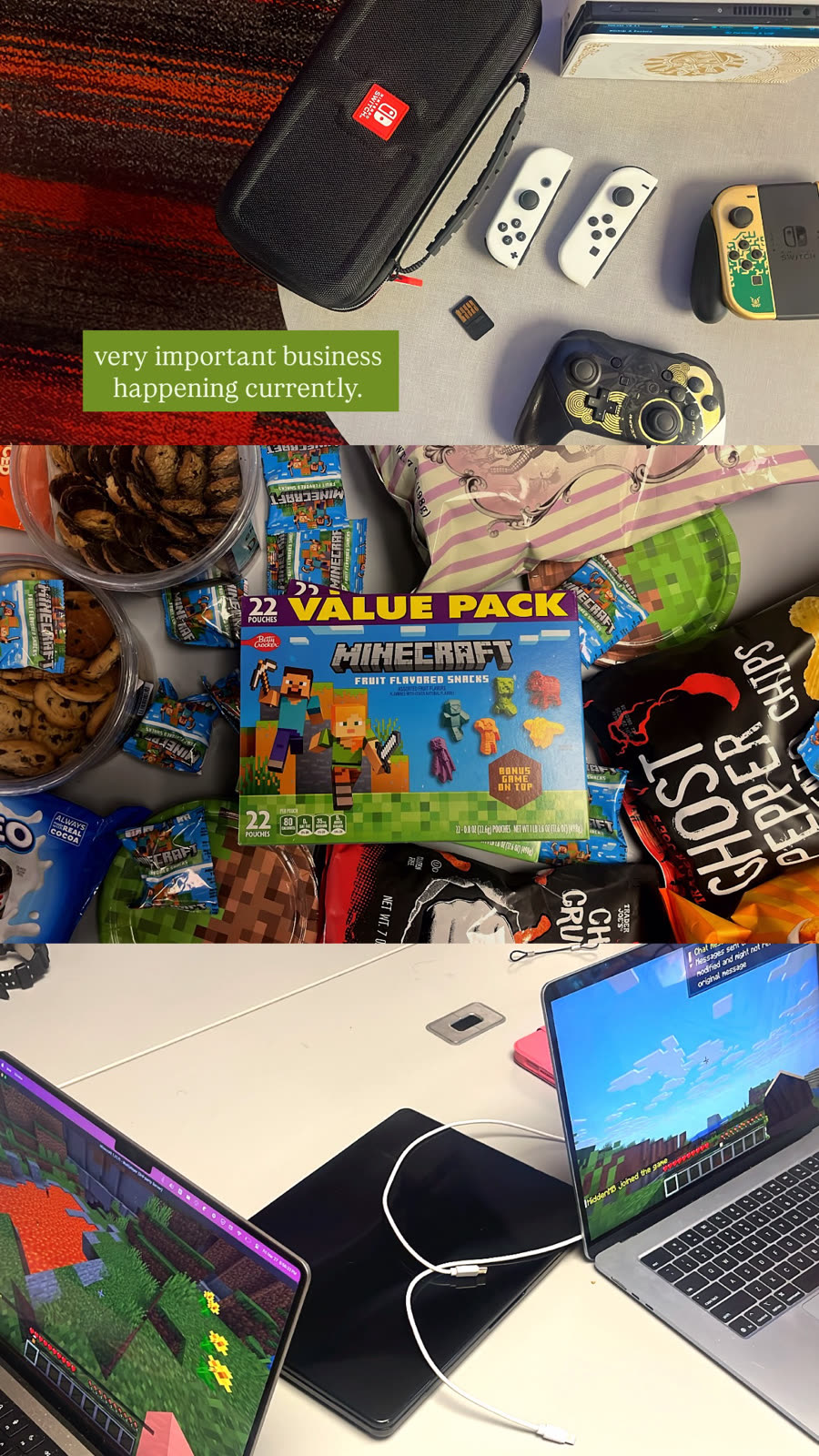
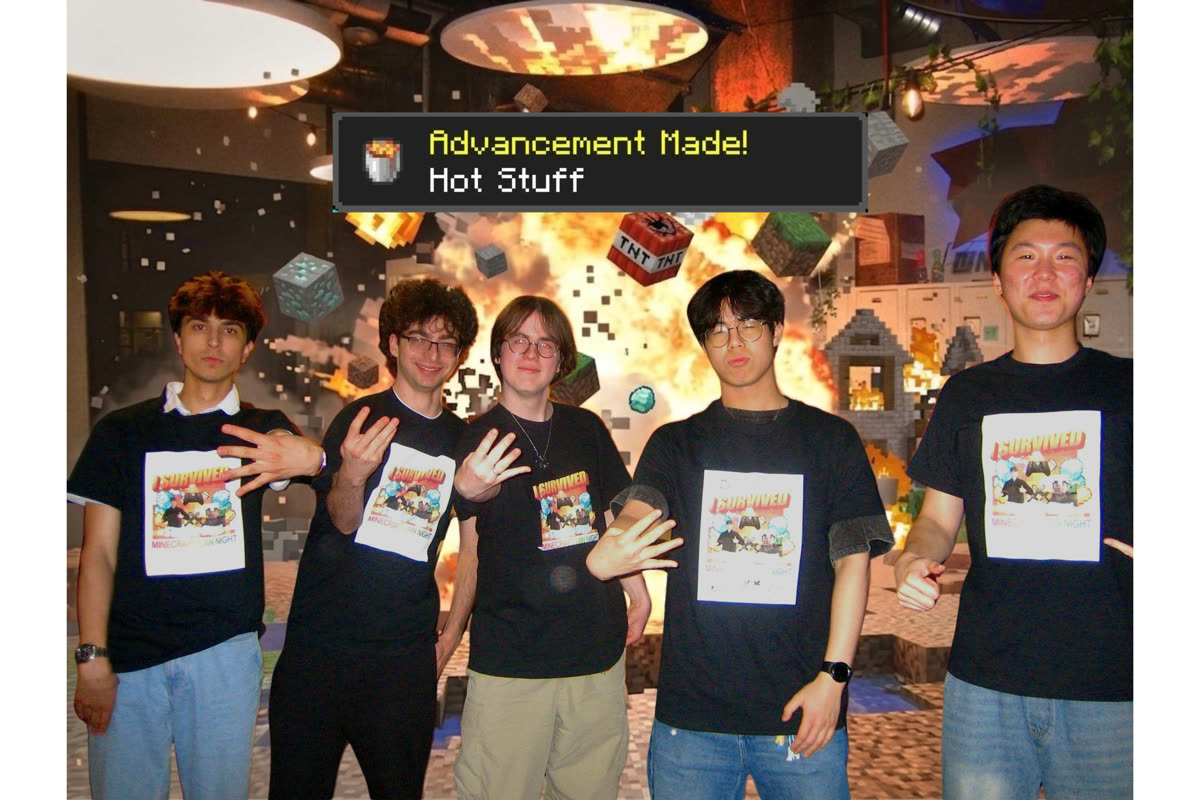
To showcase the internal community, I designed content with no professional event behind it.
Life Outside the Events
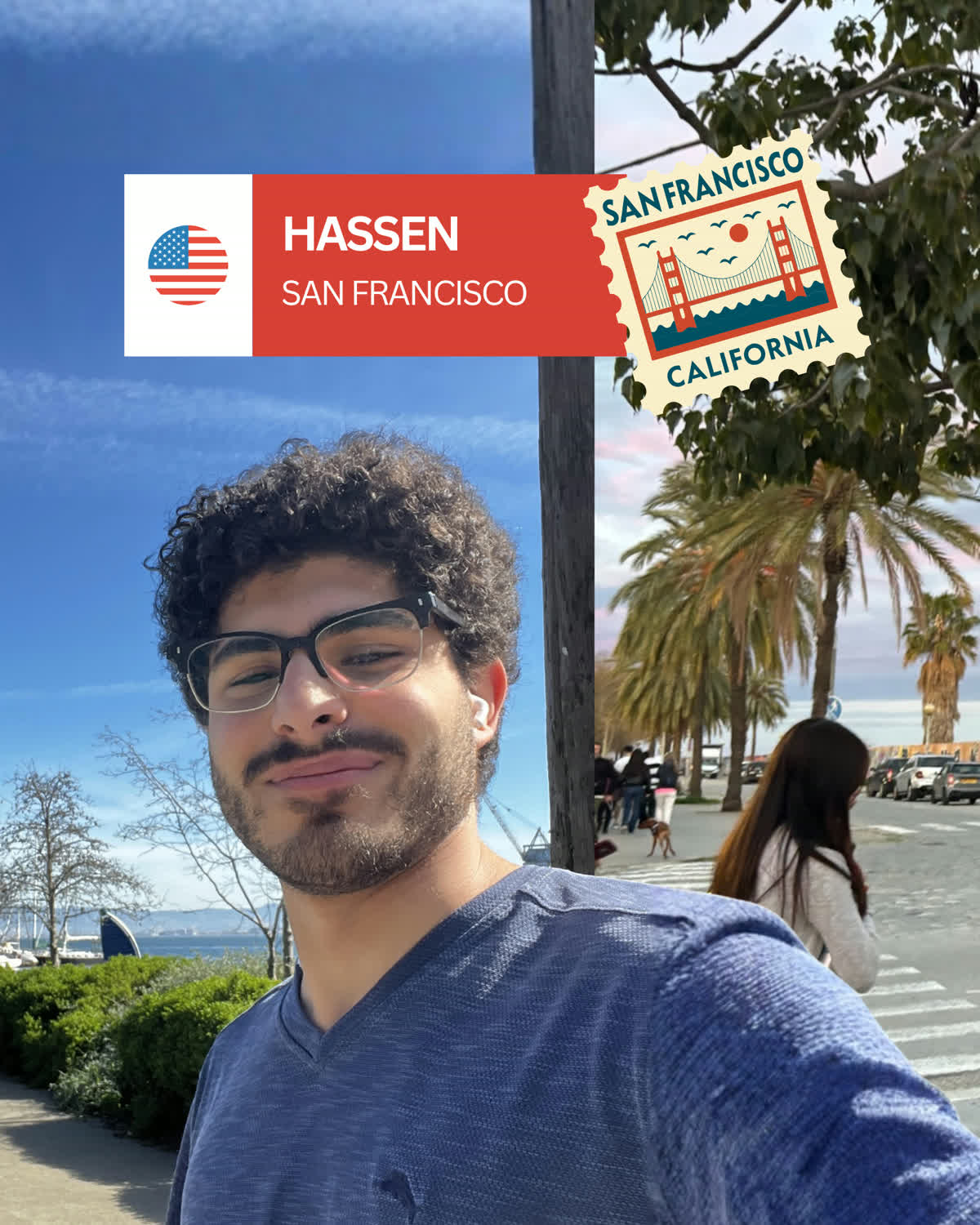
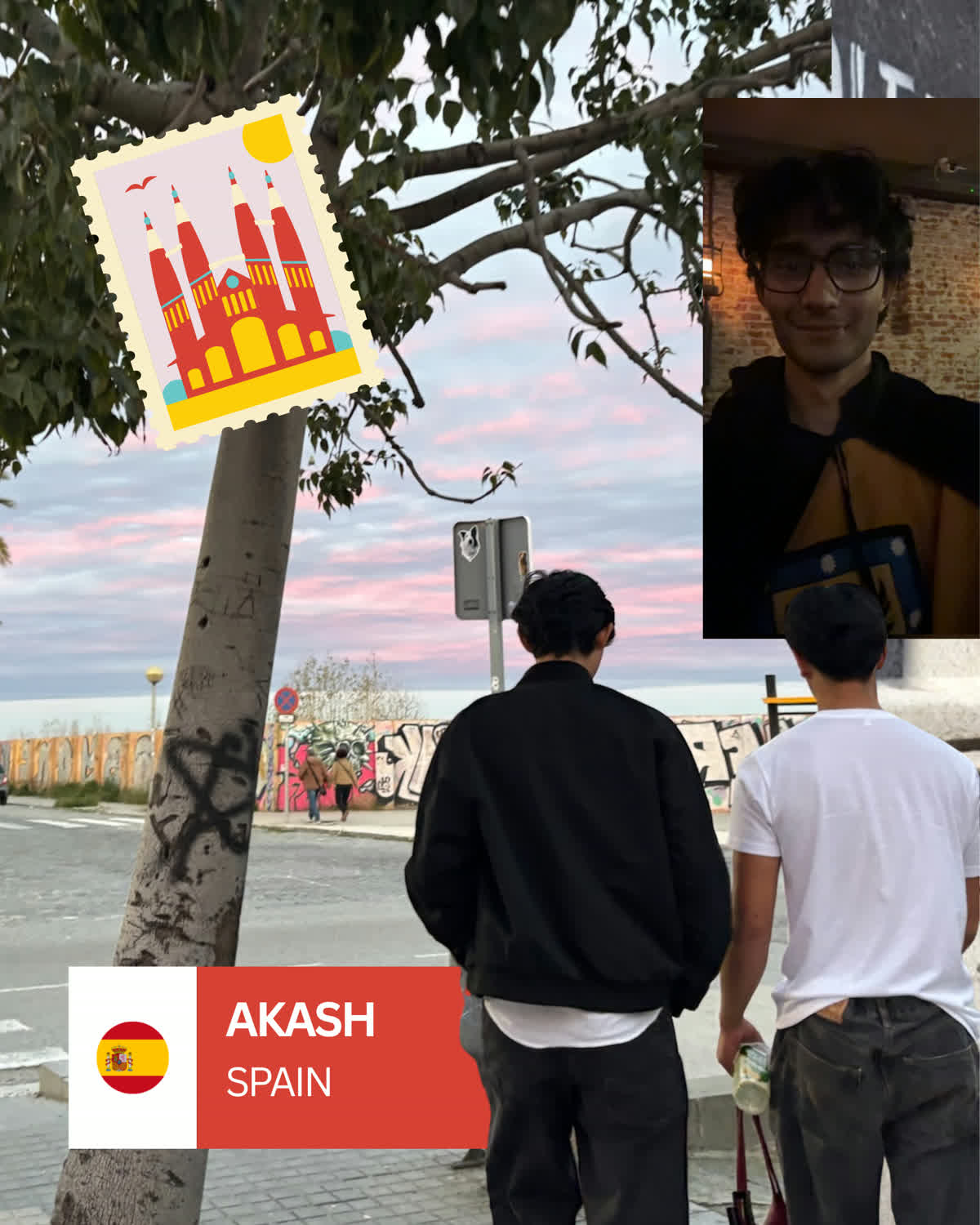
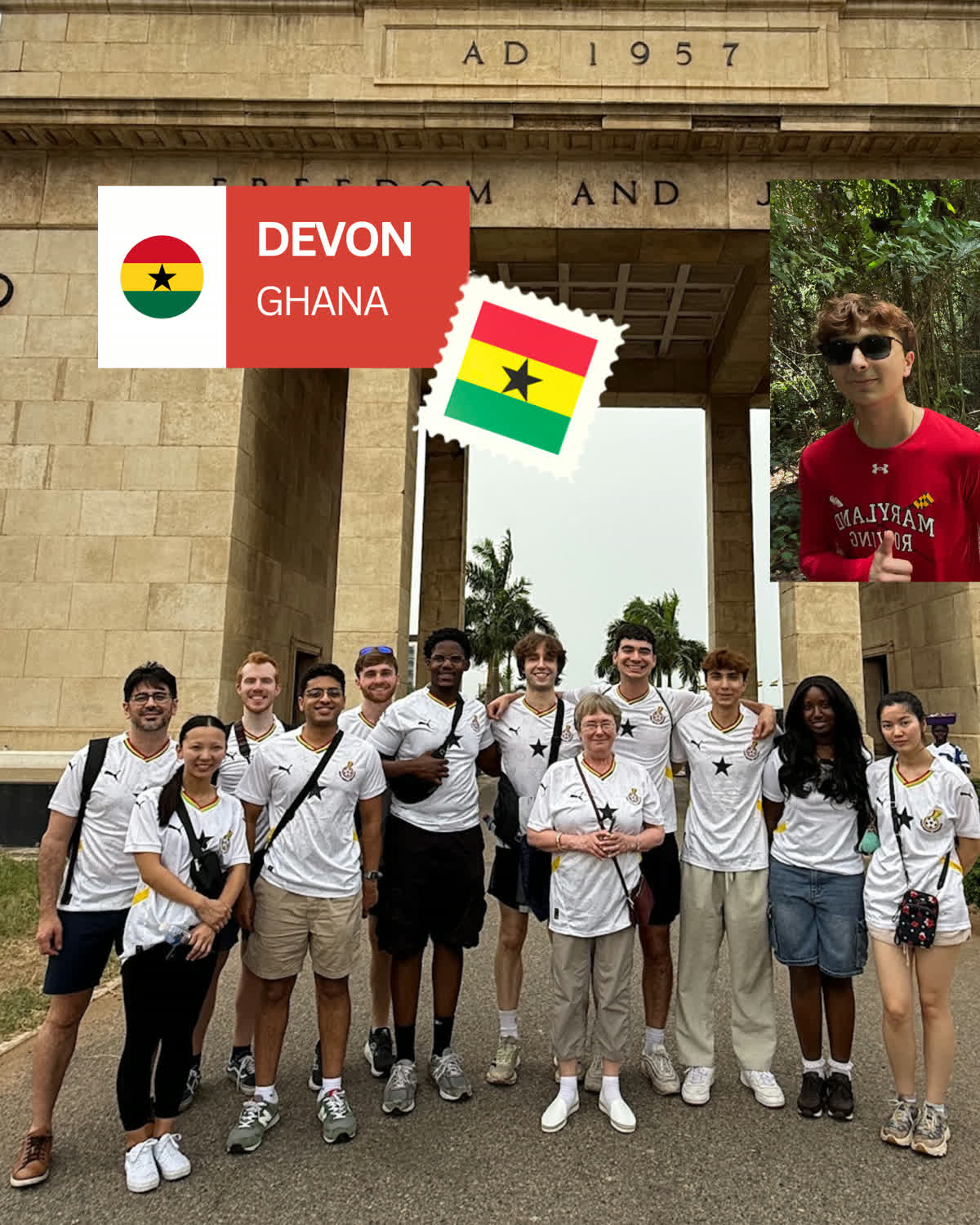
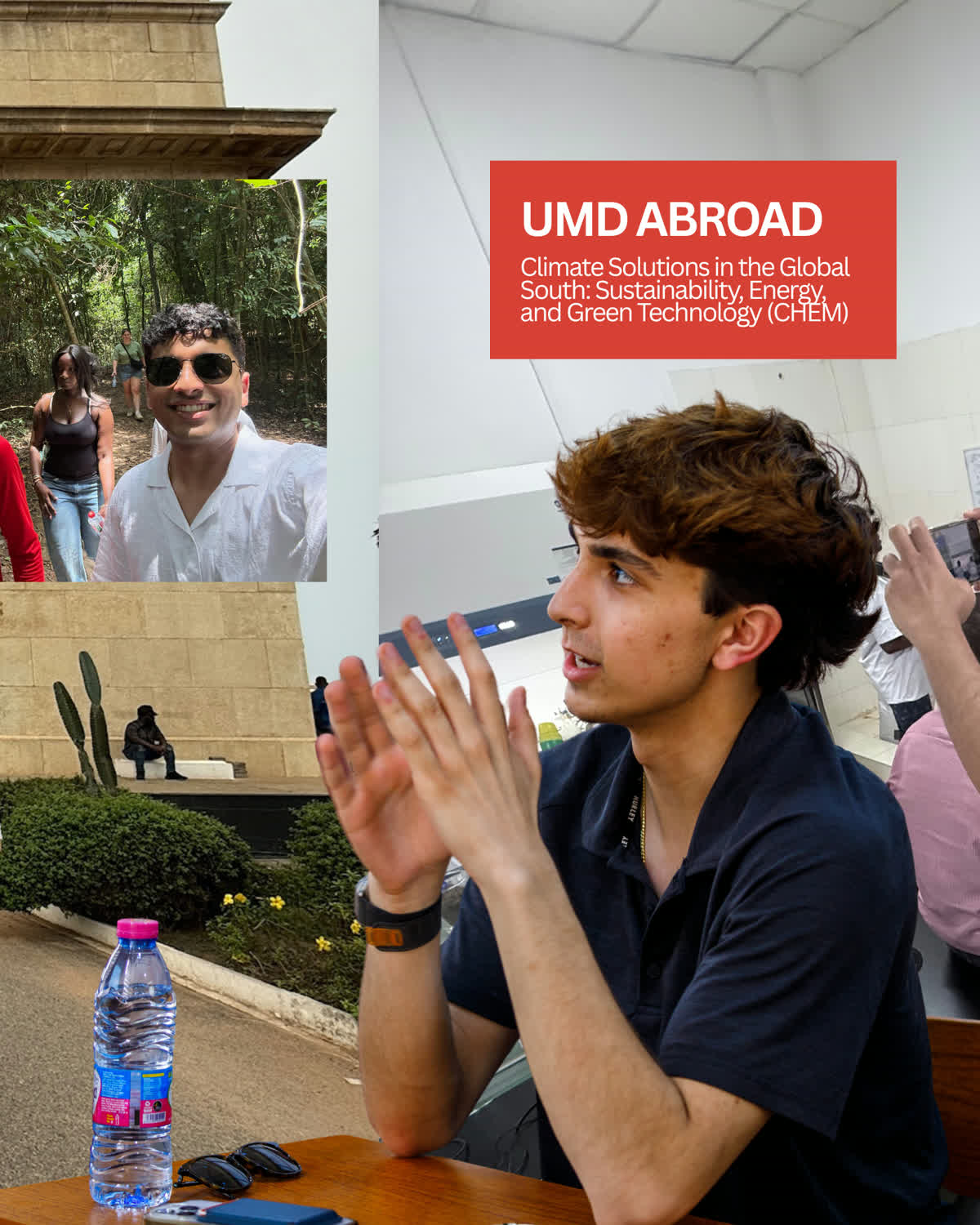
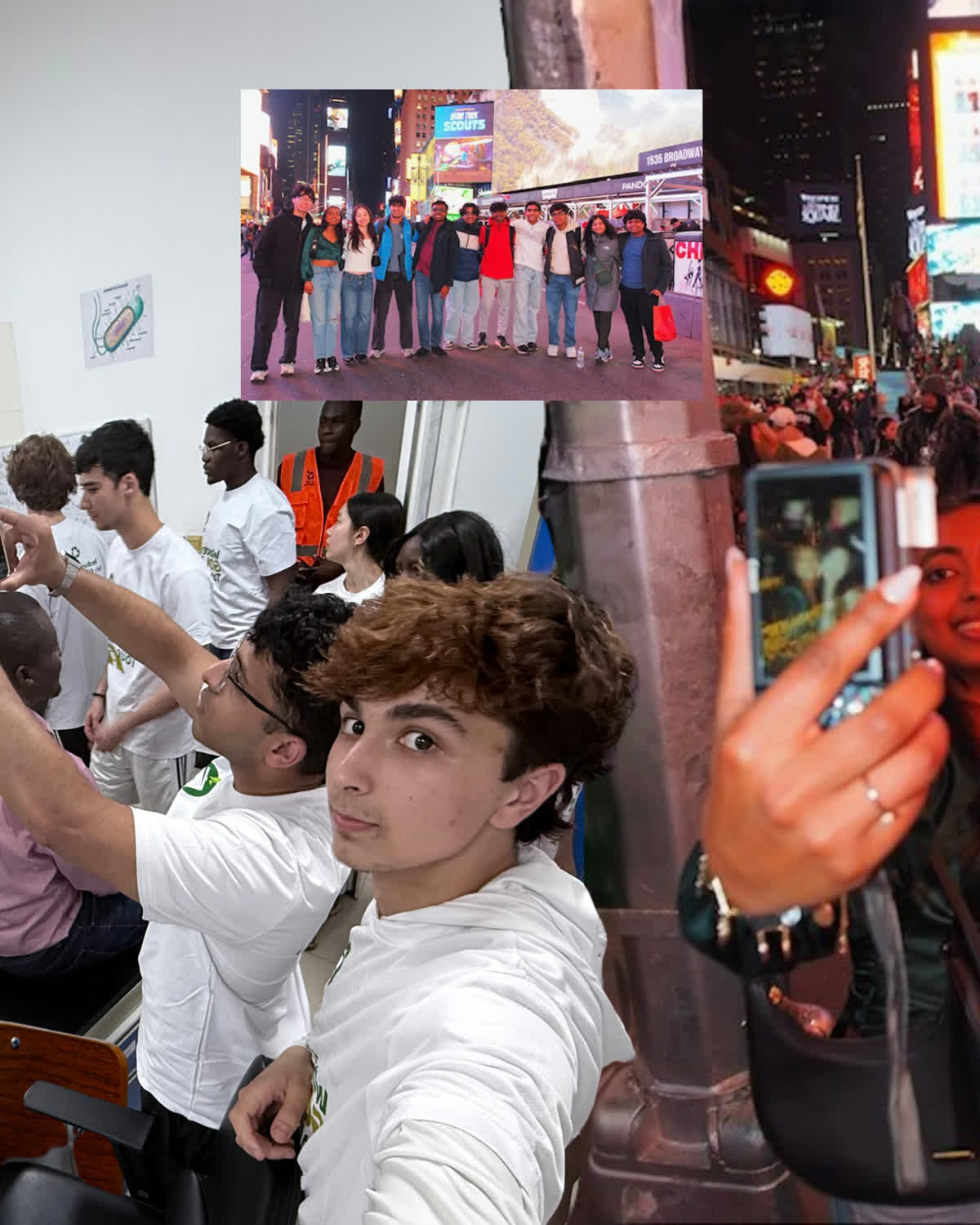
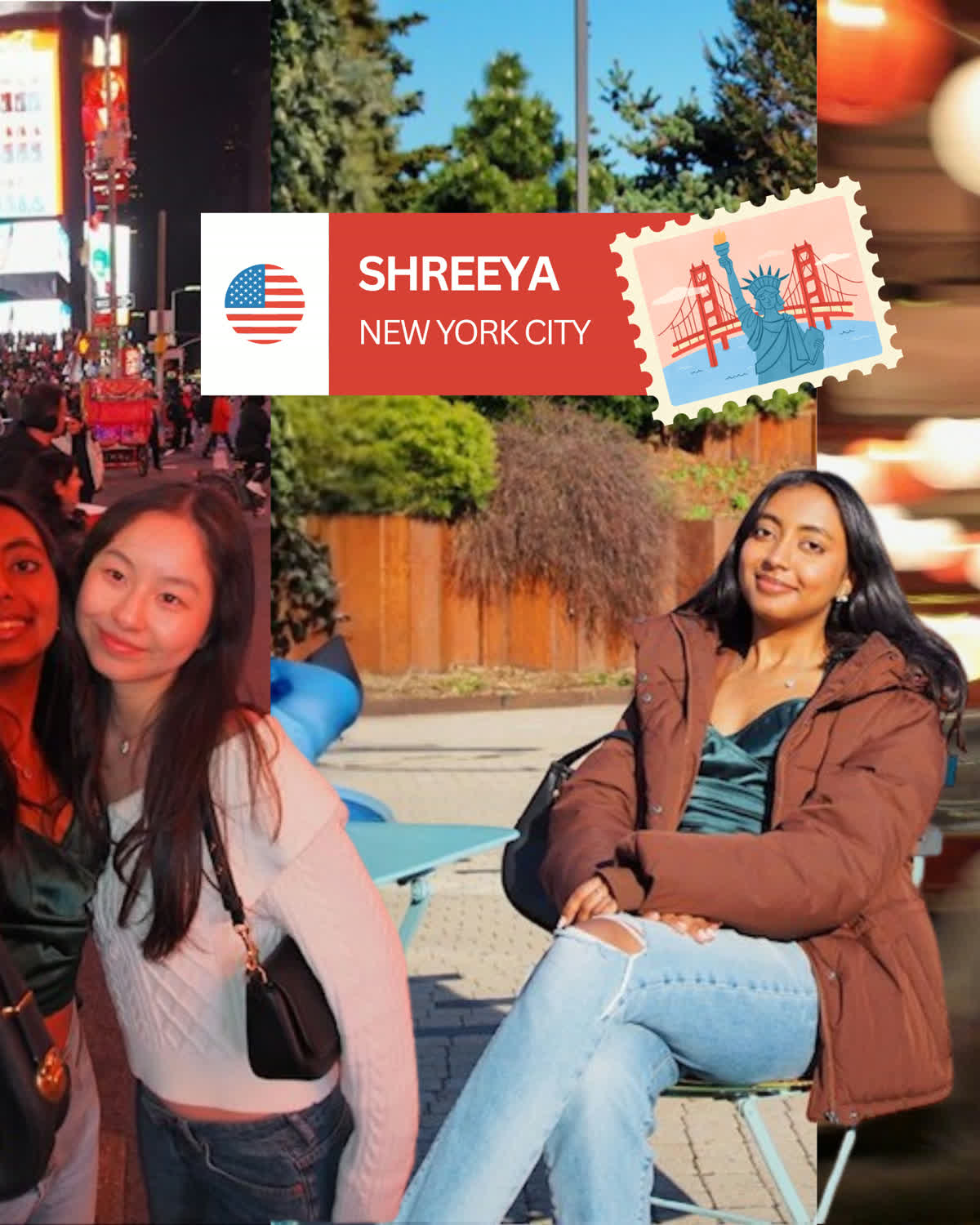
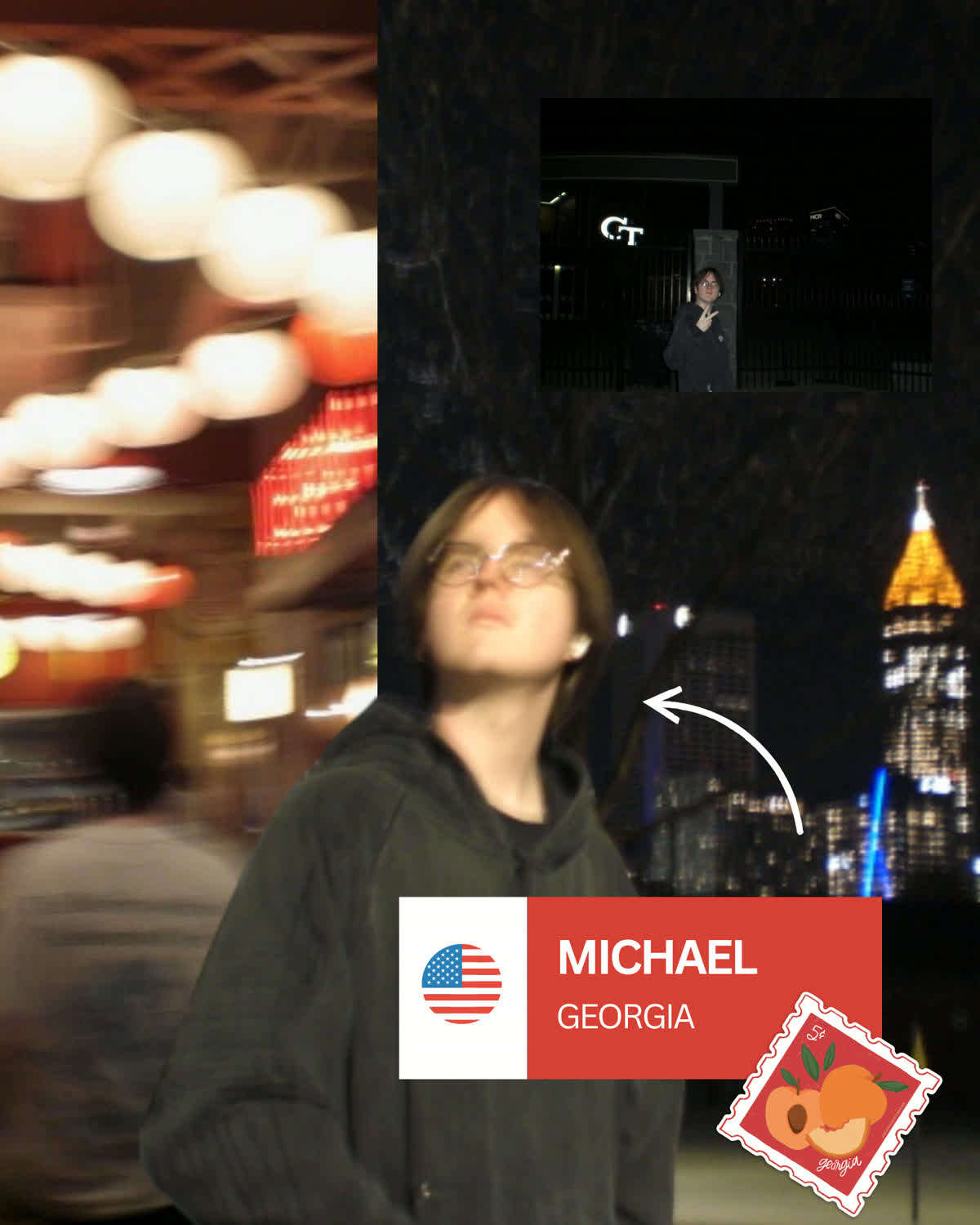
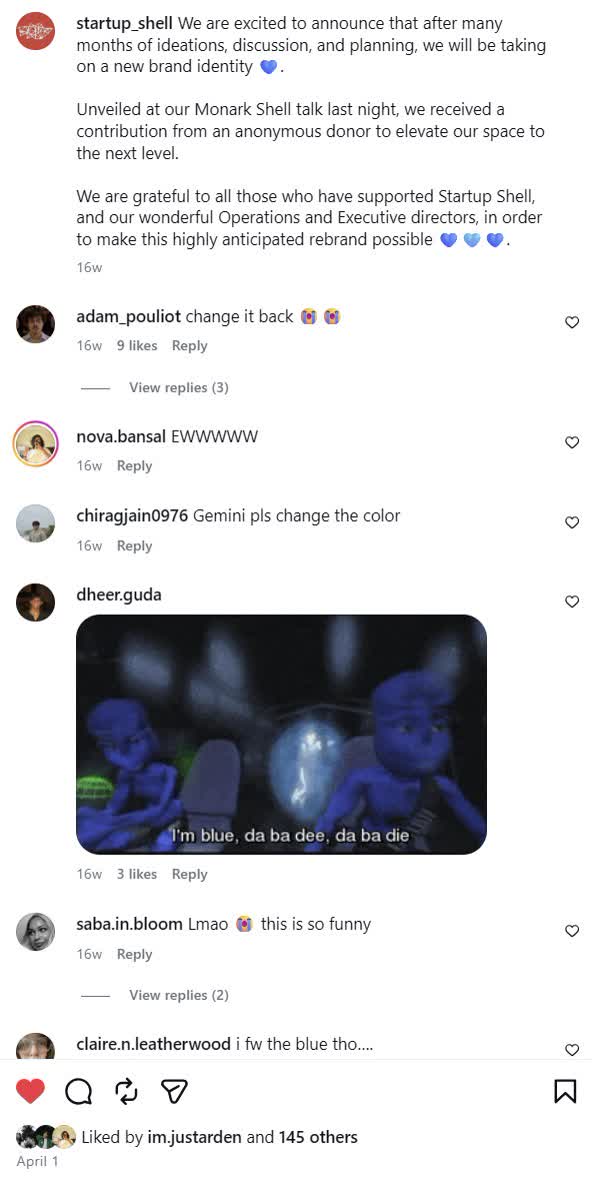
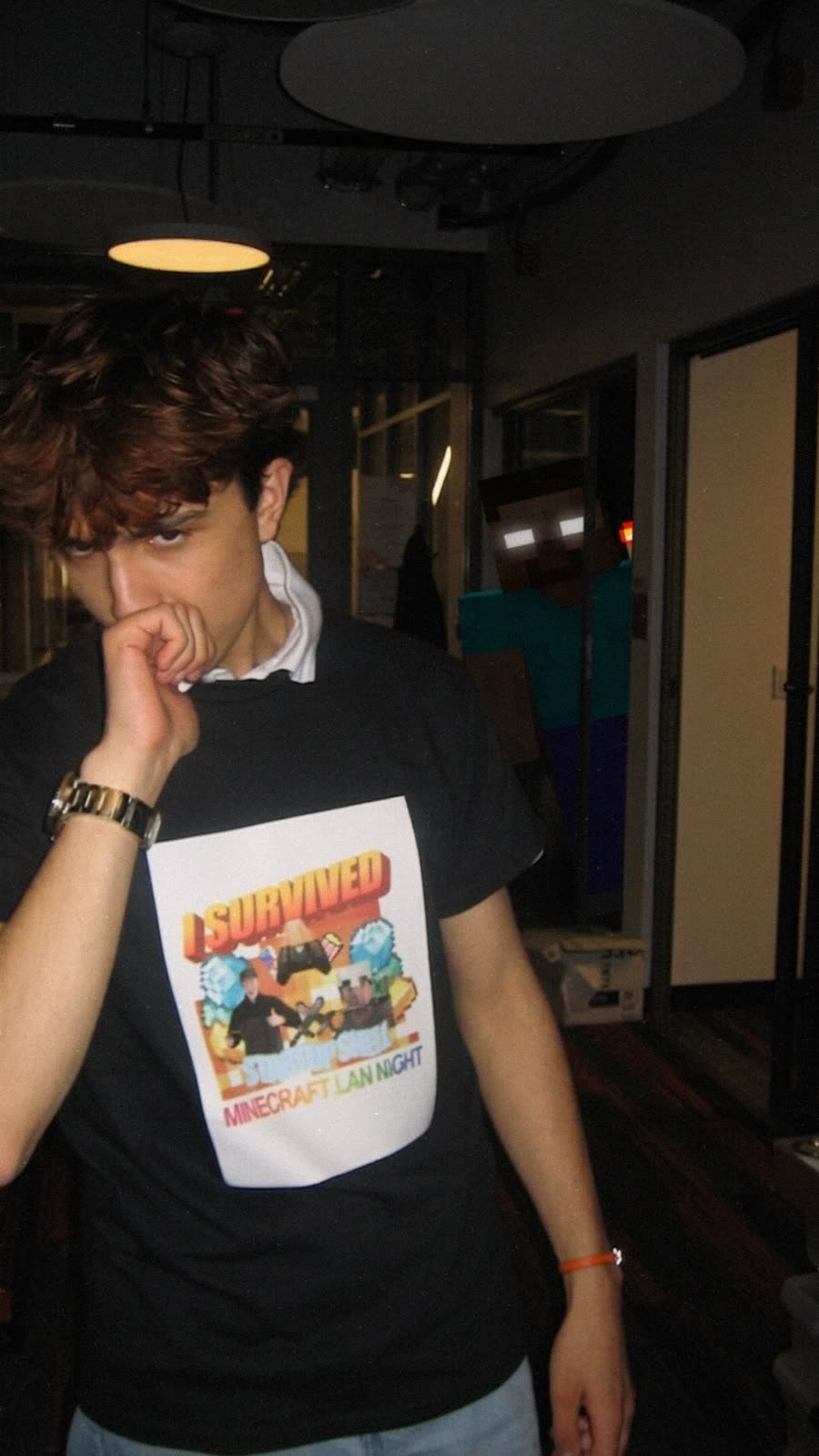
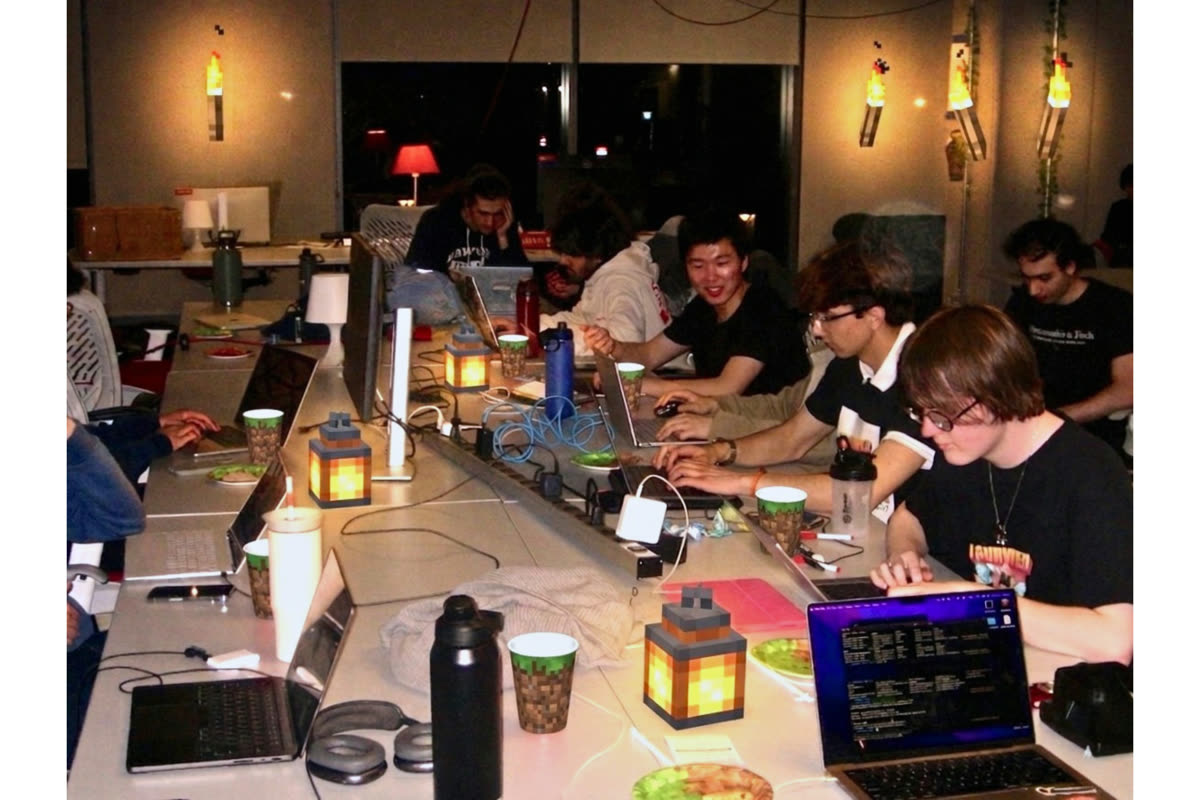
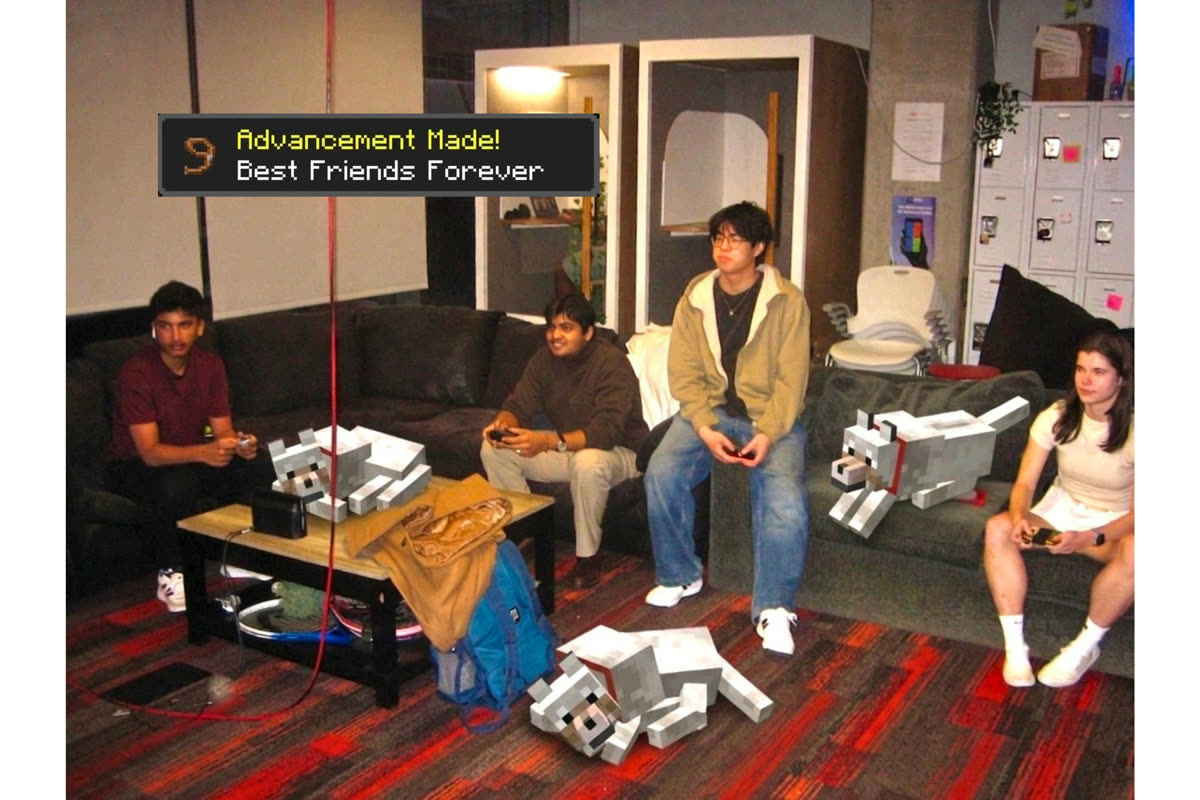
I wanted the account to show the org's actual energy, not just its calendar, existing together outside of anything scheduled.
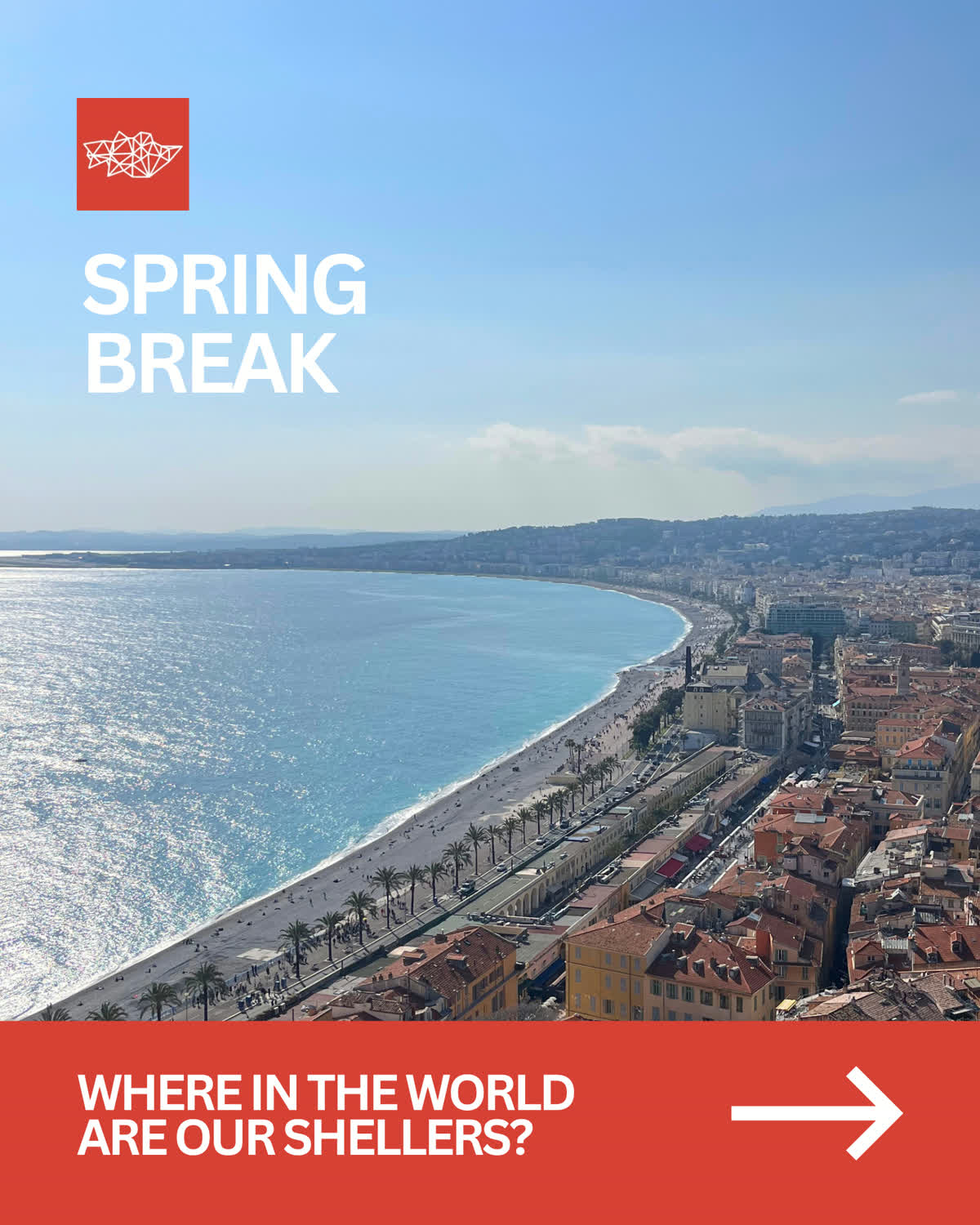
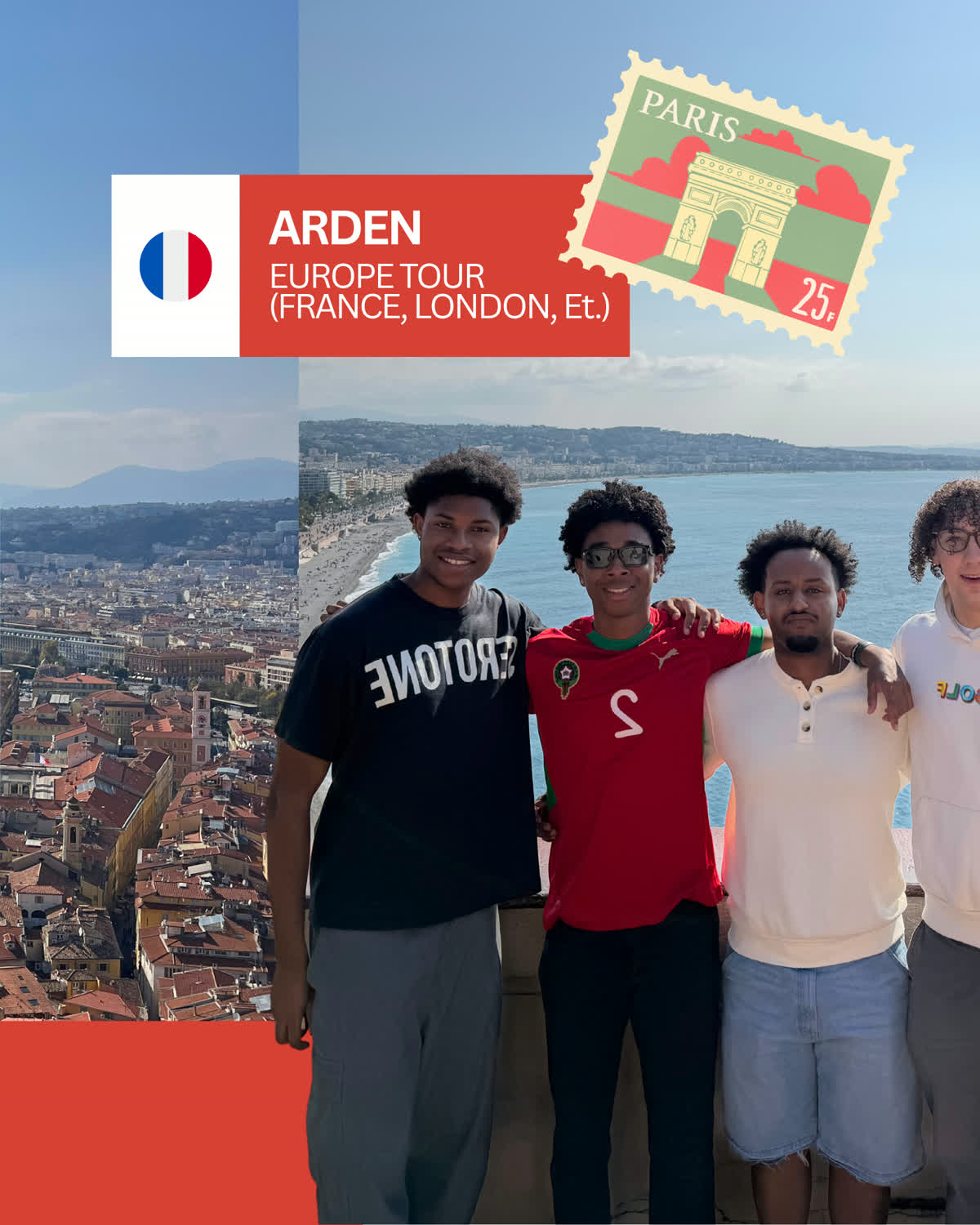
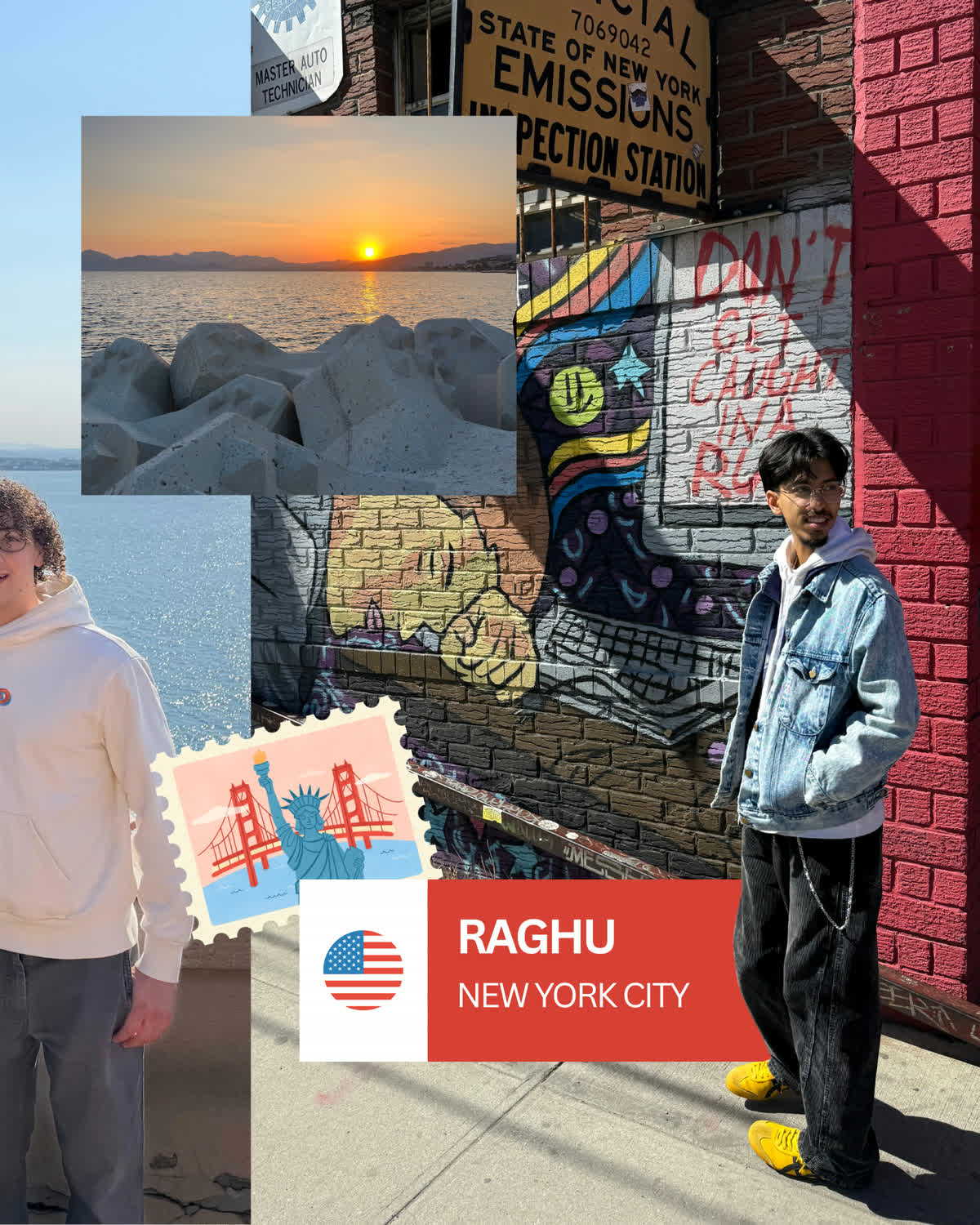
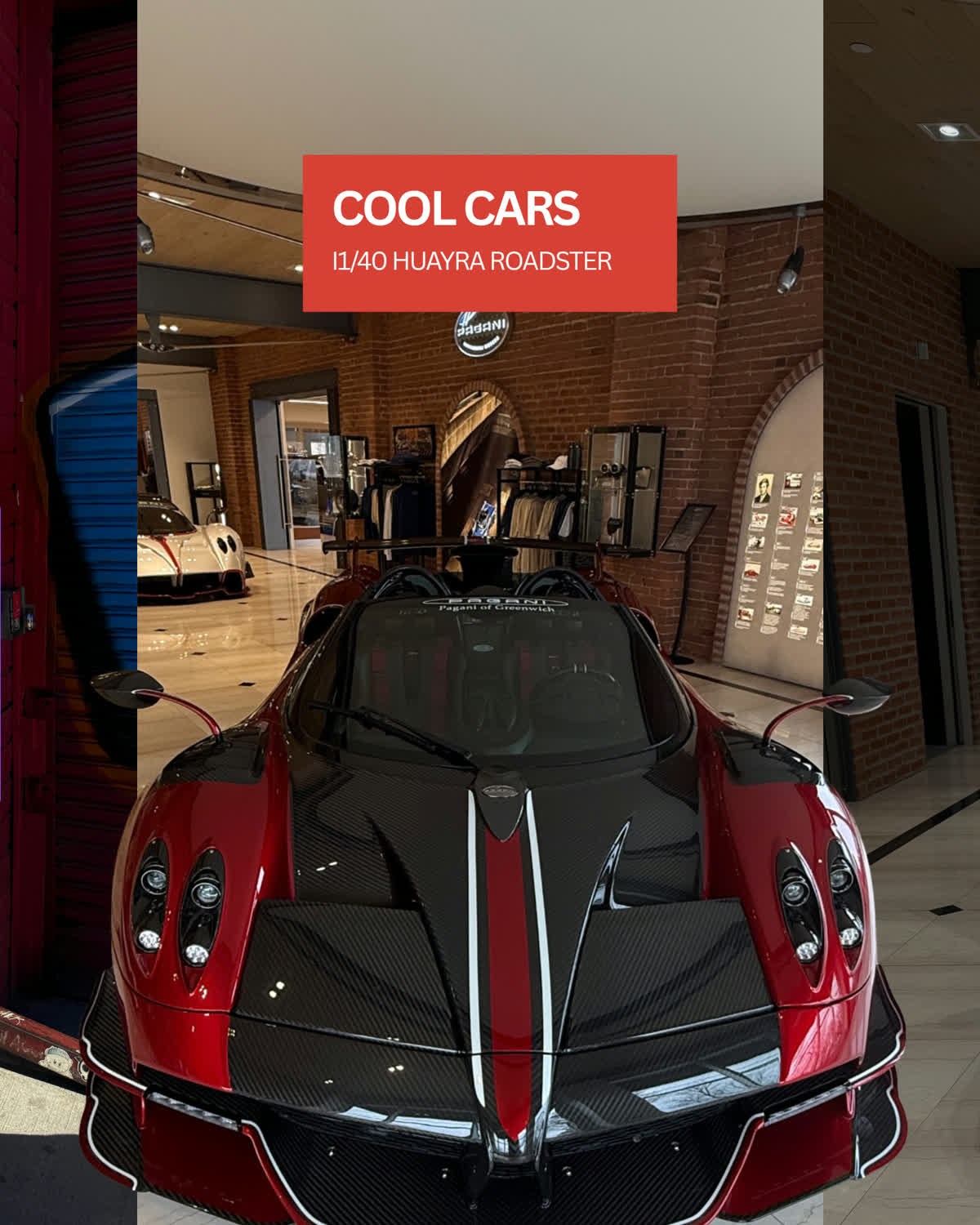
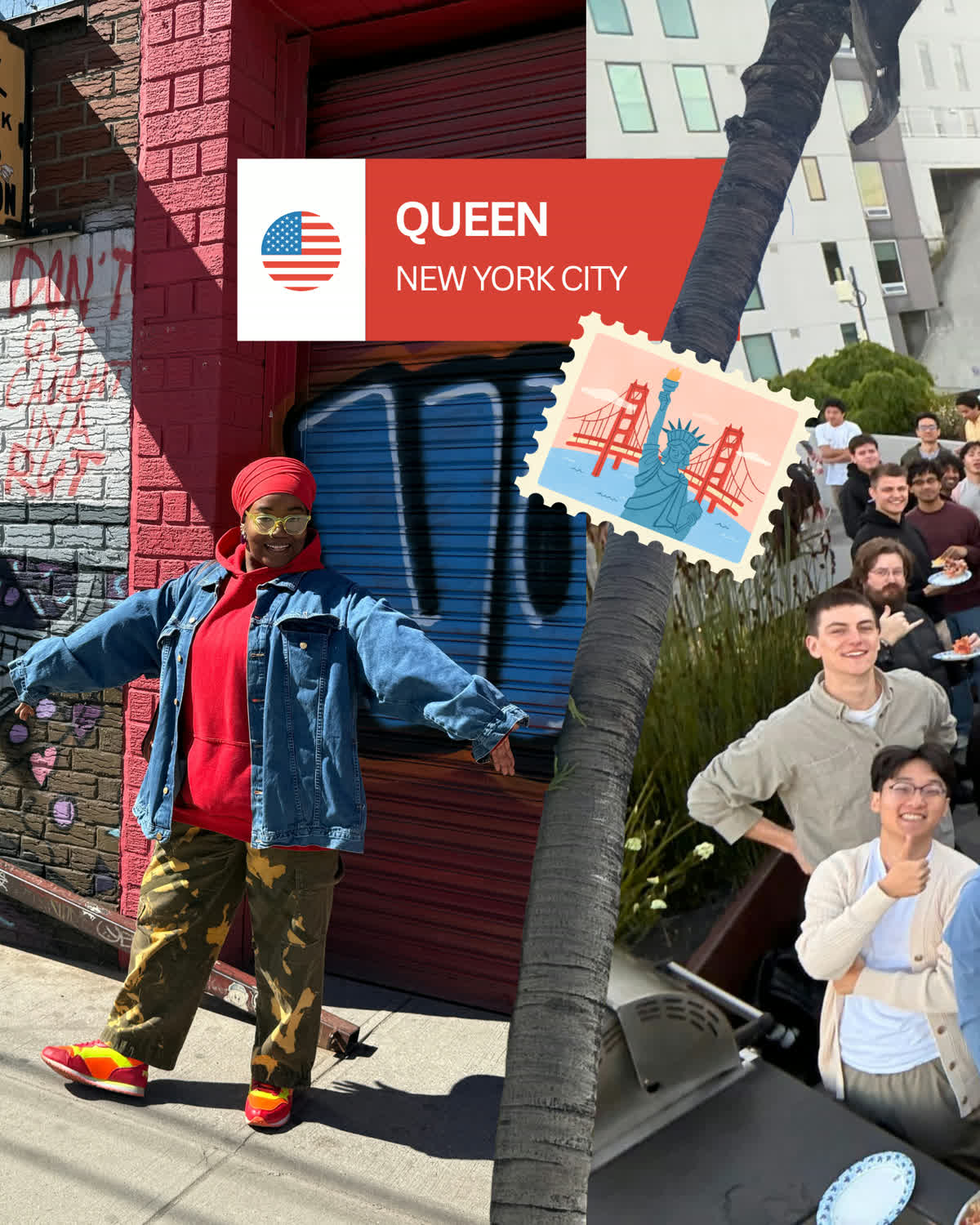
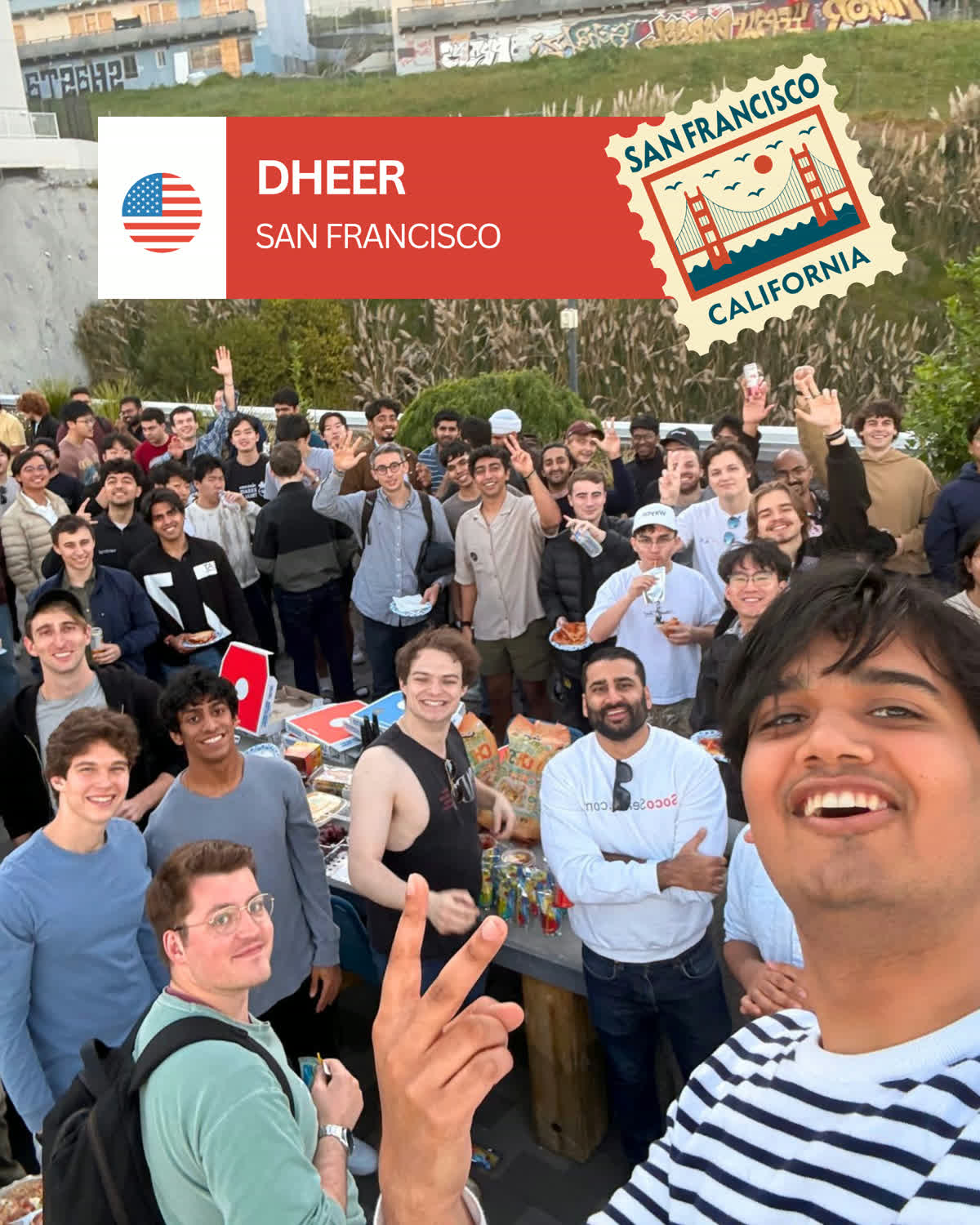
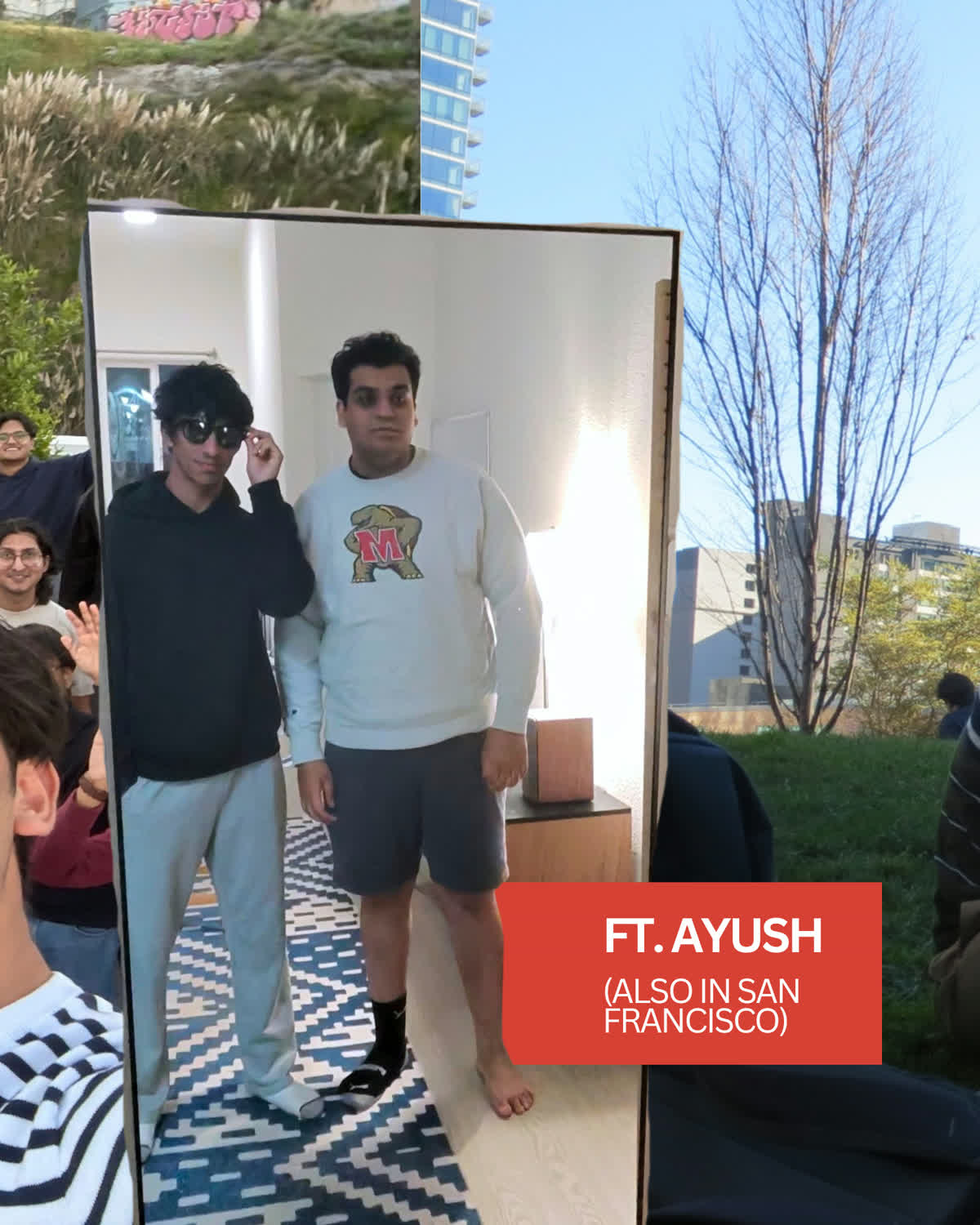
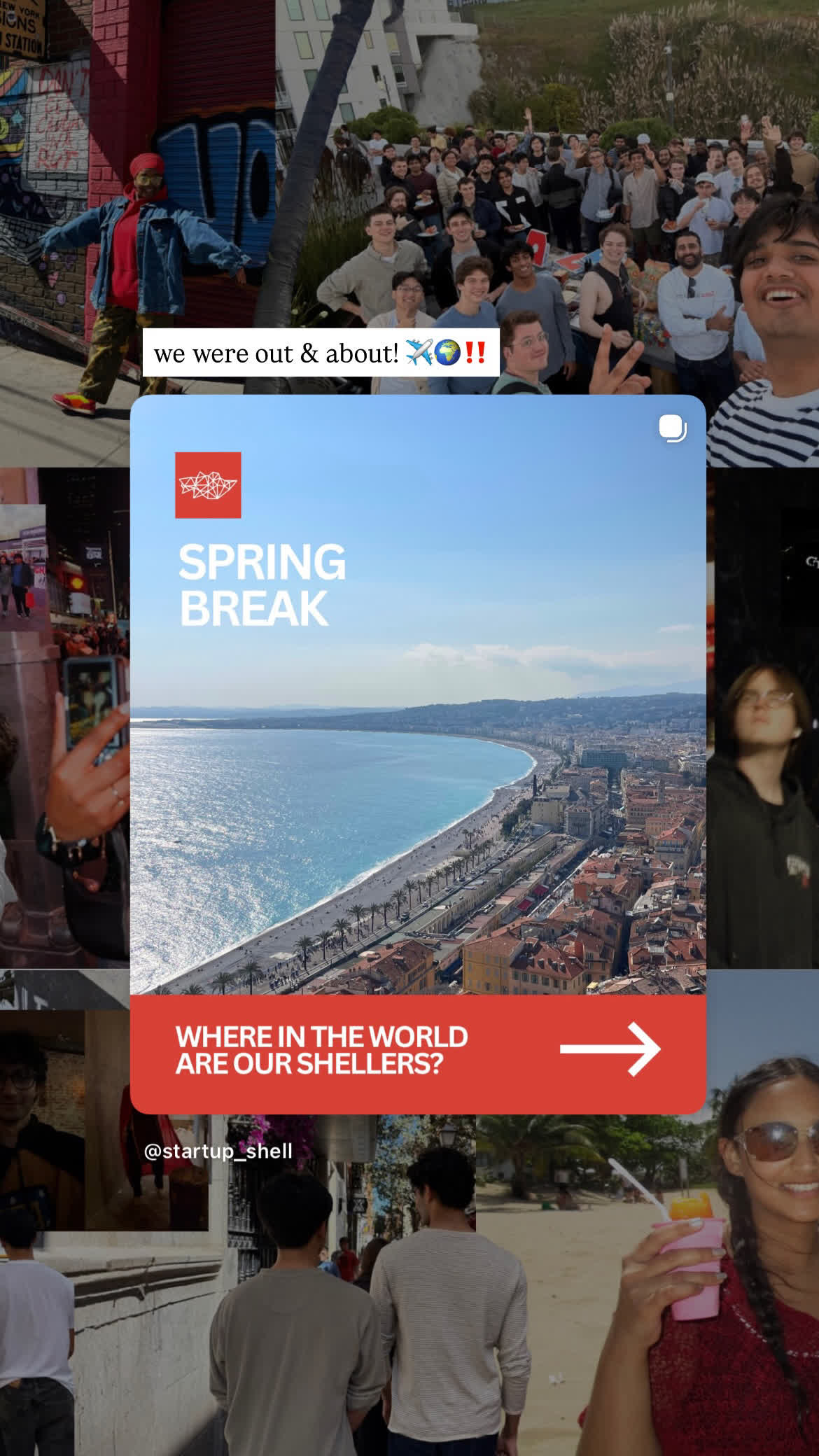
Where in the World are our Shellers
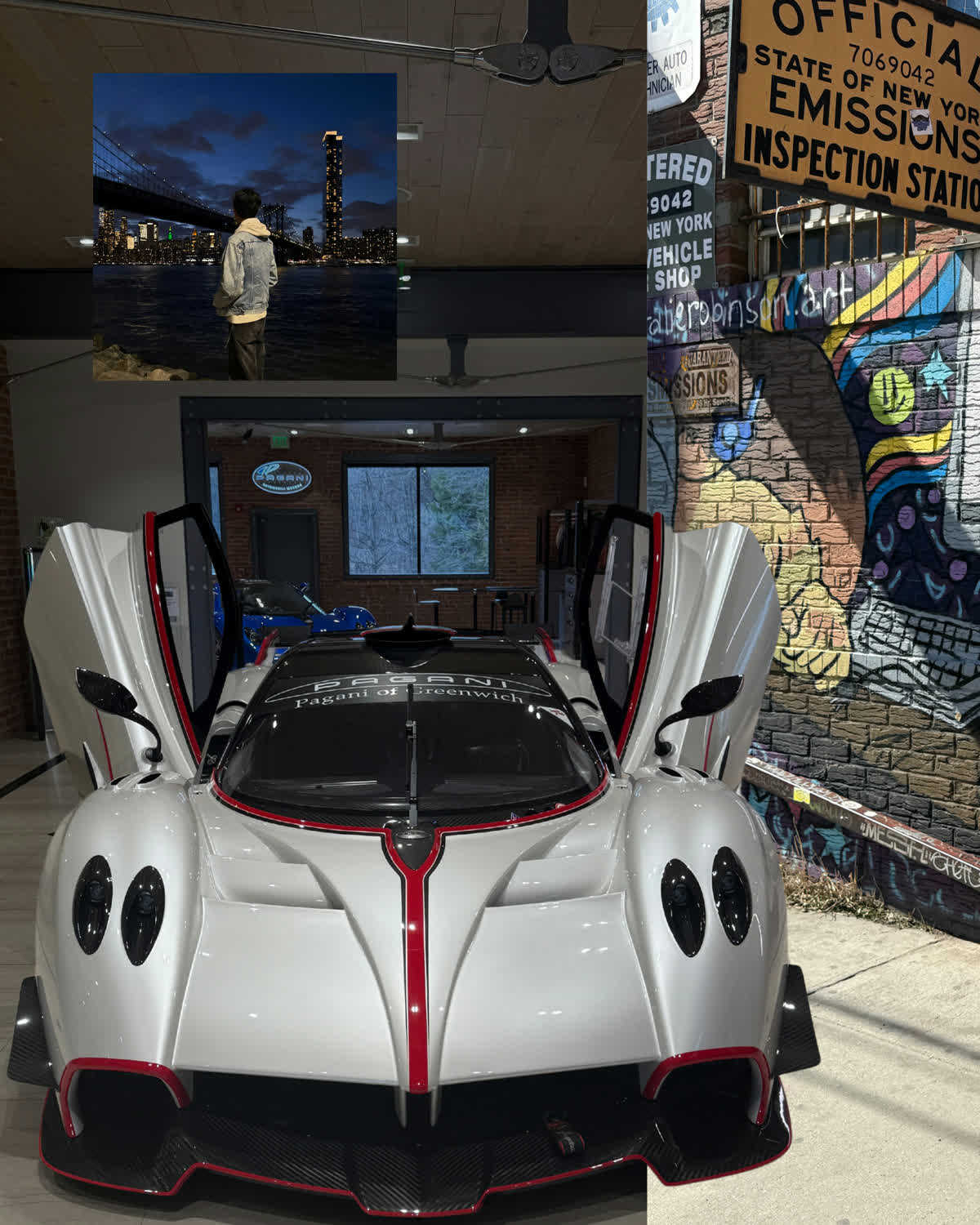
April Fools Rebrand Post
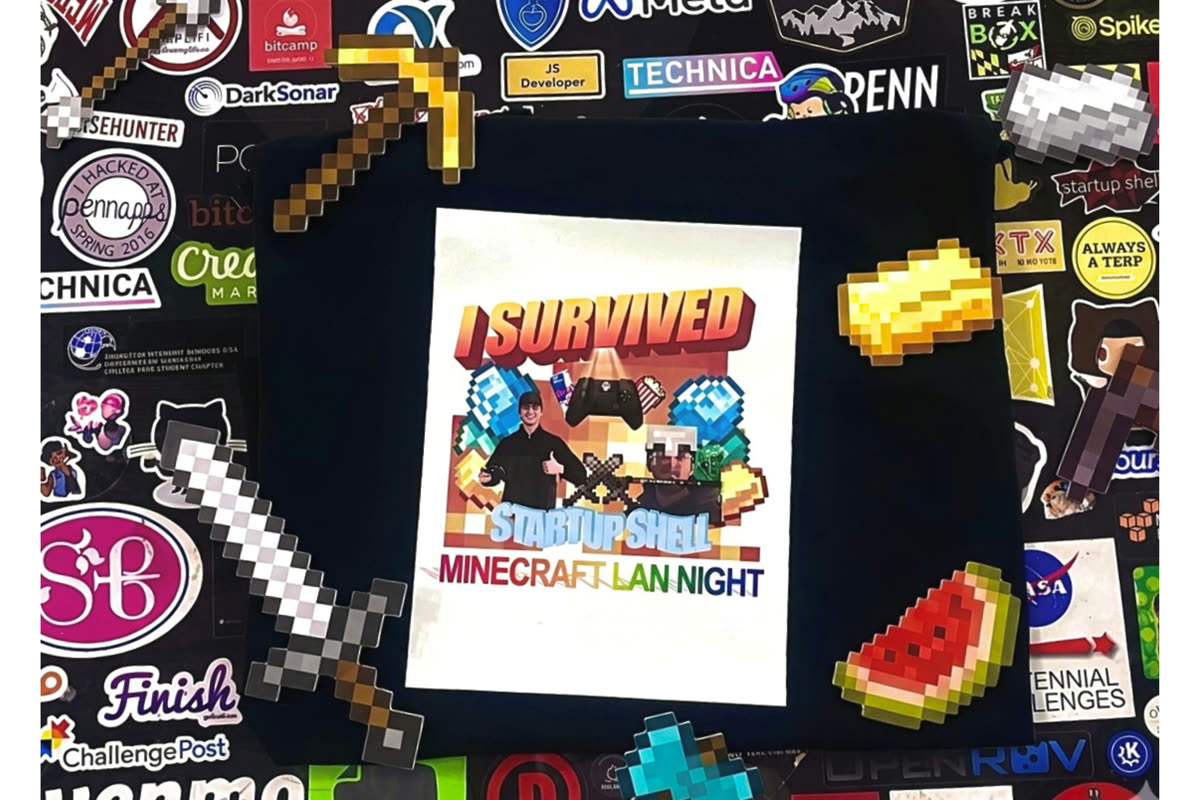
Minecraft LAN Party
The old copy lacked personality, so I wrote an actual voice for the account: inquisitive and a little introspective, like Shellers actually talk.
Copywriting
The old story posts were just a photo sitting in plain space; no caption, no text, nothing over top of it. So alongside the recaps I started writing an actual voice for the stories and posts themselves.
Example story captions
"something's brewing."
"happening tomorrow. bring your ideas, we'll bring the whiteboard."
"these Shellers are making something great; come see what."
A slideshow doesn't introduce anyone to anyone, so reworking orientation meant replacing it entirely with an egg drop.
Reworking Orientation
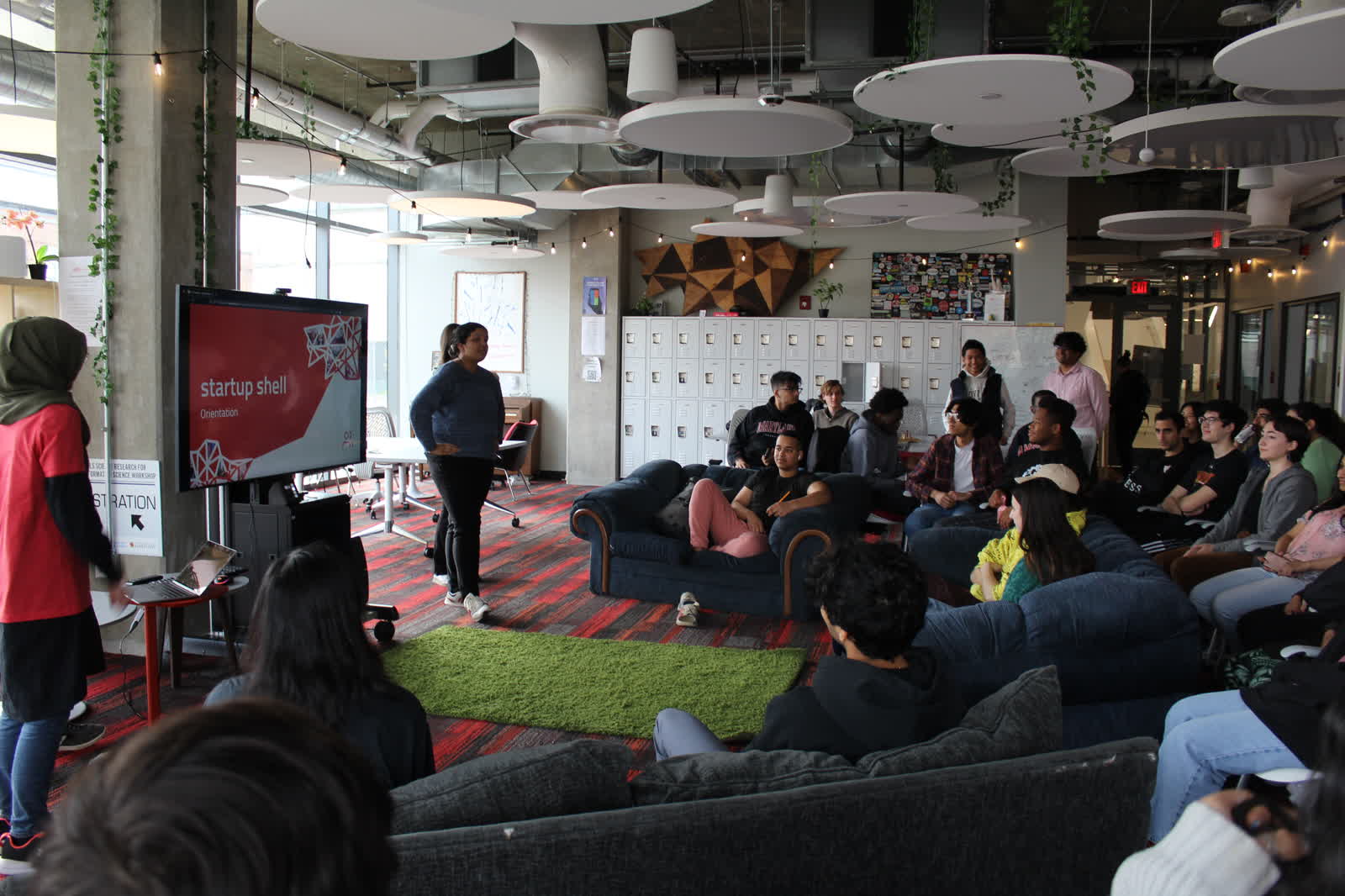
The Director of Programming role also meant owning orientation for new members. What existed was a long mock-presentation exercise; new Shellers worked through a case study about finding ways to help a squirrel gather more nuts for winter. It was meant to simulate a startup pitch exercise, but in practice, people found it unengaging. Some tried to leave early, and nobody was talking to each other, which was supposed to be the entire point.
Old Orientation
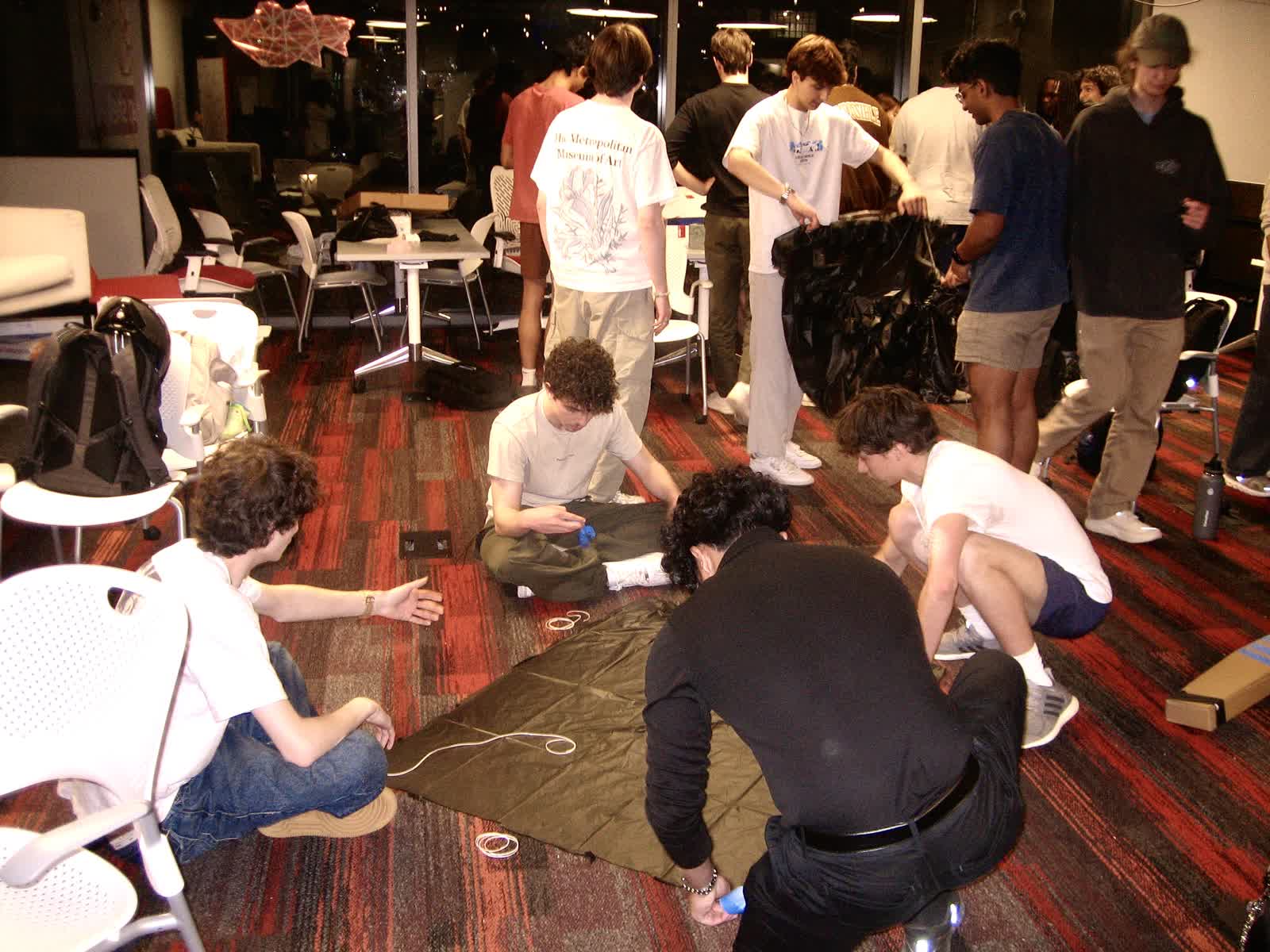
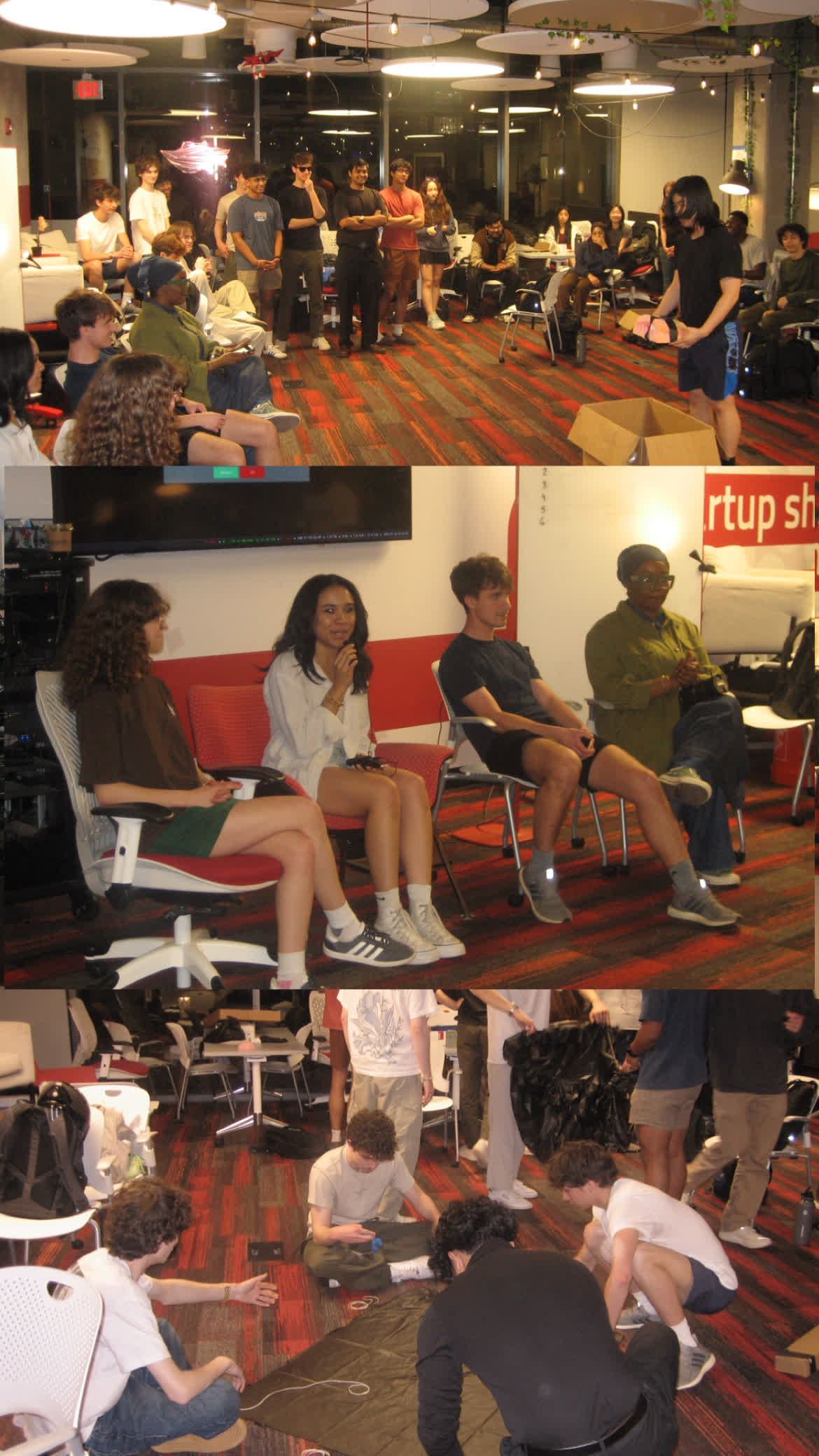
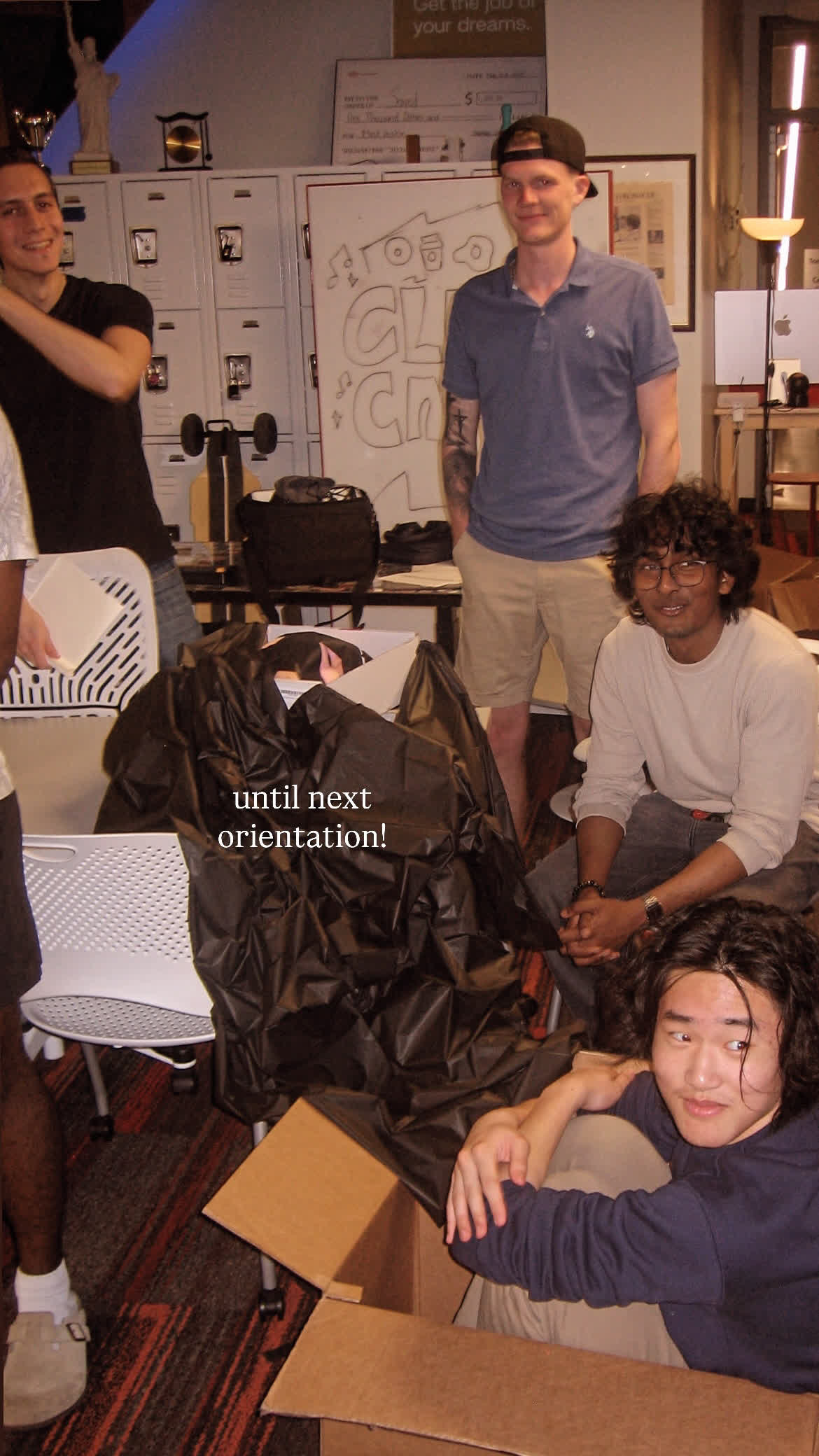
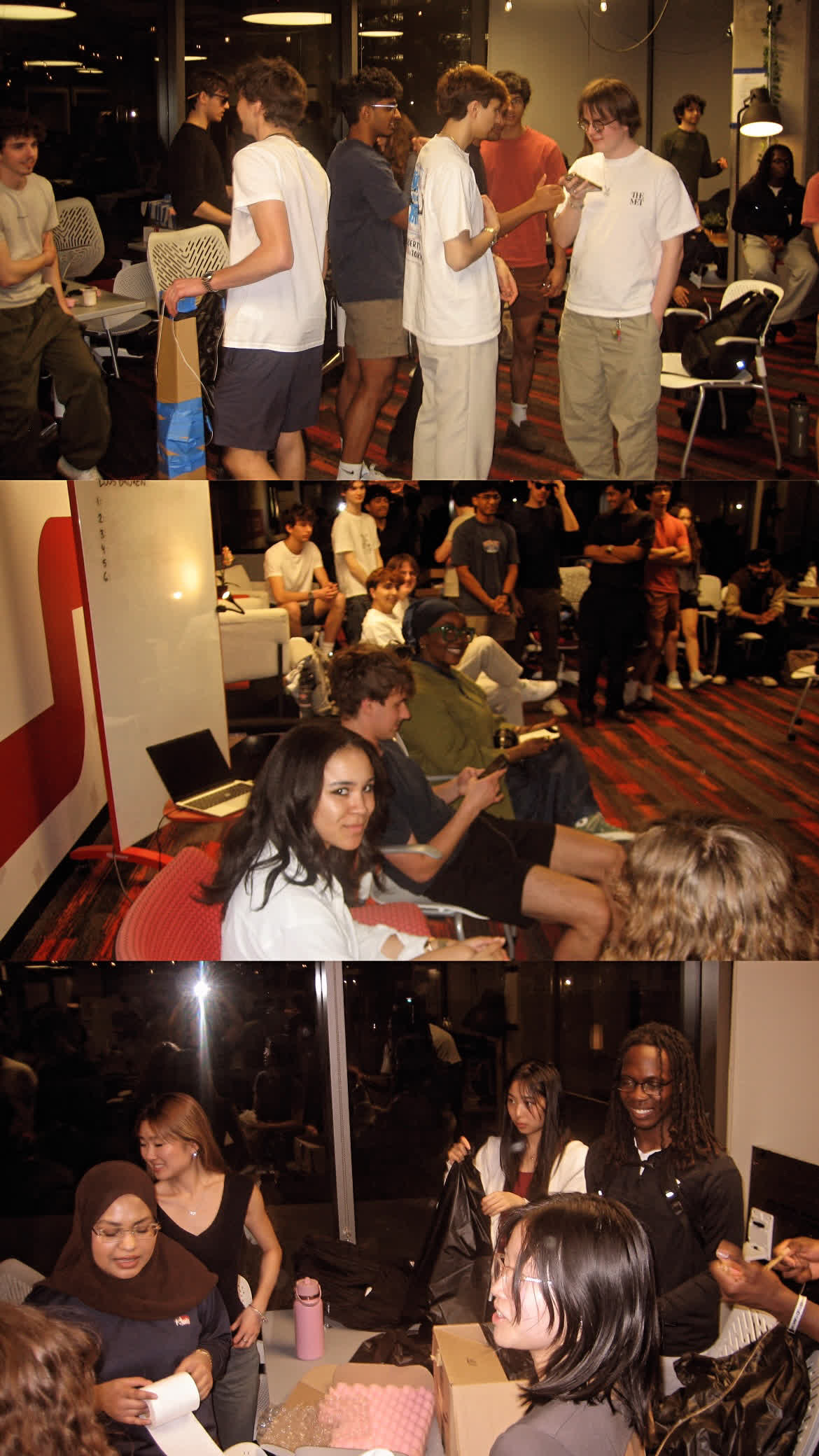
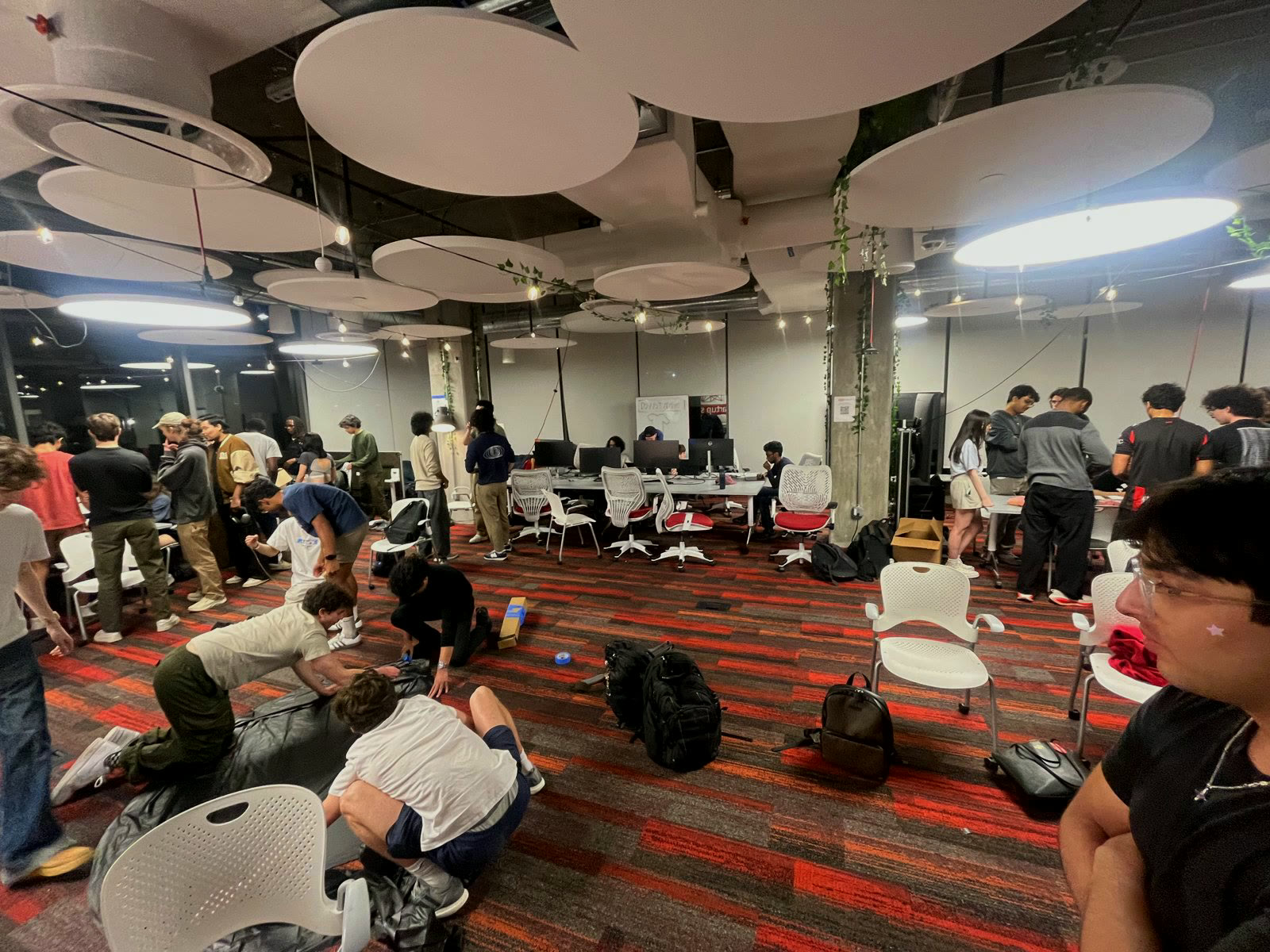
I scrapped it and replaced it with an egg drop instead: small teams, a pile of random materials, one raw egg, and a drop test at the end. No slides, no case study, just a room full of new members forced to actually build something together.
Before
A 45-minute mock-presentation exercise about a squirrel gathering nuts for winter. People tried to leave early.
→
After
An egg drop. Small teams, scrap materials, one raw egg. People stayed late.
Egg Drop Rules
- Use piles of scrap materials laid out for each team.
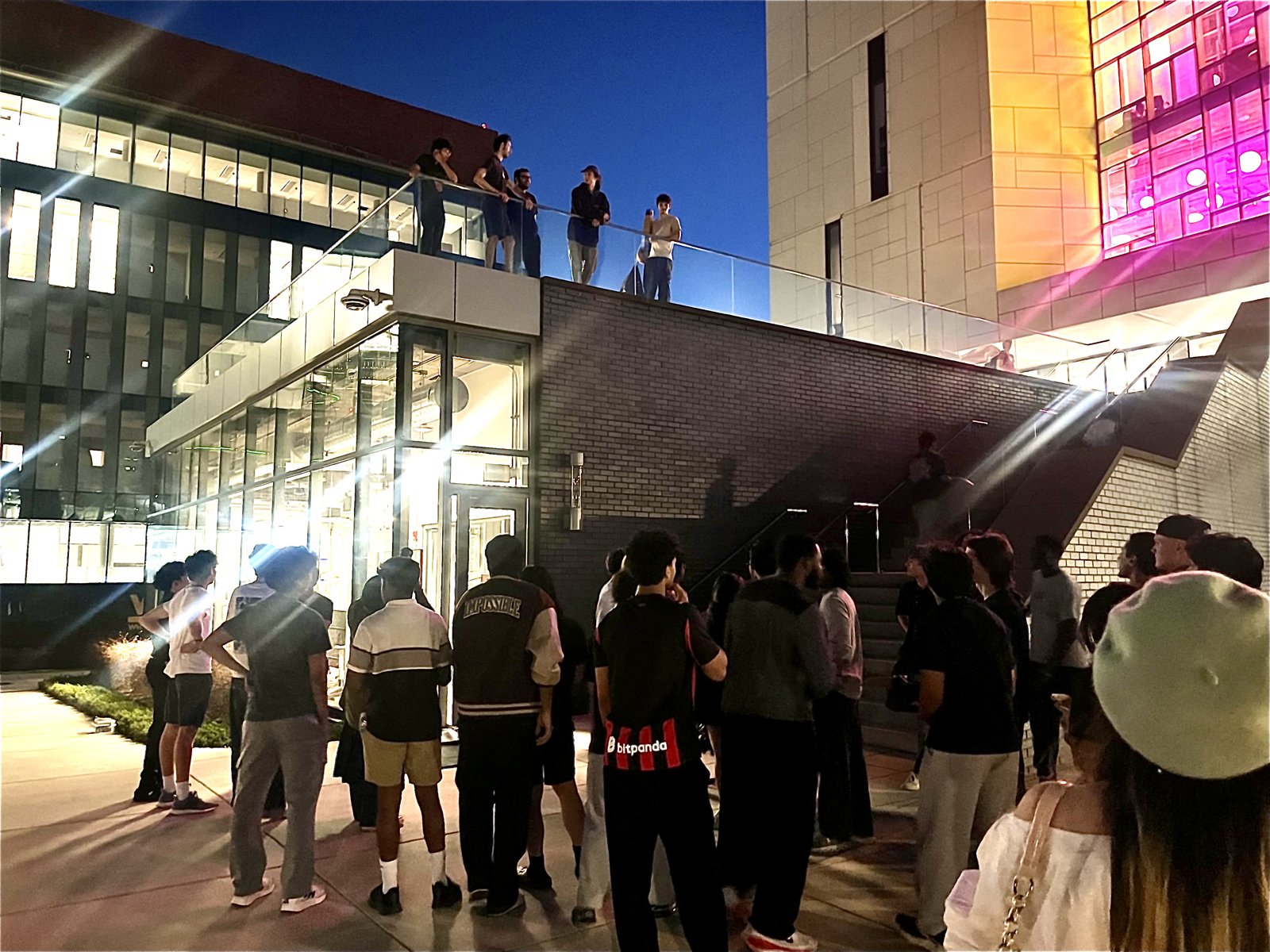
- Egg drops from the Idea Factory balcony.
- Egg doesn't crack, or at least cracks the least.
- 30 minutes to build.
- 20 minutes to drop.
Interest-Based Cohort Architecture
The teams themselves were pods; small groups new members get assigned to for their first couple of weeks in Startup Shell. Pod time is loose on purpose: hanging out in the space, baking cookies, rock climbing, whatever that pod's leader plans.
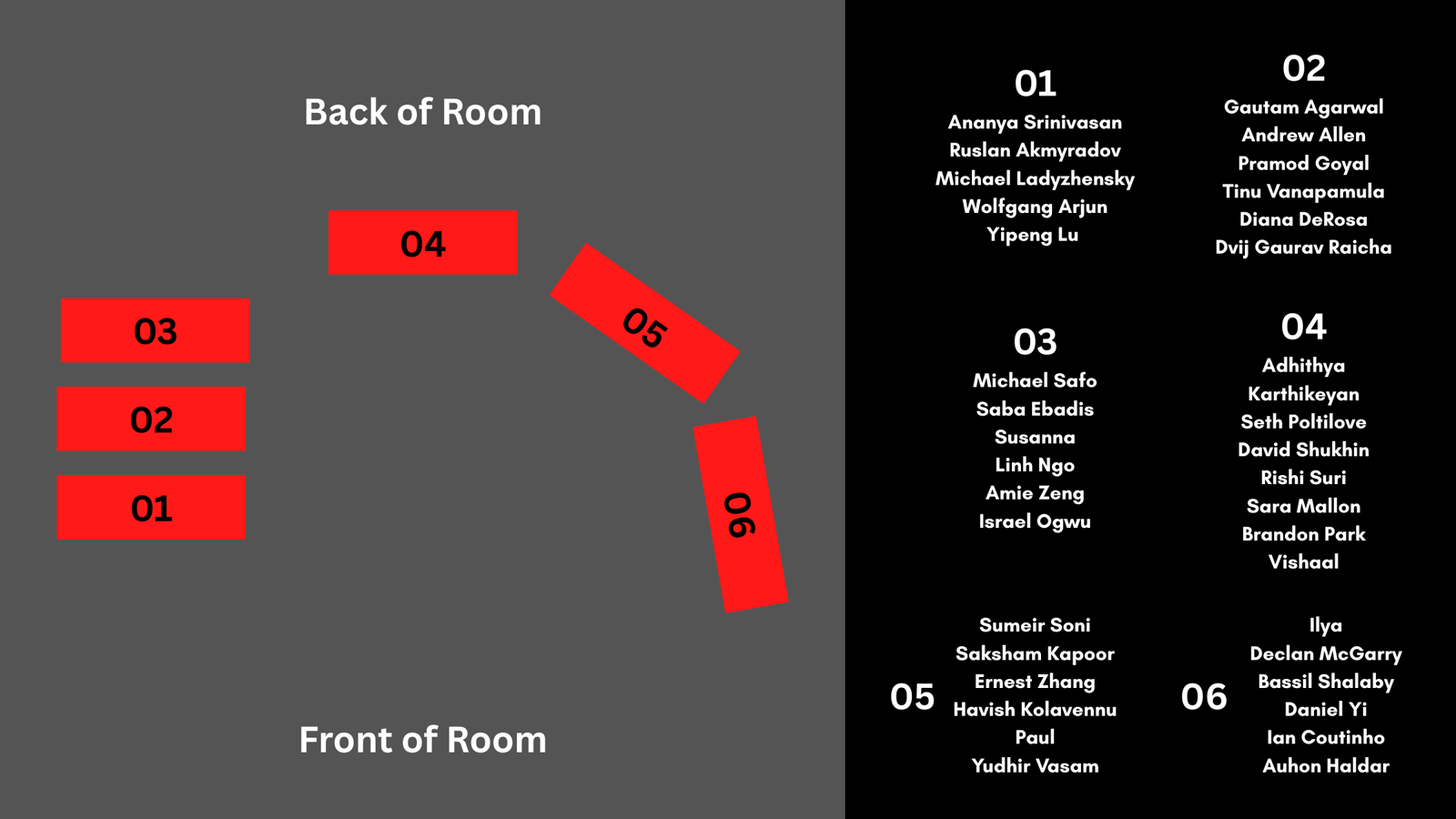
I sorted people into pods based on interests pulled straight from their applications; media and photography, hardware, software and AI. Those same pods became the egg drop teams, so the first real thing a new pod did together was build something with strangers who already had something in common.
How the six pods were laid out across the space for building, each with enough room to actually work.
Resolution
It went well beyond what I expected; people stayed past when orientation was supposed to end, still working on their contraptions. Typically, retention from orientation into people actually showing up to the space drops to around 30%. This time it held closer to 70%.
"Best orientation they'd seen the club run; the most present, most engaged group they'd watched come in."
older Shellers
70%
Orientation-to-space
retention, up from ~30%
Retention figures from internal club attendance records.
I almost missed out on this community, so I made sure no one else would.
Reflection
Finding community I almost missed.
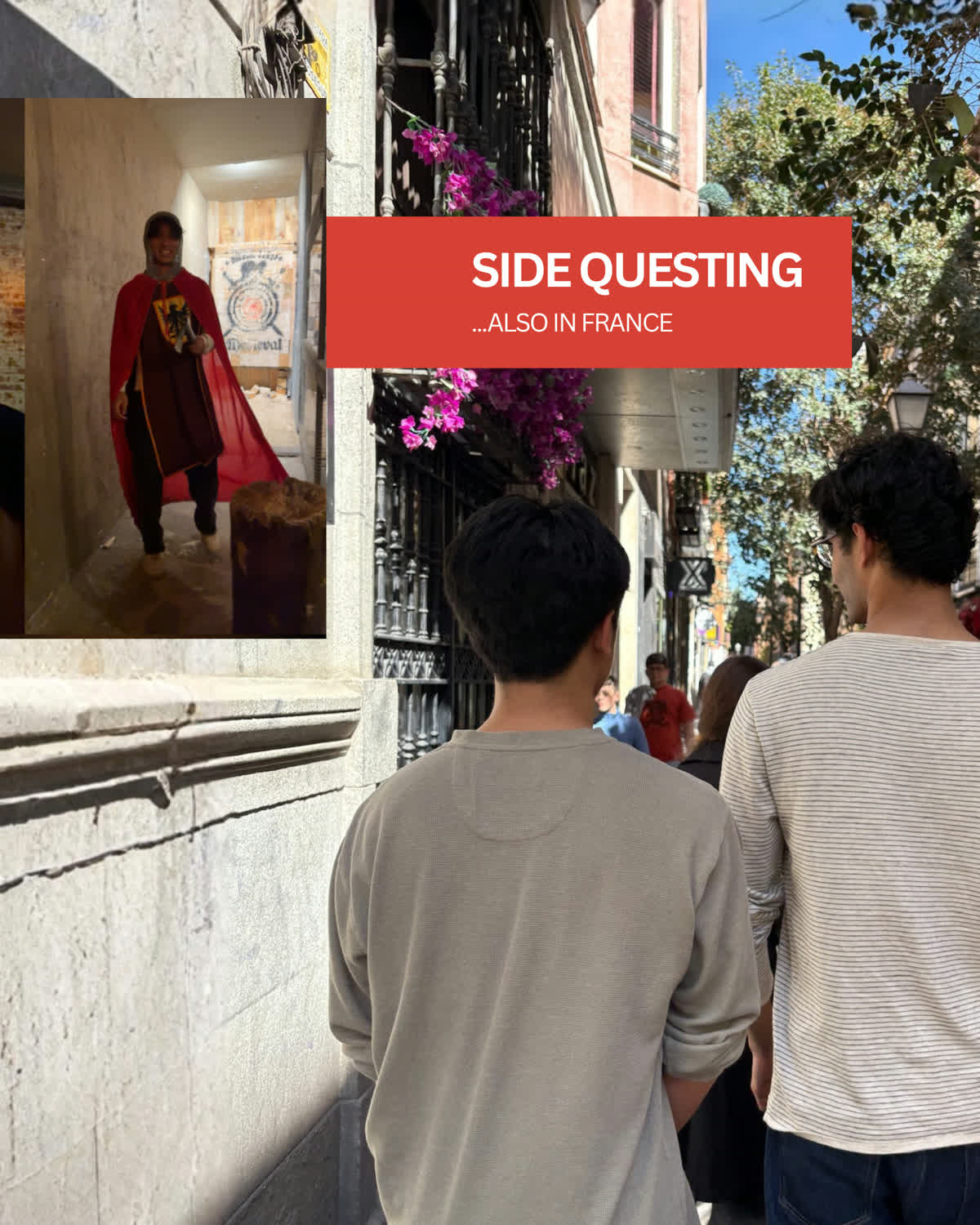
Startup Shell quickly became my home at Maryland during my senior year, but I almost missed out on it entirely; when I first looked at the Instagram, there were barely any photos, and the orientation itself felt quiet, boring, and a bit insular. Giving it a second chance was one of the best decisions I made in college, because I found a community of people who were incredibly passionate about their work while genuinely caring about each other, side-questing, and bringing joy into each other's lives.
Reshaping the brand around real people.
Knowing how close I came to walking away inspired me to completely revamp our orientation and rebuild our Instagram presence; I wanted to make sure new members saw the true warmth and energy of the Shell from day one. Instead of a stiff, quiet room, we created an orientation where people felt comfortable walking up to each other and saying hello, while using our social media to highlight real member personalities, including hit posts like our spring break feature that showed people how much the community actually cared about them.
Leaving an imprint for the next class.
Seeing the shift in engagement, comments, and atmosphere was one of the most fulfilling parts of my senior year, as it proved that showing our true personality helped others find their place here too. As we always say, "once a sheller, always a sheller"; even after graduating, the people I met in this space remain some of my closest friends, and I am deeply grateful I got to use my design skills to make my home a better place for the next generation.